


The final catering invoice is due, and wedding details are still changing. When a reply arrives confirming that you can pay by wire, it looks like one decision settled.
Then a call from the catering company puts the payment back on the list.
Overview
The wire reply fit a real conversation
The customer had been corresponding with a caterer and an event company for months. When the final bill came due, one of them suggested using a wire transfer.
A reply that appeared to come from the caterer supplied payment instructions. The person planning the wedding reported sending about $15,000 and receiving an email that confirmed receipt.
The email conversation continued afterward, including exchanges about tablecloths and extra seating. The fraud became clear only when the actual caterer called to ask about the original payment.
One letter changed who was speaking
The customer reported finding an address that differed from the caterer’s by one letter.
It had appeared inside correspondence the customer recognized, where a familiar subject line made it easy to miss.
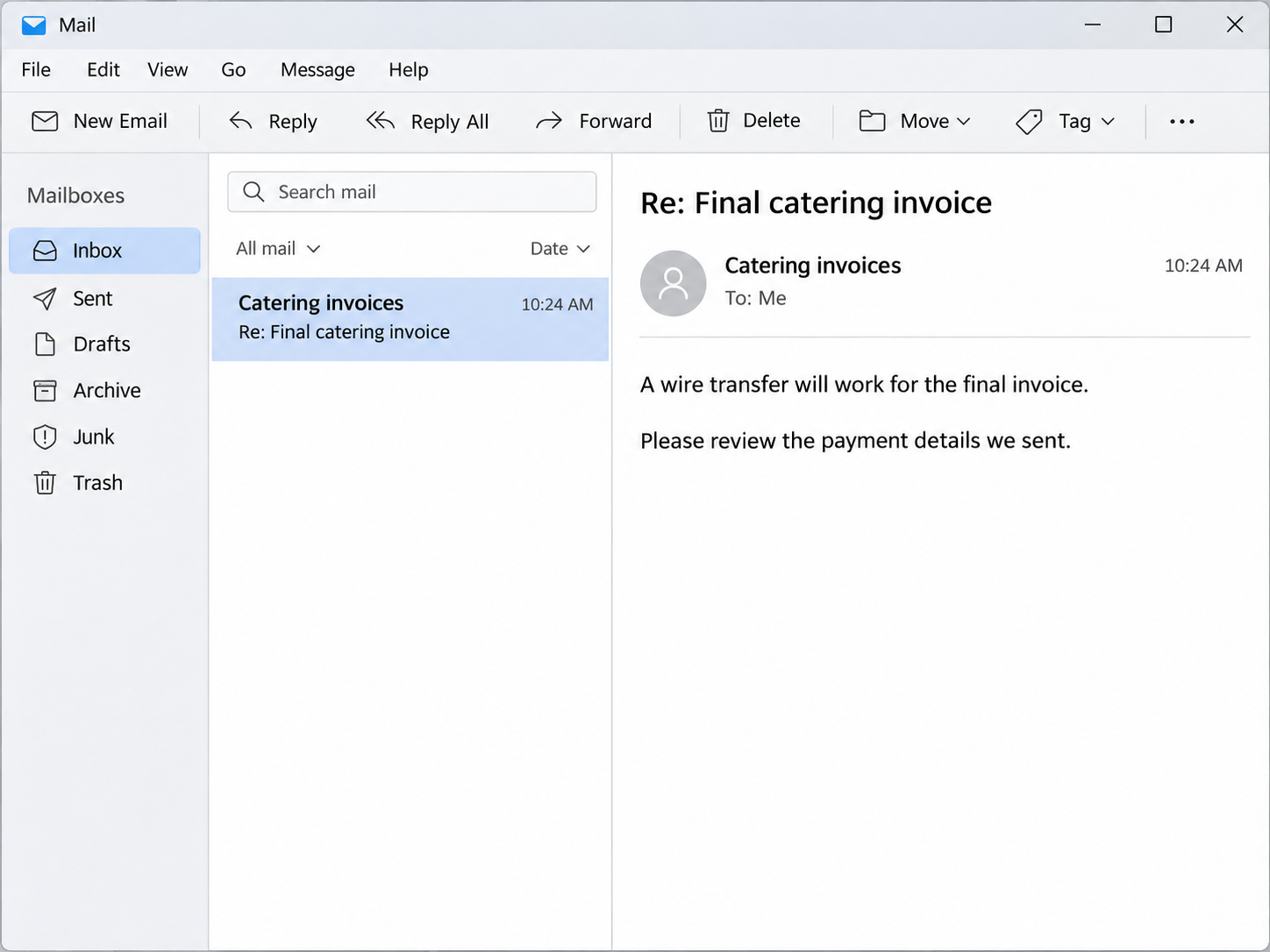
The image above reconstructs that payment reply. It contains no bank details, and it does not reproduce the actual email or show how the impostor learned about the wedding.
The FBI’s guide to business email compromise warns that small variations in an address can redirect payments. The source here never established which inbox, if any, was compromised.
The supplier and the bank have different records
An email can claim money arrived. The bank can show where the wire went, while the actual vendor can check its own account and invoice records.
- Call your own bank immediately about a wire you sent to the wrong account.
- Call the vendor using the number you already had in the contract.
- Save the original thread, wire receipt and both versions of the invoice.
- Confirm remaining payment instructions by phone before making another transfer.
If the wedding is close, give one trusted person the fraud paperwork and another the arrangements. The bank and caterer still need accurate information while the event is moving ahead.
How the Real Wedding Details Made the Reply Believable
The customer was not choosing a vendor from a cold email. They were paying a bill they already expected, to someone they had worked with over multiple planning decisions.
Tablecloths and seating made the discussion feel continuous. The reported correspondence covered ordinary rental questions as well as payment instructions.
A revised total would be routine if the couple added rentals. That is why it helps to verify the payment instructions themselves even when the amount and invoice look right.
The real caterer offered several ways to pay. If you choose a wire, confirm the recipient name and destination over a known number.
Reviewing the email address is useful before you call. Expand the From and Reply-To fields if your mail app shows them, and compare the complete address against your original contract.
Reading the address can tell you that a letter changed. The call can tell you whether the vendor actually authorized the account receiving the payment.
There is a second bank detail worth checking after you send money. Ask the vendor to confirm receipt through a known channel, especially if the wire is large or time-sensitive.
How the Wedding Catering Wire Scam Works
Step 1: A real invoice comes due
The wedding is getting closer, and the final catering or rental bill has to be paid. The customer reported proposing a wire in the legitimate conversation.
That explains why the reply did not feel like an unexpected change in the way payment worked. Someone had just asked about wiring the money, and an answer followed.
Step 2: The impostor answers with different bank information
The reply confirmed that a wire would work, then provided the instructions the customer followed. The address looked close enough to the caterer’s to fit the conversation at a glance.
The person receiving it still has a second way to test the request. Use a contact method already supplied by the real vendor and read back the payment destination.
Step 3: An email claims the payment has arrived
After sending the wire, the customer received an email confirming that the payment had been received. The source describes that email as part of the continuing impersonation.
A bank receipt shows that you instructed a transfer. The supplier’s own confirmation, obtained through a trusted route, tells you whether its accounting records reflect payment.
Step 4: Real planning continues around the fake receipt
The customer reported continuing to discuss wedding details after the wire. A later request for extra seats made the prospect of another revised invoice seem natural.
This part matters when more than one payment remains. A mistaken first transfer can leave the same conversation in place for later invoices if nobody checks the vendor’s account.
Step 5: The vendor calls about the unpaid bill
The real caterer called to ask about the original wire. The customer and caterer reviewed what had happened and found the lookalike address.
The customer discovered the diversion six days before the wedding. The outcome of the bank dispute and the catering bill remain unknown.
What the Bank Needs While the Wire Is Still Traceable
Start with the transfer that actually left your account
Use the receipt from the bank you paid through.
It can identify the transfer even if the fraudulent reply contains different names or if the email attachment is hard to read.
Tell the fraud representative that you authorized a wire after someone impersonated the vendor. That describes what happened more accurately than saying somebody signed into your bank and stole it.
Ask the bank to note the time you discovered the fraud as well as the transfer time. That timing helps explain any gap before you contacted the bank.
Ask whether the bank has requested a recall from the receiving institution. Keep your reference number and ask when to follow up if there is no immediate update.
If you scheduled another wire to the same destination, tell the bank before it goes out. The scheduled instructions may still be visible in your account.
Preserve the correspondence in a form investigators can use
A screen capture shows the words you saw. The message itself may also preserve details about where it came from and the addresses used for replies.
Keep the original and suspect invoices even if they look identical at first. The payment instructions, message time and recipients explain more than a screenshot of the total.
Make a copy that marks which items were supplied by the real caterer. Use a separate note for your comments so the original files remain intact.
The IC3 reporting guide asks victims to preserve and report payment information. Submit the routing and recipient details through the bank or official complaint site, away from public posts.
What to Compare Before Paying a Final Invoice
Keep the contract and the wire instruction separate
Find the signed agreement and the first payment records. Look for the billing contact, payee name, invoice schedule and any payment instructions already confirmed.
A contract may list more than one company because catering, tables and chairs can be arranged separately. Ask which company owns the invoice you are about to pay.
If a planner forwards a payment message, call the vendor responsible for the bill. The planner can help keep everyone informed without becoming the only source of bank instructions.
Keep a note of when you called and who verified the details. It makes later changes easier to spot and gives someone else a record to check.
When more than one person handles payments
A couple or family may split the deposits, balance and last-minute rentals. Share the verified payment record with the people paying so nobody sends the same amount twice.
Ask the second person to check any unexpected change against the original contract. That is especially helpful when an email arrives while someone else is dealing with the venue.
If the new invoice combines multiple vendors, confirm which part belongs to each. Ask for separate confirmations if the catering company and the rental provider use different accounts.
Keep your own running total so any suspicious revision has something to compare against. Work from paid receipts and confirmed balances rather than the latest email alone.
Watch the wording of a receipt that comes by email
Some providers send an automated confirmation when they receive a payment. Ask what a normal receipt looks like and how long it usually takes for the provider to issue one.
If the email and the bank receipt disagree about the recipient name, call the bank and vendor separately. Explain the mismatch while both records are still available.
The same applies if the vendor says a balance is due after an apparent receipt. Preserve both versions of the conversation before you make a second payment.
Check the event deadline and the payment deadline separately
The vendor may still need to know whether to deliver rentals or buy ingredients. Explain when you first discovered the fraud so the staff can plan around confirmed information.
Ask who can confirm what must be paid before service begins. A verified statement can separate catering already booked from seating or linens added later.
If you previously split payment with a family member, notify them about the suspect address. They may have a second invoice or confirmation you need to preserve.
Keep the venue and planner out of email exchanges that ask you to publish banking details. Tell them which contact is legitimate and what the caterer has confirmed.
What to Do if You Have Fallen Victim to This Scam
-
Call your bank’s fraud or wire team immediately, explain that the recipient instructions were fraudulent, and ask whether the transfer can be recalled.
-
Have the transfer receipt, amount, date, recipient details and any reference number ready so the bank can identify the exact wire.
-
Call the actual caterer using a number from your contract and tell them the transfer went to instructions they did not authorize.
-
Save original emails and attachments, including their sender details, and keep the genuine invoice and the changed payment instructions next to each other.
-
File an IC3 report in the United States and retain the confirmation alongside your bank’s fraud reference and vendor communications.
-
Work out any urgent arrangements using verified contacts and confirm all outstanding invoices before anyone sends another payment for the wedding.
The bank may ask you to describe which inquiry came first and when the instructions changed. Give it the dates in order and note what the vendor later confirmed.
The FBI’s IC3 guidance recommends asking the financial institution for a recall as soon as possible. The outcome depends on the transfer and whether the funds can still be reached.
Warn the vendor so it can check whether other customers received similar messages. If it looks into mailbox access, let its staff handle that separately from your bank report.
If the vendor needs a decision on the event, ask for a written statement of remaining balances and deadlines from a verified address.
Save any temporary agreement separately from the suspect thread.
Do not send a stranger a second fee to trace a wire.
Contact the bank through the same verified route if someone approaches you with an offer to recover the money.
Frequently Asked Questions
How did the reply appear in a familiar wedding email thread?
A lookalike address and familiar subject can make a new message appear to belong in existing correspondence. The public account does not show how the impostor obtained the planning details.
What if the name and invoice amount both look right?
Those details can match while the bank account is different. Call the caterer through a known number and confirm the destination before you authorize a wire.
Can my bank recall a wire if it was already sent?
Ask the bank’s wire or fraud team immediately. A recall may be possible, but it depends on the transfer and whether the receiving institution can act in time.
Should I keep talking to the sender to get a refund?
End contact with the person who gave the suspect instructions. The bank can handle the recall request and the actual caterer can confirm its own payment records.
Does this incident prove the caterer’s own mailbox was hacked?
The report identifies an impersonating address and a diverted wire. It does not establish which account exposed correspondence, so share the original records with the vendor for its own review.
What should I check before paying the remaining balance?
Ask the vendor for a confirmed balance and independently verified payment instructions. Make sure the other people paying for the wedding know which amount and account were approved.
The Bottom Line
Call the caterer at the number you already had before sending any wedding wire. Check the recipient with the vendor even if the invoice fits everything else you discussed.
If the money already went out, contact your bank’s wire team immediately and ask for a recall. Share the records with the real vendor and verify the outstanding balance separately.

Join the discussion
0 commentsShare your experience or ask a question about this article.
Community experiences
Did this happen to you?
Your experience could help someone recognize the same scam. Submit a private report for our team to review.
I experienced this tooReports are reviewed before publication. Sharing publicly is always your choice.
Discussion
Start the conversation
Have a question or something useful to share? Add the first comment.