New Update Announcing Windows 11 Insider Preview builds [Mega-Thread]

Hello Windows Insiders, We have new releases today with builds across Beta and Experimental, and are excited to begin rolling out the new Windows Insider experience to retail Windows 11 builds this week! New Windows Insider Program changes launching into retail After validating through the Windows Insider channels, and receiving much feedback from the Insider community, we are excited to begin rolling out the new program changes into retail. This means those on standard retail Windows 11 builds (i.e. non-Windows 11 Insider Preview Builds) will begin seeing the new channel experience in the WIP UI settings. This can be found under Settings > Windows Update > Windows Insider Program. Please note this will be a gradual roll out, so don’t worry if you are on a retail build and do not see the new channel options just yet – these will roll out to everyone over the coming weeks. For more information about the changes that the new WIP experiences bring, read the original announcement blog here. We have also updated the Windows Insider Program website, as well as the Windows Insider Program Documentation Hub to reflect the new program changes. If you are not currently running a Windows 11 Insider Preview Build, there has never been a better time to start flighting – you’ll get early access to new Windows 11 features, enhance your say in the development of Windows, and now in most cases, you will be able to switch channels or exit the program without having to do a full reinstall of Windows if you find it's not working for you. See the WIP Documentation Hub for more information. Thank you to everyone who has provided feedback on the new WIP experiences – we continue to listen to your feedback and look forward to providing more resources and updates in the coming weeks! New builds this week Today we are releasing new Windows 11 Insider Preview Builds. See your channel release notes here:
For those on other specific build versions, here are today’s new builds and release notes:
  • Beta (26H1): Build 28020.2366
  • Experimental (26H1): Build 28120.2374
  • Experimental (Future Platforms) – Including Canary 29600 series: Build 29617.1000
    • Please note we have not yet launched the new Windows Insider program changes for those in Experimental (Future Platforms), currently Canary 29600 builds. We will be providing an update on this in the very near future.

Notable new features:

[Taskbar]

New Taskbar size setting Release channel: Experimental
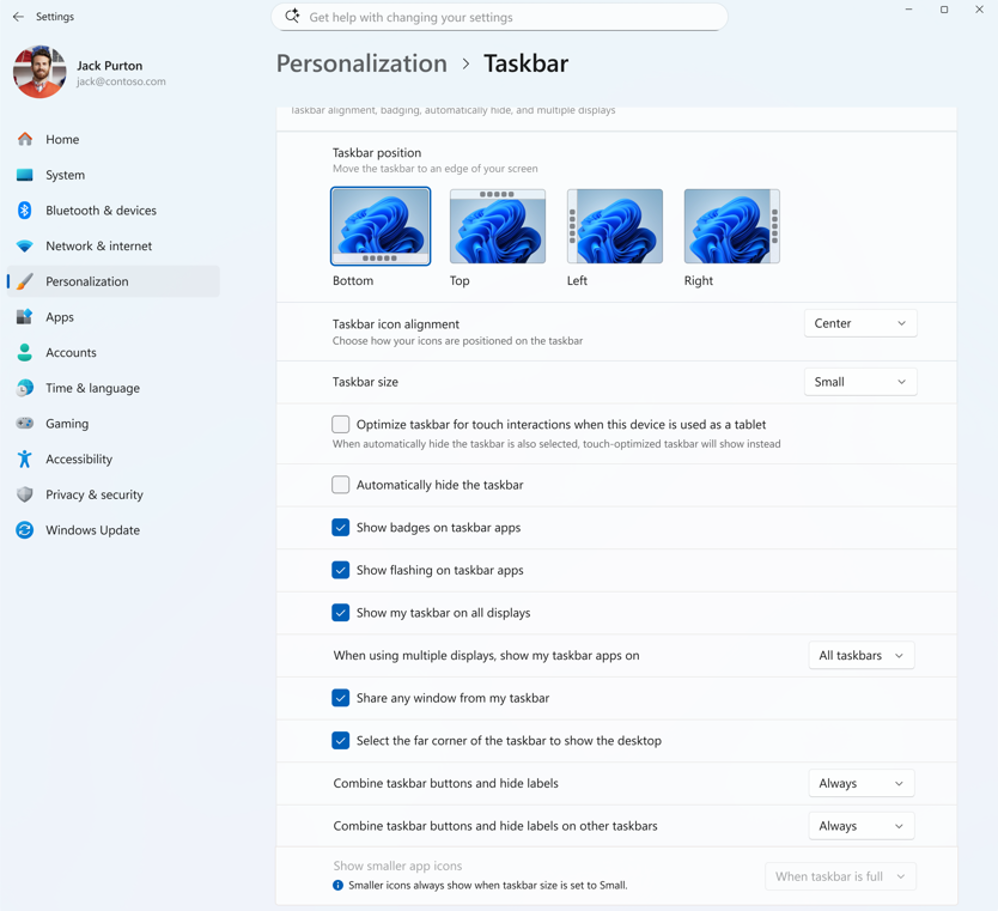
  • Taskbar customization just got easier. As we continue to make improvements to the Taskbar experience mentioned last month, we've introduced a dedicated Taskbar Size setting, making it simpler to find, understand, and personalize your ideal taskbar experience.
[caption id="attachment_179025" align="aligncenter" width="998"]Screenshot showing ability to change taskbar size Screenshot showing ability to change Taskbar size[/caption] Thanks, Stephen and the Windows Insider Program team

Source: Announcing new builds for 26 June 2026, retail launch of new WIP improvements
 
Hello Windows Insiders, We have new releases today with builds across Beta and Experimental. New builds this week Today we are releasing new Windows 11 Insider Preview Builds. As a reminder, all Insiders can find the release notes for your device based on the new channel system, even if you haven’t moved yet. This is to make finding build information as easy as possible during the transition. See your channel release notes here:
For those on other specific build versions, here are today’s new builds and release notes:
  • Beta (26H1): Build 2820.2380
  • Experimental (26H1): Build 28120.2387
  • Experimental (Future Platforms): We do not have a new build for this channel today, keep an eye out for future announcements.

Notable new features:

[Cloud Recovery]

Release channel: Experimental
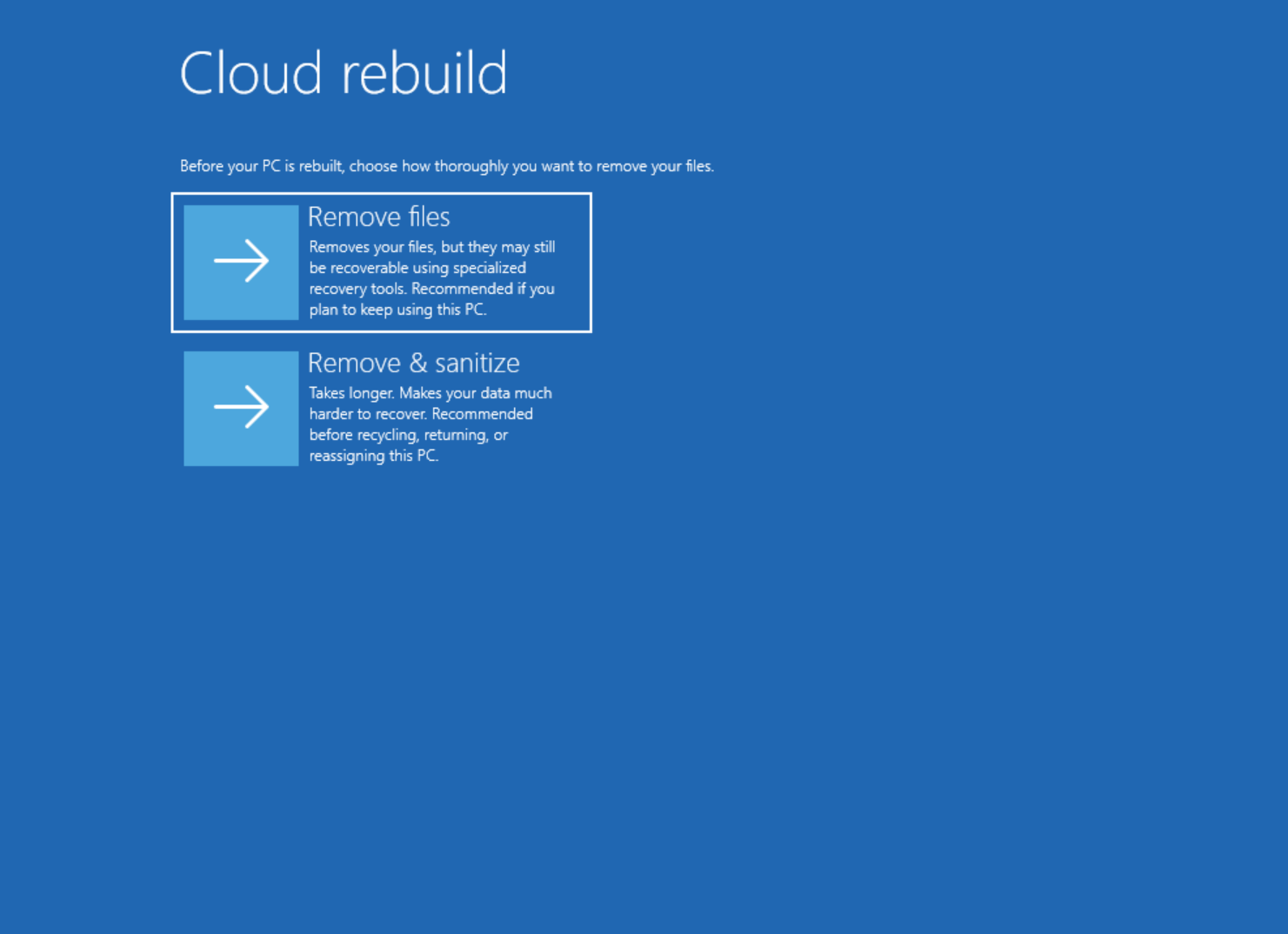
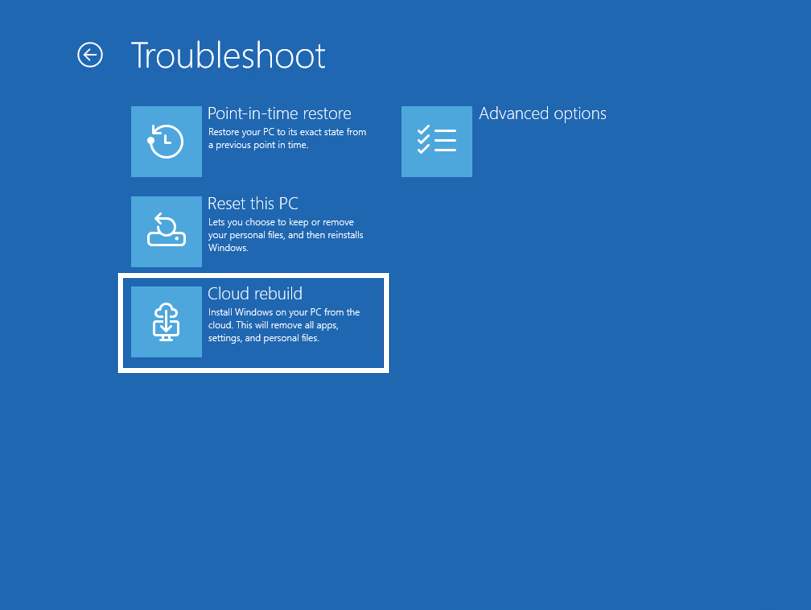
  • We're introducing Cloud rebuild, a new recovery option that restores a Windows 11 PC to a clean, known-good state by performing a full OS reinstall, even when Windows won't boot. Unlike Reset this PC, Cloud rebuild downloads both the target Windows image and the device's drivers from Windows Update, so the device comes back fully functional without USB media, without a custom image, and without depending on the health of the currently installed OS.
[caption id="attachment_179033" align="aligncenter" width="811"]The new Cloud rebuild option in Windows Recovery Environment (WinRE), enabling a full Windows reinstall using files downloaded from Windows Update. The new Cloud rebuild option in Windows Recovery Environment (WinRE), enabling a full Windows reinstall using files downloaded from Windows Update.[/caption] To learn more, see Quick Machine Recovery.

[Account Control]

Release channel: Experimental
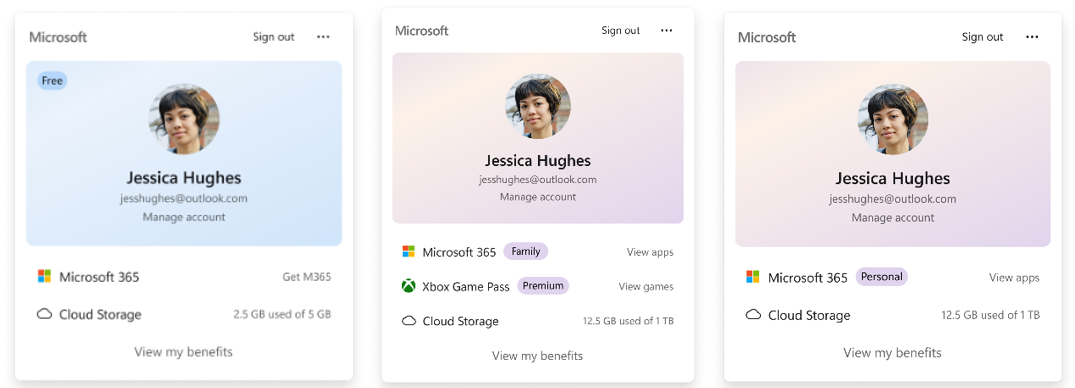
  • The Windows 11 Account Control flyout has a refreshed, modern design and a clear subscription badge to make the user's account status instantly visible. This helps users easily identify their plan, discover benefits, and explore upgrades.
[caption id="attachment_179034" align="aligncenter" width="1024"]UI showing the refreshed Account Control flyout with subscription badges, account benefits, and storage details. UI showing the refreshed Account Control flyout with subscription badges, account benefits, and storage details.[/caption] Thanks, Stephen and the Windows Insider Program team

Source: Announcing new builds for July 6 2026
 
  • Like
Reactions: Khushal
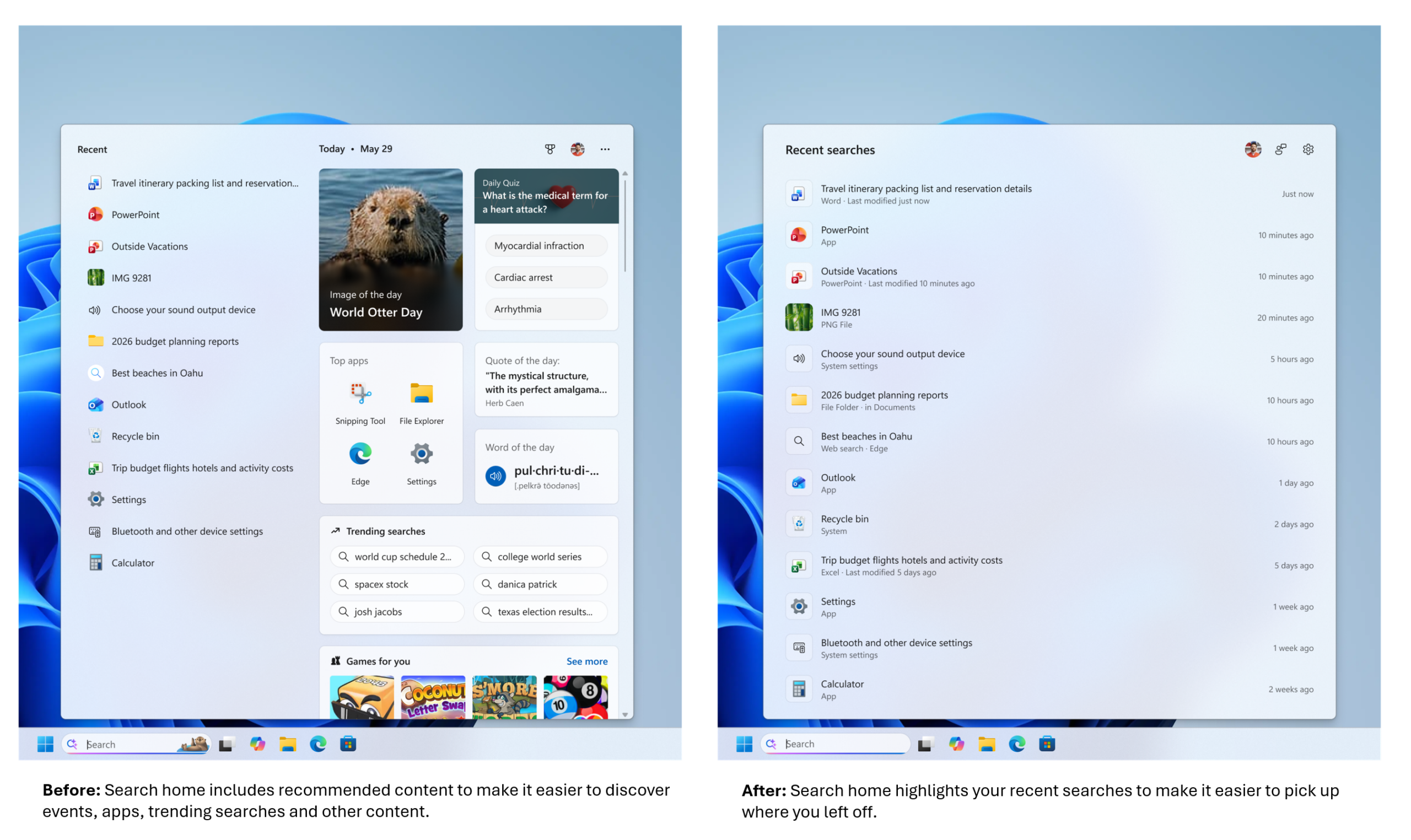
Hello Windows Insiders, You’ve been asking for search that is faster, more relevant, and easier to use—whether you’re opening an app, finding a file, or changing a setting. Because the Windows Search Box is where many people start, we focused first on making results more dependable, easier to scan, and clearer before you click.

Windows Search Box improvements gradually rolling out today to Windows Insiders​
Today, we’re rolling out several improvements to Windows Search Box available to Windows Insiders in the Experimental channel. These improvements are gradually rolling out via Controlled Feature Rollout so not all Insiders will see them right away. You can reboot to see if you receive them today. They are also available via feature flags.
  • A calmer home screen. Search home has been simplified to reduce visual clutter and make it easier to get back to recent searches quickly.

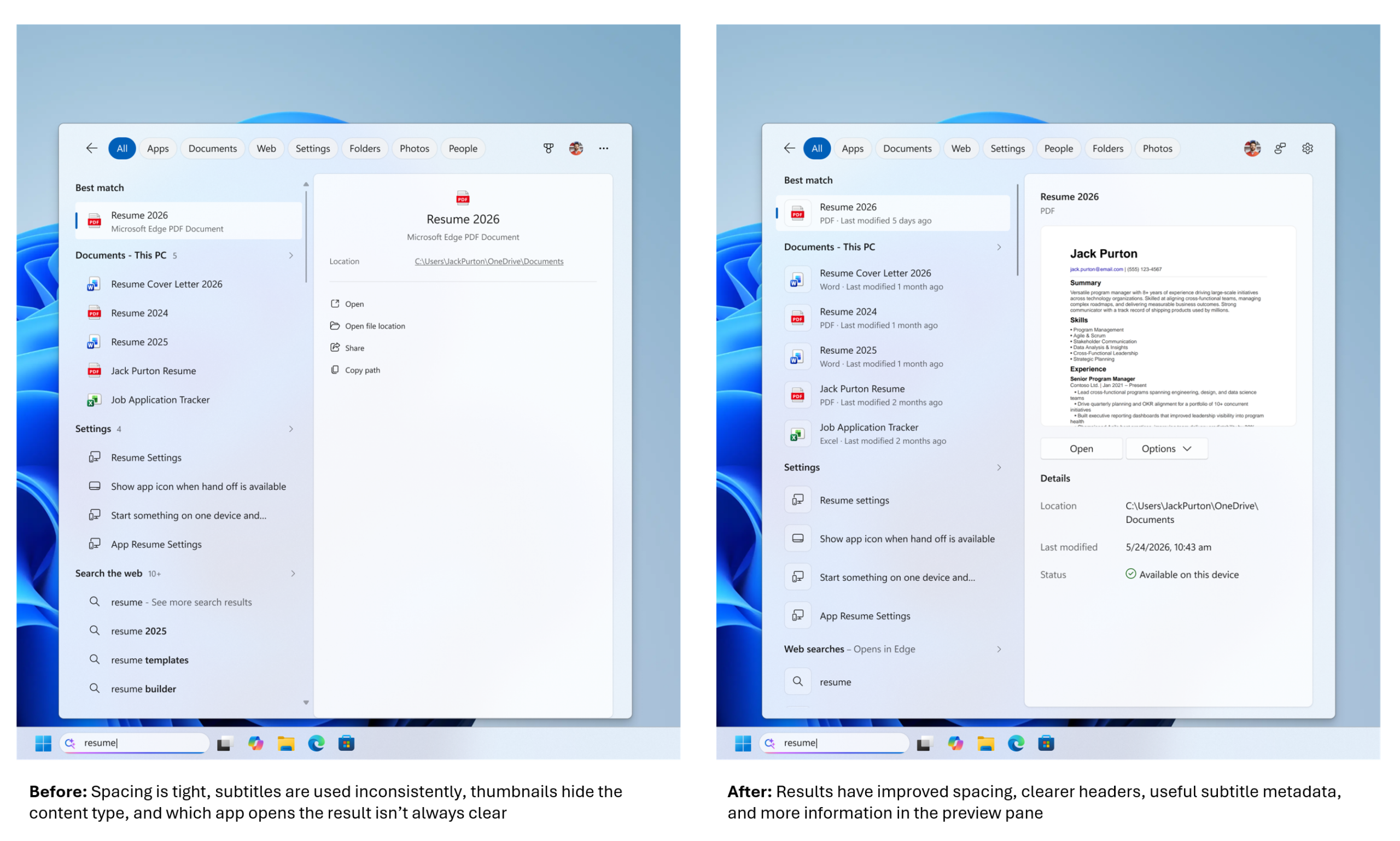
  • Clearer results. Search does a better job showing where a result comes from—app, setting, file, web result, or Store suggestion—so it’s easier to tell what you’re looking at and where you will go before you click.

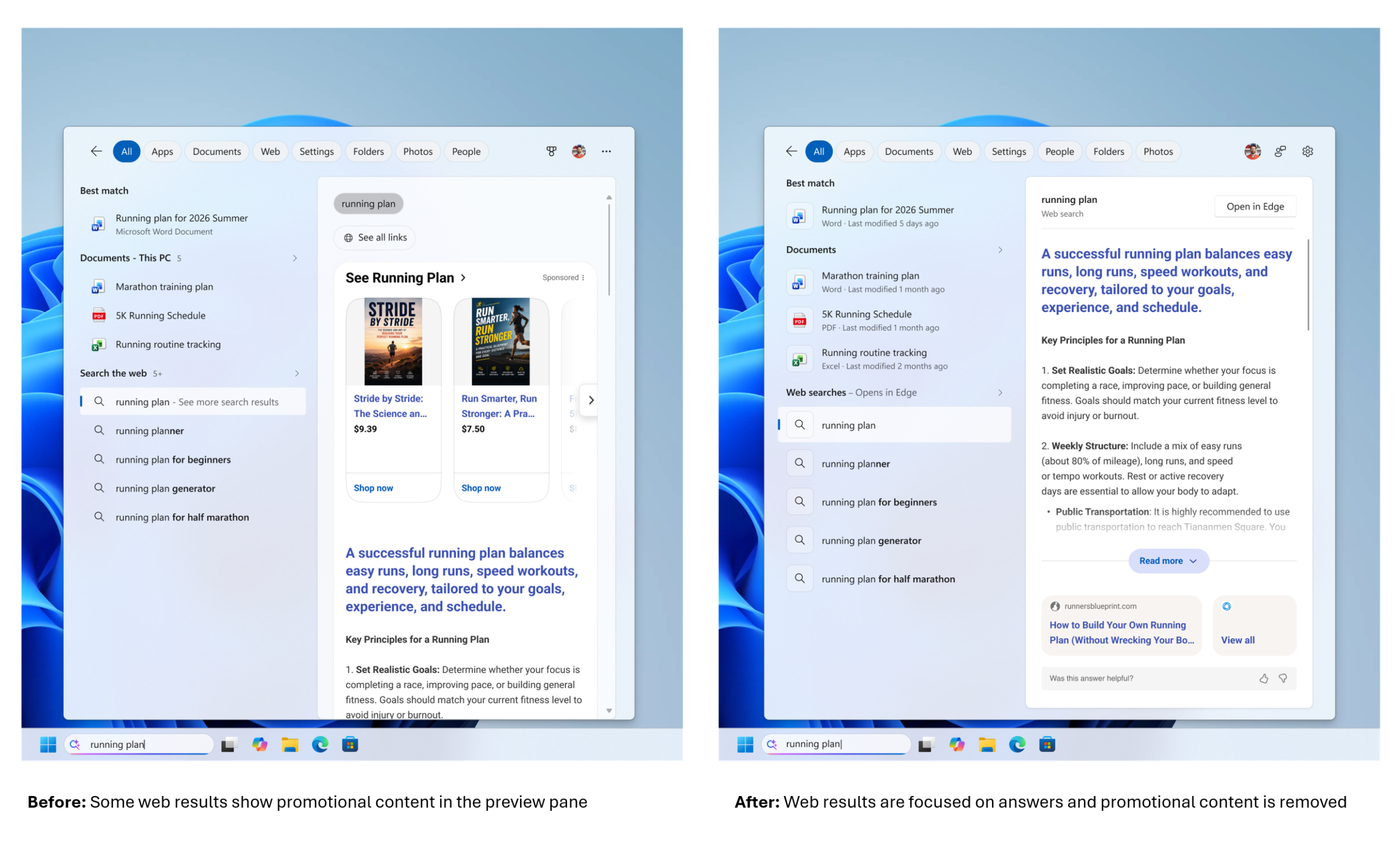
  • Promotional content has been removed from web results. Web results show the most relevant answer, instead of first showing related products and promotions, helping search feel more focused and less distracting.

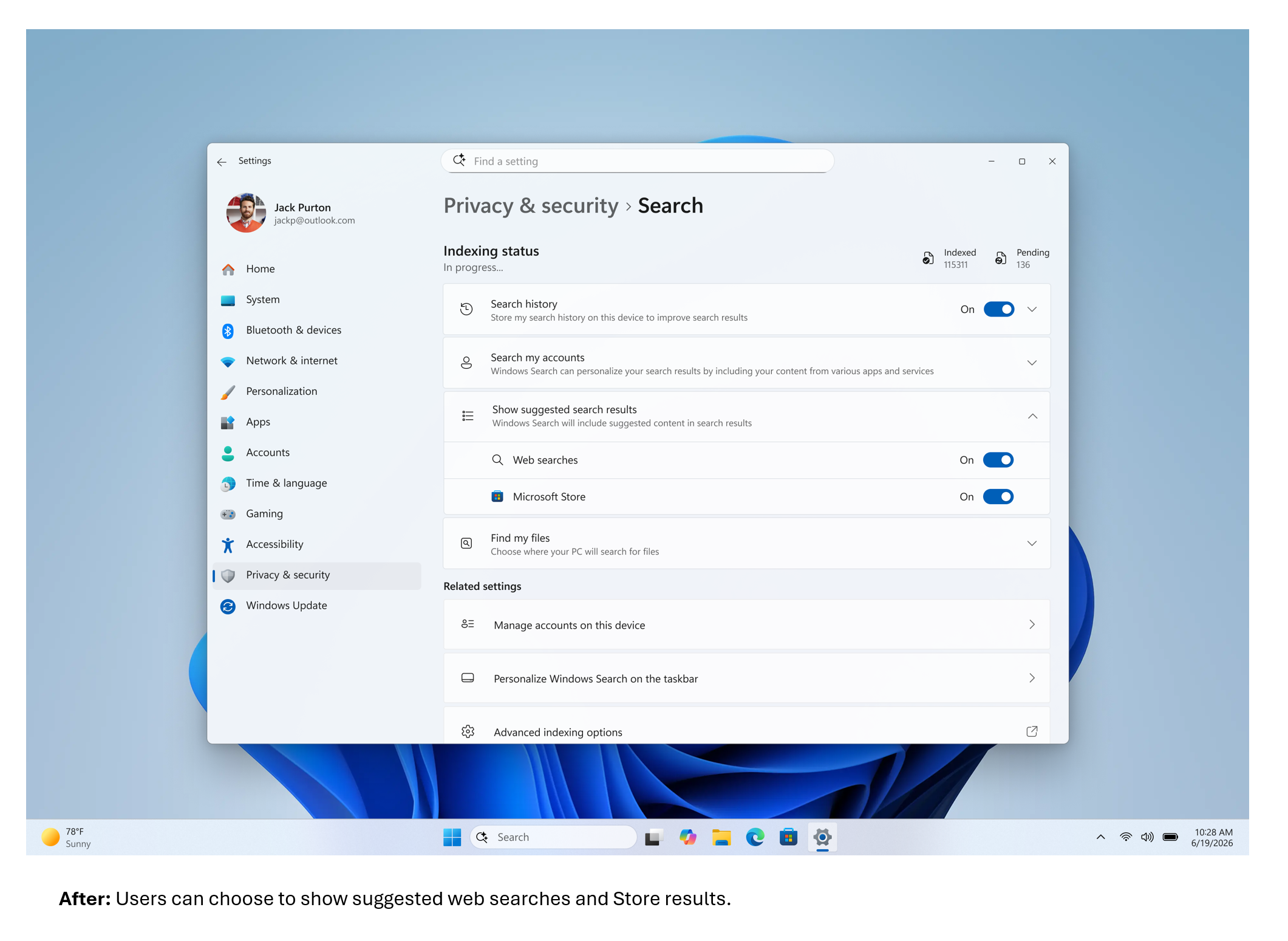
  • You’re in control of web and Microsoft Store results. A new setting in Settings > Privacy & Security > Search lets you choose whether web and Microsoft Store suggestions appear alongside local results.

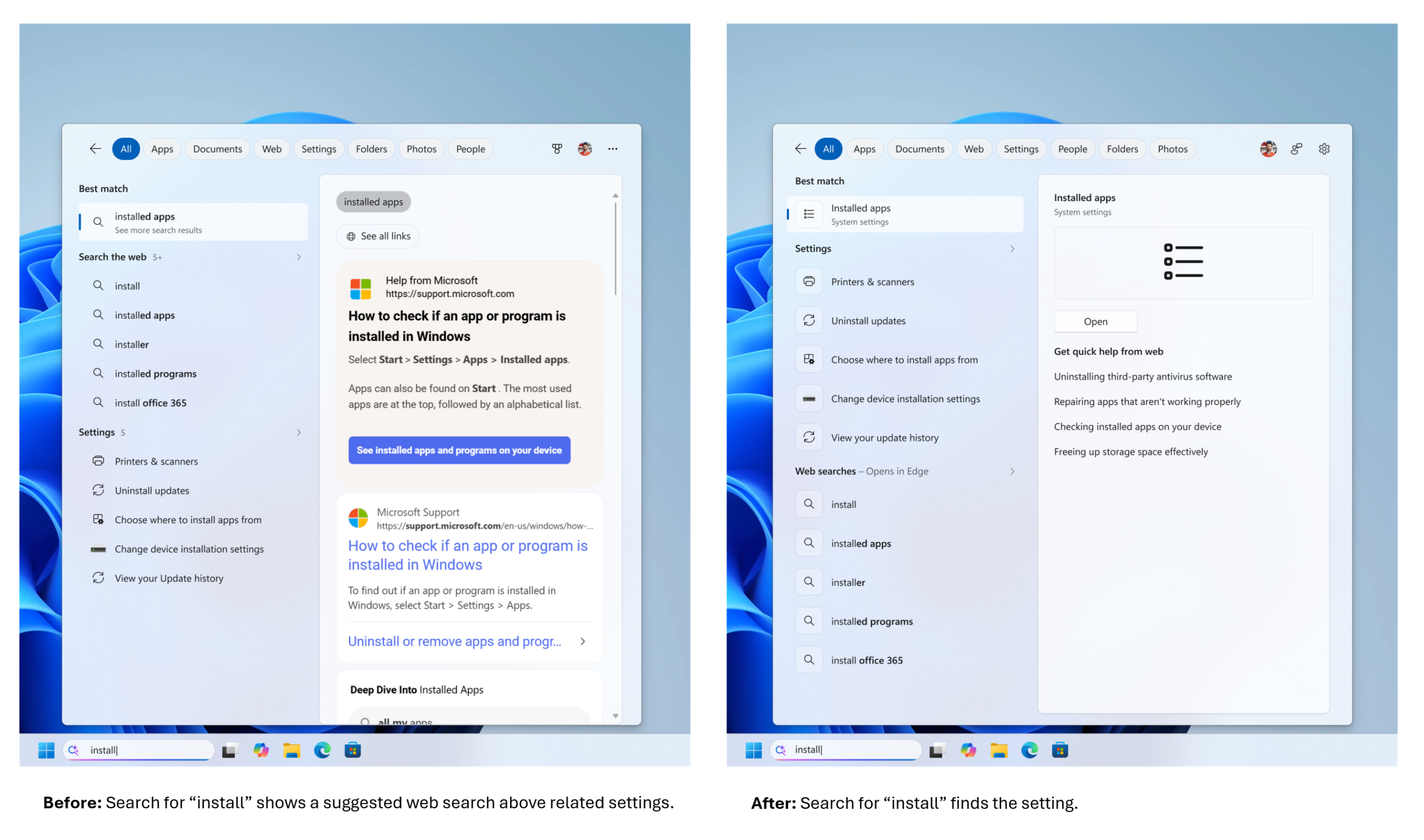
  • Local results prioritized when they’re the better match. Apps, settings, and files more reliably appear ahead of web and Store suggestions when your content is the stronger match. System items like This PC and Recycle Bin are easier to discover.
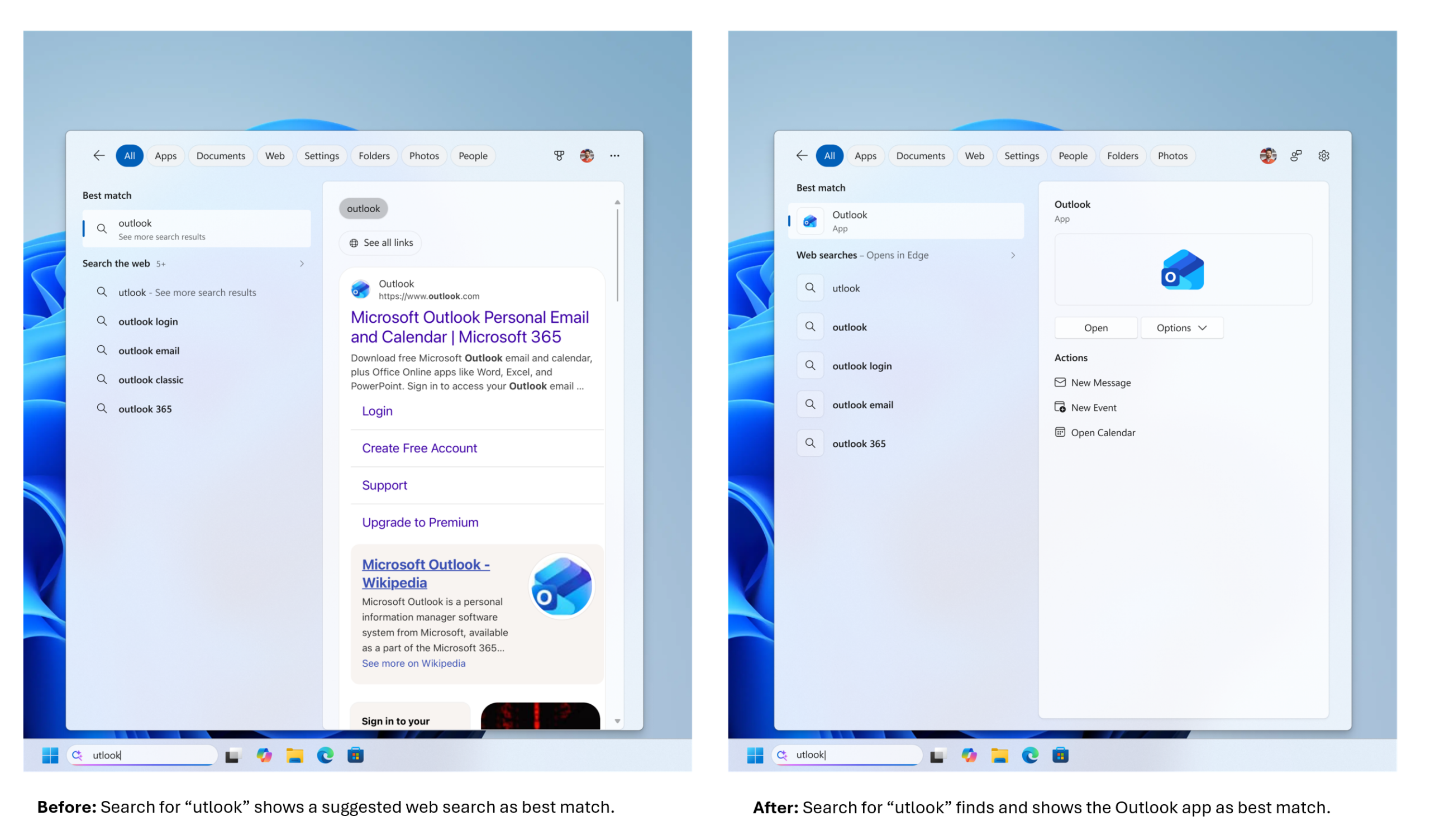
  • Finding apps is more forgiving. Search is better at handling typos, dropped letters, extra letters, and partial words for apps. Queries like “utlook” can still find Outlook.

  • Settings results are improving. We’ve made a first round of ranking improvements to help more relevant settings appear higher in results, with more tuning planned in the coming months.

  • Finding files is improving. Search is better at surfacing the right local files with added support for two-character file searches. We’ve also made improvements to show cloud and connected files in results when they’re the stronger match. These changes help you get to the document, download, or folder you are looking for faster.
  • Reliability is improving. Improved search reliability, including reducing likelihood of crashing and loading issue, with more work underway.

Try the changes and give us feedback​

These improvements become available to Windows Insiders today in the Experimental channel. The changes in this post reflect the feedback you’ve shared, and we’ll keep refining them as they roll out to more Insiders. Share your thoughts in Feedback Hub (WIN + F) under Desktop Environment > Search. Jeff & Anderson NOTE: Experiences vary by region.

Source: Improving Windows Search Box, with less clutter and more control
 
Hello Windows Insiders, Today we are releasing new Windows 11 Insider Preview Builds across Beta, Experimental and Release Preview. See your channel release notes here:
For those on other specific build versions, here are today’s new builds and release notes:
  • Beta (26H1): Build 28020.2539
  • Experimental (26H1): No new build today, please keep an eye out for future blog updates
  • Experimental (Future Platforms): No new build today, please keep an eye out for future blog updates
We also have Release Preview builds today for 24H2/25H2 and 26H1:
Thanks, Stephen and the Windows Insider Program team

Source: Announcing new builds for 20 July 2026
 
  • Like
Reactions: micasayyo
Hello Windows Insiders, Today we're releasing build 28120.2546 for the Experimental (26H1) channel. Release notes can be found over in the Windows Insider Documentation Hub as usual, as well as below:

Changes and improvements gradually being rolled out​

- This update includes a small set of general improvements and fixes that improve the overall experience for Insiders running this build on their PCs.

[Smart card removal policy]​

- Administrators can now configure Azure Virtual Desktop (AVD) and Windows 365 sessions that use Microsoft Entra ID (RDS AAD Auth) authentication to automatically disconnect when a redirected smart card is removed. This extends smart card removal policy enforcement to Microsoft Entra authenticated remote sessions, helping organizations meet security and compliance requirements.

[Narrator]​

- Braille displays now connect instantly with Narrator. - We're making refreshable braille displays easier to use in Windows. Narrator now supports displays that use the HID standard, an open industry standard for braille displays. If your display supports HID, simply connect it via USB and start reading with no additional setup required. - For Bluetooth, pair your HID braille display in **Settings > Bluetooth & devices** just like any other accessory, and you can work wirelessly without being tethered to your PC. - Compatible HID displays include Orbit Reader 20, Orbit Slate 340, Freedom Scientific Focus 40, and APH Mantis Q40. - HID braille displays now work during the initial Windows setup experience (OOBE) over USB, meaning users who are deaf-blind can set up their PC independently right from the first screen. - You can customize braille input and output options anytime in **Settings > Accessibility > Narrator > Braille**.

[Voice Access]​

- Voice Access now supports Portuguese (Portugal), Portuguese (Brazil), and Korean (South Korea).

[Settings]​

- The Bluetooth quick settings page is now navigable using gamepad input. - Fixed an issue causing the Graphics page in Settings to crash for Insiders after the latest updates.

[Sounds]​

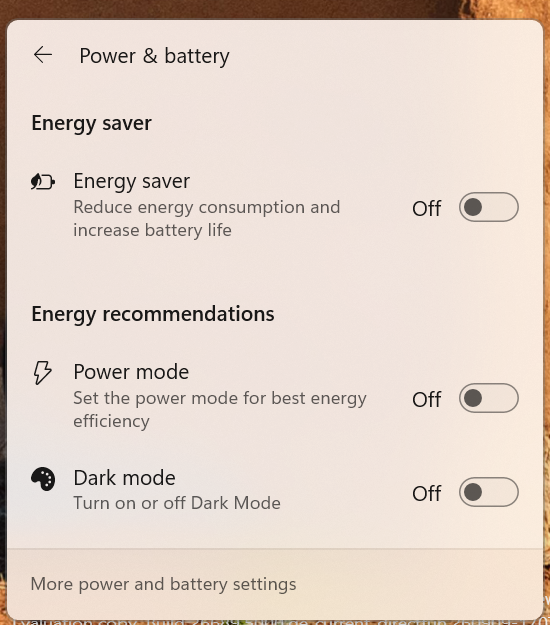
- Improved system sounds when using Windows in dark mode. Thanks! Stephen and the Windows Insider Program team

Source: Announcing Windows 11 Insider Preview Build 28120.2546 for Experimental (26H1)
 
  • Like
Reactions: Khushal
Hello Windows Insiders, Today we’re releasing build 29634.1000 for the Experimental (Future Platforms) channel. Release notes can be found over in the Windows Insider Documentation Hub as usual, as well as below. Renewed Windows Insider flight certificate Today’s Experimental (Future Platforms) build contains a renewed Windows Insider flight certificate. Windows Insider Preview builds use flight certificates that are renewed periodically to help ensure Insider devices remain on supported builds and continue receiving future Insider Preview updates. The current flight certificate expires on August 11, 2026, so please update your device to a build containing the renewed flight certificate before that date. For more information, please visit the certificate renewal FAQ. Experimental (Future Platforms) moves to updated WIP UI We conclude the full transition of all Windows Insider builds to the updated WIP channel UI, with those on the 29600 Preview Builds now seeing Experimental (Future Platforms) in the Windows Insider channel settings.

Release notes for Windows 11 Insider Preview Build 29634.1000 for Experimental (Future Platforms)

Changes and improvements gradually being rolled out [Voice Isolation in Voice Access]
  • We're introducing Voice Isolation, a new option in Voice Access that helps it focus on your voice, even when others are speaking nearby. Whether you're in a shared office, an open floor plan, or at home with family around, Voice Isolation filters out other voices and background noise so Voice Access can better understand you. All processing happens privately on your device.
  • Getting started Voice Access now offers three speech recognition modes under Voice Access settings > Improve speech recognition:
    • Voice Isolation — Filters out other speakers and background noise (one-time voice setup required).
    • Remove background noise only — Filters out non-speech sounds like typing or door slams. No additional setup needed.
    • No filtering — Default microphone input with no additional processing.
  • To set up Voice Isolation, select it from the menu and follow the short, guided setup where you'll read a brief paragraph aloud so Voice Access can learn your voice. It only takes a minute, and your voice data never leaves your device
[Narrator] Braille displays now connect instantly with Narrator
  • We're making refreshable braille displays easier to use in Windows. Narrator now supports displays that use the HID standard — an open industry standard for braille displays. If your display supports HID, simply connect it via USB and start reading — true plug-and-play with no additional setup required. For Bluetooth, pair your HID braille display in Settings > Bluetooth & devices just like any other accessory, and you can work wirelessly without being tethered to your PC.
  • Compatible HID displays include models like the Orbit Reader 20, Orbit Slate 340, Freedom Scientific Focus 40, and APH Mantis Q40.
  • HID braille displays now work during the initial Windows setup experience (OOBE) over USB — meaning users who are deaf-blind can set up their PC independently, right from the first screen. You can customize braille input and output options anytime in Settings > Accessibility > Narrator > Braille.
[Account Control]
  • The Windows 11 Account Control flyout has a refreshed, modern design and a clear subscription badge to make the user's account status instantly visible. This helps users easily identify their plan, discover benefits, and explore upgrades.
Feedback: Share your thoughts in Feedback Hub (WIN + F) under Settings > Start Menu. [Input]
  • The emoji panel (Windows key + period (.)) now uses GIPHY as the GIF provider, delivering a smoother GIF browsing and sharing experience following the deprecation of the Tenor API.
[Settings]
  • Improved reliability of navigating to the Startup apps page in Settings.
[Taskbar]
  • Improved reliability of loading the system tray area of the taskbar when using your PC in a tablet posture.
[Start menu]
  • Improved reliability of Start menu view preferences, ensuring your selected view is retained.
  • Improved keyboard navigation when keyboard focus is set to the apps list within Start menu.
[Date and Time]
  • Improved detection for triggering time zone change notifications.
[Display and Graphics]
  • Improves the reliability of rendering content while scrolling for certain apps spanning across multiple monitors.
Thanks, Stephen and the Windows Insider Program team

Source: Announcing Windows 11 Insider Preview Build 29634.1000 for Experimental (Future Platforms)
 
Hello Windows Insiders, We have new releases today with builds across Beta and Experimental, including refreshed security certificates across all new builds. Renewed Windows Insider flight certificates All builds this week contain renewed Windows Insider flight certificates (Note: Experimental (Future Platforms) has already contained the renewed flight certificate since the build released earlier this week). Windows Insider Preview builds use flight certificates that are renewed periodically to help ensure Insider devices remain on supported builds and continue receiving future Insider Preview updates. The current flight certificate expires on August 11, 2026, so please update your device to a build containing the renewed flight certificate before that date. For more information, please visit the certificate renewal FAQ. New builds this week Today we are releasing new Windows 11 Insider Preview Builds. See your channel release notes here:
For those on other specific build versions, here are today’s new builds and release notes:

Notable new features:

[Adaptive Hibernate Policy]

Release channel: Experimental Updates to the adaptive hibernate policy to increase instances of instant-on resumes from Modern Standby and increased battery preservation at the low end of the battery.  Noticeable changes include less hibernation while the battery is above 80% and hibernating sooner when the battery is below 10%.

[Taskbar]

Release channel: Experimental, new to Beta Alternate Taskbar Position
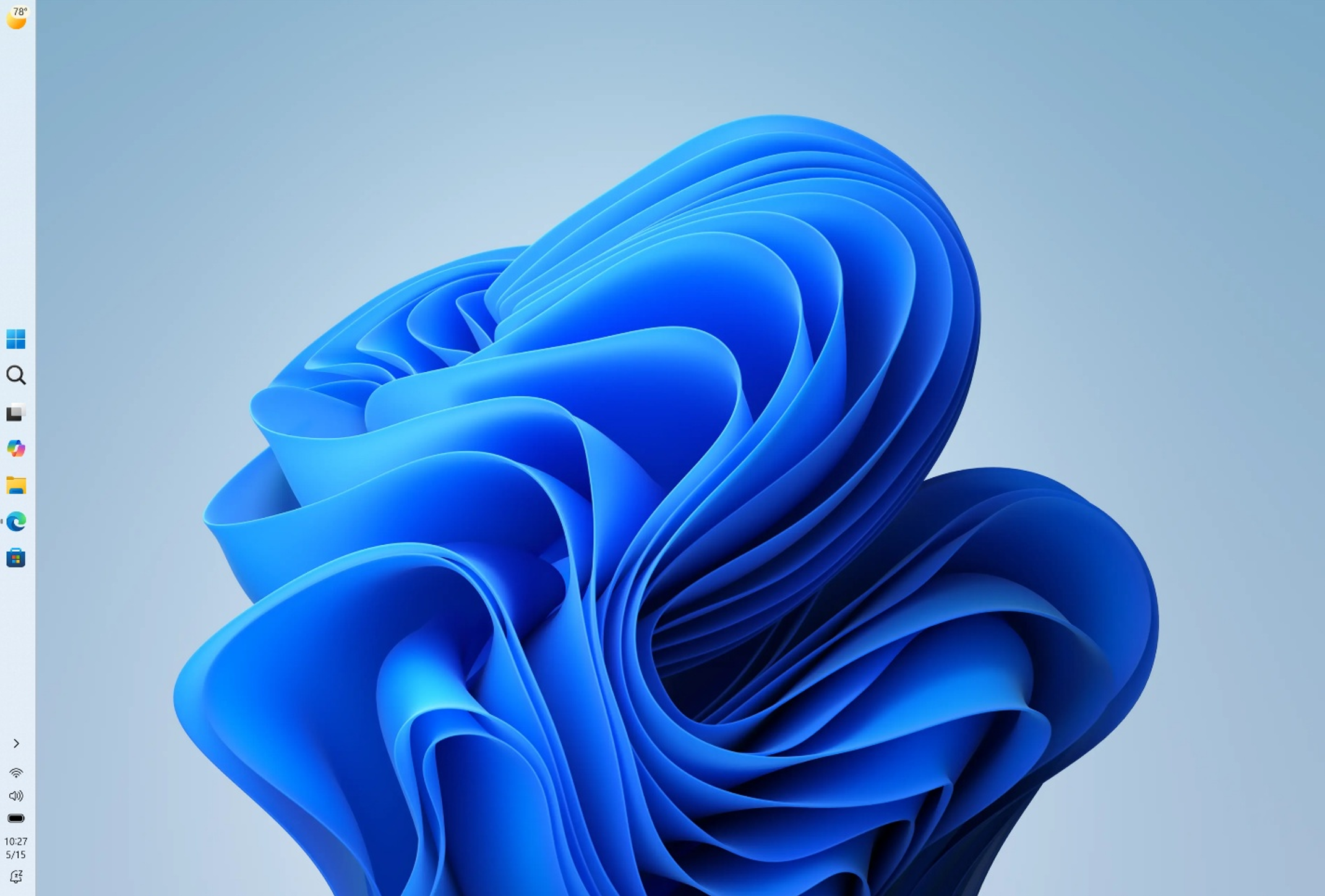
  • You can now change the position of taskbar on your screen. In Settings > Personalization > Taskbar > Taskbar Behaviors, you can select the side of the screen you want your taskbar on: bottom, top, left, or right. In these other positions, tooltips, flyouts, and animations will still come from the taskbar, and most customization settings like never combine taskbar icons will work with all locations.
  • Support for touch gestures, Search box, and Ask Copilot in alternate locations is in progress. Auto-hidden taskbar and touch optimized taskbar are not currently supported. Smaller taskbar is currently supported only for top and bottom positions.
[caption id="attachment_178963" align="aligncenter" width="1024"]Screenshot of the taskbar in the left-aligned position. Screenshot of the taskbar in the left-aligned position.[/caption] Smaller Taskbar
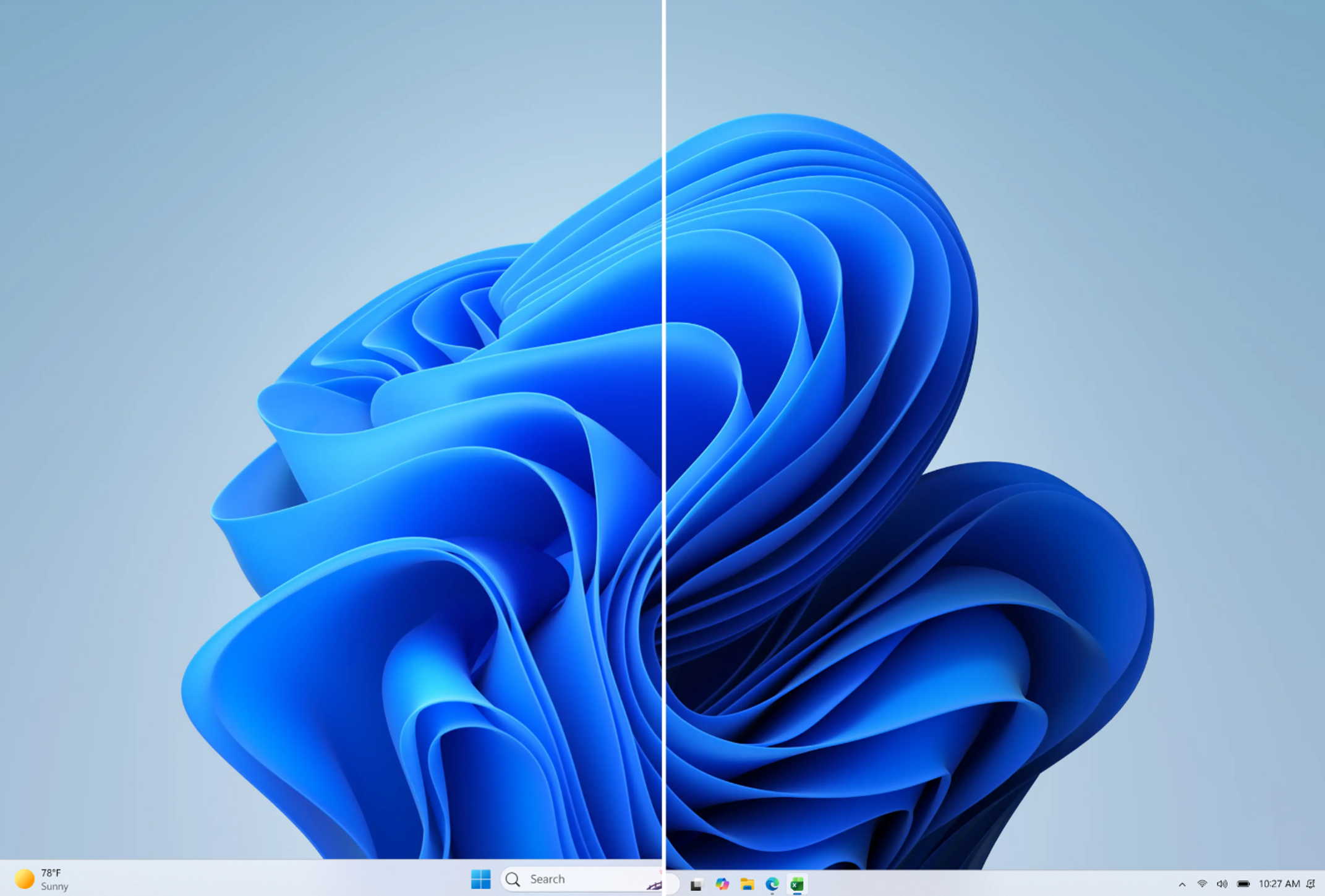
  • We’re introducing a smaller taskbar for users who want to maximize screen space, especially on smaller devices. While the default taskbar remains unchanged, this setting provides a more compact experience with smaller icons and a reduced taskbar height, giving you more room for your apps. Core elements like Start, Search, and the system tray scale appropriately to stay aligned and consistent.
  • To change your taskbar size, go to Settings > Personalization > Taskbar > Taskbar behaviors > Taskbar size. When set to Small, both the icons and the taskbar height become smaller.
[caption id="attachment_178959" align="aligncenter" width="1024"]Side-by-side comparison of the standard and smaller taskbar heights on the same device and resolution, showing the additional screen space gained. Side-by-side comparison of the standard and smaller taskbar heights on the same device and resolution, showing the additional screen space gained.[/caption] Thanks, Stephen and the Windows Insider Program team

Source: Announcing new builds for 31 July 2026
 
Microsoft has released a detailed update on its Windows quality initiative, four months after committing in March to improve performance, reliability, and everyday user experiences across Windows 11.

The company says early improvements are already reaching Windows Insiders and will begin rolling out more broadly to Windows 11 PCs this fall, while stressing that work is far from finished.

In March, Microsoft outlined immediate priorities that included greater taskbar customization, more intentional AI integration, less disruptive Windows Updates, a faster and more dependable File Explorer, stronger control over widgets and feeds, a simpler Windows Insider Program, and a better Feedback Hub.

Windows Quality Initiative

Those goals sat under three core pillars: performance, reliability, and well-crafted experiences. Since then, engineering teams have focused heavily on those areas, with many changes already visible in Insider builds.

Recent previews show a calmer Windows Search experience with clearer results and less promotional web content. At Build 2026 in June, Microsoft highlighted developer-focused gains, including a developer-optimized Windows 11 setup, a public preview of WSL containers, Windows 365 developer configuration, and Microsoft Execution Containers.

The company has also strengthened WinUI 3 and extended it deeper into the Windows shell, including Widgets and the new Run experience, with Autoplay and more File and Folder Properties dialogs planned for Experimental Insider builds. Memory efficiency and latency improvements are meant to modernize both the OS and the broader app ecosystem.

Taskbar and Start personalization arrived in May previews, including the ability to move the taskbar and refine Start layouts. Microsoft also began simplifying AI across inbox apps so features appear only where they add clear value.

File Explorer received foundational architecture work aimed at better launch speed, navigation reliability, and long-standing Home issues such as unstable transitions and blurry thumbnails. Address bar behavior, file size formatting, keyboard navigation, and renaming have also been refined, with more updates expected.

Widgets and feeds were made quieter by default and more user-controlled. On the reliability front, Microsoft launched the Driver Quality Initiative, an ecosystem-wide push to raise driver quality, reliability, and security.

Connectivity gains include better USB4 docking, improved Bluetooth support for devices such as AirPods, and fewer in-network printer discovery failures. Windows Hello face and fingerprint sign-in has also become more consistent, helping users reach the desktop faster.

Pavan Davuluri of Microsoft said that performance work spans the full stack. Application launches and core experiences such as Start, File Explorer, Search, and Snipping Tool are more responsive, with fewer stutters. Boot and logon times have improved, and developers benefit from faster compile times.

Memory efficiency has advanced through a more efficient allocator, leaner WinUI 3 apps, and optimizations in Chromium and WebView2 components used inside the OS.

Update disruption was reduced in April previews with options to skip updates during out-of-box setup and longer pause controls, while the Insider Program was streamlined with fewer channels and more feature control.

Looking ahead to the end of the year, Microsoft will keep shipping these enhancements to general availability and expand into four new focus areas: faster onboarding and setup, memory optimization for PCs with 8GB of RAM and above, easier family setup with stronger parental controls, and more natural voice interaction across everyday apps.

The company says Insider feedback remains the clearest signal to keep going, and it intends to.
 
Last edited by a moderator:
  • Like
Reactions: Khushal
Key takeaway

This appears to describe Microsoft’s Windows quality work as a combination of Insider-build changes and longer-term engineering goals. The important distinction is that many listed improvements are previews or planned features, not necessarily available in the stable Windows 11 release.

Insider features can change, be delayed, or be removed entirely. Performance improvements reported in development builds also cannot be assumed to apply equally to every device, driver configuration, or Windows edition.

Practical considerations

  • Users who depend on system stability should generally avoid Experimental or Dev-channel builds on their primary PCs.
  • Create reliable backups before testing preview releases, especially when testing changes involving boot, storage, drivers, or Windows Update.
  • Driver, Bluetooth, USB4, printer, and Windows Hello improvements may depend on compatible hardware and updated vendor drivers.
  • Longer update pauses and reduced setup interruptions improve control, but delaying security updates for too long increases exposure to known vulnerabilities.
  • Claims about responsiveness, memory use, boot times, and compile performance should be confirmed through Microsoft documentation or repeatable independent testing rather than relying only on the announcement.

The official Microsoft Insider article is the more authoritative source for the scope and availability of these changes. For now, this should be viewed as a progress update rather than confirmation that all listed improvements are already part of the stable Windows 11 experience.
 
Hello Windows Insiders, Today, we’re releasing new Windows 11 Insider Preview builds to the Beta and Experimental Channels. This post also includes reminders about renewed flight certificates and the current Feature Flags settings issue in the Experimental channel. Renewed Windows Insider flight certificates As a reminder, all new builds include renewed Windows Insider flight certificates, replacing certificates that expired on August 11, 2026. Flight certificates are renewed periodically to help ensure Insider devices remain on supported builds and continue receiving future Windows Insider Preview updates. Devices that are not updated to a newer build with a current certificate may encounter compatibility issues with software such as anti-cheat applications. For more information, please visit the certificate renewal FAQ. Experimental Feature Flags We’re investigating an issue that causes the Feature Flags settings page to appear empty for Windows Insiders in the Experimental channel. We expect to resolve it in the next Experimental build and will share updates on the blog. New builds this week We’re releasing new Windows 11 Insider Preview builds today. Select your channel below to view its release notes:
For those on other specific build versions, here are today’s new builds and release notes:

Notable new features:

[File Explorer]

Release channel: Experimental Introducing the new, redesigned Context Menu in File Explorer
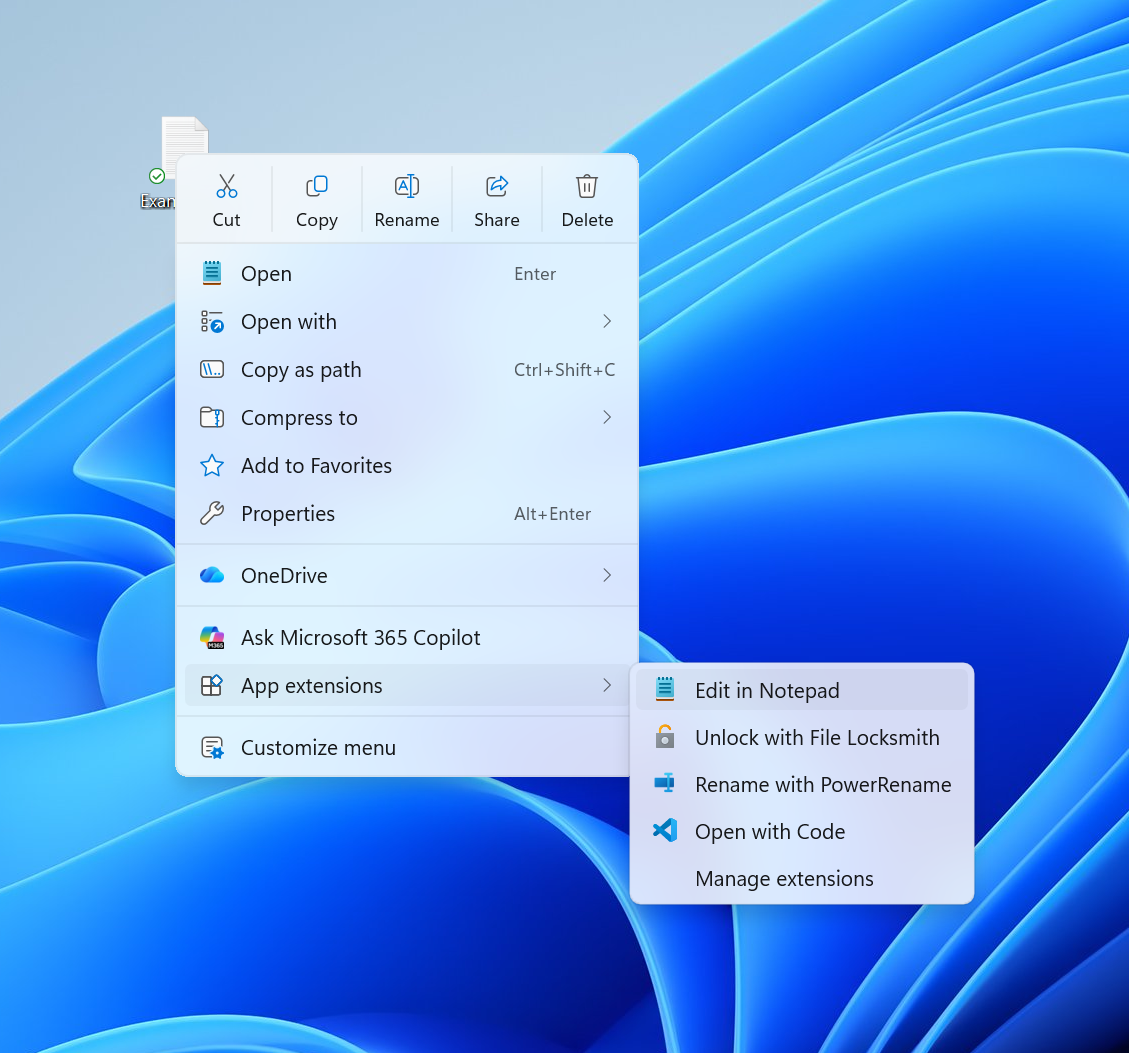
  • We’re beginning to roll out an updated context menu experience in File Explorer, designed to feel faster, cleaner, and easier to tailor to the way you work. The new design reduces top-level clutter, keeps commonly used actions easy to access, and adds a new Settings experience that gives you more control over what appears in the menu. As we continue refining this experience with Insider feedback, our goal is to make right-click feel more responsive, predictable, and personal.
[caption id="attachment_179130" align="aligncenter" width="1024"]The new right-click menu. The new right-click menu.[/caption]

[Emoji]

Release channel: Experimental
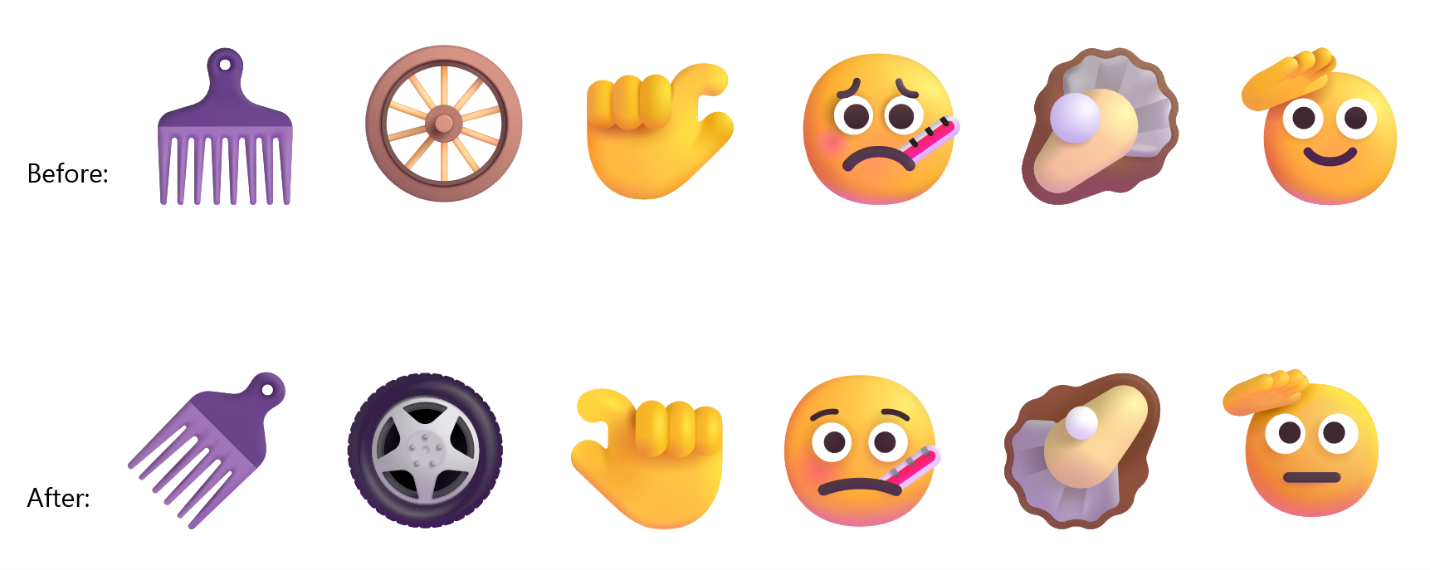
  • We’re adding support for Emoji 17.0. This includes new emoji such as distorted face, fight cloud, and hairy creature. To try out the new emoji, you can press the Windows key plus Period (.) to open the emoji panel and insert them from there.
New Emoji 17.0
  • As part of this effort, we’ve also made some slight adjustments the design of some of our current emoji to improve consistency across platforms. This includes the saluting face, face with peeking eye, goose, lotus, and kissing cat emoji.
Updated emoji Thanks, Stephen and the Windows Insider Program team

Source: Announcing new builds for 17 August 2026
 
Hi Windows Insiders, File Explorer is one of the most used experiences on Windows. It's where you get work done: organizing files, finding what you need, and moving content seamlessly across local storage and the cloud. Earlier this year, we shared our commitment to improving Windows quality, with a focus on performance, reliability, and craftsmanship. In File Explorer, that means investing in the foundational work needed to improve the experience end-to-end: reducing hangs and delays, improving responsiveness and reliability, addressing customer-reported issues, and removing friction from everyday tasks. But quality is also about continually evolving the experience to feel more modern, intuitive, and efficient for the millions of people who rely on File Explorer every day. Today we're sharing progress on both fronts. Alongside continued investments in File Explorer performance and reliability, we are introducing a substantially redesigned context menu experience that's faster, simpler, and more customizable than ever before. This new context menu experience is now rolling to Windows Insiders and represents one of several major improvements underway as we continue to modernize File Explorer.

Fewer bad moments​

What people remember most are the worst moments. A single freeze while renaming a file, a slow right-click, or a Home view that flashes and reloads can outweigh dozens of smooth interactions. That reality has guided our approach to improving File Explorer. We focused on the everyday experiences people rely on most and set clear goals to make those interactions faster, more reliable, and less disruptive. Improving the moments that matter most We've profiled and invested in improving the performance and responsiveness of File Explorer. File Explorer now launches faster, and the overall experience feels more consistent and predictable. We’ve analyzed the issues behind many of the freezes, hangs, and delays users encounter, and eliminated dozens of potential stalls and interruptions in the experience. As a result, you'll see fewer freezes and flashes when browsing, renaming files, navigating, or selecting multiple files. There are many more improvements to come, and these changes are designed to reduce disruptions and make File Explorer feel more responsive and reliable day to day.

Improving the details that matter every day​

Our work extends beyond performance and reliability improvements. Many of the requests we hear from customers aren’t about major new features, they’re about the small interactions that happen every day. We’ve continued refining File Explorer based on that feedback, removing friction and improving the details that help make everyday tasks feel more natural and predictable. For example, file renames no longer get interrupted by background file synchronization, and case-only filename changes now appear immediately. We’ve also improved navigation workflows. The Address Bar now supports a wider range of inputs, including paths with quotation marks and double backslashes. Support for opening folders in a new tab with a middle-click has also been expanded to the Address Bar and Home page folders, making multitasking faster and more intuitive. Smaller usability improvements add up as well. Home now preserves whether sections are expanded or collapsed so you can pick up where you left off. File sizes are now displayed using appropriate units such as KB, MB, and GB, making them easier to understand at a glance. The Details pane has been reorganized so file properties are easier to find and review. Many of these improvements came directly from customer and Windows Insider feedback. They represent just the beginning of our ongoing effort to improve the everyday experiences people depend on most.

Putting you in control of the context menu​

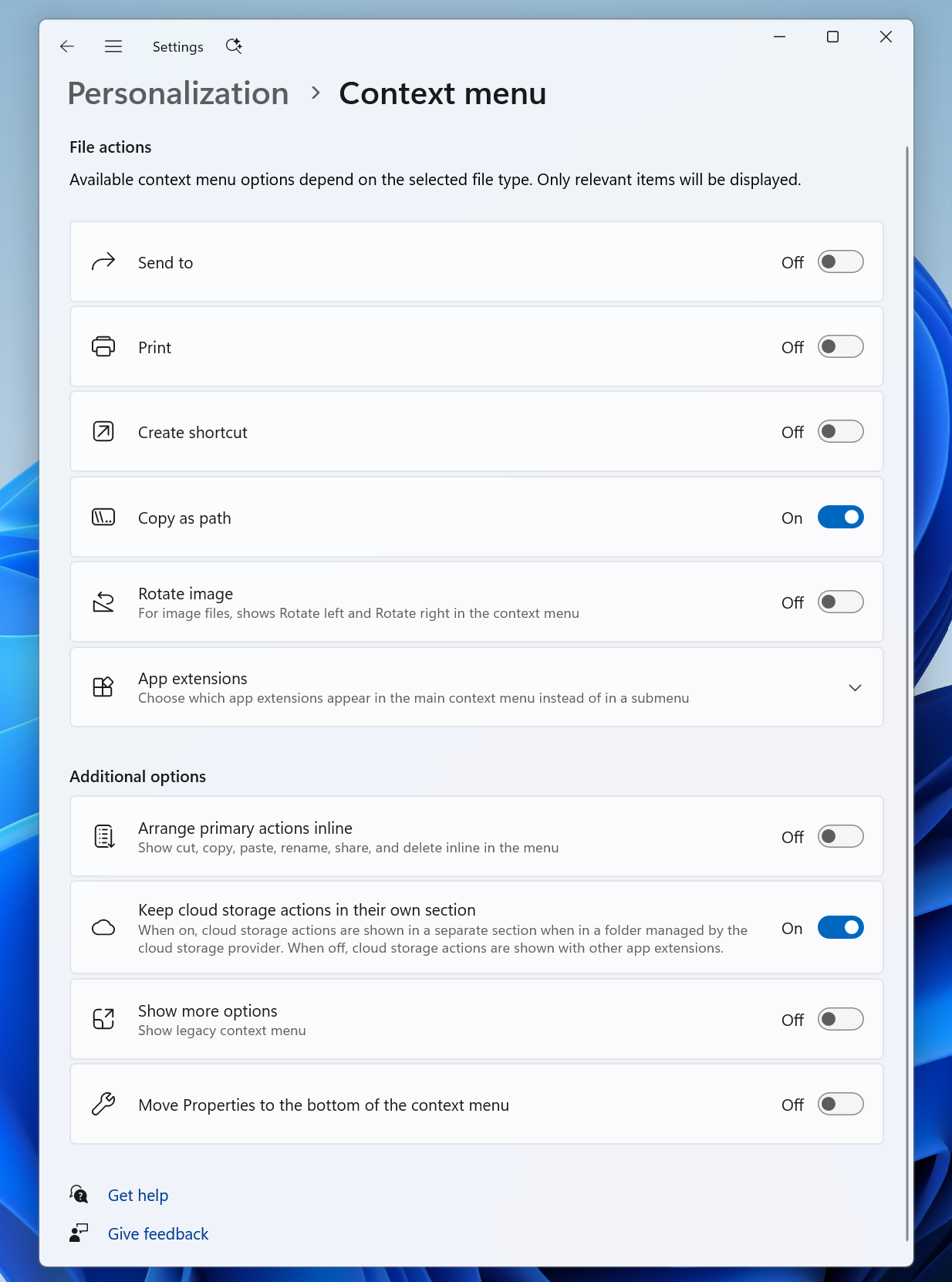
Right-clicking is one of the most common actions in Windows. If it doesn’t work as intended, or is difficult to navigate, it can derail your workflow. When we launched Windows 11, we introduced a new context menu with a modernized design, improved organization, and a new approach to application extensions. Over time, though, the menu became cluttered and sluggish, and we recognized the need to dramatically reduce the time between right-clicking and having a menu that’s fully ready to use. Today, we're excited to announce an updated context menu that delivers a faster, simpler, and more customizable experience. The new design reduces top-level clutter, keeps commonly used actions easy to access, and introduces a new Settings experience that gives you more control over what appears in the menu. [caption id="attachment_179130" align="aligncenter" width="1024"]The new right-click menu. The new right-click menu.[/caption] Faster to open The first thing you'll notice is that the menu opens much more quickly. For something used as often as the context menu, speed is part of good design. A lot of that comes from behind-the-scenes engineering improvements, and a good part comes from a cleaner default menu, with the full set of options just a click away in Settings. Clutter isn't only a visual problem; it slows the menu down because every app that adds its own options can make the menu do extra work each time it opens. Your menu, your control Part of the broader push we’re making across Windows 11 is making the operating system calmer by default, with more personalization and control. Each person uses the context menu in different ways, so we’re adding more customization to allow you to choose the layout that works best for you. At the bottom of the new context menu, you’ll now find “Customize menu”, as a shortcut to its Settings page, where you can shape the menu around your preferences, your habits, or the years of muscle memory you’ve built with a specific configuration. [caption id="attachment_179131" align="aligncenter" width="760"]The new Context Menu page in the Settings app, under Personalization. The new Context Menu page in the Settings app, under Personalization.[/caption] The top section lets you turn built-in Windows commands like Send to or Create shortcut on or off. Some of these commands, like Print, weren't available in the Windows 11 context menu before and can now be switched on if you want them. The next section is about options for app extensibility, so you can choose which app extensions appear in the main menu or submenu, including hiding the submenu altogether. Finally, the last section is about where the most common commands live. We know many people have years of muscle memory from the Windows 10 menu, so we've added options to bring that feel back. You can list the main commands (Cut, Copy, Paste, Rename, Delete, and Share) inline directly in the menu instead of as a row of icons, and you can move Properties down to the very bottom. As we continue refining this experience with Insider feedback, our goal is to make right-click feel more responsive, predictable, and personal.

Building a healthier File Explorer for the long term​

We are committed to continue doing the hard work and consistently improving File Explorer month after month. Not every update will be obvious on its own, but together they should make File Explorer feel faster, polished, and more dependable across tasks users do most. Your feedback continues to shape every step of this journey. Keep it coming through Feedback Hub, and we'll continue sharing our progress as this work evolves. The File Explorer team

Source: Improving File Explorer & Context Menu: faster, simpler, and more customizable
 

You may also like...