
Browsers automatically block exe and a download manager can be setup for additional AV scanning like via virustotal.My personal rules in the adblocks I use block malicious downloads instead.


Open MalwareTips from your Home Screen or desktop. Follow discussions, find answers and pick up where you left off.
If you cannot find an install option, update your browser or use its bookmark option to keep MalwareTips close.
After installation, open the app and sign in. Enable push notifications in Preferences if you want alerts. On iPhone and iPad, push requires a Home Screen web app and iOS or iPadOS 16.4 or later.
Sign in to manage notificationsInstallation is optional. Your notification settings stay under your control.
Browsers automatically block exe and a download manager can be setup for additional AV scanning like via virustotal.My personal rules in the adblocks I use block malicious downloads instead.

Complete protection in comparison with NextDNS; not in comparison with traditional antivirus software. I never said Cloudflare is an antivirus company.Define complete protection.
DNS-level protection is always supplementary, never complete.
In fact, even your “complete” Cloudflare protection does not block this malware:
URLhaus | Checking your browser
Good for you!My personal rules in the adblocks I use block malicious downloads instead.
View attachment 294583
Even your estimated 300,000 rules in uBo will not be able to effectively block all third-party trackers/scripts/iframe without efficient dynamic filtering.
And Cloudflare DNS will not block any first-party scripts/trackers on all web pages (and there are many) that cannot be blocked for compatibility reasons.
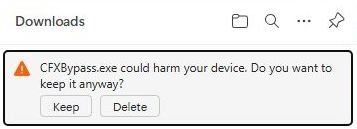
github.com domain just for that one malicious .exe file hosted. In fact, I believe it's Microsoft's job (considering it's their platform) to scan and block malicious files from being uploaded.Exactly! Every unsigned file is treated like malware and being blocked from downloading by default.Browsers automatically block exe and a download manager can be setup for additional AV scanning like via virustotal.
View attachment 294584

Da. Cloudflare allows the use of Zero Trust at home (and even recommends it), but while it's not complicated for me as an advanced user, it is for average users. NextDNS might not provide the same level of protection, but it offers simple to use interface so anyone can use it. The only shame is it's limited to 300.000 queries which isn't a lot these days.Cloudflare Zero Trust is a particular implementation of Zero Trust technology. It is very different and much more advanced/complex/granular than NextDNS and other similar solutions.
The question is whether such a solution can be useful at home. I would not recommend it for most users due to its complexity. However, some advanced users can use it to protect home computers.

Safe hex?' Cute. I haven't heard that one since the dial-up days.Thanks for the adviceChecking the ego at login is probably a good safe hex practice.
How often should we do this? What is your experience with it?
You call it 'granular'; I call it 'administrative debt.' For a residential threat model, that level of complexity is mostly performance theater. NextDNS secures the perimeter with the same effective kill-chain disruption but without the unnecessary friction.Cloudflare Zero Trust is a particular implementation of Zero Trust technology. It is very different and much more advanced/complex/granular than NextDNS and other similar solutions.
The question is whether such a solution can be useful at home. I would not recommend it for most users due to its complexity. However, some advanced users can use it to protect home computers.
A true 'advanced' architect understands that the best security stack is the one that works silently and reliably, not the one that requires constant policy tuning.
Since we’re measuring 'advanced' by how much administrative overhead we can introduce to a residential line, why stop at Cloudflare Zero Trust?Why do you think that it is impossible with Cloudflare Zero Trust with proper settings?
As you were already informed by some MT members in this thread, they use it silently and reliably.
However, it is true that initially it requires more learning and tweaking.
Since we’re measuring 'advanced' by how much administrative overhead we can introduce to a residential line, why stop at Cloudflare Zero Trust?

Is not that what you do in the weekends on a Chromebook according to this (informative and very educationalYou guys might as well throw a dedicated Suricata IDS/IPS node in the rack. Go ahead, mirror the port, write your own custom Snort signatures, and spend your weekends analyzing PCAPs for false positives.
) threadLet’s try reading the headers again.Is not that what you do in the weekends on a Chromebook according to this (informative and very educational
Serious Discussion - Suricata for Beginners: Your First Step into Network Threat Detection (Linux, Windows, macOS)!
So why did you mention it in this thread?Divergent said:If you can't distinguish between a training exercise (Suricata) and a practical home configuration (NextDNS), you aren't pointing out a contradiction, you're just exposing your own inability to understand scope.
What is the relevance for using Cloudflare Zero trust?Divergent said:You guys might as well throw a dedicated Suricata IDS/IPS node in the rack. Go ahead, mirror the port, write your own custom Snort signatures, and spend your weekends analyzing PCAPs for false positives.
So the Suricata setup in a Linux VM on a Chromebook is a absurdism not for home use? Why did you label it a beginners guide?@LinuxFan58 A Do you require a firmware update for your humor module, or are you willfully misparsing the input?
I mentioned Suricata as sarcasm, a rhetorical device used to highlight the absurdity of recommending enterprise-grade complexity for a Home Users thread. If you can't distinguish between a satirical comparison and a literal deployment order, it explains why you confuse "following a guide" with "engineering."
Members who viewed this thread in the last 5 minutes

