Executive Summary
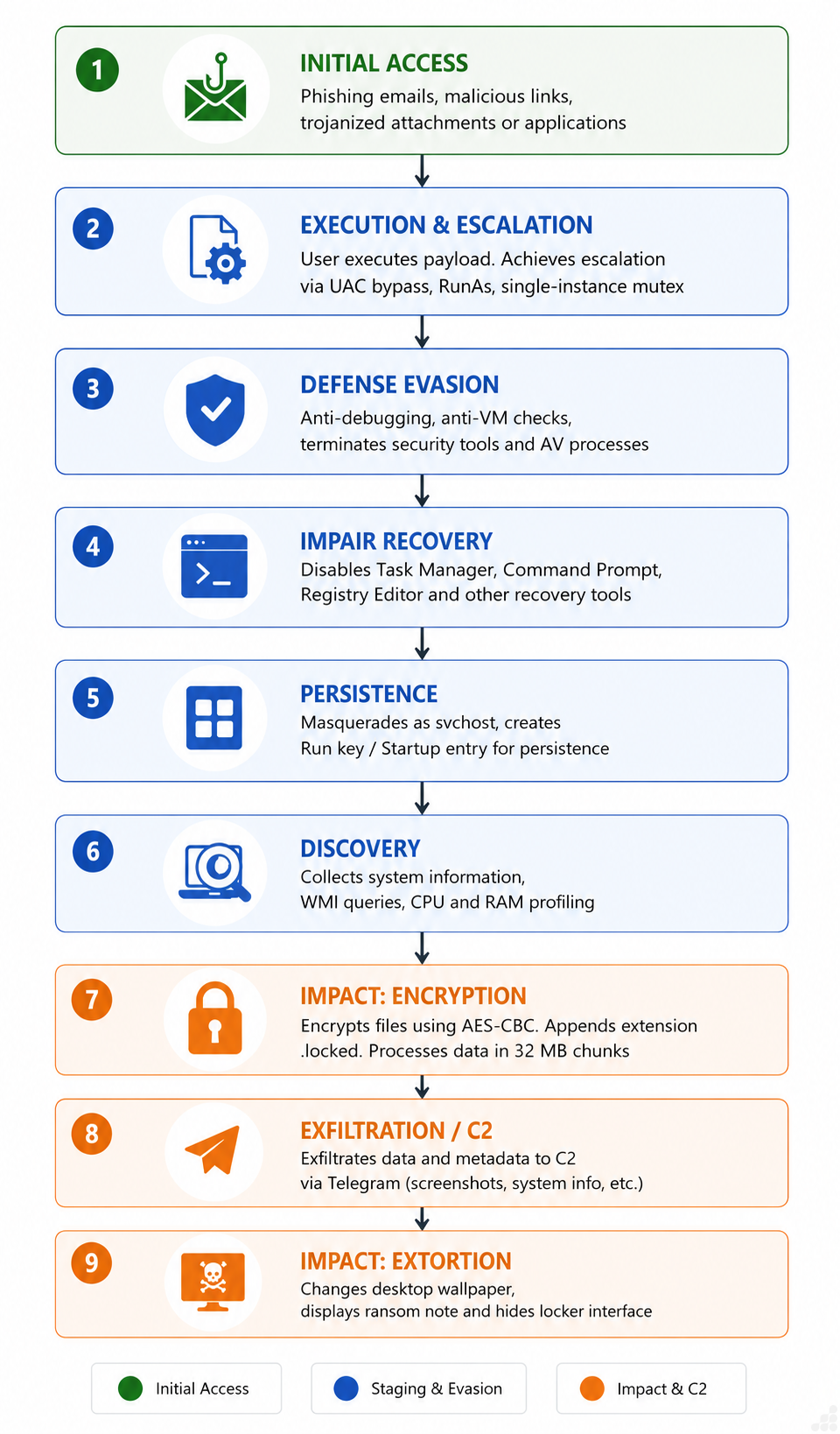
Point Wild Threat Intelligence analyzes a .NET-based locker sample that combines file extortion with aggressive system lockdown and Telegram-based command-and-control. The malware is distributed through common initial access vectors, such as phishing attachments, malicious links, and messaging or social-media lures, and on execution attempts to relaunch itself with administrator privileges via a UAC prompt, enforcing single-instance execution through a hardcoded mutex.
The malware’s use of the Telegram Bot API for exfiltration and victim tracking is the most operationally significant trait.

www.pointwild.com
The PlikanLocker routine derives a key, enumerates targeted user data file types across common directories in parallel, and locks each file with AES-CBC, appending a .locked extension and a 20-byte header (ASCII LOCK marker plus a random 16-byte IV) while processing files in 32 MB chunks. Post-locking, the malware profiles the host via WMI, captures a desktop screenshot, and exfiltrates victim metadata and locking statistics to send the attacker’s Telegram bot. It concludes by hiding the desktop, taskbar, and Start button and displaying a fullscreen locker note rendered in a retro IBM BIOS-style font, blocking user interaction and instructing the victim to contact the attacker. Instead of locking the original file in place, the malware creates a new .locked file, leaving the original file intact.