


A relative has heard about a short-term loan that would help build a second home on somebody’s property. They can even give you the address.
The idea is easy to picture. The harder part is finding out what the project, and the promise to repay you, have behind them.
Overview
A real building type made the proposed investment easy to picture
An accessory dwelling unit, or ADU, is a separate home on a property with another home. The concept was real; the projects used to attract this money were not.
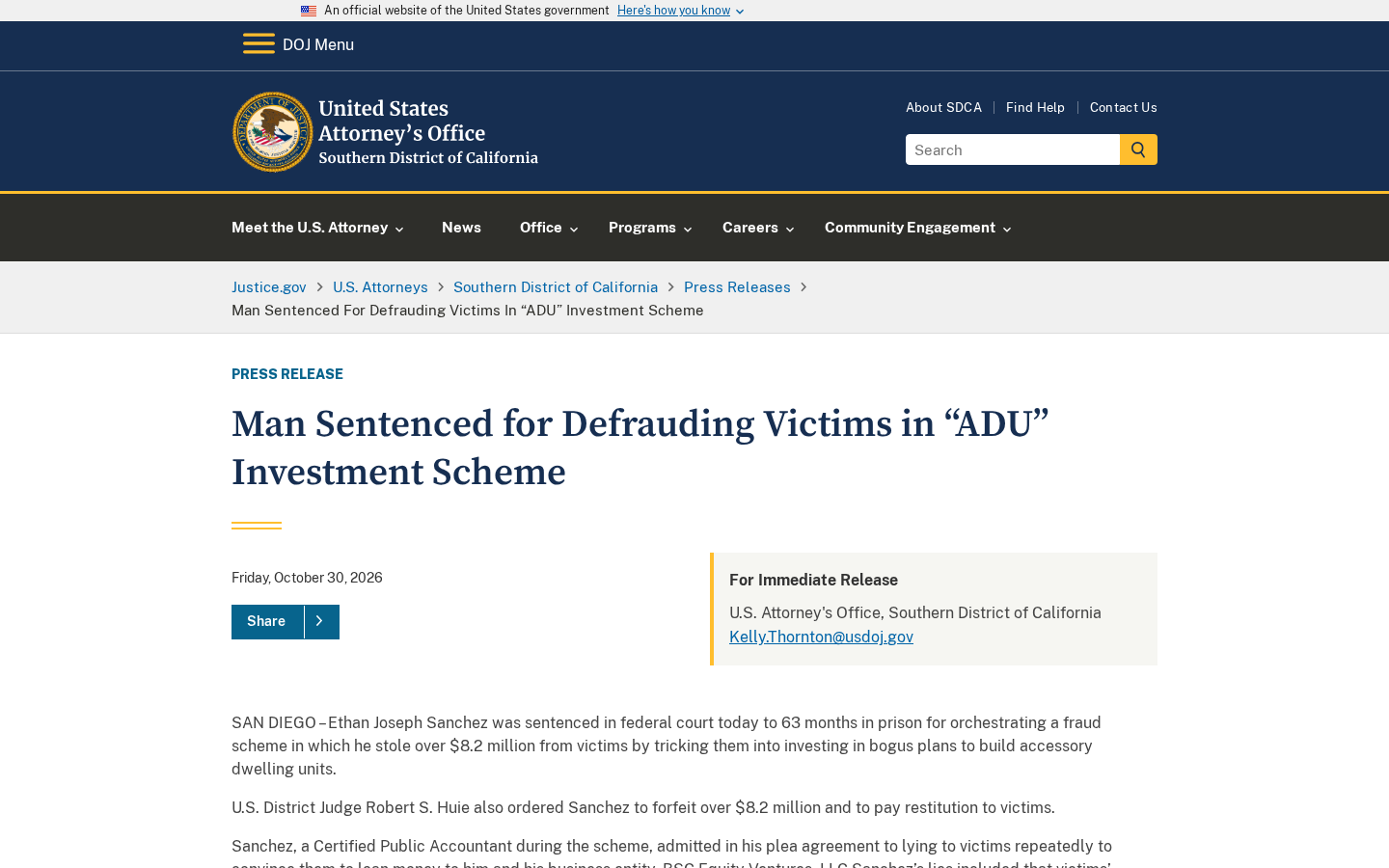
The U.S. Attorney’s Office in San Diego says Ethan Joseph Sanchez persuaded victims to lend to him and BSC Equity Ventures, LLC by promising real estate projects.
These included ADUs on specified properties. In his plea agreement, Sanchez admitted that he lied about what the loans would fund and promised to return principal and interest promptly.
The DOJ says he funded no real estate transactions and built no ADUs. He rarely returned money and instead lost it through risky day trading.
The address, the borrower and the repayment promise were separate claims
Think about the three questions an investor needs answered. Is there a project, is this borrower connected to it, and what would repay the loan?
An address only speaks to the first question, and even then it may tell you nothing more than that the land exists. It tells you nothing about the borrower’s rights.
- A permit can show a proposed building without making your loan part of its financing.
- A signed note is a promise to repay, not proof that cash has been set aside.
- A claim of collateral needs documentation and independent review, not just an address in a pitch.
- A personal referral can explain how you heard about a deal without verifying where the money goes.
The federal sentence did not put money back in anyone’s account by itself
On October 30, 2026, a federal judge sentenced Sanchez to 63 months in prison. The judge also ordered more than $8.2 million in forfeiture and restitution to victims.
The amount ordered forfeited is not a second loss you should add to the reported theft. Forfeiture and victim restitution are different parts of the case.
A judge’s order also does not promise a first check next week. Existing investors should use the official case and victim assistance channels rather than a private recovery solicitor.
How the ADU Investment Scam Works
Step 1: A familiar building project makes a short loan sound practical
People can imagine an unused part of a property becoming a small rental. That picture makes a funding request easier to understand than an abstract pitch about investment performance.
Prosecutors said that Sanchez described real estate transactions, including ADUs at specific properties. Investors were told the money would support these transactions rather than the trading that followed.
A proposed use that sounds plausible can still be wrong. Ask what rights the borrower has at the address and how the money will be spent there.
Look up the property yourself rather than relying on a marketing packet. Ask an independent adviser to review any ownership or financing document that you may need to rely on.
Step 2: The borrower makes repayment sound quick and routine
A borrower can write that principal and interest will be repaid within a certain time. That tells you the due date being proposed, not what resources will be available.
Ask what is supposed to happen first. A sale, new financing and rents each depend on different events, and each has a different risk of being delayed.
The federal release says Sanchez promised to return principal and interest promptly. It does not turn an alleged borrower’s paperwork into independently verified collateral or reliable payoff dates.
If you cannot name a realistic repayment source before lending, do not assume you will be able to work one out after a payment is late.
Step 3: A trusted introduction stands in for scrutiny of the deal
Sanchez was a certified public accountant during the scheme. That professional role did not verify the properties, the use of the funds or his ability to repay.
The sentencing judge also noted that investors were used to bring in other investors, sometimes family members. A relative might sincerely share an opportunity without knowing what the borrower did.
Do not blame the friend who introduced you. Ask for your own supporting documents and do not take the promise as confirmed just because someone you love trusts it.
When sharing a concern, show the documents and discrepancies instead of treating every person who passed along a pitch as part of the fraud.
Step 4: The money ends up somewhere other than the project
The decisive contrast in this case was between a building proposal and the money’s actual destination. The DOJ says Sanchez instead lost funds on risky day trades.
There is a difference between a real project that costs more than expected and money never going into the promised project. Ask for records that can distinguish them.
Construction photos and building sketches do not show what your money did. If you are told your funds bought a particular service or material, ask for independent confirmation.
A borrower might offer to fix a missed payment if you extend the loan. Before agreeing, find out whether the project and payoff source you originally relied on were real.
Checks to Make Before Funding a Backyard Building Project
Verify the street address and the project status separately
Use the local property assessor or recorder to identify the parcel and legal owner. A mailing address is a useful start, but the parcel number helps avoid confusing neighboring lots.
Then contact the building department for the jurisdiction that issues permits at the site. Ask how to search its official records by parcel, address or permit number.
The California housing department provides statewide ADU guidance. The local permitting office, not the statewide guidance, can confirm the status of a particular project.
If the proposal calls a permit approved, ask to see that status in the relevant office’s records. A real application that is still pending does not equal permission to proceed.
Work out what the collateral paperwork actually proves
If the offer calls the loan secured, ask what assets secure it, who owns those assets and whether your interest would be recorded. Do this before agreeing to transfer funds.
Have an attorney or independent title professional explain who else has a claim on the property. An earlier lender’s priority can matter even if the lot is worth something.
A parcel may support a particular project without being the borrower’s to pledge. Be cautious if the person seeking money cannot show any legal authority to offer it as security.
If no security is documented, evaluate the arrangement as an unsecured promise rather than assuming the property stands behind it. Do not rely on terms conveyed only in conversation.
Keep the professional relationship separate from the investment
Check any professional credentials through the appropriate licensing authority. If someone claims to sell an investment, the SEC’s promissory note guidance explains why registration and seller checks matter.
Verifying a license tells you something about the role the license covers. It does not guarantee the truth of a specific use-of-funds statement.
Ask whether the borrower is an individual or a business, which party signs the documents and into whose account an investment is expected to go.
If the names do not match, ask an independent professional what that would mean for enforcement and ownership. An explanation from the salesperson alone cannot resolve it.
Ask who controls project money after you send it
An agreement can say money is for construction without explaining who has authority to spend it. Ask how disbursements are approved and documented before putting money in.
If the borrower names an escrow or title company, contact that company directly. Use a number you found independently, not the one in the pitch.
Ask whether the office recognizes the transaction and what it would actually hold or distribute. The existence of an escrow company does not prove it is participating.
If you are considering a loan negotiated through an attorney, ask who that attorney represents. The borrower’s attorney may not be looking after your particular financial position.
Keep the forecast and proof of actual spending separate. A kitchen budget, rent estimate or architectural plan describes a proposal, not a payment or completed job.
If a progress statement supports a request for more money, ask who confirmed the milestone. Check the date and project rather than accepting a generic completion photo.
What an ADU Loan Can Leave You With
Owning a share of a project and making a loan to its owner are different arrangements. Read the actual agreement rather than relying on how people say you invested.
A lender may be owed repayment without owning any part of the building or future rents. If you expected ownership, ask where the agreement grants it.
Ask for a realistic answer about a delay before agreeing to a short term. If the work is not done by the due date, who must pay then?
Do not accept an example return as a replacement for written terms. Compare the actual dates, amount advanced, repayment schedule and any fees before it is too late to decline.
Watch for paperwork that changes the entity after an introduction. Signing with a different entity can change who owes money and what assets you might look to later.
What to Do if You Have Fallen Victim to This Scam
-
Do not send more money or accept revised repayment terms on the spot.
Stop any proposed extension or fresh transfer until an independent professional reviews it. Do not pay a processing charge to speed up repayment or release proceeds.
Write down the exact use that was promised, the amount you sent and the date repayment was due. Save any explanation of a change in plans.
-
Ask the institution that sent the money what it can still stop.
Call the bank or payment provider at its verified number. Give the transaction reference, beneficiary, payment date and amount, and explain the difference between the promise and what happened.
Ask whether a pending transfer can be canceled or an outgoing wire recalled. A request starts a process; it does not guarantee that funds will come back.
-
Preserve the investment documents without altering the originals.
Save the original note, messages, payment confirmations, proposed property address and any funding or repayment schedules. Add the original referral if it helps explain what was promised.
Record payments back to you as well as payments out. Showing both gives investigators a better picture than reporting the gross amount as though nothing came back.
If a project document references an existing permit, save the reference number and ask the issuing agency for its status. Do not treat a lender’s screenshot as independent verification.
-
Have an independent lawyer review rights you may need to preserve.
Share your note, any security documents, and correspondence showing what the borrower agreed to do. Ask which party owes the money and whether any deadlines apply.
Do not sign a backdated receipt, waiver, release or revised account of why you paid. Such a document can complicate an otherwise accurate record of the transaction.
-
Use the official reporting and case contacts.
If the transaction involved online communications or payments, file a complaint at IC3. Include records that show the promised property and the actual recipient of your funds.
If you believe you are a victim in the Sanchez case, use the prosecuting office’s official site to reach victim assistance. Reference case 25-cr-04062 and your own transfer dates.
Save any confirmation number and send no sensitive documents to an unsolicited recovery caller. Ask an official contact how documents should be provided securely.
Frequently Asked Questions
Are all investments that finance ADUs fraudulent?
No, an ADU may be a legitimate project. A verifiable site, borrower, use of funds and repayment source are still needed to evaluate the terms of any specific loan.
What if the property and its owner are both real?
That can validate an address and owner without validating the offer. Check whether the owner actually authorized the arrangement and whether the borrower has the rights it claims.
Does a promissory note mean I have a lien on the property?
A note is a promise to repay. Do not assume it gives you a lien unless separate documents and independent title or legal review verify that claimed security.
Is a payment to me evidence the project made money?
It proves that money reached you, not how it was earned. Ask for verified records linking payments to the work and revenue the borrower promised.
Did the court order establish the date victims would receive money?
The DOJ announced forfeiture and restitution orders, not a universal payment date. Use official case contacts to check developments, and avoid anyone charging to accelerate payment.
Should I warn a relative who introduced me to the investment?
Yes, tell them what you can verify about the borrower or your own payments. Ask them not to refer anyone else until the issue has been independently resolved.
The Bottom Line
Do not lend against an ADU proposal you cannot verify beyond a real address and a repayment promise. Confirm the borrower’s authority, what the money funds and how it returns.
If you already transferred money, contact the bank, save records and check your rights with independent counsel. Use official contacts for any restitution or case update.

Reviews & discussion
0 commentsShare a firsthand experience, or ask a question.
Community reviews
ADU
Moderated reader experiences, not an editorial verdict.
Start the conversation
Have a question or something useful to share? Add the first comment.