


Someone close to you asks for help with a deal and sends a contract that seems to answer every question. Even the company name looks familiar.
Before signing anything or wiring money, consider who gave you the document and who can tell you, independently, that it is real.
Overview
An apparent relationship became a reason to finance a business deal
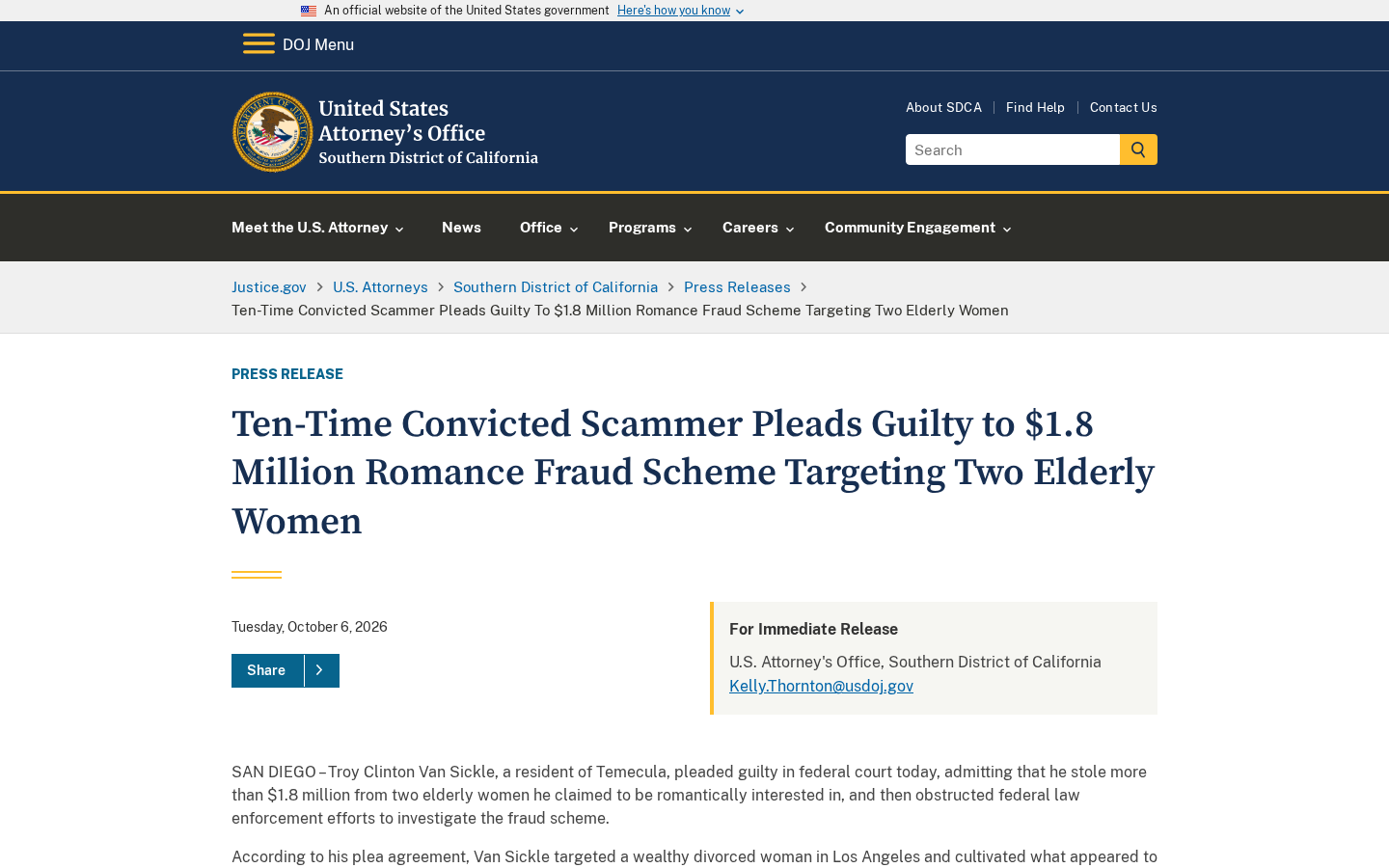
The U.S. Attorney’s Office in San Diego says Troy Clinton Van Sickle admitted stealing more than $1.8 million from two older women he claimed to be romantically interested in.
The October 6, 2026 guilty plea announcement describes more than 30 transfers between 2022 and 2024. The first transfer described in detail was not the whole loss.
Van Sickle used the name of a famous company to make a business pitch seem credible. The plea described a false contract, not a failed investment.
This was not simply an unknown profile asking for a quick transfer. Documents and people the victim already trusted could become part of how a request seemed reasonable.
A contract using Lotus Cars’ name was not a contract with Lotus Cars
Prosecutors said Van Sickle created a fake miniature replica car company and provided a counterfeit contract purporting to show a deal with Lotus Cars. The relationship victim wired $150,000.
She had sent the contract to her financial adviser, according to the DOJ. That does not establish what the adviser told her or that the deal had been verified.
Van Sickle used the money to make a payment on a Ferrari he had already bought, according to the plea description. There was no Lotus contract for her to finance.
- A real brand can appear as the supposed counterparty on a fake contract.
- Passing the document to a trusted person does not itself validate the signatures.
- A wire receipt identifies where funds were sent, not how they will be used.
- A later document can misrepresent the original purpose of the payment.
The attempt to change the record came after investigators made contact
Prosecutors say that, after the FBI contacted one woman, Van Sickle pressured her to delete messages and sign papers falsely documenting the payment as a long-term loan.
Those documents also gave the false impression that a $140,000 payment had been made to her. It was not money to add back to her actual bank history.
DOJ reported no repayment as of its announcement. It gave a future scheduled sentencing date, not a completed sentence for that case.
If someone asks you to replace an account of what happened, save the original version first. A new signature can change how an earlier transaction appears on paper.
How the Romance Investment Scam Works
Step 1: Money is presented as help for someone you care about
A business request from a stranger would normally face questions about the company, the contract and the investment. An apparent partner may already seem worth taking at their word.
According to the plea, Van Sickle portrayed himself as a successful businessman, then said financial trouble stood in the way of pursuing deals or investment opportunities.
Keep the questions attached to the money, not to whether you are a supportive partner. A genuine relationship does not eliminate the need to know who receives a wire.
If someone makes a business loan feel like a test of trust, tell a person outside the relationship what they are asking you to risk.
Step 2: A recognizable company makes the story feel independently checked
The Lotus Cars name did important work in this case. A real company’s reputation is easy to carry over to a document it had nothing to do with.
A document can identify a plausible product and still lie about who commissioned it. Verification means learning whether the purported counterparty actually knows the deal.
Do not call the number provided by the person requesting funds to verify their own account. Use a public company contact you find without their help.
A company may not disclose private deals to someone outside them. Treat an inability to check the contract as unresolved; it is not a reason to pay first.
Step 3: The wire funds an expense the victim was never told about
The purpose given to the woman and the use described in the plea were entirely different. She thought her money would fund the supposed contract.
When a personal relationship and a commercial request overlap, identify who owns the receiving account, who would owe you money and what is being paid for.
Read the agreement to see whether you are being offered repayment, equity or simply a future share of supposed profits. Those promises do not give you equivalent rights.
A payment confirmation will not tell you whether a specific supplier, company or project got the money. An account name is a clue, not a completed verification.
Step 4: A second request tries to change what happened the first time
When law enforcement comes into the picture, someone may suggest that a revised note will help you both. In this case, the later notes were part of the deception.
If a paper describes a repayment you cannot find in your records, preserve the draft and do not sign it. Show the investigator or attorney the original transaction instead.
Pressure to delete embarrassing exchanges can remove the record of what you believed when you paid. Save the surrounding conversation, not only the last request for money.
Do not let a person named in the report handle communications with investigators for you. Confirm the investigating agency through contact details you obtain yourself.
What to Check Before Paying Someone You Already Know
Confirm the counterparty, the document and the purpose separately
Write down the exact legal names in the agreement and who is supposed to have signed. Compare them with names on the proposed payment and written funding instructions.
If it involves a known company, find its official corporate contact and ask where to verify an alleged vendor agreement. Do not use the telephone number inside the contract.
If the company cannot discuss it with you, ask for consent to have your independent adviser or lawyer verify it. Do not let the lack of confirmation become acceptance.
Even a genuine document may put you under a different obligation than you expect. Have your own adviser explain whether you would actually have an enforceable right to repayment.
Keep separate records of promises, actual transfer and any genuine repayment
A promised payment, a message stating that payment has been made, and a deposit in your account are not the same thing. Keep those three events as separate entries.
Download your transaction details from your own bank and compare the dates with the claimed details. If you cannot find a payment, ask the bank before signing any acknowledgment.
Do not rely on a screenshot from the person who says they paid. The account they show could be unrelated, and a confirmation image can be false.
If there was money back, document the amount actually posted and the date it arrived. That gives your provider a more accurate picture of what remains in dispute.
Tell a trusted person before the next deadline expires
It may feel awkward to share an investment discussion that started between two people. You do not have to explain your whole relationship to ask someone to verify a transaction.
Send the trusted person a copy with private identifiers covered. Ask them to help check the contract’s claimed counterparty rather than to decide whether they like the person asking.
Give your helper permission to challenge the timing. If the offer cannot survive a short independent check, do not make the decision while you are being urged to hurry.
If you already brought a friend into a similar offer, tell them why you paused. Share what you can substantiate rather than passing along an unverified claim as a fact.
How Families Can Intervene Without Taking Over
Start by asking to see the document that triggered the payment. A conversation about the contract can be easier than a confrontation about whether the relationship is real.
Let the person explain the reason for the payment in their own words. That can uncover whether they understood the request as a gift, a loan or an investment.
Offer a concrete task such as finding the bank’s genuine phone number or writing a timeline together. Leave decisions about the account with the authorized person unless you have authority.
If your relative has a trusted financial adviser, ask whether they are willing to bring them into the discussion. Do not assume the adviser already saw the complete picture.
Ask the adviser which facts were independently verified, rather than assuming that forwarding an attachment meant the adviser approved it. Keep the answer separate from the seller’s representation.
If the person avoids telling you everything at once, you can still help them stop the next payment. They can fill in other details when they feel ready.
Where a family member received a request to conceal an earlier transfer, save that request too. Helping them keep the original record can be more valuable than arguing about intent.
When a bank or investigator needs evidence, ask how to provide it securely. Do not email financial records to a person who first contacted the family out of the blue.
If you are not an account holder, the bank may not discuss details with you. Offer to sit with the account holder while they make the call themselves.
What to Do if You Have Fallen Victim to This Scam
-
Stop any scheduled payment and decline new paperwork.
Do not send a second wire to unlock the supposed agreement. Do not sign a new promissory note, repayment certificate or statement about a payment you did not receive.
If you have a signed document already, preserve it exactly as it was. Ask your own lawyer how to deal with it rather than trying to correct it privately.
-
Call the bank that actually sent your transfer.
Use its established fraud contact, and state that you sent the wire after relying on a business claim you now believe was false. Give the bank the amount and date.
Ask it to stop a pending payment or request a recall if the payment has left. Keep the provider’s reference and any written response; recovery is not guaranteed.
If someone also has access to your account or login, tell the bank that separately. A payment you authorized and unauthorized account access require different investigations.
-
Keep the complete record of what was promised.
Save the contract you originally received, chats around the request, and proof of actual transfers. Preserve the later loan or repayment documents separately rather than overwriting the earlier ones.
Record who suggested any changes and what they said about speaking to investigators. If you cannot retrieve a deleted message, note what you know and avoid guessing at wording.
-
Reach investigators independently when there is a possible connection.
For an online fraud report, use the FBI’s Internet Crime Complaint Center. Give the transfer references and how the supposed deal was presented.
If a caller says they are already investigating, use the agency’s published contact information to confirm their identity. Do not rely on a transferred call or number they supplied.
If you think your loss belongs to the documented case, contact victim assistance through the prosecuting office. Give case number 26-cr-1774-RBM and the dates you can support.
-
Protect yourself from renewed requests and private recovery offers.
Tell a person you trust what happened so they can help you screen follow-ups. Decide who can see bank information or advocate on your behalf through verified channels.
Do not pay a third party to get evidence deleted or to obtain guaranteed reimbursement. A legitimate investigation or claim does not depend on paying an unsolicited intermediary.
Frequently Asked Questions
Does a real brand named in a contract make the offer genuine?
No, the brand may have had no connection to it. The Lotus Cars contract described in the Van Sickle case was false despite using a real company name.
Is this the same as a dating profile stealing someone’s photos?
The case was about an apparent relationship and a false financing story. The DOJ announcement does not identify a copied dating profile as the way he contacted the women.
Can an adviser confirm a document just by receiving it?
No, forwarding it can help get advice, but it is not confirmation. The actual company or independently verified records must support the promise you are relying on.
Should I sign a new note if it promises to repay me later?
Do not sign under pressure, especially if it changes why you paid or records money you did not receive. Have your own lawyer review what it would do.
Did the women make one combined payment?
No, the DOJ described more than 30 transfers between 2022 and 2024. It identified a $150,000 wire tied to the false contract within the larger loss.
Can I still report a wire even if I sent it on purpose?
Yes, explain exactly what you authorized and what false claim induced it. Give the bank the transaction reference and ask what can still be reviewed.
The Bottom Line
Do not finance a partner’s business deal on the strength of a brand name and a document they control. Verify the transaction through people who are independent of it.
If you already paid, call the bank and preserve the original messages and agreement. Do not let anyone write a different history of the payment for you.

Reviews & discussion
0 commentsShare a firsthand experience, or ask a question.
Community reviews
Romance
Moderated reader experiences, not an editorial verdict.
Start the conversation
Have a question or something useful to share? Add the first comment.