

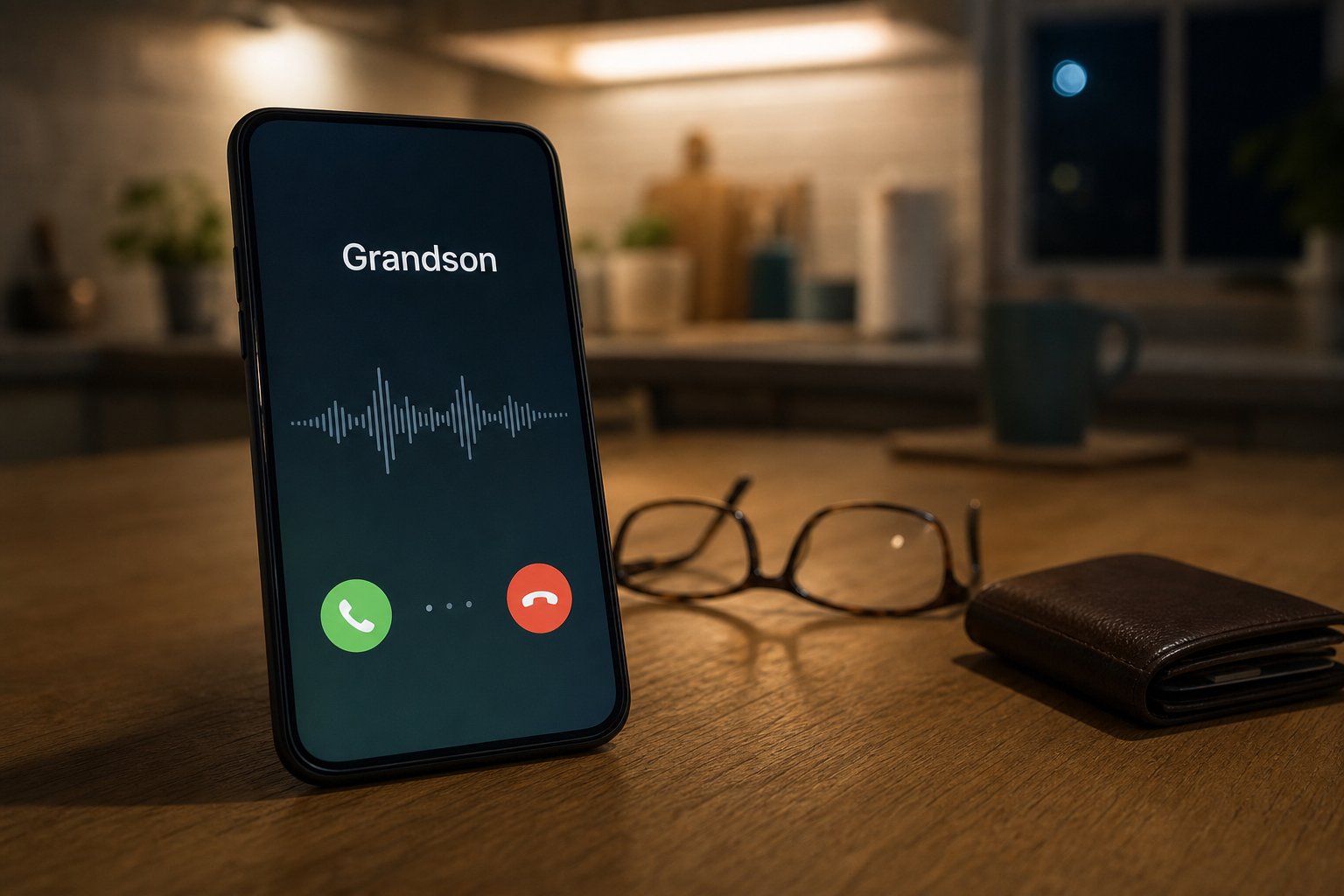
The voice on the phone sounds exactly like your child, grandchild, partner, or parent. They are crying, speaking quickly, and begging you not to tell anyone. A car crash, arrest, hospital bill, or kidnapping has left them desperate for money.
The emotion may sound real because the voice may be real enough to fool you. AI voice cloning lets a criminal turn a short public audio clip into a convincing family emergency that never happened.

Overview
A familiar voice is no longer proof of identity
In an AI voice cloning family emergency scam, a criminal impersonates someone close to the victim and invents an urgent crisis. The call may sound like a traditional grandparent scam, but synthetic speech makes the performance much harder to dismiss.
The clone does not need to hold a long, natural conversation. A few panicked sentences, sobbing, background noise, and a quick handoff to a fake lawyer or police officer can be enough to create belief.
The criminal builds the story before dialing
The setup can begin with social media research, a compromised account, a voicemail greeting, or a short video containing the loved one’s voice. Public posts may also reveal relationships, nicknames, travel plans, workplaces, schools, and the relatives most likely to respond.
AI is only one part of the operation. Caller ID spoofing, stolen account access, scripted pressure, payment mules, and fake authority figures give the cloned voice a larger and more convincing stage.
The goal is a fast payment that is difficult to reverse
The caller demands secrecy and immediate action. Gift card codes, cryptocurrency, wire transfers, cash couriers, and payment apps are common because money can move before the victim checks whether the loved one is actually safe.
The Federal Trade Commission warns that family emergency scammers create urgency, isolate the target, and may use a cloned loved one’s voice. The safest response is to stop and verify through a separate channel.
- The call or voice message arrives unexpectedly.
- The voice sounds like a loved one who is crying, injured, frightened, or rushed.
- The story involves arrest, an accident, medical care, kidnapping, or another crisis.
- A second caller poses as a lawyer, doctor, police officer, or court employee.
- The victim is told to keep the situation secret.
- The requested payment is urgent and difficult to recover.
- The caller resists independent verification or tries to keep the victim on the line.
What AI Voice Cloning Actually Does
Voice-cloning software analyzes characteristics such as pitch, rhythm, accent, pronunciation, and speaking style. It can then produce new speech that resembles the sampled person, even though that person never said the generated words.
The technology has legitimate uses in accessibility, entertainment, translation, and voice restoration. The danger appears when someone uses it without consent to impersonate a trusted person and create a false sense of emergency.
A short clip can be enough for a useful imitation
Criminals may collect audio from a public video, podcast, livestream, school event, work presentation, voicemail greeting, or social media story. They do not need a studio-quality recording to produce a few emotional phrases.
Background noise can hide small flaws in the clone. Crying, whispering, a supposed injury, a bad connection, or a mask after an accident also explains why the voice sounds slightly wrong.
The clone may be prerecorded or generated during the call
Some schemes use a short recording that says a name, asks for help, and hands the phone to an accomplice. Others use real-time software that converts the scammer’s speech into a target voice.
A prerecorded clip is often enough because the fake lawyer handles questions and payment instructions. If the relative speaks only briefly, that is not reassurance. It may be a deliberate limit designed to prevent the illusion from breaking.
The scammer can combine audio with a hacked account
A compromised social account makes verification more complicated. The criminal may send messages from the loved one’s real profile, steal voice clips from private posts, and answer a callback made through the same compromised platform.
That is why verification must use a genuinely separate route, such as the person’s known mobile number, another family member, their workplace, or a friend who can physically confirm where they are.
The Stories Used in Cloned-Voice Calls
The details change, but the emotional architecture stays remarkably consistent. The loved one is in trouble, time is short, normal communication is supposedly impossible, and the person answering the call is the only one who can help.
A good script gives the victim a role. They are not merely asked for money. They are told they can prevent jail, surgery delays, violence, embarrassment, or a family scandal by following instructions immediately.
The arrest and bail story
A supposed child or grandchild says they caused an accident, were arrested after a party, or injured someone while driving. A fake lawyer then explains that bail, bond, or legal fees must be paid before the situation becomes public.
The secrecy request may be framed as shame. The caller begs the victim not to tell parents, a spouse, or other relatives. In reality, secrecy prevents the fastest verification.
The hospital and emergency treatment story
The caller claims to be hurt, unable to access insurance, or waiting for urgent treatment. A fake doctor or hospital administrator may provide a payment deadline and a convincing explanation for why standard billing cannot be used.
Real hospitals can be called through a published number. They do not require gift card codes or cryptocurrency to keep treating a patient.
The virtual kidnapping story
A criminal claims to have abducted a relative and may play screams, a prerecorded plea, or cloned speech. Threats are used to stop the victim from hanging up or contacting law enforcement.
The FBI explains that virtual kidnapping calls often keep targets on the line, resist simple questions, and demand rapid transfers. If there is any possibility of real danger, contact emergency services from another phone while preserving the call.
The broken phone or lost wallet story
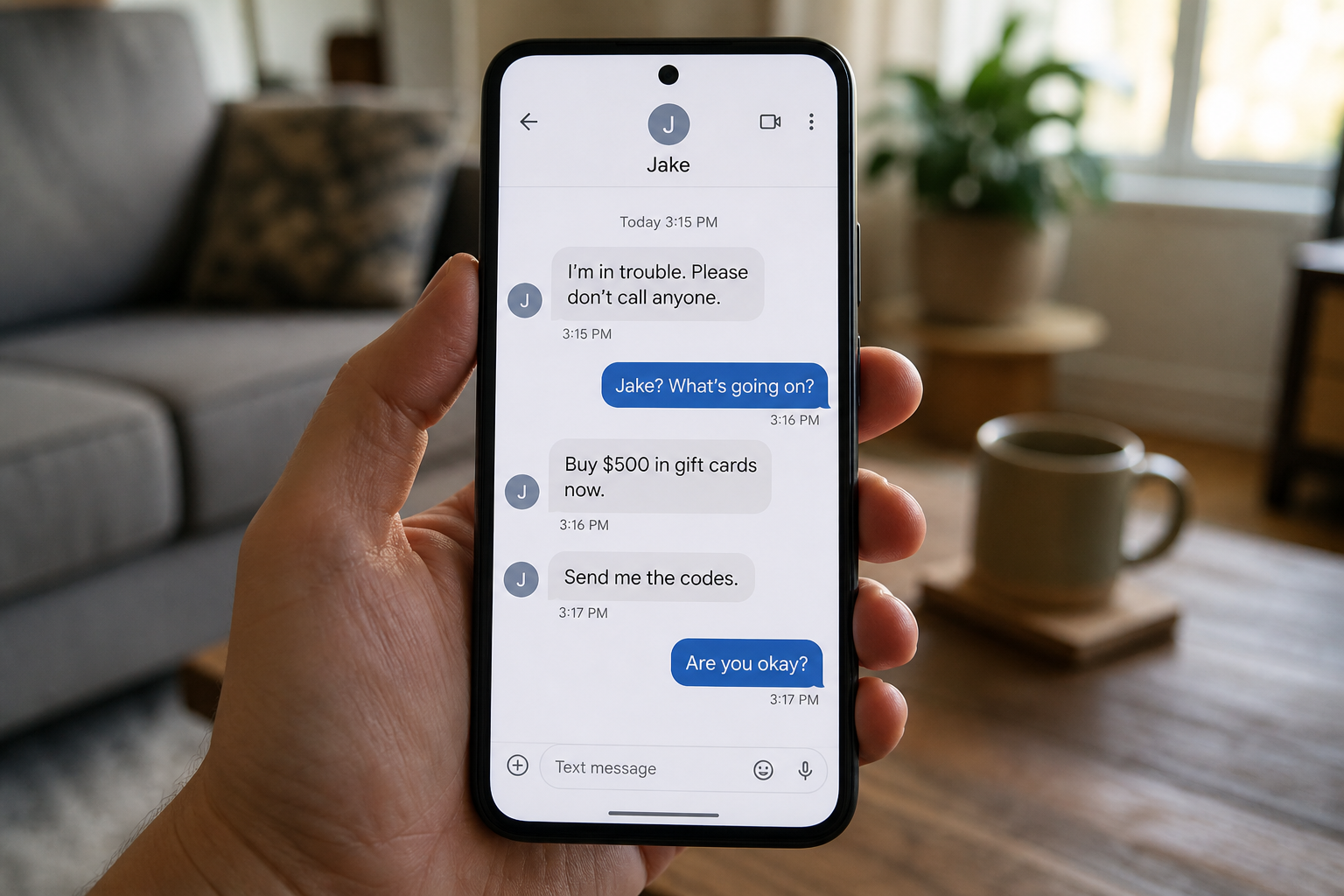
A voice note or message says the loved one is using a temporary number because a phone was lost or damaged. The new contact then asks for rent, travel money, a replacement device, or help paying an unexpected bill.
This quieter version avoids dramatic claims and may continue over several days. The identity should still be verified through a known number or an in-person family contact before any money is sent.
How the AI Voice Cloning Family Emergency Scam Works
Step 1: Criminals identify a family network
Public profiles, data-broker records, obituaries, school posts, wedding pages, and compromised accounts can reveal who is related to whom. The scammer looks for a target likely to answer an unknown call and act quickly for a loved one.
Older adults are common targets, but anyone can be manipulated. Parents, partners, coworkers, and business staff may all react strongly to a familiar voice in distress.
Step 2: They collect a voice sample and personal details
A short video or audio clip provides speech for the model. Additional posts can supply a nickname, recent destination, pet name, workplace, family tension, or event that makes the emergency script feel current.
The scammer does not need a complete biography. One accurate detail placed early in the call can make later claims seem trustworthy.
Step 3: AI creates a convincing voice performance
The software generates selected phrases or changes the operator’s speech in real time. The script favors short, emotional lines that require little back-and-forth conversation.
Sobbing, shouting, background traffic, or a poor connection can mask robotic pauses and pronunciation errors. The victim hears fear first and technical imperfections second.
Step 4: The emergency call triggers panic
The supposed loved one says they have been arrested, injured, kidnapped, or stranded. They may use the victim’s name and a familiar form of address before saying they cannot talk for long.
The opening is designed to compress decision-making. Once the victim imagines a real person in danger, every minute spent verifying can feel cruel.
Step 5: A fake authority figure takes control
A second person claims to be a lawyer, officer, doctor, bondsman, or kidnapper. This caller provides payment instructions and explains away details that do not fit.
The handoff also protects the voice clone. The victim is less likely to ask the artificial voice unexpected personal questions once an apparent professional is managing the crisis.
Step 6: Secrecy and continuous contact block verification
The victim is told that speaking to police, parents, a spouse, bank staff, or store employees will make the situation worse. The caller may demand that the line remain open while the victim drives to a bank or shop.
This control is tactical. A separate call to the loved one or another relative can collapse the story in seconds.
Step 7: The victim is pushed into an irreversible payment
Gift card codes, cryptocurrency, wire transfers, payment apps, and cash deliveries are favored because they can move quickly and provide little consumer protection. The requested amount may start small enough to avoid bank scrutiny.
If the first payment succeeds, a new fee often appears. The fake lawyer may need court costs, the hospital may demand a deposit, or the kidnapper may raise the ransom.
Step 8: The operation disappears or returns for more
After payment, the callers may block the victim and abandon the number. In other cases, they continue the emergency until the victim cannot pay more.
Later, another criminal may claim to be an investigator or recovery service. A promise to trace cryptocurrency or release frozen money for an upfront fee is another attempt to exploit the same fear.
Why Your Ears Cannot Be the Final Test
People recognize loved ones through more than pitch. We notice accent, pacing, favorite phrases, and emotional habits. Modern cloning tools try to reproduce those signals, while the scam story pressures us to overlook anything inconsistent.
Waiting for a robotic sound is therefore a weak defense. The better question is whether the person can be verified outside the conversation.
Caller ID can display a familiar name or number
Caller ID information can be spoofed. A screen that displays a loved one’s number does not prove that the call originated from their phone, just as a copied return address does not prove who sent an email.
Hang up and place a fresh call to the number saved in your contacts. If the caller insists you must not disconnect, that resistance is itself evidence of manipulation.
Personal details can come from public or stolen data
A caller may know where your relative studies, where they traveled, or what they call you. That information can come from public posts, leaked databases, account compromise, or conversations with another family member.
Ask something private that cannot be learned from social media. Better yet, use a family code word agreed upon in person and never stored in chats or cloud notes.
Company, Address, and Fulfillment Checks
The caller’s identity is a performance, not a company record
A loved one’s name, a lawyer’s title, or a police-department reference does not identify the operator. Scammers invent firms, case numbers, badge numbers, and employee names that sound official but do not survive independent verification.
The phone number can be spoofed, rented, or stolen
The displayed number may belong to your relative, a real law office, or an unrelated person. VoIP accounts and disposable numbers can vanish within hours. Never verify an incoming caller by calling a number they provide during the same conversation.
The address cannot explain the requested payment
A real courthouse, police station, or hospital address may be copied into the script. It does not make a gift card, cryptocurrency wallet, cash courier, or personal payment-app account legitimate. Call the organization through its independently published number.
The payment trail leads to mules, not emergency services
Gift card codes and crypto wallets do not identify a treating hospital or licensed lawyer. Cash pickup locations and bank recipients may belong to money mules. If the destination cannot be matched to a verified bill and legal entity, do not pay.
The Fastest Ways to Verify the Call
Slow the conversation down without arguing. Ask to speak directly with the loved one and request a private detail. A real emergency can tolerate a few seconds of verification.
Use another phone if the caller refuses to release the line. Contact the loved one, a parent, partner, roommate, workplace, school, or local friend. One confirmed location is stronger evidence than a perfect voice.
For a supposed arrest, call the relevant police department, detention facility, or court using a number from its official website. For a hospital story, call the hospital’s main switchboard and ask to be connected.
If kidnapping or immediate physical danger could be real, contact emergency services. Do not confront the caller, transfer money, or travel to a meeting place without law-enforcement guidance.
What to Do if You Have Fallen Victim to This Scam
- Confirm that your loved one is safe. Call their known number and contact another person who can physically verify their location. If the story involves kidnapping or immediate danger, call emergency services and explain that the demand may involve a cloned voice.
- Contact the payment provider immediately. Tell the bank, wire service, payment app, crypto exchange, gift card issuer, or cash-transfer company that the transaction resulted from an impersonation scam. Ask for a recall, freeze, reversal, or fraud investigation.
- Keep every piece of evidence. Save call logs, voicemails, audio files, texts, usernames, email headers, wallet addresses, gift card receipts, transfer records, courier details, and the exact words used. Do not edit the original recordings.
- Report the fraud. File a report at ReportFraud.ftc.gov and submit cyber-enabled fraud details to IC3. Contact local police when money was lost, threats were made, or a real person’s identity was used.
- Secure the impersonated person’s accounts. Change passwords, enable strong multi-factor authentication, review active sessions, and remove unknown third-party app access. Focus on email and social media accounts that may contain voice clips and family details.
- Warn relatives privately. Explain which voice, number, account, and story were used. Agree that no family member will send emergency money without a callback and the family code word.
- Scan devices if you clicked or installed anything. Download Malwarebytes from its official website and run a complete scan. Use AdGuard to help block known phishing and malicious domains during recovery.
- Review financial and identity activity. Watch for new payees, password resets, loan applications, SIM changes, unfamiliar withdrawals, and follow-up messages sent from compromised accounts.
- Ask gift card companies anyway. If codes were shared, contact the issuer with the card and receipt immediately. The funds may already be gone, but fast reporting can sometimes stop unused balances and helps investigators trace the pattern.
- Ignore recovery promises. Nobody can guarantee the return of a wire, cryptocurrency payment, or gift card balance. Do not pay another fee or grant remote access to someone claiming they have already found your money.
How Families Can Prepare Before an Emergency
Choose a spoken family code word
Pick a memorable word or phrase that is not posted online and is not an obvious birthday, pet name, or address. Share it in person or during a trusted live conversation, not through an account that could later be compromised.
Make sure older relatives and teenagers know the code. Change it if anyone accidentally sends it in a message or reveals it during a suspicious call.
Create a two-channel verification rule
Agree that emergency requests must be confirmed through a second channel. A phone call can be checked with a separate video call, another relative, a workplace, or a known friend near the person.
Do not use a new number supplied by the caller. Start with contact information your family already trusted before the emergency began.
Reduce public voice and relationship clues
Review who can view social videos, stories, travel posts, family tags, and friends lists. Remove unused third-party apps connected to social accounts and enable login alerts.
Privacy settings cannot eliminate voice cloning, but they can reduce the ready-made package of audio and personal context available to a stranger.
Talk about payment methods before anyone is frightened
Make a family rule that bail, hospital care, taxes, and police matters will never be paid with gift cards or cryptocurrency following an unexpected call. A rule made calmly is easier to follow under pressure.
The FTC’s family emergency guidance recommends calling the person directly using a known number and contacting another relative or friend when the person cannot be reached.
Frequently Asked Questions
Can AI really clone a relative’s voice from a short clip?
Yes. The quality varies, but modern tools can produce useful imitation from brief audio. A scammer needs only enough convincing speech to trigger panic before a fake lawyer, officer, doctor, or kidnapper takes over the conversation.
How can I tell whether a familiar voice is fake?
Do not rely on sound alone. Ask for the family code word, hang up, call the person’s known number, and verify through another relative or trusted contact. Identity is established by independent confirmation, not by vocal similarity.
What if the call comes from my loved one’s real number?
Caller ID can be spoofed, and messaging accounts can be compromised. End the incoming contact and start a new call from your saved contact list. If possible, confirm through a different app or another person who can see the loved one.
Should I keep a voice-clone scammer talking?
If there is any possibility of real danger, contact emergency services and follow their instructions. Otherwise, do not provide information or payment. Preserve the call details, verify the loved one’s safety through another channel, and report the incident.
Can a bank recover money sent during the scam?
Recovery is not guaranteed, especially for gift cards, crypto, cash, and completed wires. Contact the provider immediately. Faster reporting gives fraud teams the best chance to freeze a transfer, flag a recipient, or preserve records.
What is the best single defense against a cloned family voice?
A separate verification path is the strongest defense. Hang up and contact the person through a known number or someone physically near them. A private family code word adds another fast check when emotions are running high.
The Bottom Line
An AI voice cloning family emergency scam succeeds by making love and fear feel like proof. The voice may be nearly perfect, the caller ID may look right, and the story may contain private details. None of that replaces independent verification.
Pause, hang up, call back through a trusted channel, and never pay an emergency demand with gift cards, cryptocurrency, or a secret transfer. Five minutes of checking can stop a convincing voice from becoming a devastating loss.








