

Blushe looks like an ordinary mascara until the sales page promises something more permanent. It says every application can make lashes appear longer now and support real growth later.
That is an attractive two-in-one idea, especially for mature or thinning lashes. It also moves the product beyond simple cosmetics and into claims that deserve evidence.
Overview
Blushe is marketed as treatment plus makeup
The store describes its product as a growth serum mascara. Immediate length comes from cosmetic coating, while peptides and botanical ingredients supposedly create lasting improvement.
Those are different outcomes. A mascara can visibly extend lashes on application without proving that follicles produced longer, thicker, or more numerous hairs.
The headline statistics lack supporting detail
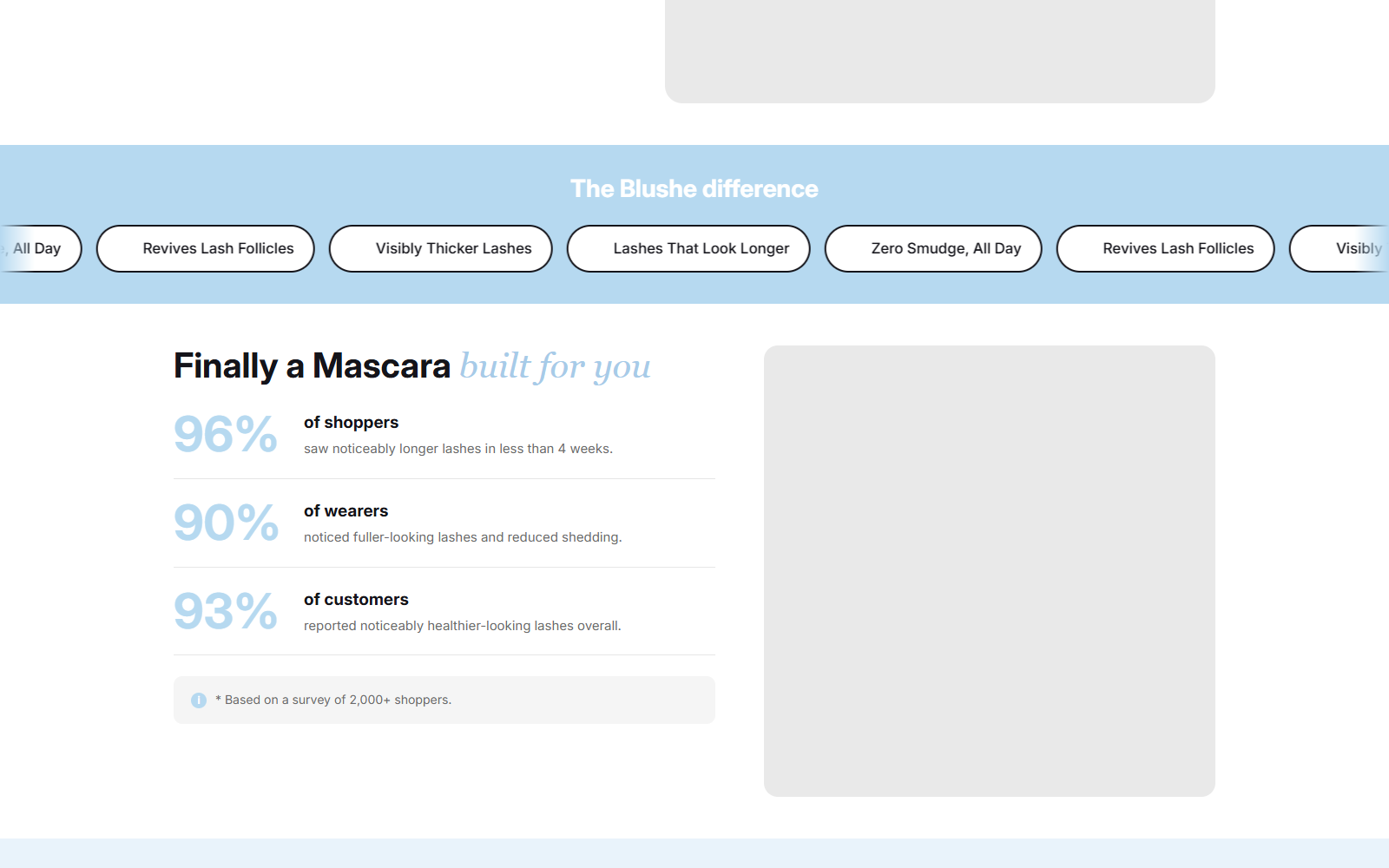
Blushe says 96% of shoppers saw longer lashes within four weeks, while 90% noticed fullness and reduced shedding. The figures reference a survey exceeding 2,000 shoppers.
No linked study report explains participant selection, control group, photographs, measurement method, response rate, or whether respondents received incentives.
Seller transparency is weak
The site lists Blushe and a support email, yet its contact information does not show a legal company, business address, telephone number, manufacturer, or laboratory.
Key findings from our review include:
- The domain was registered only recently
- More than 10,000 customer ratings are claimed
- Survey results are published without research documentation
- Ophthalmologist-tested and hypoallergenic claims lack a linked report
- A 60-day guarantee appears in sales copy
- The expected refund-policy address returned a missing page
Blushe may be a functioning cosmetic, but the website does not provide enough proof for readers to treat its lash-growth promises as established clinical facts.
What the Mascara Can Reasonably Do
Traditional mascara uses pigment, film-formers, waxes, or fibers to darken and define lashes. A brush separates hairs and deposits material that increases visible length or volume.
Those results occur immediately and wash away. Before-and-after photographs taken with makeup on cannot demonstrate biological growth.
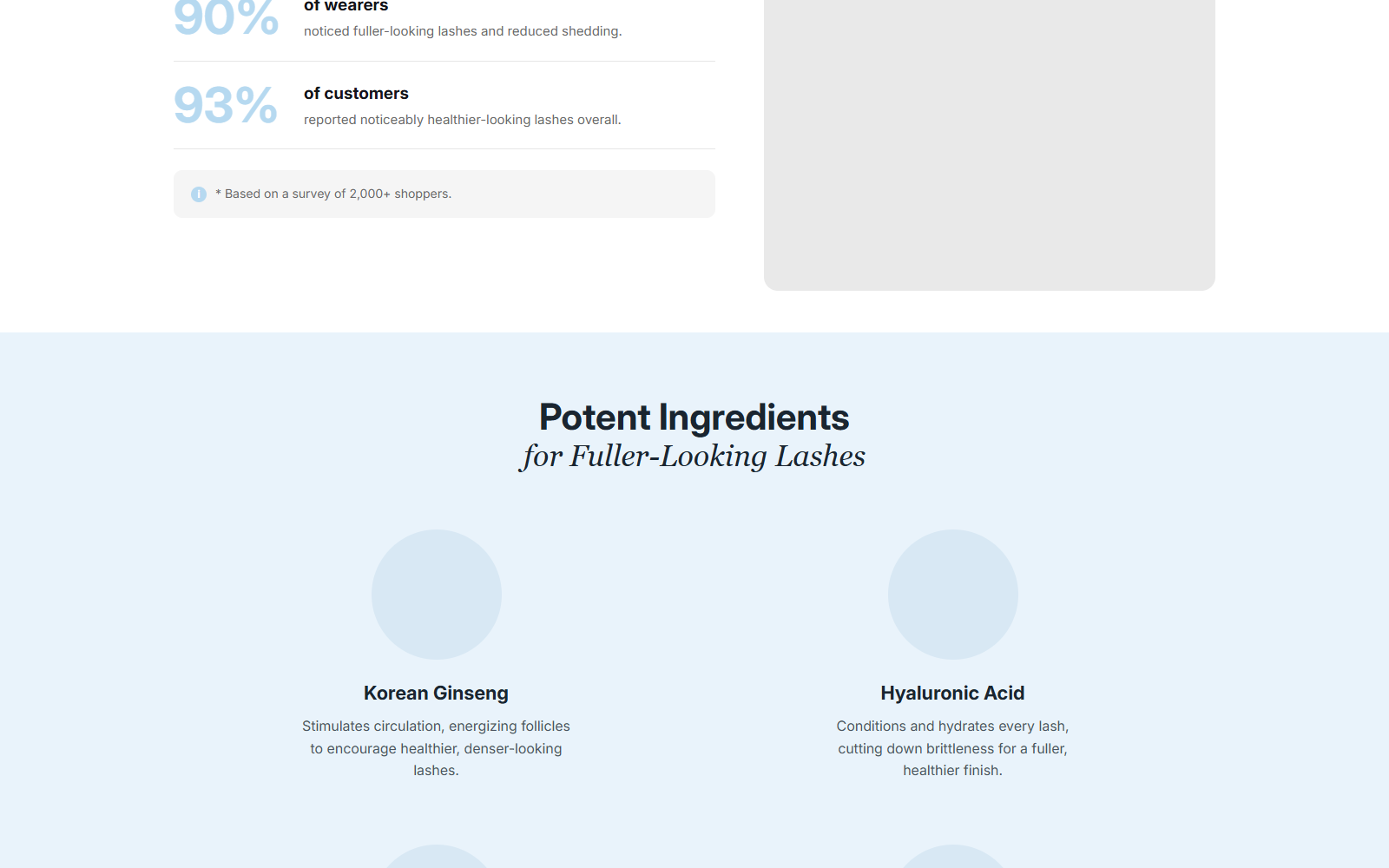
Blushe also highlights hyaluronic acid, vitamin E, ginseng, and Swertia japonica. Conditioning ingredients may improve softness, flexibility, or the appearance of brittle lashes.
Conditioning is not the same as activating dormant follicles. A claim that an ingredient “revives” follicles requires stronger evidence than traditional use or general skincare benefits.
The page mentions peptides but does not display a complete ingredient declaration in the principal claim section we captured. Concentration and formula stability influence potential effects.
Even a studied ingredient cannot transfer every published result to an unknown finished product. Formulation, dose, application area, study design, and duration all matter.
The website says genuine visible growth commonly appears between weeks four and six. It provides no baseline photographs or standardized measurements supporting that timeline.
A shopper should separate three questions: Does the mascara look good today? Does it condition hairs? Does it produce measurable growth without makeup?
The first question can be answered by ordinary product testing. The last requires controlled evidence that the sales page does not currently show.
Why the Survey Numbers Are Not Clinical Proof
A customer survey can record opinions, satisfaction, and self-reported impressions. It cannot automatically establish a biological effect or rule out expectation bias.
Participants know they are using the product. They may also change application technique, remove makeup more gently, or pay closer attention to their lashes.
The website does not identify who conducted the survey, when it occurred, how questions were worded, or how many invited shoppers responded.
“Noticeably longer” can mean coated lashes looked longer during use. Unless the survey specified bare lashes, the wording can blend immediate cosmetics with persistent change.
The percentages also appear beside a disclaimer stating they are based on shoppers. That is more limited than dermatologist measurements in a randomized controlled trial.
Strong marketing can still rely on honest respondents. The problem is not necessarily fabricated answers, but the confidence attached to results we cannot audit.
Blushe should publish the questionnaire, raw totals, inclusion criteria, conflicts, investigator identity, and clear before-and-after protocol if it wants scientific credibility.
How the Blushe Mascara Sales Funnel Works
Step 1: The advertisement focuses on age-related frustration
The product is positioned for mature lashes, where thinning and breakage can affect confidence. The message feels personal because it speaks to a visible daily concern.
Targeting is not inherently deceptive. It becomes questionable when emotional relevance carries stronger weight than the evidence supplied for a treatment claim.
Step 2: Makeup and growth are blended into one promise
Immediate length is easy to observe after applying mascara. That visible result can make the separate claim of future biological growth feel proven prematurely.
The two outcomes reinforce each other psychologically. A satisfied first application may lead customers to credit the formula for changes that have not been measured.
Step 3: Large numbers manufacture confidence
A 4.7 rating, more than 10,000 customers, and three impressive survey percentages appear before visitors can examine methodology.
Numbers feel objective, even when their collection process is unknown. The page benefits from that authority without giving shoppers the information needed to reproduce it.
Step 4: Bundle pricing raises commitment
Customers can buy one mascara or choose multi-unit packages framed as free extras and larger savings. The biggest bundle lowers the apparent unit price.
That structure encourages purchasing months of product before testing eye comfort, removal, flaking, brush performance, or the seller’s support.
Step 5: A guarantee answers the last objection
The FAQ says customers receive a 60-day, no-questions-asked money-back guarantee if their lashes do not visibly improve.
During our review, the standard refund-policy address returned a 404 page. The sales promise therefore lacked an accessible detailed procedure at that location.
Step 6: Support depends on one email address
Customers are directed to support@blushemascara.com. We found no telephone number, physical return address, or registered operator in the visible contact information.
Email support can work, but the absence of alternatives increases the buyer’s risk if messages bounce, go unanswered, or fail to settle a refund.
Eye Safety Deserves More Than Reassuring Labels
The eye area is sensitive. Mascara can cause irritation, allergic reactions, infection, or corneal injury when contaminated, shared, expired, or applied carelessly.
Blushe calls the formula ophthalmologist-tested and hypoallergenic. These phrases do not mean nobody will react, and they do not reveal the testing protocol.
“Hypoallergenic” generally communicates reduced allergy expectations, not a guarantee. Consumers still need a readable ingredient list and should stop after burning, swelling, or persistent redness.
People with eye disease, recent surgery, severe allergies, or prescription lash treatments should consult an appropriate clinician before adding another active-looking product.
Do not apply mascara to an inflamed lash line. Never share the wand, add water to the tube, or keep a product that smells or changes texture.
Marketing about “energizing follicles” should not encourage applying cosmetic material inside the eye or directly onto damaged skin.
If lashes suddenly thin or fall out, consider medical causes rather than masking the change. Hormonal issues, skin conditions, medicines, and mechanical damage can contribute.
The Review Count and Domain Timeline
The page claims a 4.7 rating from 10,467 reviews and separately refers to more than 10,000 radiant customers.
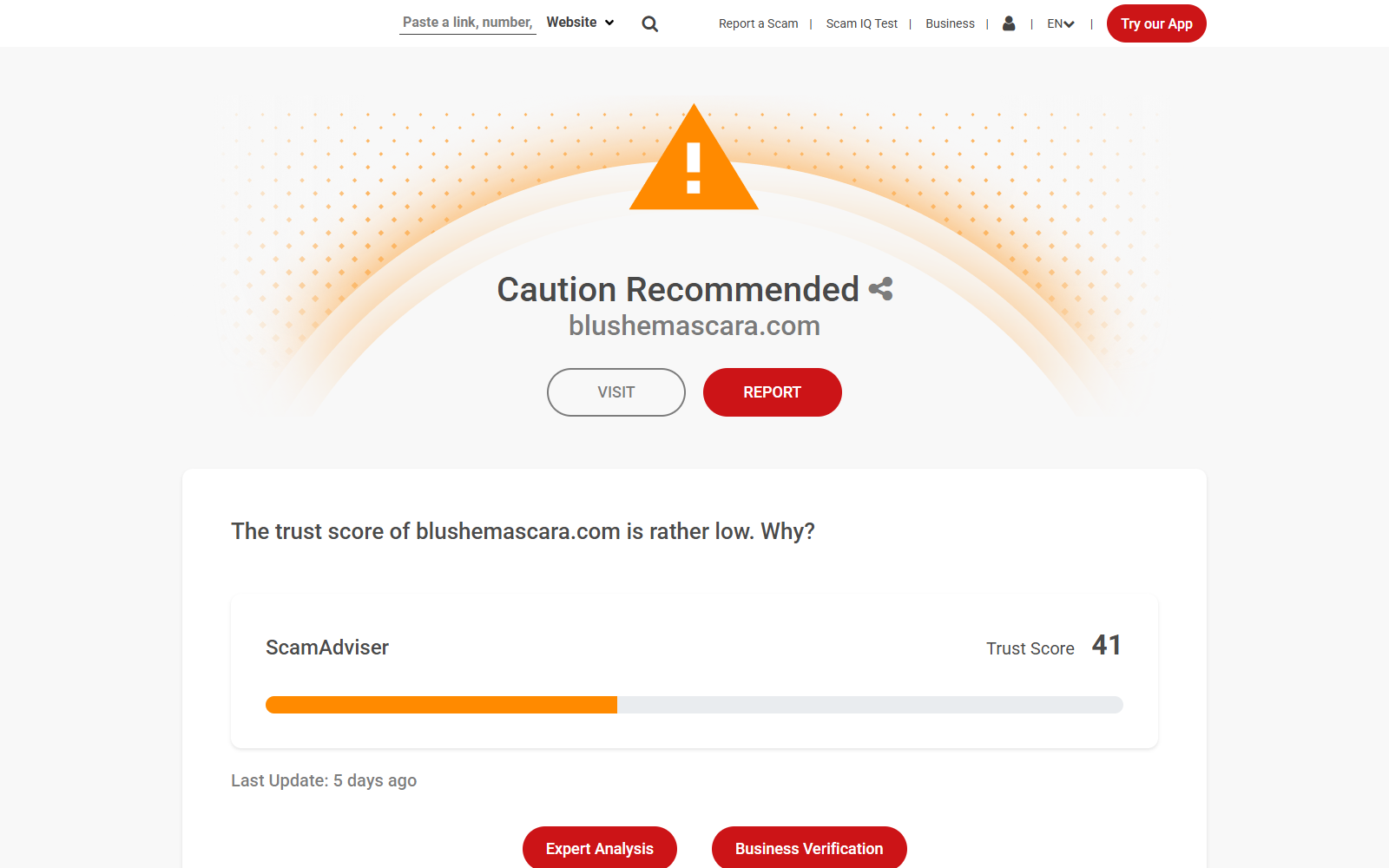
Public domain records reviewed by reputation services show blushemascara.com was created in August 2026, roughly one month before this investigation.
A young website can sell an existing product or migrate from another platform. However, a five-figure review count needs an explanation when the domain has little public history.
The store does not show where the reviews originated, whether they were imported, which product version they cover, or how purchasers were verified.
It is possible that sales occurred through social commerce or another domain. The site should state that clearly and identify the original source.
Until then, treat the count as a seller claim. Focus on detailed, independent reports that include order dates, photographs, packaging, and follow-up after several weeks.
What Convincing Lash-Growth Evidence Would Include
A credible trial would define whether it measured length, diameter, density, breakage, or participant satisfaction. These outcomes are related but not interchangeable.
Bare lashes should be photographed under fixed lighting, distance, angle, and camera settings. Mascara must be removed before any biological comparison.
Researchers should use a control product so normal lash cycles and expectation do not receive credit. Participants and assessors should be blinded where practical.
The finished Blushe formula must be tested, not merely one ingredient found in academic literature. A different concentration or delivery system can produce different results.
Adverse events belong in the report alongside benefits. Eye watering, redness, itching, lid discoloration, dryness, and discontinuations help consumers judge tradeoffs.
The study should disclose funding, investigator relationships, and statistical methods. A brand-funded trial can still be useful when its design and data are transparent.
Results also need a realistic timeline after use stops. Temporary conditioning or reduced breakage may fade, while true follicle changes follow the hair-growth cycle.
Until Blushe publishes comparable evidence, “growth-activating” remains promotional language. Customers should assess the product primarily as mascara with conditioning ingredients.
That narrower description may still appeal to buyers. Honest expectations protect both consumers and legitimate cosmetic benefits from exaggerated medical interpretation.
Company, Address, and Fulfillment Checks
The contact page names only the brand
Blushe’s contact information shows the store name and support email. It does not identify the company that processes the sale or carries legal responsibility.
Payment statements may use another descriptor. Buyers should request that descriptor before checkout so they recognize the charge and know whom to contact.
No physical address or phone is visible
We found no street address, customer telephone number, or named representative on the contact page captured during this review.
That makes it impossible to inspect the return destination, corporate registration, or ordinary business footprint before placing an order.
The manufacturer and laboratory are not identified
“Korean peptide science” describes an inspiration, not necessarily manufacturing origin. The site should name the responsible manufacturer and country shown on the package.
Claims of ophthalmologist testing should link to a report identifying the laboratory, finished formula, participant group, endpoints, and adverse reactions.
Return fulfillment lacks a published route
The guarantee sounds generous, but the expected refund-policy page was unavailable. No return address or step-by-step claims process appeared in the contact information.
Ask support whether opened mascara qualifies, who pays postage, which country receives returns, and whether all units from a bundle must be sent back.
Cosmetics often have hygiene exclusions. A promise tied to visible results is meaningless if opening the tube makes the product non-returnable.
Keep the written answer with a screenshot of the 60-day guarantee. Do not rely on a countdown banner or social advertisement that may change.
What to Do if You Have Fallen Victim to This Scam
- Prioritize eye safety. Remove an irritating product gently and seek medical advice for pain, swelling, discharge, vision changes, or symptoms that do not settle.
- Photograph everything. Capture the box, tube, batch code, ingredient list, country of origin, damage, and the result that conflicts with advertising.
- Request the guarantee in writing. Email support within 60 days. Ask for return authorization, destination, postage rules, bundle requirements, and refund timing.
- Preserve the original offer. Save the statistics, no-questions wording, checkout total, order confirmation, tracking, and every reply from the seller.
- Challenge unresolved charges. Contact the payment provider before its dispute deadline. Explain any missing delivery, misdescription, or guarantee refusal with evidence.
- Watch for repeat billing. The page we reviewed did not disclose a subscription, but monitor statements and question any unfamiliar recurring cosmetic charge.
- Protect the device. If an advertisement installed software or opened suspicious downloads, scan with Malwarebytes and remove anything unrecognized.
- Reduce malicious retargeting. AdGuard can block many risky ads and trackers. Clear site permissions and notification access in the browser as well.
- Report unsafe or deceptive marketing. Notify the platform, payment processor, and relevant cosmetics or consumer regulator with the product and batch information.
Frequently Asked Questions
Is Blushe mascara definitely fake?
We cannot say that. The website sells a plausible cosmetic. Our concerns involve unsupported growth claims, opaque review statistics, recent domain history, and incomplete seller details.
Can mascara make lashes look longer immediately?
Yes. Pigment and film can coat and define hairs. That temporary appearance does not prove new lash growth.
Do peptides guarantee thicker lashes?
No. Results depend on the specific peptide, concentration, finished formula, application, and evidence. Blushe does not publish enough study detail to verify its promises.
Are the 96%, 90%, and 93% results clinical?
The page identifies them as shopper survey results. It does not provide the methodology needed to treat them as controlled clinical findings.
Is the 60-day guarantee reliable?
The promise appears in the FAQ, but we could not access a detailed refund policy at the expected address. Confirm every condition with support before buying.
What should appear on a trustworthy mascara label?
Look for a complete ingredient list, batch or lot code, responsible company, quantity, warnings, country details, and a practical contact route.
The Bottom Line
Blushe may work as mascara, but its page asks shoppers to believe far more: lasting growth, huge satisfaction figures, sensitive-eye safety, and an easy guarantee.
Those claims need documents, not decorative numbers. Buy only after obtaining the full label and refund conditions, and stop immediately if your eyes react.








