


Your credit card can still be in your wallet when an unfamiliar charge or a change to your account appears.
Those two alerts do not always mean the same thing, and they are worth describing separately when you call the issuer.
Overview
The fraud reached accounts that already belonged to real cardholders
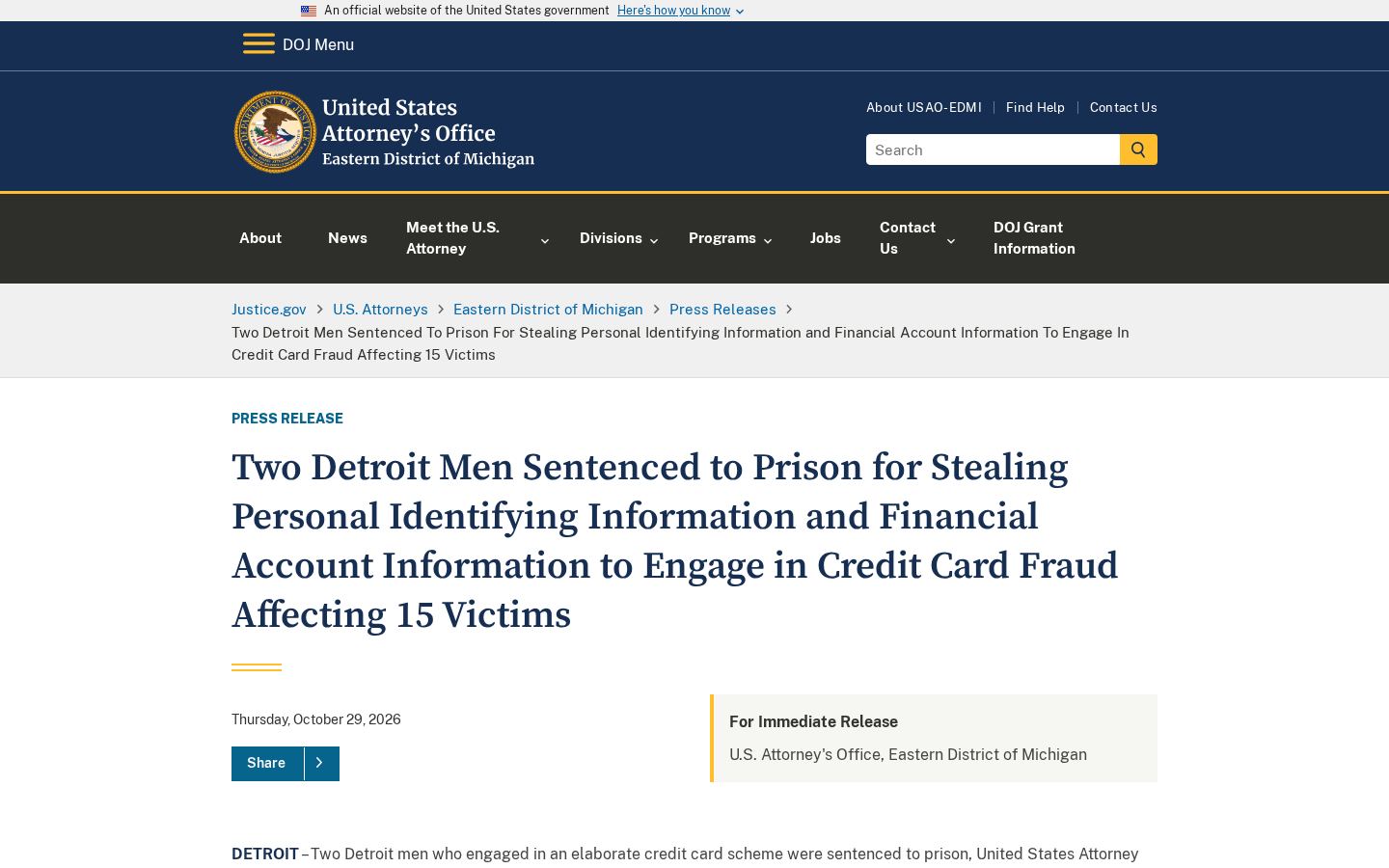
The Justice Department’s October 29 sentencing release describes a Detroit conspiracy that involved stolen financial and identifying information and affected 15 credit card holders.
Spencer and Vasquez pleaded guilty to conspiring to commit wire fraud, after obtaining access to card accounts using false identity evidence.
Prosecutors say the pair used their own faces with counterfeit identification in victims’ names, then made unauthorized purchases from the accounts.
The court sentenced Spencer to 37 months in prison and Vasquez to 54 months, with five years of supervised release each.
The release does not identify the issuers, the exact verification processes they used, or the source of each victim’s stolen information.
This story is about access to an existing account, which calls for a different response from noticing a single fraudulent transaction.
A replacement card and a recovered account solve different problems
A new card can help stop further use of the old number, but it does not tell you who can sign in.
An issuer may need to review your account contact details, active devices, authorized users or other access that was not yours.
Ask for a review even if the only obvious symptom was a purchase, especially when an account alert arrived around the same time.
If you still have access, save the latest statement first, but do not delay contacting the issuer just to collect more proof.
If your usual password has stopped working, contact the issuer instead of testing credentials through links someone sent about the incident.
A support agent can tell you which changes were recorded and how to restore your contact information without disclosing it to a stranger.
Treat each alert as a clue, not a diagnosis
Card security notices can refer to a particular purchase, a payment method or a broader change in how the account is controlled.
Give the issuer the actual wording and timing rather than calling them all unauthorized purchases or assuming they all came from one incident.
| What you notice | What to ask the issuer |
|---|---|
| Unfamiliar credit card purchase | Dispute route, transaction status and case number |
| Email or phone changed | When it changed and how to restore trusted contact |
| New card without your request | Where it was sent and whether it can be canceled |
| Sign-in stopped working | How to verify yourself and restore access safely |
| New account on your credit report | Issuer’s fraud process for a separate account |
- The issuer can review both activity and access, even when you only noticed one unfamiliar purchase or did not get an alert.
- Keep a copy of the first message and statement, because a later account recovery might change what you can still see.
- For an alert that asks for a password or security code, call through a number you already recognize as belonging to the issuer.
A fraud alert with the right last four digits still does not make a reply or callback request safe on its own.
How the Credit Card Account Takeover Worked
Step 1: Someone else gets information tied to the cardholder
In the Detroit case, the two men admitted to obtaining personal and financial account details belonging to real consumers, according to prosecutors.
That gave the operation access to information about existing accounts, not permission to use those accounts or make changes on the owners’ behalf.
Your name, address and account details can sometimes appear together even if you never handed them to one person in a conversation.
The public record does not explain how each set of records was obtained, so this case cannot identify a particular data breach.
As a customer, you can report the changes you actually saw without waiting to determine where the information may have come from.
If you shared documents recently, write down when and with whom, but keep that separate from facts the issuer has already verified.
Step 2: Remote identity checks accept evidence that is not genuine
The release says the defendants used facial evidence and counterfeit documents to pass themselves off as the real cardholders during identity checks.
It does not identify a particular product or disclose what happened at every check, so do not assume all providers work the same way.
For a person dealing with the result, the important detail is whether the issuer now relies on information they did not provide.
Ask how to flag a disputed identity verification and make sure the person handling an ordinary charge dispute passes the issue along.
You can describe when your account behaved differently without sending another selfie or a copy of your license to an unverified email address.
If a fresh identity check is required, ask the actual issuer where to complete it and how to recognize its verified channel.
Step 3: The account can be used without taking the plastic card
After they obtained account access, the two men made fraudulent purchases, which is why a person can face charges while keeping their card.
The written case record confirms purchases, but it does not say each issuer changed an address or sent a replacement card.
Treat those possibilities as questions to ask, not established facts about what happened to the 15 people in the case.
If you spot a charge, write down the merchant name, date and amount, including whether it is pending or already posted.
A pending charge may need a different immediate response from a posted one, so ask the issuer how it handles each status.
If you learn that the account contact changed too, ask for both issues to stay open until the issuer addresses them separately.
Step 4: The financial loss and the account repair follow separate tracks
The defendants’ guilty pleas and sentences answer what happened in court, not whether every victim received reimbursement or regained account access.
An issuer can investigate a purchase, shut off access and issue replacement payment credentials, but each change needs its own confirmation.
If a credit appears while the investigation is open, ask whether the issuer considers it temporary or the final result of the dispute.
Continue to review legitimate activity because a disputed balance and an upcoming ordinary payment can appear together on the same statement.
When you rely on a card for regular bills, keep a list of authorized merchants to update after you confirm the replacement is safe.
Don’t send all those merchants the new number in a group email or share it with someone offering to update accounts for you.
If the Account Looks Different After You Get It Back
Sign in through the issuer’s usual app and review the profile fields and alerts that the issuer allows you to see.
Check whether the mailing address, primary email and phone now match your own records, then save any confirmation that you changed them back.
Ask about access that may not be visible to you, such as saved sessions, additional authorized users or wallet connections supported by the issuer.
If you cannot inspect a setting yourself, have the fraud team confirm what it changed and what choices remain available to you.
Find out how to receive notices going forward, especially if the old alerts went to contact details you no longer control.
Check whether a trusted device or the issuer’s preferred verification method needs to be set up again after access is restored.
A credit freeze can be useful if identity details were exposed, but it will not log someone out of an account you already had.
Look through your reports for unfamiliar new credit in parallel, rather than treating a restored sign-in as proof that nothing else happened.
Keep the account review and the credit report review separate so you can give each institution the documents that apply to it.
If someone has changed your mailing address, review anything ordered during that period, including a replacement card the issuer may have sent.
Ask how the issuer handles digital wallets when it closes a card number, because removing a payment link is separate from changing an address.
A merchant refund can arrive after a dispute starts, so tell the issuer about any new credit instead of counting it twice.
Keep only the transaction details you need in a separate working copy, and store full account documents somewhere less likely to be exposed.
If an authorized user needs a working card, have the issuer verify that access separately before assuming everyone received the right replacement.
What to Do if You Have Fallen Victim to This Scam
-
Reach the credit card issuer without responding to the alert
Use the number on your card, a statement or the issuer’s official app, and ask for its fraud or account security team.
Explain both the charge you did not make and any changes to the way you access or receive information about the account.
Ask what the issuer can stop now, including transactions, an account change or a replacement you never requested.
-
List the transactions and send the required written notice
Write down the dates, amounts, merchant names and statement date, then ask the issuer where to send the billing dispute.
The CFPB’s credit card dispute guidance says to send written notice within 60 calendar days after the disputed charge appeared on your statement.
Keep a copy and confirmation of delivery, and ask separately how to handle any undisputed part of what you owe.
-
Restore trusted access and verify the issuer’s security changes
Follow the issuer’s actual identity checks to restore your contact information and ask which sessions or linked payment methods it can reset.
Change a password you know was exposed and protect the email account that receives your card alerts or password reset messages.
If another person still has access, let the issuer complete its recovery process before assuming a changed password or card solved everything.
-
Check for additional identity misuse outside the card
Open IdentityTheft.gov yourself, report the exposure and save the recovery plan if personal records were used to impersonate you.
Review your credit reports for unfamiliar accounts and consider a security freeze with the major bureaus if there is a new-account risk.
Tell each issuer about the specific account involved instead of assuming one credit report request will close every account in your name.
-
Follow up on the result rather than the first reassurance
Keep your claim reference with the dated statement, written decision and any temporary or final credit the issuer confirms for the charge.
If you reopen a complaint, refer to the original timeline and state whether the problem concerns money, access or both.
Ignore callers asking for security codes or fees to clear a fraud hold, and contact the original issuer independently about those claims.
Frequently Asked Questions
Can someone use my credit card account if I still have the card?
Yes, this case involved access to existing accounts, followed by purchases the real holders did not make, rather than theft of their cards.
Call the issuer when something changes on the account even if the physical card has been with you the entire time.
Should I just wait for a replacement card to arrive?
Do not wait if someone may still have account access, because replacing the number may not address your contact settings or sign-in.
Ask the issuer which changes it made and what you can verify in your own account after you regain safe access.
Is a credit freeze enough to stop fraud on a card I already have?
A freeze can limit access to a credit report for new applications, but it does not automatically secure an existing card account.
Handle the account directly with the issuer and use a separate credit report check to look for new accounts in your name.
Does this case mean every identity check on a phone is unsafe?
No, the release describes fraud involving two men and specific accounts, not every use of a photograph during legitimate identity verification.
Use the issuer’s established process and avoid handing identity documents to anyone who contacts you first and cannot prove they represent it.
Can I dispute a charge if I already paid my credit card bill?
The CFPB says you can still dispute the charge, but you may not get the money back until the issuer decides the case.
Contact the issuer promptly and keep whatever written notice is needed rather than counting an earlier payment as the end of your options.
What if the card company says it needs more proof from me?
Ask which records it needs and use the submission route you confirmed, keeping copies of your statements and the contact history.
If the issuer rejects your dispute, get its decision in writing and review what it says before accepting another person’s offer to intervene.
The Bottom Line
Do not assume a replacement card fixes an account takeover, especially if contact details, sign-in access or purchases changed without your permission.
Call the issuer through a trusted number, dispute specific charges and confirm what it did to put account access back under your control.

Join the discussion
0 commentsShare your experience or ask a question about this article.
Community experiences
Did this happen to you?
Your experience could help someone recognize the same scam. Submit a private report for our team to review.
I experienced this tooReports are reviewed before publication. Sharing publicly is always your choice.
Discussion
Start the conversation
Have a question or something useful to share? Add the first comment.