


A large tax refund can be welcome news, particularly when you have been wondering how to cover the next few bills.
Before you trust the number, make sure the return tells the same story as the records you handed your preparer.
Overview
The case ended with a prison sentence and a separate ban
Oladapo Olagbemi prepared returns through a San Diego business called D.A.O. Accounting, Consulting, and Taxation, according to the government’s civil complaint.
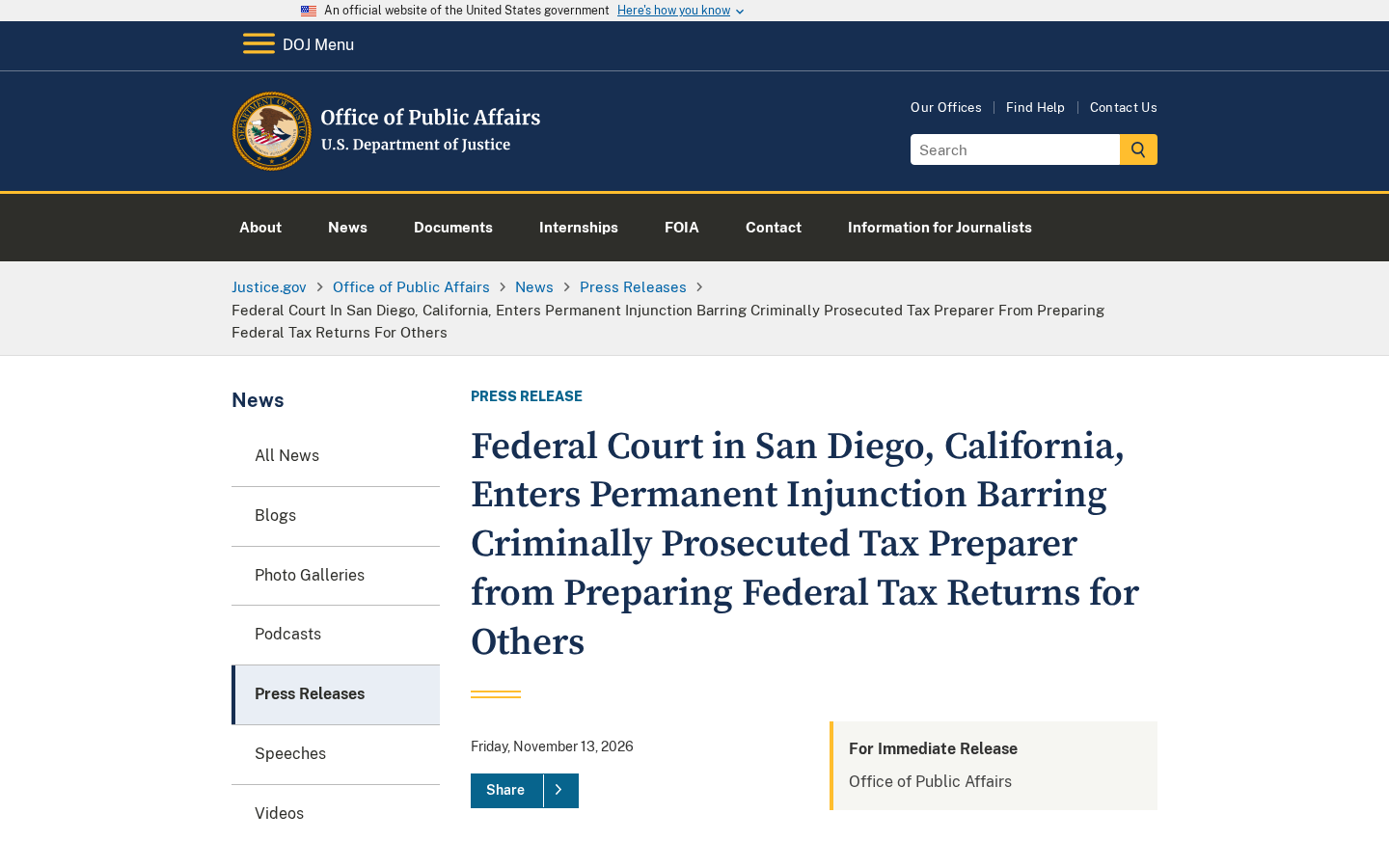
The Justice Department’s November 13 announcement says he pleaded guilty to four counts of helping prepare false returns and received 18 months in prison.
The criminal case also required him to pay approximately $1,922,887.31 in restitution to the United States, not directly to individual clients.
A separate court order permanently bars him from preparing federal returns for others, owning a preparation business or training others to prepare returns.
He consented to that civil injunction, which is distinct from the guilty plea and prison sentence in the criminal matter.
The government’s complaint described conduct between 2019 and 2024, but it does not identify a problem with every return the business handled.
A refund does not tell you whether the return is accurate
A refund is the result shown on the return, so checking only the amount tells you nothing about whether the inputs were right.
Compare what the preparer filed with the income, expenses and other documents you actually gave them, not with your expectations alone.
The Justice Department says the case involved false information that could reduce tax due or produce refunds the return did not support.
There is no reason to treat a larger refund as proof of fraud when an independent review can explain each material change.
The worry is an amount or activity that appears on the return even though you cannot match it to your records.
If something seems wrong, get a second opinion before agreeing to file, and do not let a refund estimate rush the decision.
Use different records for different questions
The copy you reviewed explains what you expected to submit, while an IRS transcript helps you check what the agency processed.
A refund receipt answers a third question about where money arrived, but it will not explain why a tax item appeared.
| Detail to verify | Record to check |
|---|---|
| What you signed | Final signed return and supporting schedules |
| What the IRS processed | IRS return transcript for the correct year |
| Identity of the paid preparer | Preparer name and identifying number on the filed copy |
| Intended refund destination | Refund instructions on the return and your own bank record |
| Deadline for your reply | The IRS notice, its reference and the response date |
- Check each tax year separately because a correction for one year does not establish that the other years are accurate.
- Keep the return as a separate file from the transcript, even when the numbers appear to match on both records.
- If the business changes hands or names, verify the identity of the individual preparing your return rather than relying on the sign.
Get advice if a document you expected to see is missing, instead of filling in numbers the preparer cannot account for.
How the False Tax Return Scheme Worked
Step 1: Clients used a professional service to prepare federal returns
Olagbemi ran a tax preparation business, which meant clients came to him for the ordinary work of turning records into returns.
When someone hires a preparer, they may expect help identifying deductions, but they still need a chance to review what will be filed.
The IRS preparer guidance recommends choosing a qualified professional you can contact after filing if the agency examines your return.
It also advises against choosing a preparer based on an unusually large promised refund or a fee tied to the refund amount.
Before handing over documents, confirm who actually prepares and signs the return and where you can reach that person after tax season.
A referral from a friend can help narrow a search, but it is not a substitute for checking the preparer independently.
Step 2: False entries changed the result on some returns
The civil complaint describes false entries on federal return schedules and forms that decreased the stated tax or increased the stated refund.
A total can look reasonable while an underlying entry describes an expense, income source or activity the taxpayer does not recognize.
Check that any large difference from last year has a reason tied to your current facts rather than to a preparer’s prediction.
For an unfamiliar entry, ask to see the supporting paperwork and get an explanation before you approve a return for filing.
A qualified adviser can tell you whether a real expense belongs where it was reported without treating every unfamiliar line as fraud.
The preparer’s guilty plea concerns false returns, but someone reviewing their own paperwork still has to identify which entries need attention.
Step 3: A completed filing creates a record the taxpayer may need to correct
Once the agency processes a return, fixing a mistake is different from asking the preparer to edit a draft you never signed.
Start by getting a copy from the preparer and comparing the version you approved with what the agency shows for that year.
The IRS transcript page explains how to request a tax record, including through an online account or by mail if online access is unavailable.
A return transcript generally reflects the original filing, and it may not show changes made after that return was processed.
When a correction may be needed, bring the transcript, your filed copy and the supporting records to a different qualified preparer.
Do not submit a second original return over the first one just because a refund number or a notice surprised you.
Step 4: The court order limits future tax preparation
The civil injunction addresses future work by Olagbemi and does not itself correct tax returns previously submitted on behalf of clients.
The criminal sentence and the required restitution to the United States also do not tell you what amount your household might owe.
If an IRS notice arrives, handle its deadline separately from any complaint about the person who prepared the filing.
Open your own case records first, because an offer to fix everything for a fee can make it harder to preserve original evidence.
When looking for a replacement preparer, choose someone who can explain the correction and put their own name on the work.
If an independent review finds no error in your filing, keep that finding with the documents rather than assuming a new return is necessary.
Decide Which IRS Process Fits the Problem
The IRS preparer misconduct page asks questions about who submitted the return, what changed, and whether you received an IRS letter.
Use Form 14157 for a preparer complaint when the IRS directs you to that route, and keep a copy of the submission.
Form 14157-A is an affidavit for certain claimed changes or refund misdirection without your knowledge or consent, not a general complaint form.
Follow the IRS instructions for your situation before sending an affidavit, because the required supporting records depend on what actually happened.
If the IRS has sent a letter, start with its verified response instructions and note any deadline before gathering materials for a complaint.
A complaint documents the preparer’s conduct, and a separate tax or notice response may still be needed to correct the account.
If you’re unsure whether you authorized the entry, keep the signed copy and let an independent professional compare it with the filed data.
For records that show identity theft outside this case, ask the IRS about the appropriate identity theft process instead of guessing at the form.
Never email a complete tax return to someone who says they represent a refund service and cannot be independently identified.
Read the signature pages as well as the numbered lines, because the name recorded as preparer can matter when you need help.
Ask for a complete copy before filing, and check that your supporting schedules are included rather than accepting only the summary page.
If the refund is going to the wrong account, write down what you approved and contact the agency through its published channel.
Confirm who is allowed to discuss your return with the IRS and tell an independent adviser about any authorization you no longer want.
For a mailed IRS response, keep proof of what you sent and enough information to identify which notice or tax year it answers.
If the preparer will not return your records, tell the new adviser which documents are missing and where you might obtain replacements.
If the numbers changed after you reviewed the return, ask your adviser to distinguish the filed copy from a later IRS adjustment.
When a notice proposes an adjustment, take the supporting records to your adviser and ask what belongs in the response.
What to Do if You Have Fallen Victim to This Scam
-
Get the complete paperwork for the right year
Save the signed return with its schedules, the records you supplied, the preparer’s messages and any notice that reached you directly.
Make a separate note of what you approved and when, especially if the preparer sent more than one version for review.
Keep the originals unchanged so a new adviser can compare dates and numbers without wondering which copy was edited.
-
Check the IRS record before accepting a new refund claim
Open the IRS transcript page yourself, select the record for the year at issue and compare it with the copy you approved.
If you cannot access the online account, use the official mail option described on that page or ask the IRS for help.
Treat a mismatch as a question to investigate and do not send money to someone claiming they can access the transcript for you.
-
Have another preparer review the disputed entries
Identify the specific lines you cannot explain and bring the original supporting records, not just a photo of the refund number.
Ask the adviser what needs correction and whether a separate response to the IRS is required because a notice is already open.
Get written confirmation of what has been done and what deadline remains, especially if you are disputing more than one year.
-
Use the complaint route that matches what happened
Work through the IRS misconduct questions and use the assigned form and documentation instructions before submitting a preparer complaint.
Explain the entry or refund issue clearly, including whether you authorized the filing and whether you have received an official notice.
Send sensitive records only through the verified route, and retain a copy of what you submitted and when you submitted it.
-
Protect future filings and follow up on any separate notice
Do not let the person involved file another return on your behalf while you are still trying to establish what happened.
If you gave away IRS account details, access the agency directly and ask how to secure your account and future filings.
Keep checking notices and deadlines, because reporting a preparer does not by itself close your case or pause the agency’s response clock.
Frequently Asked Questions
Does a big refund mean my preparer committed fraud?
No, a refund can be correct for many reasons, and the amount on its own cannot explain how the return was prepared.
Check the entries that produced the result and ask for the underlying documents instead of assuming the deposit proves the return was right.
What did the judge order in the Olagbemi case?
The Justice Department reported a criminal sentence and, separately, a permanent injunction restricting Olagbemi’s preparation of federal tax returns for others.
Neither the prison sentence nor the injunction determines whether a specific client’s filed return needs an amendment or other action.
Does this restitution order pay former customers directly?
The announcement says restitution was ordered to the United States, which is not a payment plan for everyone who used the business.
Don’t pay a person who promises to release a portion of that amount to you without confirming the claim through official channels.
Is a tax return transcript the same as a full copy?
The IRS distinguishes transcripts from complete copies, and a transcript may not show any changes made to the account after the original filing.
Keep the copy you approved so an independent adviser can check information that might not appear on a particular transcript.
Should I file Form 14157-A as soon as something looks wrong?
Use the IRS decision questions first because an affidavit has specific requirements and does not apply to every complaint about a preparer.
If a notice has already arrived, follow its verified contact and deadlines rather than submitting an unrelated or incomplete form.
Is a signed return enough to prove what was filed?
A signed copy shows what you reviewed or approved, but you may need the agency’s record to see what it actually processed.
Request the correct year and compare individual entries before deciding whether a discrepancy came from preparation or a later adjustment.
The Bottom Line
Do not approve a refund based on entries you cannot explain, and do not give the same preparer more access while checking them.
If a return was filed already, get your IRS record, seek independent review and use the verified complaint or notice route that applies.

Join the discussion
0 commentsShare your experience or ask a question about this article.
Community experiences
Did this happen to you?
Your experience could help someone recognize the same scam. Submit a private report for our team to review.
I experienced this tooReports are reviewed before publication. Sharing publicly is always your choice.
Discussion
Start the conversation
Have a question or something useful to share? Add the first comment.