


A small company can hire a bookkeeper it never meets in person and still keep close control of its accounts.
The important questions are what the person needs to do and who will see the money move when they do it.
Overview
A remote applicant misrepresented his background and got access to company finances
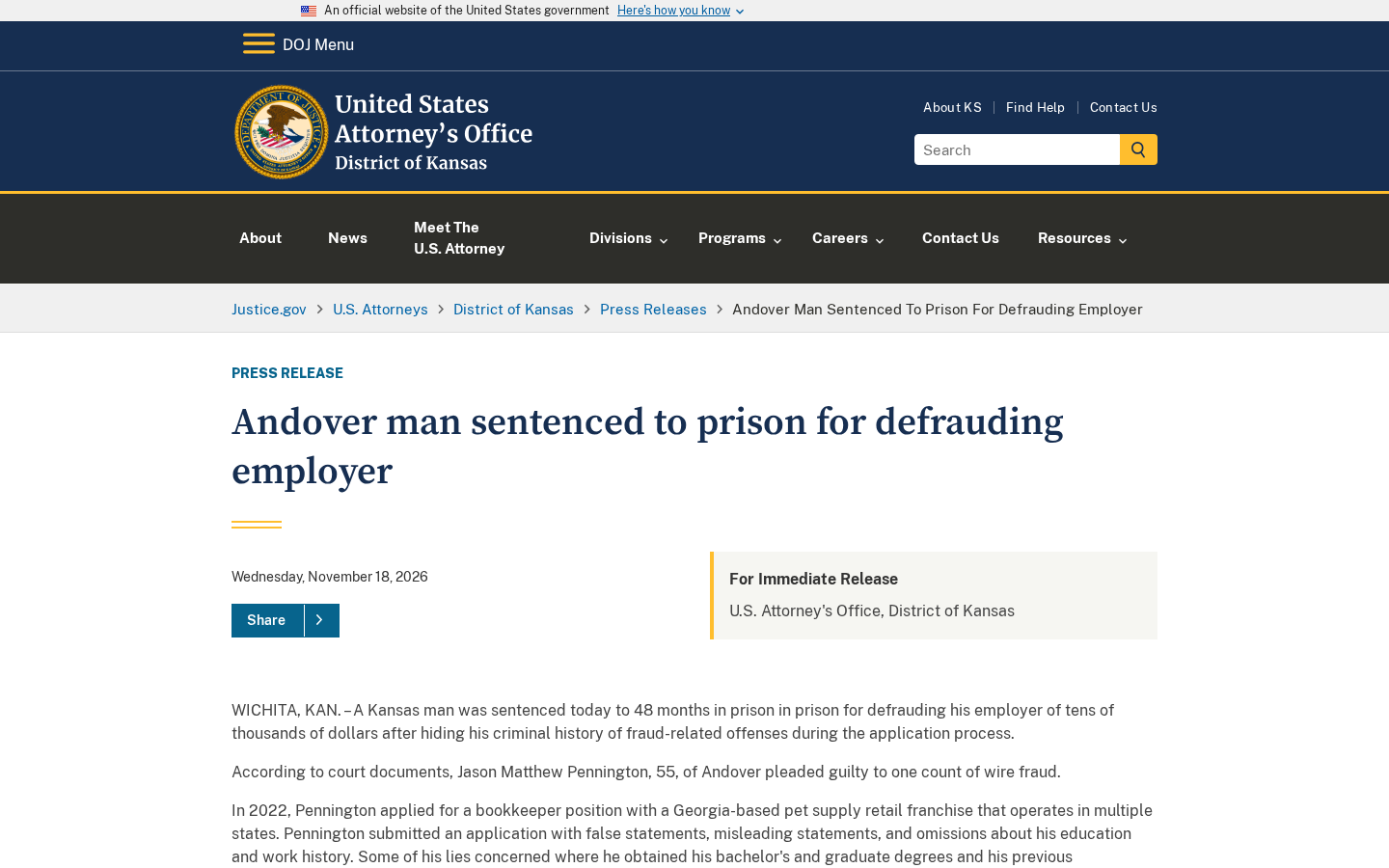
Jason Matthew Pennington applied for a bookkeeping position with a Georgia-based pet supply franchise that operated in several states, prosecutors said.
The Kansas federal sentencing report says his application contained false or misleading claims about education and employment, including schools he said he had attended.
The company hired him remotely with accounting and payroll responsibilities, and prosecutors say unauthorized wires cost the business $84,822.
Pennington pleaded guilty to one count of wire fraud and received a 48-month prison sentence on November 18, 2026.
The release does not describe the company’s exact bank permissions or say whether each transfer passed through a separate approval process.
That leaves two questions a business can act on separately: what it verifies when hiring and what authority the role needs afterward.
A background check cannot replace a payment control
References can help establish whether someone did the work they claim, but they cannot tell you who approved a transfer last week.
Likewise, seeing a person on a video call does not establish that they earned a degree or worked for an organization they named.
Make the hiring checks relevant to the actual job, apply them consistently, and use proper procedures if you obtain a third-party report.
The FTC’s employment screening guidance explains how federal requirements can apply when an employer obtains background information from a company that compiles reports.
For a payment role, use the screening results alongside independent approval and review rather than treating any prior report as a guarantee.
The same payment limits should work when a trusted employee takes a vacation, gets promoted or temporarily covers another person’s work.
Separate tasks that sound similar but carry different authority
A bookkeeper may need transaction records to reconcile the ledger without needing permission to send a wire from the bank account.
Put the difference in writing before creating access so a temporary convenience does not become a standing assignment no one reviews.
| Task | Who or what should verify it |
|---|---|
| Verify a claimed job | Former employer reached through independently located details |
| Prepare a payment | Staff member working from an approved invoice or payroll record |
| Release a wire | Separate authorized approver checking recipient and amount |
| Update a payee | A verified requester and independent check of the change |
| Reconcile the bank activity | Someone who can compare bank records with the approved ledger |
- Make a list of who can prepare, release and review payments, and compare it with the permissions the bank actually shows.
- Use individually assigned accounts so the records show who approved a specific transaction instead of merging several people into one login.
- Keep a way to use the controls during holidays, because relying on one owner can turn delayed work into pressure to bypass approvals.
If your bank cannot separate those duties easily, ask about limited roles or a different arrangement before enabling broad transfer rights.
How the Remote Bookkeeping Fraud Worked
Step 1: The application makes the candidate appear more qualified
Prosecutors say Pennington supplied false or misleading details about his education and employment when applying for the job in 2022.
The issue was not the format of the interview, but that the statements an employer relied on did not match his background.
An employer can ask an applicant to confirm relevant positions and credentials, then verify them without relying solely on documents the applicant supplies.
Look up the institution or former employer yourself and use its authorized process rather than calling an unverified personal number.
If a verification provider cannot confirm an older record, ask what was actually checked instead of treating silence as confirmed deception.
Keep factual discrepancies separate from issues that were not verified, and follow applicable employment rules before you act on a report.
Step 2: Accounting duties put the employee close to outgoing money
The franchise hired Pennington as a remote employee whose work included accounting and payroll oversight, according to the sentencing announcement.
An employee doing that work needs reliable records and may prepare payment information, but not every task requires an ability to release funds.
The public record does not establish which banking tools he used, so the lesson is about authorization rather than one technical setting.
Give a reviewer access to the statements they need while preserving a separate route for the person authorized to approve a payment.
When a new role needs access to several locations, list the accounts, companies and dates covered rather than extending the same permissions everywhere.
Review any temporary access after payroll or another deadline passes, and remove powers the employee no longer needs to perform the job.
Step 3: Transfers happen without the employer’s authorization
Pennington made unauthorized wires that cost the employer $84,822, a total the Justice Department reports for the specific fraud against that employer.
There may be a bank reference and a posted debit for a wire even when no one can produce a valid approval.
A bank record shows what happened to the balance, and checking it against a separate approval record tells you who agreed to it.
An employee explaining the charge is not a substitute for the business confirming the recipient and payment separately from the person who prepared it.
Pick a time to review actual transfers regularly, and act promptly if a transaction does not match a real invoice or payroll entry.
Use the bank’s fraud team rather than assuming an unusual transfer can wait until the company finishes its internal investigation.
Step 4: The court result does not replace the business’s own records
Pennington’s guilty plea and prison sentence establish his responsibility for wire fraud, but the announcement does not describe the company’s recovery.
A company can still need to trace its balance, prevent another unauthorized payment and keep records for the bank or investigators.
If transfers affected payroll or vendors, identify which legitimate obligations still need to be paid before changing access across the whole operation.
Preserve account permissions and review records as they existed when you first noticed the problem, subject to advice from your authorized team.
A small business can learn from the control gap without assuming remote employees are inherently harder to trust than local employees.
Set Up a Payment Review That Still Works Next Week
Start with one payment type you can trace all the way through, such as an ordinary supplier invoice paid from the operating account.
Give the person who prepares it a way to attach evidence, including what was bought and which account the payee is supposed to use.
When the approver opens the bank request, they should see enough information to identify that invoice rather than accepting only the total.
Use an independently verified contact when a previously known supplier changes its bank details, even if a familiar employee forwards the message.
After payment, have a reviewer compare the bank record with the invoice, expected recipient and name of the person who approved it.
If one employee must cover multiple duties, arrange owner or outside-accountant review of that activity against bank records rather than leaving it unchecked.
Do not stop the test at payroll, because reimbursements, manual transfers and changes to saved payees may use a different set of permissions.
Where a bank lets you configure alerts, send them to someone who is not the only person able to prepare and release wires.
Keep the check specific enough that a substitute reviewer can follow it using the same records without relying on a verbal handoff.
If your accountant is also the only backup approver, assign someone else to compare the month-end bank activity against the approved records.
Check recurring payment templates as well as individual wires, because permission to change a standing instruction can affect more than one payment.
Keep approval limits tied to actual business needs instead of letting an old onboarding preference continue after the person takes a different role.
When a vendor insists an unfamiliar account is correct, pause and compare the new request against the already approved contact and payment details.
Review which people can change transaction alerts, because the person spending funds should not be able to silence the only independent notification.
Set a date to repeat the review after the new employee starts rather than assuming permissions stay the same through setup and training.
If your bank cannot add a separate approver, ask which accounts can be viewed without payment access before handing over a broader role.
Send the reviewer a statement from the bank rather than only an exported ledger whose contents may depend on the preparer’s access.
What to Do if You Have Fallen Victim to This Scam
-
Contact the bank about the exact wires immediately
Use the business banking number you already trust and ask for the team handling unauthorized wires, rather than a general billing inquiry.
Give dates, amounts, recipients and references you can verify, and ask whether a pending payment can be stopped or a recall requested.
Record the bank’s case number, the time of your call and any cutoff it gives you for sending more information.
-
Protect accounts without losing evidence
Have an authorized administrator review access and suspend permissions linked to suspected misuse, following instructions from your bank and response team.
Save the current permissions, bank activity and approval records where authorized staff can reach them without changing the original files.
Do not shut off an essential business process blindly if you can contain the affected access and keep valid payments moving safely.
-
Reconcile from bank records, not only the internal ledger
Match each disputed debit to its approval and supporting invoice to see whether it reflects an expected payment or an unexplained transfer.
Keep different legal entities and locations separate so a debit on one business is not mistakenly reported as another location’s loss.
Check whether a legitimate invoice remains unpaid and coordinate any replacement payment before sending the same amount a second time.
-
Give internal reviewers and investigators a dated account
Identify the bank details, relevant staff access and gaps in approvals, and separate observed transfers from assumptions about how they were made.
Speak with your accountant, insurer or counsel promptly when notice deadlines, employee records or a suspected financial crime may be involved.
If the case fits online fraud reporting, use the FBI’s IC3 website and retain the evidence you submitted through its verified route.
-
Verify the new controls before returning to normal access
Have an authorized reviewer trace one routine payment through preparation, independent approval and reconciliation before expanding permissions for the restored account.
Make sure someone other than the preparer receives alerts and can view the actual bank activity when the regular reviewer is away.
Do not assume a different password fixes a role that still lets one person release transfers without anyone else seeing them.
Frequently Asked Questions
Was the company a victim of a fake job advertisement?
No, the business hired an applicant for a real bookkeeping position, and prosecutors say the employee then made unauthorized transfers.
That is different from a fraudulent recruiter asking an applicant to buy equipment, accept a check or pay fees to start work.
Was a remote job the reason the fraud was possible?
The role was remote, but prosecutors did not identify remote work itself as the cause or describe all of the banking controls.
Confirm the person’s qualifications and vet payment authority separately, regardless of where the employee usually happens to do their work.
Does a background report let us skip checking a reference?
A report shows the information the provider obtained for its assignment, and it may not verify the candidate’s exact duties or dates.
Use lawful and relevant checks, and address discrepancies through the required process before drawing a conclusion about the person who applied.
Does review mean a second person must enter every transaction?
A reviewer can check the recipient, amount and supporting record without doing the preparer’s data entry or sharing the same login.
Ask the bank what approval roles it supports, then choose an arrangement that reflects what your employees actually need to do.
What if the employee can still explain the transfer?
Request the source record and an approval you can verify, rather than relying on an oral explanation from the person who sent it.
Contact your bank promptly if funds may still be recoverable, even if your internal review remains open and the explanation sounds plausible.
Did the sentencing mean the company got all of its money back?
The Justice Department reported the loss and sentence, but the announcement does not confirm that the business was reimbursed for the wires.
Keep the bank claim and internal loss records current instead of assuming the outcome of a criminal case answers those questions.
The Bottom Line
Do not give a new bookkeeper payment authority that nobody else can check, however strong the references or interview may have seemed.
If a wire was not approved, call your bank, preserve the transfer and approval records, and verify the separate permissions before restoring access.

Join the discussion
0 commentsShare your experience or ask a question about this article.
Community experiences
Did this happen to you?
Your experience could help someone recognize the same scam. Submit a private report for our team to review.
I experienced this tooReports are reviewed before publication. Sharing publicly is always your choice.
Discussion
Start the conversation
Have a question or something useful to share? Add the first comment.