

Your Paris dates are set, but the ticket calendar on the official site looks thin. A search result promises the Eiffel Tower entry you wanted, perhaps with a “priority” option that sounds worth the extra cost.
There is a reason that offer deserves a pause. The difference between a valid guided-tour package, an overpriced listing, and a ticket that will not get you through the gate is not always obvious from the checkout screen.
Overview
Fraudulent Eiffel Tower ticket sites exploit sold-out dates
The company that operates the Eiffel Tower warns of increased websites and online ads selling fraudulent tickets during busy travel periods. Popular time slots can sell out quickly, so a search result promising easy availability may look like the answer to a real planning problem.
The operator says the sole official website for direct Eiffel Tower ticket sales is ticket.toureiffel.paris. Its ticket-scam warning urges visitors to check the full address before buying, including when a link is promoted in search results.
“Priority entry” is a powerful but misleading phrase
The Eiffel Tower says it does not operate a “skip-the-line” system. It warns that ads promising that benefit are misleading. A legitimate timed ticket can save a visitor from queuing at the ticket office, but that is different from a magical pass around all entry procedures.
Some authorized resellers offer an entry ticket bundled with a guided or accompanied service. Their packages may cost more than a direct ticket. This means “not the official website” is a reason for scrutiny, not automatic proof that every tour operator is a scam.
The loss can be money, entry, and a ruined visit
A fraudulent seller may take payment and send nothing, issue a confirmation that is not a valid ticket, or sell access it cannot deliver. The visitor may discover the problem only at the monument, when the preferred time is gone and the rest of the day’s plans are difficult to rearrange.
Before paying, look for these signs together rather than relying on one clue:
- A page claims to be the official Eiffel Tower seller outside the known official domain.
- It promises “skip the line” or a special certification the operator does not award.
- It sells a bare elevator ticket while claiming to be an independent reseller.
- It shows unlimited popular time slots when official inventory is scarce.
- Legal business details and the exact service are missing or unclear.
Why the Ticket Search Is Vulnerable
Travel decisions are often made under a clock. You have a hotel booking, perhaps a train on the following morning, and only a narrow opening for the tower. That makes a “two tickets left” warning feel like helpful information instead of pressure.
Search ads add apparent credibility. A paid result can sit above the operator’s own site, and a title can use words like “official,” “verified,” or “priority.” Placement is advertising inventory, not an endorsement by the monument.
Ticketing has legitimate complexity, too. Direct tickets, timed admissions, stairs options, elevator options, and guided packages are not all the same product. A dishonest page can exploit that complexity by making a vague offer sound like a special access tier.
The Eiffel Tower’s guidance is unusually specific: the official direct seller is clearly identified, and the site explains which reseller packages can exist. That makes it possible to check a claim before paying rather than relying on a review widget on the checkout page.
It also protects the rest of your itinerary. A questionable booking can waste more than the ticket price when a family has reserved transport, meals, and a limited afternoon around one entry slot. Verify the admission before building other plans around it.
How the Eiffel Tower Ticket Scam Works
Step 1: The visitor finds scarce availability
A traveler checks the desired day and cannot see a convenient slot on the official ticket office. That creates a genuine problem. Fraudulent sellers do not need to invent interest in the landmark; they simply position themselves where disappointed buyers will look next.
The operator says tickets may be released again at intervals and can also be bought at the monument on the day of a visit for immediate use, subject to conditions. A sold-out online calendar is frustrating, but it is not a reason to abandon verification.
Step 2: An ad or result offers the missing ticket
The listing may use a domain with Paris, Eiffel, tower, tickets, or a similar word in it. It can show attractive time slots and a “reserve now” button. The goal is to make the visitor compare convenience and price before asking who owns the site.
The official Eiffel Tower warning says to treat ads and recommendations from search engines or AI tools cautiously. A result can be useful for discovery, but the operator’s own ticket page is the reference for official direct sales.
Step 3: The offer adds false status or special access
Some sites claim to be an “official partner” or promise “skip the line.” The tower says it does not award such certifications and does not operate a skip-the-line system. A fake badge can therefore be a warning rather than reassurance.
There is a nuance worth keeping: a guided tour may include a valid entry ticket and an additional service. It may use a reserved-access time. The buyer must understand exactly what the seller provides, who accompanies the visit, and whether the package is authorized.
Step 4: The checkout collects payment for an unclear product
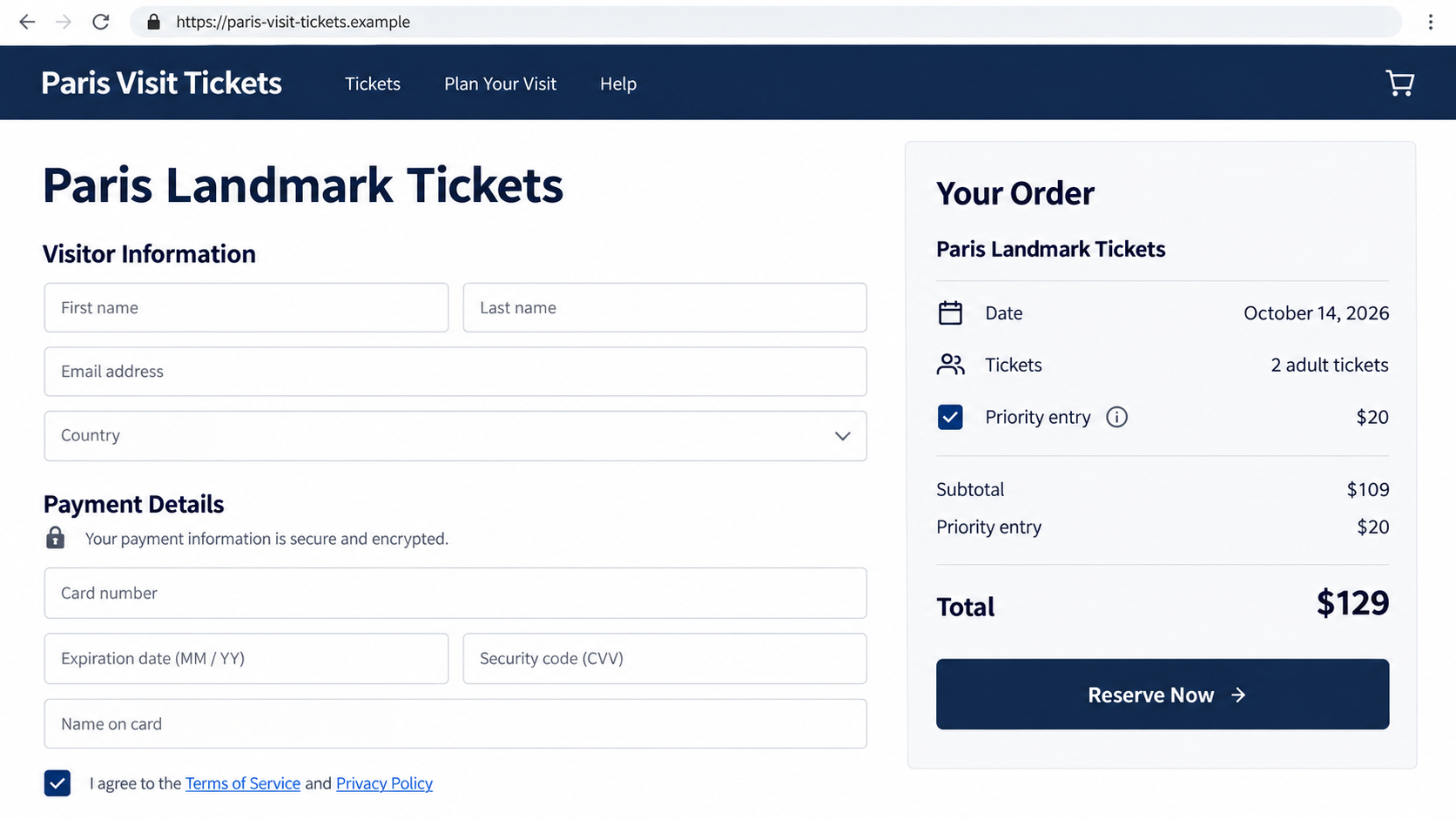
A polished page can show a date, number of visitors, card form, and final total. None of those elements proves that the seller has valid inventory. The illustration above depicts a generic fake checkout, not a captured live seller or a real Eiffel Tower offer.
Read the product name and terms before entering a card. Is the seller promising a standalone tower elevator ticket, an accompanied tour, or only a booking service? If that distinction is buried, the visitor may pay for something different from the entry they expected.
Step 5: A confirmation arrives and appears to settle the question
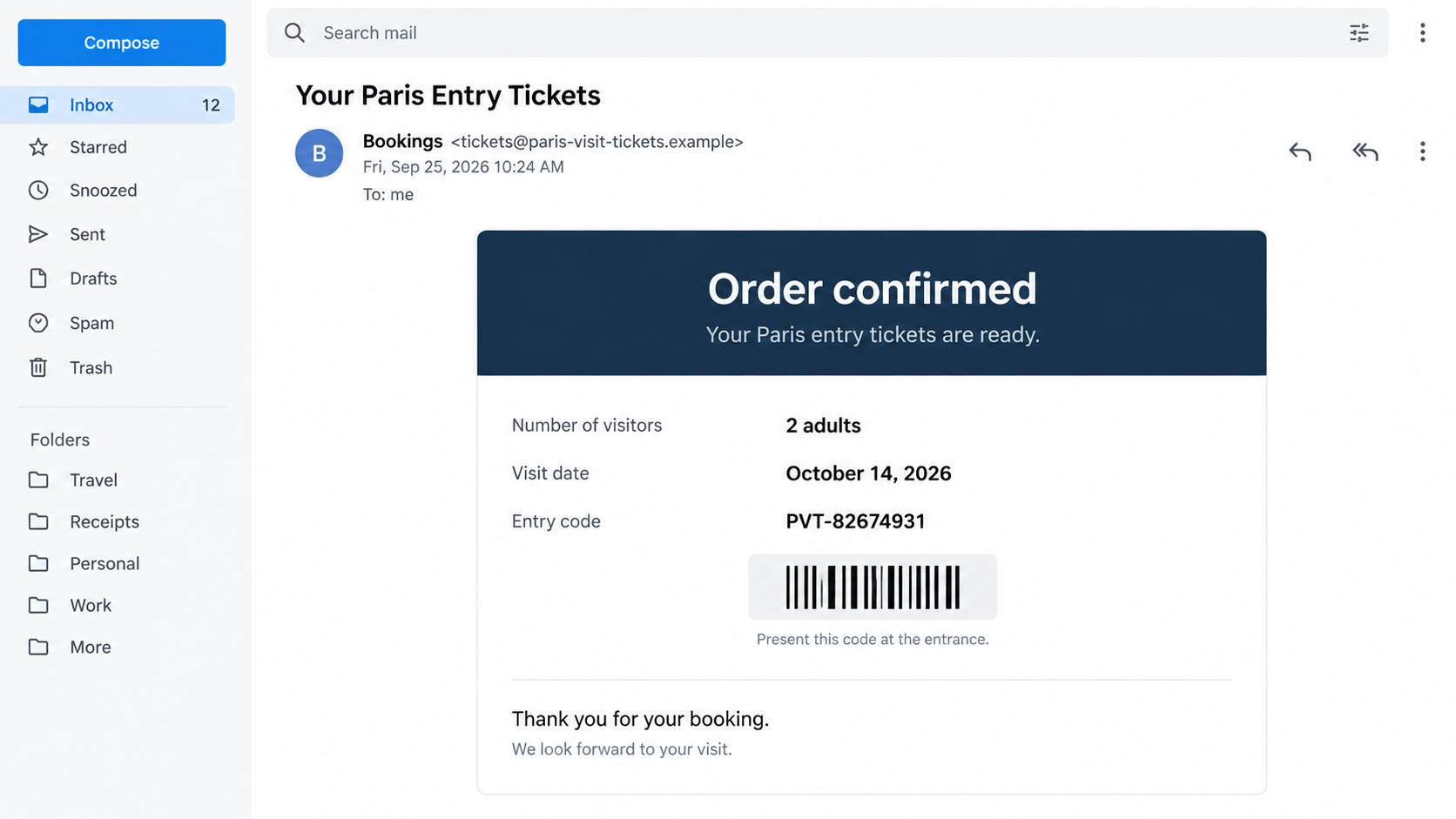
An order email can contain a barcode, booking number, or PDF. Those items can be generated without a valid tower reservation. A visible code is a visual cue, not independent proof that it exists in the operator’s ticketing system.
Check the issuer, ticket type, visit time, and any guided-service instructions. If the seller claims to be an authorized reseller, ask for the exact operator and the included service. Do not wait until you reach the gate to raise questions about a vague confirmation.
Step 6: The problem surfaces at the monument or after payment
A visitor may receive an invalid ticket, learn the advertised time was unavailable, or be directed to wait for a guide who never appears. Some sellers may refuse a refund while pointing to terms the buyer did not notice. The precise outcome varies, so keep the purchase documents and correspondence.
The tower’s visitor regulations warn that tickets obtained illegally, including through unauthorized resellers, can be refused without compensation from the operator. A payment dispute belongs with the seller and card issuer, not with gate staff who did not issue the ticket.
Seller, Address, Support, and Ticket Checks
The official seller is identifiable
The Eiffel Tower operator says only ticket.toureiffel.paris is the official direct-sale website. A site that markets itself as the tower’s official ticket office under another domain is making a claim you can test immediately. Do not confuse a tour reseller with the monument itself.
The business details should be available
The operator advises checking legal notices and terms. A commercial seller should identify the business behind the checkout, including registration details where applicable. A vague contact form and a Paris-themed domain are not substitutes for a traceable company.
Customer support should explain the service
Before paying a reseller, ask exactly what the package includes, who issues the entry ticket, where you meet a guide, and what happens if the time changes. If no one can answer in writing, the offer is too uncertain to use for a time-sensitive visit.
The ticket must match a real admission route
A standalone elevator ticket should come through the operator’s official direct-sales route. Reseller offers should include a permitted additional service, not merely a claim that a barcode guarantees entry. Check the date, time, access level, and conditions against the official guidance.
How to Buy Without Trusting a Misleading Result
Type toureiffel.paris yourself and follow its ticket link. The operator’s own guide explains ticket types, timing, and availability. It also notes that online inventory can reappear, so checking again may be safer than paying a stranger for a promise.
If you consider a tour package, do a separate business check. Read the legal company name, registration details, cancellation terms, recent independent reviews, and the exact guided service. A higher price can be legitimate when it buys a real guide; a bare ticket sold at a markup is a different proposition.
Be wary of absolute guarantees. The tower says “skip the line” is not a service it operates. A genuine timed ticket may reduce waiting at the ticket office, but security and access procedures still apply. Any seller who blurs those distinctions is not helping you plan realistically.
Keep the official site open while comparing offers. If a reseller claims a ticket type or availability the official guidance says cannot exist, do not let a countdown override that contradiction.
What to Do if You Have Fallen Victim to This Scam
- Save every record of the purchase. Keep the ad, URL, order page, terms, confirmation email, ticket PDF, merchant descriptor, and messages with the seller. Note the promised date and access type. This evidence is more useful than a general statement that the ticket looked fake.
- Contact the seller in writing. Ask for a valid ticket or a refund, and request clarification about the legal merchant and included service. Keep the reply. Do not pay an additional “validation” fee or send a second card number to release the same ticket.
- Speak with your card issuer promptly. Explain whether no ticket arrived, the ticket was invalid, or the service differed from the listing. Ask about a dispute and whether the card needs protection if the site looked fraudulent. The issuer will tell you what documentation it needs and its deadlines.
- Check the real visit options. Use the Eiffel Tower’s official ticket guidance for available routes. Do not assume the suspicious confirmation reserves a time. If your visit is soon, plan a verified alternative rather than waiting for an evasive seller.
- Protect accounts if you reused a password. A ticket checkout normally needs contact and card details, not your email or banking password. If you entered credentials on the site, change them through the genuine service and review recent sign-ins. Save any unusual verification texts as evidence.
- Check the device only if software was involved. A fake ticket site may merely collect payment, but an attachment or downloaded “ticket app” creates a separate device risk. Scan with Malwarebytes if you installed something. AdGuard can reduce exposure to malicious ads and known scam sites during later searches, though it cannot validate an already purchased ticket.
- Report the listing and avoid recovery middlemen. Flag the ad or result to its platform and report the merchant to the relevant consumer authority. If you are in France, SignalConso provides a reporting route; U.S. travelers can use the FTC. Do not pay a third party that claims it can guarantee a refund.
Frequently Asked Questions
What is the official Eiffel Tower ticket website?
The operator identifies ticket.toureiffel.paris as the only official website for direct tower ticket sales. Reach it from toureiffel.paris rather than relying on a search ad.
Are all other ticket sellers scams?
No. Authorized resellers may sell an entry ticket bundled with an additional service such as a guided tour. Check the business, package details, and terms; do not assume a standalone ticket from another site is equivalent.
Is a “skip-the-line” ticket real?
The Eiffel Tower says it does not operate a skip-the-line system. Timed tickets and reserved access can change the ticket-office wait, but sellers should not promise that all queues or procedures disappear.
Does a barcode email prove my ticket is valid?
No. A code or PDF can be generated by a seller without a valid reservation. Confirm the issuer, visit details, and service through the seller and official tower guidance before your trip.
What if the official date is sold out?
The operator says additional inventory can appear online and same-day tickets may be available at the monument for immediate visits. Availability is not guaranteed, but a sold-out calendar does not make an unverified reseller safe.
Can my bank reverse a fraudulent ticket charge?
It may be able to help through a card dispute, depending on the payment method and evidence. Contact the issuer quickly, explain the exact problem, and provide the listing, receipt, and correspondence.
The Bottom Line
The Eiffel Tower ticket scam uses real scarcity to sell false certainty. A polished checkout and a confirmation code can look convincing while the promised admission remains unverified.
Start with the operator’s ticket site. If you choose a reseller, verify the company and the additional service, and treat “official” or “skip the line” claims from another domain with care.

Join the discussion
0 commentsShare your experience or ask a question about this article.
Discussion
Start the conversation
Have a question or something useful to share? Add the first comment.