


A recruiter says you can work for Elon Musk by answering ten questions a day to train AI. The promised pay is $5,000 in a week.
The arrangement sounds like a job offer, except that money has already moved in the other direction. The recruiter says that part will be fixed later.
Overview
The applicant paid for a supposed interview
A family member described an applicant paying for an interview for a job supposedly connected to Elon Musk. The applicant’s account was charged three times, according to the report.
The applicant contacted her bank to dispute the charges. She was then told she had the job and that her earlier payments would be returned through PayPal.
The recruiter framed the fee as a way to show the applicant was serious. The offer used that explanation to keep her engaged after she had questioned the charges.
The pay promise made the job sound newly plausible
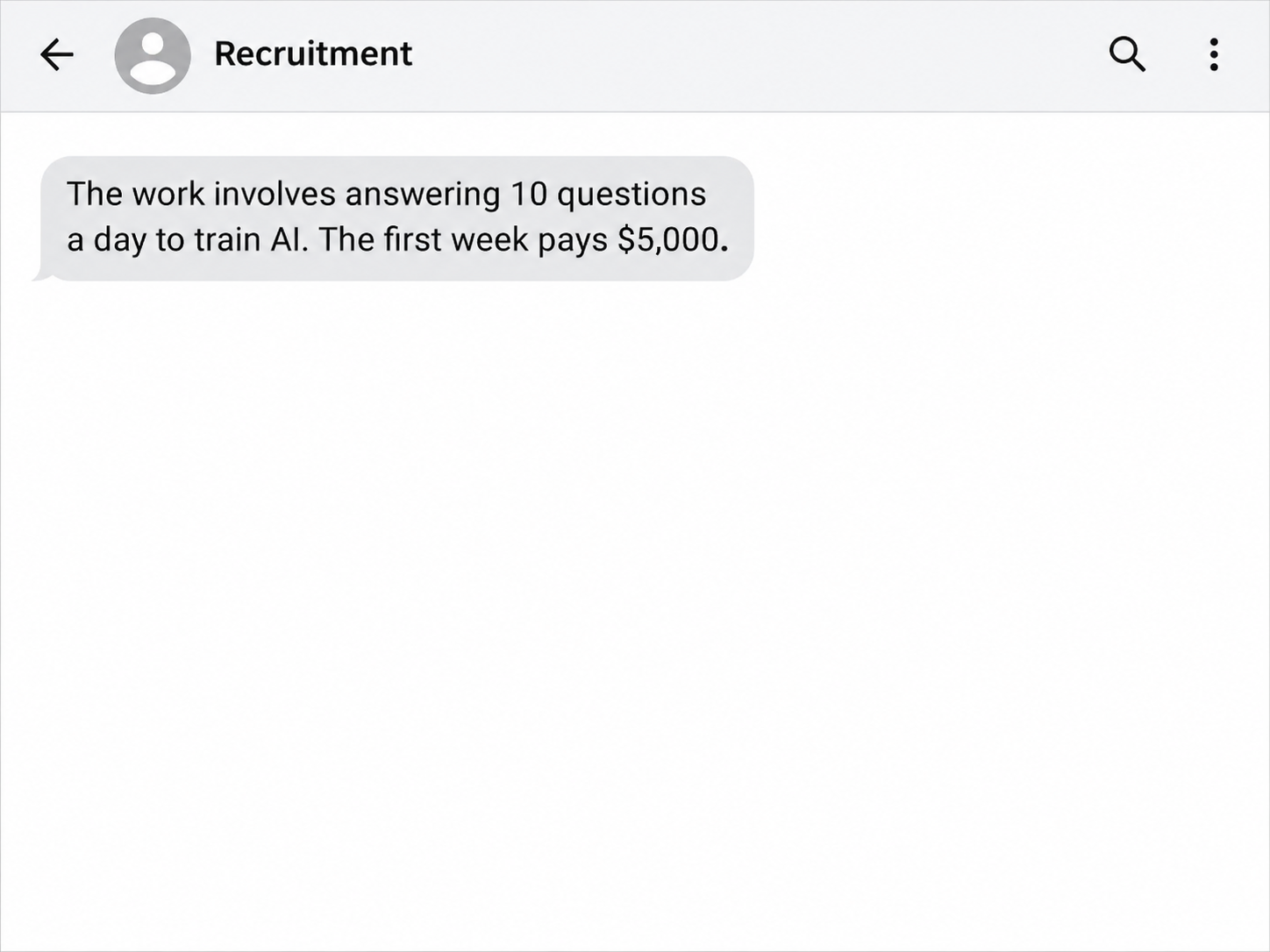
The work was described as ten daily questions to help train AI, with $5,000 promised in a week. The illustration reconstructs that pitch without showing a real recruiter account.
The family member later said the applicant recognized it as a scam. No employer, wage payment or refund was verified.
PayPal was the proposed way to return the money. The report does not show that PayPal was used to take the original payments or that it sent anything back.
Verify a job and a refund through separate channels
The FTC warns that honest employers do not charge upfront fees to get a job. An offer to return an interview fee later does not create an employment relationship.
- Confirm the legal employer and an actual vacancy before sending any documents.
- Keep the charge records and the messages explaining why you supposedly had to pay.
- Check any promised refund in the payment provider directly.
- Stop if someone asks for another fee, a login code or a different payment method.
Even if the work sounds like a real job category, the claim about the fee deserves its own check. A wage promise does not tell you where your payment went.
Why an Offer to Train AI Sounds Like a Real Job
Some legitimate jobs involve evaluating AI output, labeling data or answering questions. That makes the description sound like work someone could do from home.
Real job descriptions usually explain the responsible company, the kind of work and the terms of payment. A stranger naming a public figure has supplied none of that by itself.
In the reported case, the future wage was $5,000 in a week. There is no evidence the person completed the work or received that pay.
The applicant had already paid by the time she heard the fee was a test of seriousness.
That explanation tried to turn an earlier warning into something the new employee had passed.
The FTC’s guidance on job impersonation describes fake recruiters who use familiar company names, then request upfront money or personal information. This case supplies a specific variation on that pattern.
Ask for a job reference you can check through the employer. If the name is the only part you can find, there is no basis for paying anyone to continue.
How the Fake AI Training Interview Scam Works
Step 1: A famous name stands in for a real employer
The offer suggests a connection to Elon Musk. That can feel like enough for a job seeker to picture a real company, even if the recruiter has never named one.
A hiring company should be clear about which organization will employ and pay you. That information should be independently verifiable before an application asks for personal details.
Step 2: An interview is made conditional on a payment
According to the family report, the applicant paid for the interview. Her account showed three charges, although the public account does not establish why there were multiple charges.
If a proposed interview asks for money, keep a copy of that request. Save the charges through the bank so you can compare what was promised with what was paid.
Step 3: The offer of a job tries to undo suspicion
The applicant questioned the charges and called her bank. The reported follow-up told her she had been hired and that the payment was meant to test her seriousness.
A fake recruiter can respond to a complaint by offering better news. Keep the dispute open through the bank while you verify whether a real employer ever offered anything.
Step 4: The refund promise opens another payment conversation
The original story says a refund was promised through PayPal. It does not describe a confirmed PayPal credit or say that anyone subsequently asked for a code or another fee.
If a later message asks you to pay to release the refund, stop.
Check your actual payment account for a transaction and tell the bank or issuer what the recruiter said.
Step 5: High pay makes it tempting to keep going
The work was presented as ten answers a day with a $5,000 first week. That might persuade someone to wait instead of dealing with the first charges.
The promised wage and the money you have already paid are different amounts. Keep the record of the charges in front of you while you deal with the bank.
What to Ask Before Accepting a Remote Training Job
Identify the company listed on the actual vacancy
Ask for the full name of the employer, the recruiter’s role and the reference for the position. Open the company’s careers site using an address you find independently.
A company can use an external recruitment agency. Contact the company or agency through its own published details to verify that the person is assigned to the position.
Check which organization would issue the contract and payroll. A personal name or a logo on an interview document does not establish who would pay you.
Ask what the work and pay terms actually require
Find the schedule, expected output and pay period in the verified vacancy or contract. A promise to earn a particular amount from a handful of answers needs a real source.
An employer may ask for a work sample and explain what it tests. A trial task still gives the recruiter no reason to charge you.
If you receive documents after the charge, verify the employer before submitting new account details. A convincing offer letter can give someone a second reason to collect information.
Evaluate the refund through independent records
If you paid by card, ask the issuer how to distinguish a dispute credit from a refund issued by the merchant.
PayPal’s refund help explains where to check a refund in Activity. Check the account directly and keep the original payment record if the recruiter offers a separate payment.
Do not assume a screenshot means money has arrived. If the original charge remains, ask the issuer how to handle a later payment or credit.
If someone asks you to stop disputing the charge to keep your job, tell the bank. It can explain what withdrawing a dispute would mean for that specific transaction.
When Someone You Know Still Believes They Were Hired
Start with the exact charges and the recruiter’s explanation. Ask who actually receives the fee and how the applicant can reach the employer through a number they choose.
It may help to separate the promise of work from the refund. The person can protect the money they already paid while you both check whether the vacancy exists.
Offer to sit with them while they call their bank. Keep the discussion on concrete steps such as saving the charge records and declining to send any new payment.
If the recruiter says a family member is interfering with a good opportunity, make space for the applicant to confirm the role on their own through the company.
Follow the Three Charges Without Mixing Them Up With a Refund
Record the original fee request before contacting the issuer
Find the message that said what you would pay and when. Write down the stated purpose, then match each debit to the date and amount in your account.
Tell the issuer which payment you intended to make and which ones you did not expect. That distinction can matter when it decides how to handle each entry.
If the merchant name is different from the recruiter’s name, preserve both. Let the issuer identify the organization that processed the charge.
Keep a copy of any promise that the money would be returned through PayPal. That way the bank can see what the recruiter promised after the applicant disputed the charges.
Give a later refund promise its own place in your notes
A promise that someone will repay you is different from a credit visible in your account. Record the date of the promise and the provider it names.
If a credit appears in the original account, ask the issuer whether it is temporary or final. Its status does not turn the supposed job into a real one.
If someone sends a request for money instead of a credit, save it and contact the provider directly. You can show it the payment reference without following the recruiter’s instructions.
Preserve what you would need for a report about the job
Save the profile name, job description and any agreement you received. Record exactly when the employer claimed the position had been approved.
If you handed over personal information, list which documents went to the recruiter and whether you supplied banking information.
Give the appropriate provider the details it needs to secure the account.
If a family member is helping, make a copy for them and retain the original messages. They can help build the timeline without taking control away from the applicant.
If you need to measure how much money remains at risk, use actual account records. Leave the promised weekly wage out of the calculation until there is a real deposit.
Keep notes about when to follow up with the bank so the promised refund does not determine your next call. Use the bank’s published contact or your existing case.
What to Do if You Have Fallen Victim to This Scam
-
Stop contact about the supposed job and preserve the interview request, payment instructions, receipts and any messages promising that the fee would be refunded.
-
Report each charge to the issuer or payment service that handled it, and explain whether you agreed to one payment or saw additional charges afterward.
-
If the recruiter mentions PayPal, check PayPal independently for actual activity and keep its records separate from the original bank dispute.
-
Check the accounts connected to any personal information you submitted, and get help from the relevant provider if a password or financial detail was exposed.
-
Report the profile or job listing through the service where it appeared, and file a consumer report with FTC ReportFraud in the United States.
-
Keep the bank case number and the job messages together so you can document a later demand without returning to the recruiter.
If you only submitted a resume, record what information it included. If you also sent an identity document, tell the relevant agencies or providers so they can explain your options.
If someone offers to recover the interview fee in exchange for another payment, stay with the financial provider you already contacted. Keep the new message with the original report.
Frequently Asked Questions
Is it normal to pay someone for an interview?
The FTC says honest employers do not ask applicants to pay upfront to get a job. Verify the vacancy with the employer if a recruiter asks you to pay.
Does mentioning Elon Musk connect the job to one of his companies?
The report gives no verifiable employer tied to the offer. Check the organization and vacancy through an official careers channel before trusting a recruiter who uses his name.
Why did the recruiter offer a PayPal refund?
The report says a refund was promised after the original charges were disputed. Use your own PayPal activity and bank records to check whether anything was returned.
Does the weekly pay prove the applicant had a real job?
A figure in a chat is a claim the recruiter made. A verified employer, written terms and the actual payment record tell you more about whether work exists.
What should I tell the bank about the three charges?
Explain what payment you were asked to make and which charges appeared. Provide an amount and date for each one and keep the original promises for reference.
Can I verify a legitimate AI training role independently?
Use a known employer’s careers site or contact its recruiting office directly. Ask who pays for the work, what the terms require and whether the job reference is valid.
The Bottom Line
Walk away from any AI training job that asks you to pay for an interview. Verify the employer and the vacancy before you send documents or agree to anything.
If you already paid, report the charges to the provider that handled them. Verify any claimed refund in your own account and stop taking instructions from the recruiter.

Join the discussion
0 commentsShare your experience or ask a question about this article.
Community experiences
Did this happen to you?
Your experience could help someone recognize the same scam. Submit a private report for our team to review.
I experienced this tooReports are reviewed before publication. Sharing publicly is always your choice.
Discussion
Start the conversation
Have a question or something useful to share? Add the first comment.