


A business credit card offer arrives at your address. You recognize the address, but you have never heard of the company printed above it.
You look up the company on Florida’s business registry and find your own name on the paperwork.
Overview
A marketing letter led to a real state record
A Florida resident reported getting an American Express invitation to apply for a business card. It was addressed to an unfamiliar company at the resident’s home.
The resident searched the name in Sunbiz, the state’s business filing system.
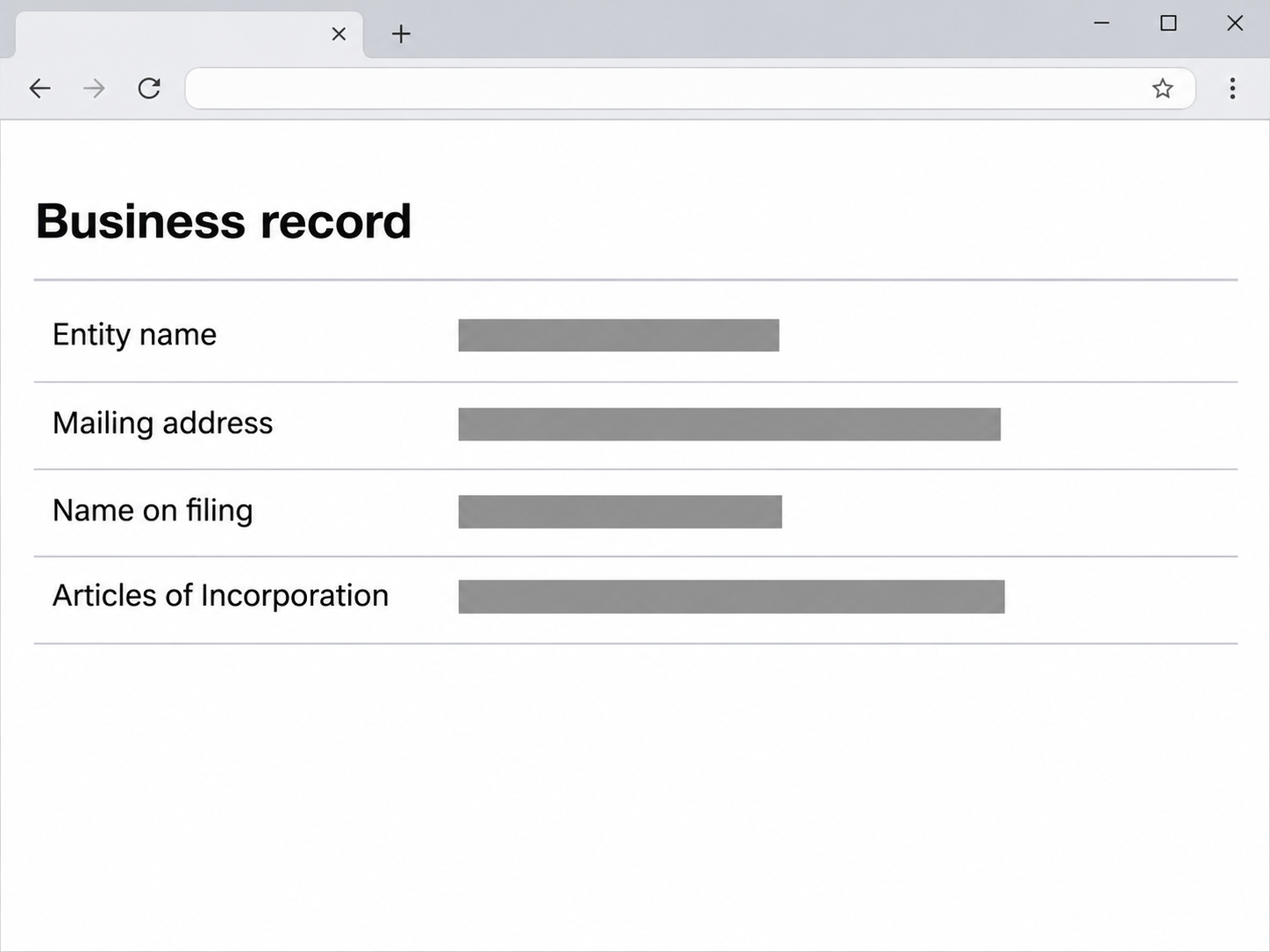
They said they found an entity tied to their name and Articles of Incorporation bearing their name as signer.
The illustration shows the registry fields with identifying details omitted. The resident did not disclose the business name or document number publicly.
A card offer and an opened account are different records
The resident described the mail as an invitation to apply.
They did not report an already opened credit card account, and they said their personal credit reports showed no new activity.
They also reported seeing no employer identification number, or EIN, on the state record. That means none was visible to them, while any separate federal records remained unknown.
The identity issue was the reported filing under someone else’s name. The letter was how the resident noticed it, and the available evidence does not show involvement by American Express.
Start with the document that has your name on it
Use Florida’s official business search to find the entity. Record where your name appears and save the actual filing if it is publicly available.
- Keep the original mail and match its business name to the registry entry.
- Save the filing date, document number and the exact role listed for you.
- Contact the Division of Corporations through its own published information.
- Check any bank or credit correspondence independently for evidence of a real account.
The right response depends on which record you found. An unauthorized state filing, an actual credit application and an IRS notice are each evidence of a different event.
What the State Record Can Tell You
Confirm the company and the original filing
Search the entity name exactly as printed on the envelope. A result with a similar name may belong to a different company, so check the document number and address.
Open the record detail and review the original filing attached to it when available. A list of search results may show less than the full document.
Look at the role printed beside your name. Someone can be listed in connection with a business without occupying the role that a letter or a caller assumes.
Save any later filings that change the listed address or person. Make a record of the dates so the state office can see what was originally filed and what changed.
Look for facts that connect the record to you
Names can coincide, especially when a person’s name is common. Compare the mailing address and other matching details before concluding that a registry record refers to you.
In the Florida report, the person said the letter reached their address and that the attached Articles of Incorporation carried their name. Those details were what prompted the concern.
If the filing bears your address or apparent signature, explain that to the state office. Describe what you did not authorize and which records show it.
Keep those records in a private folder. A public screenshot of the full filing can spread the same information you are trying to protect.
Separate the filing from its possible uses
An official registry entry shows that information was filed. It does not tell you who entered it or whether a bank opened an account for the entity.
The issuer can check whether a credit product exists when you contact it through trusted information. You need a separate answer from the state about correcting the filing.
The IRS has instructions for an EIN you did not request. That route is for evidence of an actual federal tax identifier issued unexpectedly.
How an Unauthorized Business Filing Comes to Light
Step 1: A public record appears with information you did not authorize
The resident said their name appeared in the state’s record for an unfamiliar corporation. They also said the articles carried a signature in their name.
A state filing number gives you a concrete reference to use when reporting the issue.
The public report does not identify who filed the paperwork or how they obtained the details.
Step 2: Correspondence arrives for a company you do not run
The letter reached the resident’s home. It used the company name, which gave them enough information to find the associated record.
A letter inviting an application cannot tell you whether someone already submitted one. If the mail mentions an open account or application, call the firm independently about that specific claim.
Step 3: The state filing raises questions in other systems
The resident checked personal credit and did not find a new account or inquiry. That was useful for the credit question, while the state document still needed to be addressed.
A federal tax notice would raise a different question about an EIN. Keep each notice under its own heading in your notes instead of combining them into one assumed loss.
Step 4: The listed person needs a document-specific response
The state office can tell you where to report a concern about a filing. It can also tell you what information it needs to identify the document.
Ask before submitting a correction or signing anything in the entity’s name. A form that assumes you own the company may not fit someone whose identity appears there without permission.
What to Ask Each Organization
The Florida Division of Corporations
Provide the business name, filing number and relevant document date. Explain where your name or address appears and that you did not authorize its use.
Ask what process applies to an unauthorized name or signature and which documents the office wants to see. Get the person’s name or a reference for the response.
If the office says it can add to or amend the record, ask what the public index will show after that. Keep a copy of whatever it accepts.
The company that sent the mail
Use the sender’s verified contact information to ask whether the envelope was marketing, an application record or notice of an account. Describe the name shown on the letter.
If the issuer reports an application you did not make, ask how to contact its identity theft team. Record its answer and preserve the original envelope.
If the mail was only an offer, note that finding and continue reporting the filing. It can be important even without a credit account to dispute.
Personal and business credit providers
Review your own credit reports for unfamiliar inquiries and accounts. The FTC explains how credit freezes and fraud alerts work and which credit bureaus you need to contact.
A personal credit report checks activity tied to your consumer file. A company filing that never reached a lender can still appear on the state registry.
If you discover that a company credit account actually names you, talk to its issuer about which records they received.
Bring that information to the state office or an identity theft caseworker.
Write a Timeline Before You Report the Filing
Use dates from the documents themselves
Record when the state says the articles were filed, then note when the unexpected envelope arrived. The dates can be months apart, as they were in the published account.
If the registry shows multiple dates, keep the filing date separate from any later update or reported effective date. Ask the state office which date belongs in your complaint.
Keep a copy of the page that includes the signature, along with the page that assigns a role to your name. A search listing alone may not show either.
If your address changed, note which address appears on which document. The state can use that distinction to identify a mismatch with the record you are reporting.
Organize the calls around questions each office can answer
Ask the state about correcting or disputing the filing. Ask the issuer what kind of letter it mailed and whether it sees an account or application.
If a representative confirms the mail was only a solicitation, write down who checked and when. That answer narrows the credit concern without answering who submitted the filing.
If the state asks for identification, use the channel it supplies through its official contact. Keep your submission private and send only the documents it asks to review.
Keep a separate record of anything connected to taxes
If a later letter claims an EIN was issued, verify that letter using the IRS’s own website. Keep the notice and note the company name and date next to it.
An IRS instruction for somebody who received an unsolicited tax number should be applied to that event. Leave space in your notes for what was actually confirmed by the IRS.
If you already run a different business, keep its own tax number and filings separate. A state record for another entity does not tell you whether your business’s account changed.
If the state record contains your name but a name different from yours appears on the mail, document both.
It gives the next office a useful way to trace the discrepancy.
If a real financial account turns up later, add the institution and opening date to your list.
Keep it tied to its own dispute and share the reference with the state.
You can use the same timeline with an identity theft report. Keep copies of responses from the registry, issuer and any agency that tells you it has a matching record.
What to Do if You Have Fallen Victim to This Scam
-
Save the envelope, the registry result and the full filing, including its document number, filing date and the fields that identify you.
-
Contact the state Division of Corporations through its official information and ask how it handles unauthorized use of a name, address or signature.
-
Call the card issuer through a verified contact route and ask whether it sent a solicitation or has a real account or application.
-
Check your personal credit reports for unfamiliar activity and use the FTC’s guidance if you decide to add a fraud alert or freeze.
-
Use the IRS’s official identity theft instructions if you receive a federal notice for an EIN that you did not request.
-
Record your reports and their case numbers, then follow up with the office responsible for each record rather than sending documents to an unsolicited contact.
The IRS’s business identity theft guidance explains which tax-related events may need a report. A state listing alone should not be treated as an IRS notice.
For a personal identity theft recovery plan, start with IdentityTheft.gov. If a lender or the state requests a copy, give it the record through the channel it confirms.
Do not discard later mail for the entity. It can tell you whether a new organization has acted on an existing filing and give you another case reference to check.
If the company’s paperwork brings a demand for money or a deadline, verify where it came from and seek qualified legal help when needed.
Keep documents you received in their original form.
If you receive a written correction or a case reference from Florida, keep it with the original filing. That gives you something concrete to show if another notice arrives.
Frequently Asked Questions
Does a business card invitation mean someone opened an account?
An invitation to apply describes an offer, while an issuer can confirm whether an application or account actually exists. Verify the letter directly with the issuer through its official contact.
What if my name is common and there is a match on Sunbiz?
Check the filing document and address together. A matching name is only a starting point, especially when people with the same name live in different places.
Where should I report a signature I never authorized?
Start with the state office that holds the filing. Give it the document number, filing date and a copy of the relevant page, then ask what correction process applies.
Does a blank EIN field mean nothing was filed with the IRS?
It shows what is visible on the state record you checked. An IRS notice or other federal tax record would be separate evidence, with its own reporting instructions.
Can a clean credit report settle the issue?
A clean personal credit report helps with one part of the check. It cannot fix a state filing or confirm that no other organization has used the entity.
Should I file to dissolve the company myself?
Ask the state office or qualified legal counsel which route applies before signing anything in the company’s name. Explain that you dispute being associated with the entity.
The Bottom Line
Save the state filing and report the unauthorized information to the Division of Corporations. Give the office the document number and the role listed beside your name.
If you find a credit application, actual account or tax notice, contact the organization responsible for that record directly. Keep its response with the original filing and mail.

Join the discussion
0 commentsShare your experience or ask a question about this article.
Community experiences
Did this happen to you?
Your experience could help someone recognize the same scam. Submit a private report for our team to review.
I experienced this tooReports are reviewed before publication. Sharing publicly is always your choice.
Discussion
Start the conversation
Have a question or something useful to share? Add the first comment.