


A caller says you qualify for a new phone through Verizon. You would pay the sales tax, and a promotion would take care of the rest.
Then the instructions become unusually specific about what you should say at the store. The caller wants you to handle the activation with them afterward.
Overview
The caller wants a real purchase made under a private promise
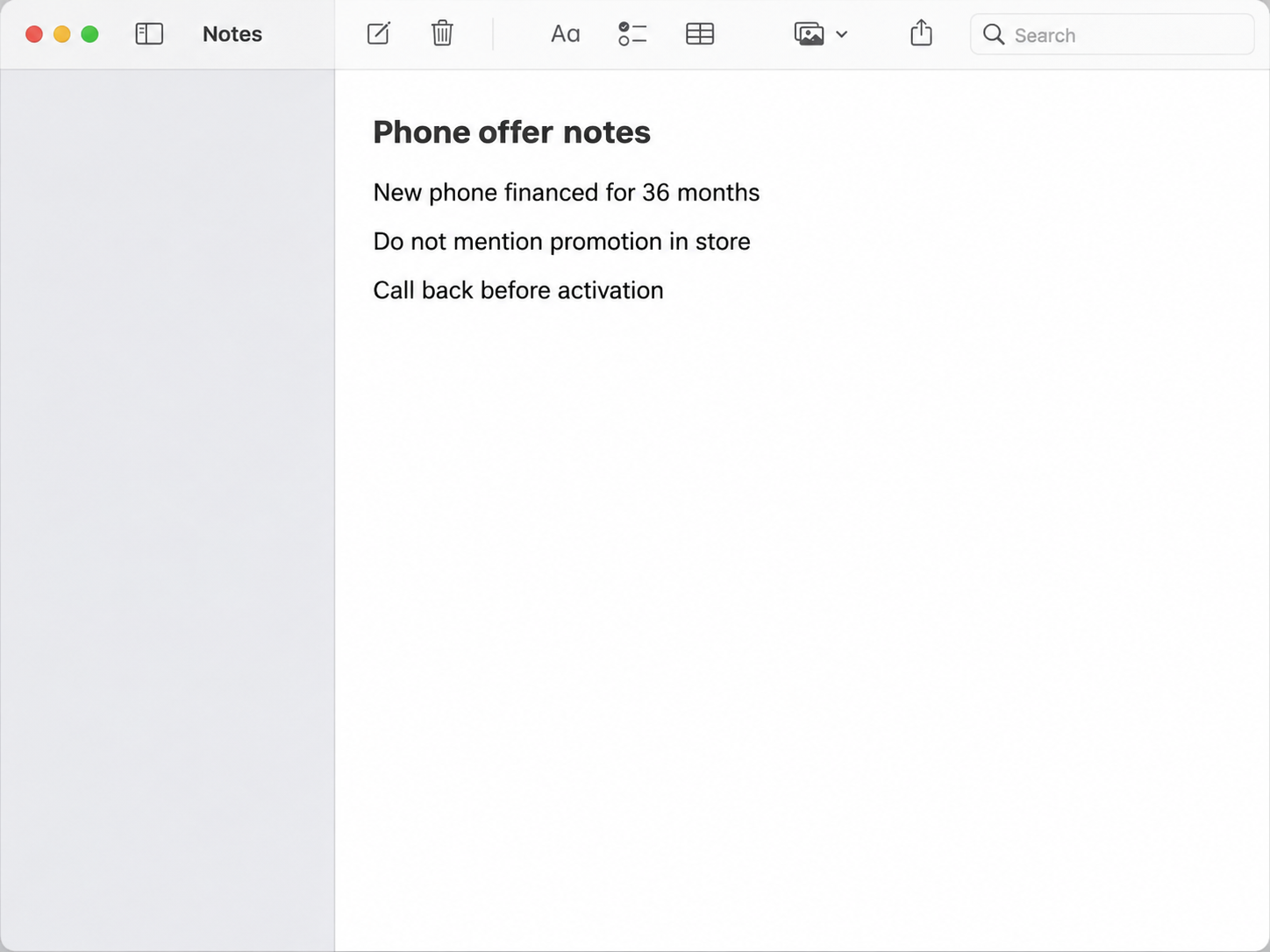
In this fake Verizon offer, the recipient was told to finance a phone for 36 months while keeping the supposed promotion from store employees.
The caller initially tried to use My Verizon. When that route failed, the instructions changed to buying the device at a local store and calling back from home.
That account of the call appears in an r/Scams report. The person questioned the arrangement before describing any completed purchase or shipment.
An authentic device agreement can leave you with the bill
Buying the phone yourself creates an obligation in your name. The caller’s promise to erase its cost needs verification before you agree to that obligation.
Verizon offers legitimate device promotions with specific requirements. Its own explanation describes monthly credits that offset qualifying purchases over the promotional term. Verizon promotion guidance
Several details in the reported call deserve immediate attention.
- The supposed offer must be kept from staff making the sale.
- The customer is told to take on 36 months of device payments.
- Activation is moved to a later conversation with the incoming caller.
- A possible replacement is introduced before anyone has used the phone.
A later return request can turn the handset into the target
A separate BBB Scam Tracker report describes a similar Verizon impersonator arranging a purchase, then supplying a return label after claiming the devices needed replacement.
That person reported losing the hardware while owing the bill. Their account helps explain a documented risk, although the first caller’s intended final step remains unknown.
The lead illustration summarizes the reported instructions as notes. It recreates the terms of the call without presenting an invented text exchange as original evidence.
Why You Need the Store to Hear the Whole Offer
Someone buying a phone at an actual store may feel protected by the setting. There is a receipt, a familiar carrier and a physical device to take home.
The deception concerns the promise attached to that purchase. A store can sell the device correctly while an unrelated caller tells you its cost will disappear.
Keeping the promotion secret prevents staff from comparing those two arrangements. They see the agreement you sign, while you expect a benefit they have never discussed.
Tell the employee exactly what the caller promised before authorizing the transaction. Ask where that promotion appears in the order and what conditions apply to your account.
If the employee cannot confirm it, pause the purchase. You can leave with your existing phone and reconsider after reaching Verizon through an established support route.
There is no need to demonstrate your eligibility by buying first. The question is whether the claimed offer actually applies before you take on the device payments.
Ask for the full device price as well as the monthly figure. A small installment can make a much larger commitment easier to overlook during a busy visit.
Tell other account managers about the instructions before anyone approves an order. Another account manager may receive order notices or be asked to approve a change.
How the Fake Verizon Phone Promotion Scam Works
Step 1: An unexpected call offers an attractive upgrade
The caller introduces a familiar carrier and a benefit that sounds valuable. Paying only the tax makes the offer feel close to a normal promotional deal.
That opening can lead to questions about your account. Before answering, end the call and contact Verizon using its app, official website or an existing statement.
Knowing your name or account background doesn’t settle who is calling. Ask the real provider whether it can locate the particular promotion and the contact about it.
Write down the offer while it is fresh. Include what you were told about service charges, device payments, activation and any promised credit.
Step 2: The caller seeks a route into the purchasing process
In the reported case, the caller wanted to use My Verizon first. The recipient said they lacked an online account, so the caller proposed a store visit instead.
The plan changed, but the customer would still obtain a device under their own name. That is the point to stop and verify the offer directly.
If somebody guides you through your account, read every change before accepting it. A page within the genuine app can still show an order you never intended to place.
Tell Verizon about information you already disclosed. That gives its team a chance to review the account without relying on the caller’s explanation of what happened.
Step 3: The customer is asked to finance the phone quietly
The proposed store purchase involved 36 monthly payments and instructions to conceal the promotion. The caller said the offer would remove the further cost afterward.
A signed device agreement deserves its own review. Ask which line carries the purchase, what amount is financed and where any qualifying credit is recorded.
If your receipt shows a payment obligation, keep that document. A future verbal promise from the incoming caller doesn’t explain why the obligation would be canceled.
You can ask the store to discuss the claim with Verizon while you wait. Keep control of the conversation instead of passing decisions back to the stranger.
Step 4: Activation or a replacement becomes the next conversation
The recipient was told to leave the phone unactivated and call back at home. The caller also mentioned a rapid replacement if anything was wrong.
Those instructions create another opportunity to direct the customer after the purchase. Verify activation and any return with the carrier through your own contact route.
The separate BBB report describes a claimed device mistake followed by a prepaid shipping label. The customer believed the phones were returning to Verizon.
A prepaid label shows that somebody arranged postage for that shipment. Confirm which order the return belongs to and whether the carrier recognizes the return authorization before surrendering the device.
What a Genuine Promotion Needs to Explain
Ask for the promotion name or identifier and its eligibility terms. The answer should let Verizon or the selling store check the offer against your actual purchase.
Find out whether a new line, eligible plan or trade-in is required. Confirm what happens to the credit if you later change the relevant service.
Keep a copy of the applicable offer with the receipt. You need enough information to compare the promised benefit with the charges on later bills.
When speaking with support, say that an unsolicited caller asked you to conceal the promotion. That instruction explains why you are questioning the purchase arrangements.
Ask whether any account changes have already been made. Review unfamiliar lines, devices, delivery details and security changes with the representative you independently reached.
Verizon’s account security hub distinguishes unauthorized accounts, account takeovers and bank charges. Use the route matching what actually happened to you.
If you willingly purchased a phone after being deceived, explain that accurately. The team needs to understand both the purchase you authorized and the caller’s false promises.
Avoid claiming a device was never ordered when you bought it yourself. Your record of the instructions is what explains why that purchase is now disputed.
If You Have the Phone or a Shipping Label
Keep the device, packaging and purchase documents together while you contact the real provider. Ask what return options apply before opening or using anything further.
If a label arrives from the caller, save it without using it. Give Verizon the order information and ask whether its system issued that particular return.
A recognizable carrier logo on paperwork can make the label look routine. Its connection to your order is what you need the provider to confirm.
If a courier collection is proposed, verify it with the carrier before handing over the phone. Keep the pickup details and explain who arranged them.
If you already shipped the device, contact the shipping company promptly with the tracking reference. Ask whether it can stop or redirect delivery under its procedures.
Tell Verizon that the device may have gone to an unauthorized destination. Preserve the label and delivery record so its team can examine the shipment.
Keep notes of each conversation and any case number. A shipping inquiry and a device-payment inquiry may need different records even when they concern the same handset.
Stop relying on further promises from the caller while those inquiries are open. Sending a second device or paying another fee can increase the loss.
Bring the Order Details Back to the Store
Take the receipt and device payment agreement when asking the store about the offer. Staff can locate the sale more easily than by the caller’s name alone.
Have the device serial number or IMEI available from its packaging or your purchase records. Give it to the verified representative handling the order.
Ask which store or support team handles the return for your particular purchase. Get the deadline and condition requirements before assuming you can return it anywhere.
If the caller told you to change an existing line, explain that change too. A problem with your current service may require attention alongside the device order.
Keep any legitimate return receipt until the carrier confirms its account adjustment. Proof that a package arrived and proof of a billing correction serve different purposes.
Ask how the company will contact you about the inquiry. Record that route so a new incoming caller cannot simply borrow the existence of your case.
What to Do if You Have Fallen Victim to This Scam
-
End contact with the person offering the secret promotion. Save their instructions, call times, messages and any label they sent before blocking the contact.
-
Reach Verizon independently and explain the offer in full. Ask its representative to check orders, account access and any device payment agreement associated with the call.
-
If a store sold you the phone, contact that store with your receipt. Describe the deception and ask about the return process and applicable deadlines.
-
Keep any device still in your possession. Verify a proposed return through the genuine provider before mailing it or handing it to a collection agent.
-
If you gave out credentials or an account PIN, ask Verizon how to secure the affected account. Review the recovery and contact information with its team.
-
Report unauthorized bank or card transactions directly to the issuer. Use FTC ReportFraud to document the impersonation and keep references from each organization involved.
If someone opened an entirely new account using your identity, explain that separately. The carrier’s identity-theft claim process differs from questioning a device you purchased after a call.
Ask how you should handle bills while the investigation runs. A dispute should have a documented process, and you need the provider’s instructions for your specific account.
Tell the representative about any trade-in you surrendered as part of the purchase. That device may require attention alongside the new phone and its payment agreement.
If multiple people manage the account, agree who will speak with support. Share the case reference so another family member can recognize a follow-up about the real inquiry.
Check the next statement against the written outcome. If a correction was promised, keep the date and case reference available when asking why it has not appeared.
Anyone claiming to fix the problem for a separate fee needs independent verification. Continue through the provider and issuer contacts you already established for the case.
Frequently Asked Questions
Does a 36-month payment plan automatically mean the offer is fraudulent?
Verizon uses device payment terms in legitimate promotions. The reported deception involves an unverified caller’s secret promise, with instructions to hide it from the store.
Why would the caller tell me to avoid mentioning the promotion?
That instruction prevents staff from checking the claimed benefit during the sale. Tell them the entire offer and ask where it appears in the order.
Can the caller activate a promotion after I bring the phone home?
Verify the offer with Verizon before following that instruction. A stranger’s assurance doesn’t show that your account qualifies or explain the agreement you signed.
What if the return label is already prepaid?
Ask the genuine provider whether it issued that return for your order. Prepaid postage alone cannot establish who controls the destination or whether the device balance will change.
Should I stop paying the device bill while reporting the scam?
Discuss the disputed agreement and any deadlines with Verizon directly. Get its instructions in writing where possible, because the correct next step depends on your account and claim.
What if I gave information but never bought the phone?
Tell Verizon which details you shared and ask it to review account security and recent activity. Keep the call record in case an unexpected order or change appears.
The Bottom Line
Do not finance a phone under an incoming caller’s secret promotion. Ask Verizon or the selling store to verify the offer before you sign or surrender a device.
If you already bought or shipped a phone, contact the provider immediately with the receipt and tracking record. Explain the caller’s instructions and ask how to protect the account.

Join the discussion
0 commentsShare your experience or ask a question about this article.
Community experiences
Did this happen to you?
Your experience could help someone recognize the same scam. Submit a private report for our team to review.
I experienced this tooReports are reviewed before publication. Sharing publicly is always your choice.
Discussion
Start the conversation
Have a question or something useful to share? Add the first comment.