


A flight price looks settled, then a tip or support upgrade appears near the booking button. Another offer promises time to decide before the fare changes.
When several purchases sit inside one travel checkout, understanding what each payment buys becomes essential. The Hopper FTC case puts those distinctions under a spotlight.
Overview
The settlement addresses fees and travel add-ons
The FTC challenged Hopper’s handling of tips, VIP Support, Price Freeze, and related travel offers. Its complaint describes charges and limitations allegedly presented inadequately.
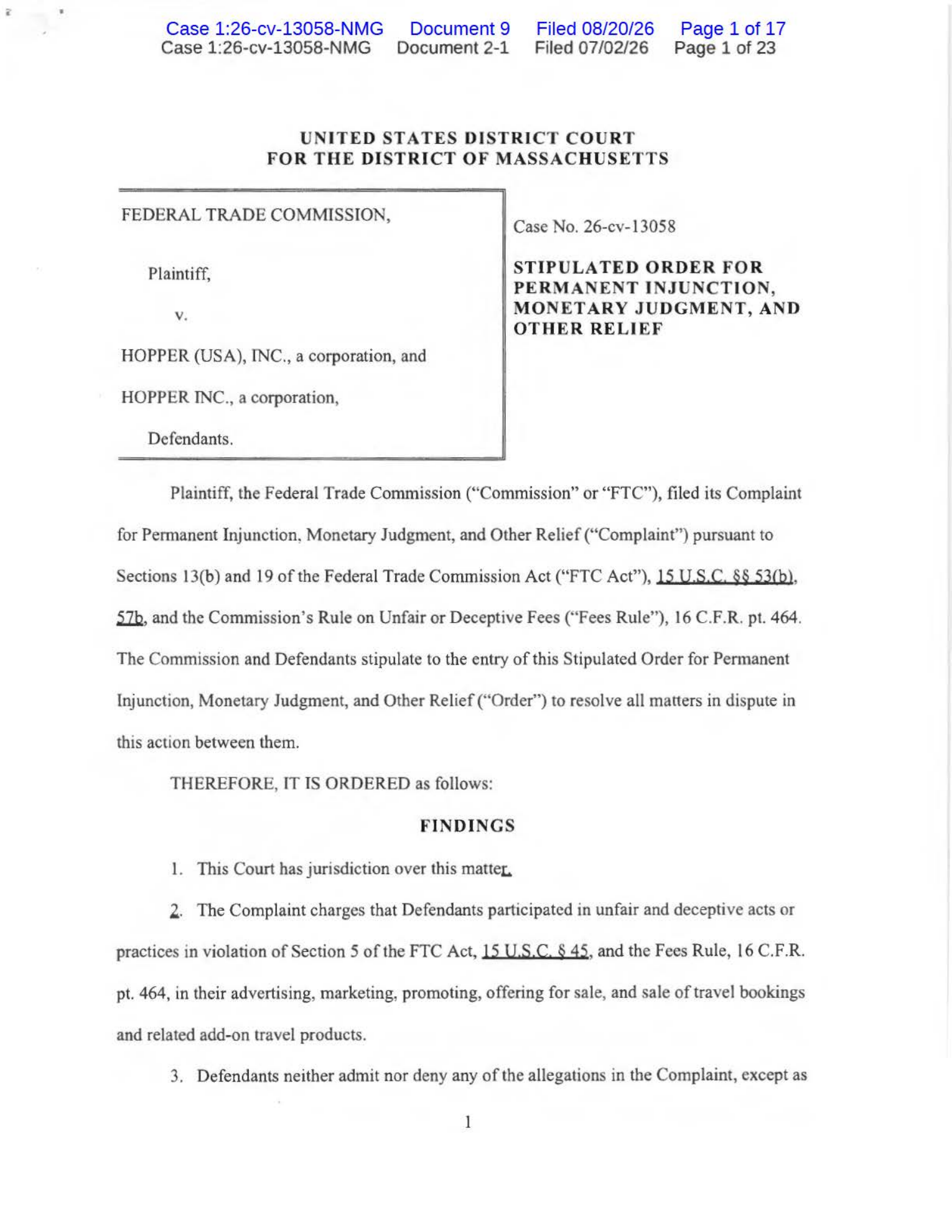
An entered court order dated August 20, 2026 imposes a $35 million monetary judgment and requirements governing consent, pricing, and representations.
Hopper neither admits nor denies the complaint’s allegations under the order. This is a civil settlement, not a criminal conviction or a finding about every booking.
Historical app exhibits are not today’s checkout
The complaint includes dated screenshots showing earlier purchase flows. They explain the FTC’s allegations but should not be mistaken for a current app demonstration.
Hopper disputes the agency’s characterization and says the settlement concerns past display practices. That response matters, alongside the actual complaint and binding order.
The practical question for a traveler remains concrete: what is the full price, which extras are optional, and what happens if the underlying booking fails?
Check each purchase separately before authorizing it
- Compare the complete booking amount with competing offers.
- Inspect tips and support upgrades before confirming payment.
- Read the limit on any price-protection benefit.
- Distinguish a paid protection product from a reservation.
- Keep the terms and receipt covering your purchase.
Do not assume a settlement automatically creates a refund for your particular booking. A disputed fee still needs a clear explanation tied to your transaction.
The price shown before optional charges appeared
The FTC complaint describes a January 24, 2022 airfare example displaying a $997.85 total before additional selected charges appeared farther down.
Its exhibit shows a $3 tip and $25 VIP Support upgrade in the review flow. The agency alleges customers could authorize booking without seeing those selections.
The distinction matters because a total sets an expectation. A consumer comparing two fares may reasonably make a different choice when another charge changes the amount.
Calling an item optional does not answer whether somebody actually chose it. Placement, default selection, and the relationship to the confirmation action all affect consent.
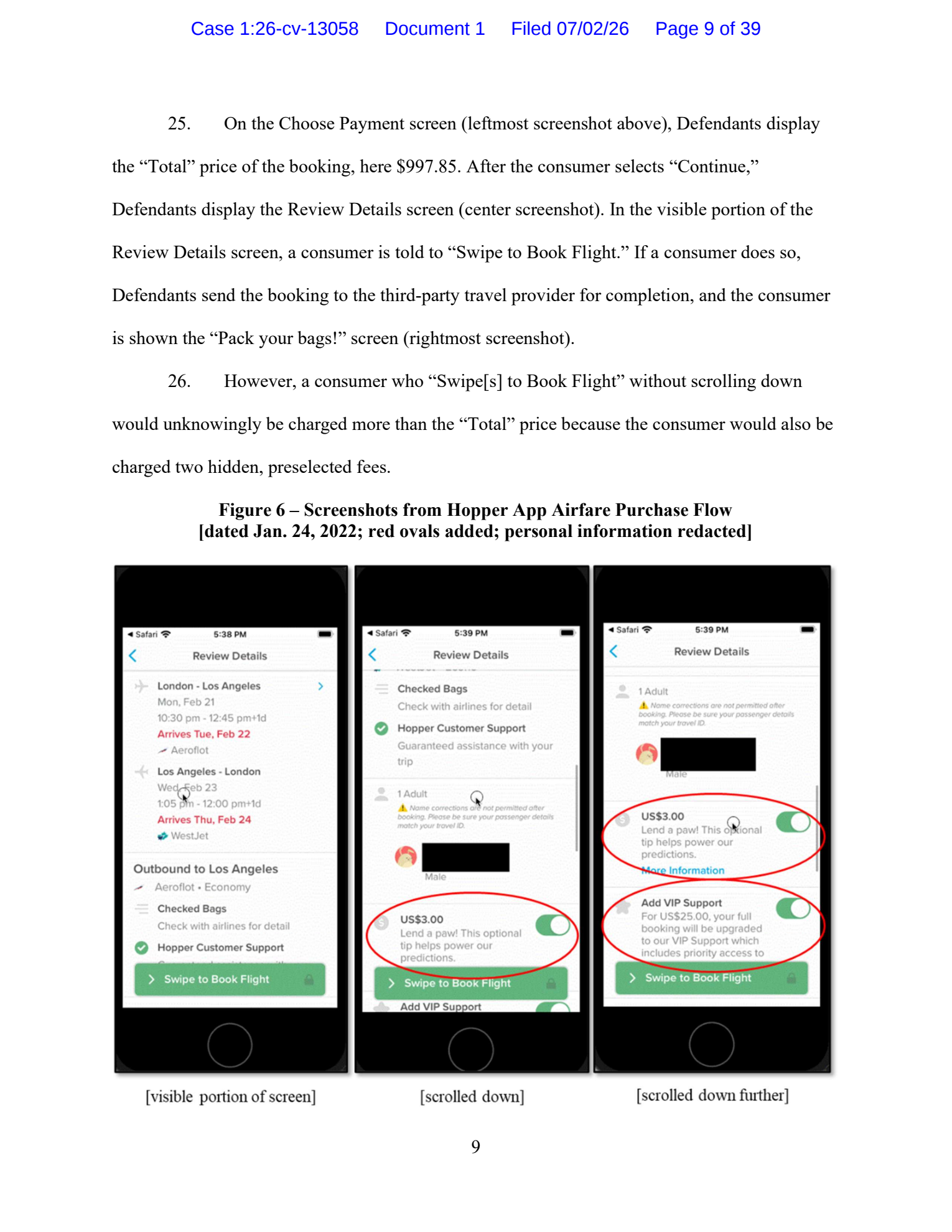
This exhibit shows a historical purchase flow, with the FTC’s own markings and redactions. It is not evidence that today’s Hopper checkout uses identical defaults.
For a current booking, inspect the actual payment summary you receive. A historical complaint can identify questions worth asking without answering every present-day detail.
Check the payable amount after changing any optional selection. A label can disappear from one part of a screen while the final total deserves another look.
If you cannot understand a charge before authorizing payment, stop there. Reaching a booking button does not create an obligation to accept unexplained extras.
A tip, support upgrade, and fare are different purchases
The base travel purchase pays for transportation or accommodation under the applicable supplier’s conditions. An add-on can have a separate seller, benefit, limitation, and refund rule.
The FTC alleges some customers paid tip or VIP fees even when bookings were not completed or were canceled, until they separately requested refunds.
That allegation illustrates why canceling a flight and reversing every related charge are not necessarily the same action. Read each line of the receipt.
| Payment component | Question before purchase | Question after a problem |
|---|---|---|
| Flight or hotel booking | Which supplier confirms the actual reservation? | Was the booking issued, canceled, or refunded? |
| Tip | Did you deliberately select this payment? | Was it charged despite your actual selection? |
| Support upgrade | What extra assistance does this specifically provide? | Which promised service did you request or receive? |
| Price Freeze or similar protection | What limit, deadline, and availability condition applies? | Does the claimed event meet those written conditions? |
A paid support tier also needs a meaningful comparison with included support. The name VIP does not independently define a response time or solve a supplier’s restriction.
The complaint challenges historical support representations and describes customer experiences. It does not supply a verified response-time measurement for every current support channel.
Hopper’s current terms list telephone, in-app, and email support arrangements. A claim that Hopper has no human telephone support today would therefore overstate this case.
Price protection is not necessarily a held seat
A product called Price Freeze can sound like a reservation. The FTC alleges customers were not adequately told about coverage caps, availability conditions, and separate fees.
The complaint’s May 22, 2025 example shows an initial offer followed by additional screens. Those later screens disclose a benefit cap and explain that freezing does not reserve a flight.
Consider the difference between keeping a seat available and compensating part of a price increase. One concerns inventory; the other concerns a limited financial benefit.
If a seat sells out, a price-protection contract cannot automatically create another seat. Its written terms determine what happens instead.
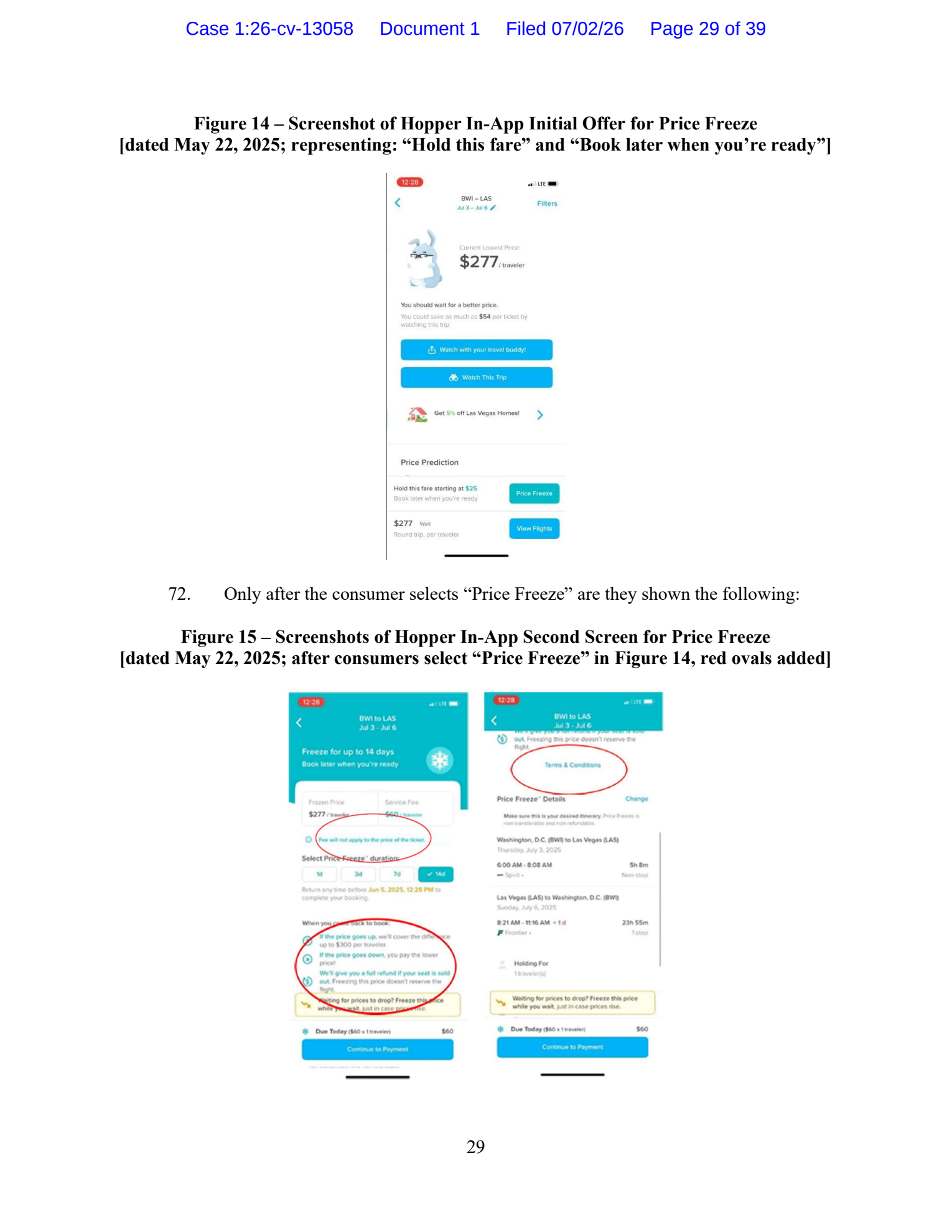
The dates within this official exhibit matter because product wording can change. Treat it as documentation of the agency’s example, not a quotation of every current offer.
Before buying similar protection, identify the initial price, protection fee, covered increase, maximum benefit, expiration, and availability condition. Each item affects the purchase’s usefulness.
Also establish whether the fee reduces your eventual ticket payment. A payment called a deposit creates a different expectation from a separate service fee.
Add the protection’s purchase price when comparing the overall cost. A capped benefit can still have value, but its name alone cannot establish good value.
Ask what happens if you decide not to travel, miss the deadline, or cannot obtain the selected itinerary. Do not infer those answers from a button label.
Which companies and terms govern the transaction?
The defendants are Hopper’s travel businesses
The order names Hopper (USA), Inc. and Hopper Inc. These are the travel businesses addressed in this case, not unrelated companies sharing the Hopper name.
That identification keeps the investigation attached to the actual defendants. A similar domain or another product containing the same ordinary word is not automatically connected.
The supplier and booking intermediary have different roles
Hopper’s terms and conditions distinguish its services from the underlying travel supplier’s contract. Airline and hotel restrictions can therefore matter separately.
A chargeback explanation should identify the specific disputed item rather than describing every travel payment as interchangeable. A canceled add-on and a canceled ticket may follow different paths.
Keep the supplier confirmation alongside Hopper’s receipt. When a booking problem involves both parties, those documents help establish which service actually failed.
Support should match your actual booking channel
Use the help route displayed within your own booking or official Hopper account. The current terms describe telephone access using a Support ID from trip details.
Do not copy an unverified number from a search advertisement or an unsolicited message. Someone using a familiar travel brand can still be an unrelated impersonator.
A support inquiry is not proof that a refund was approved. Keep the response, reference number, and any promised follow-up date.
The terms from your purchase date matter
Hopper’s current terms say earlier bookings can remain governed by the version applicable when purchased. Today’s webpage may therefore differ from your actual agreement.
Save the purchase terms and product description when booking, especially for optional protection. A later summary cannot reliably recreate every disclosure shown beforehand.
This also prevents a common misunderstanding: a present product improvement does not settle a historical dispute, while a historical exhibit does not describe today’s screen.
What the order requires and what Hopper says
The entered order requires express informed consent for each fee. It also addresses clear disclosure of fees, product limitations, and the total amount consumers must pay.
For relevant transactions, the order addresses automatic fee refunds when an underlying booking is canceled, refunded, or not completed, subject to its disclosed-nonrefundability exception.
That exception matters because the order should not be simplified into a promise that every add-on is always refundable. The actual disclosure and transaction still matter.
The $35 million judgment is payable in installments under the order. A judgment amount is not an announcement that every traveler has an immediate individual claim.
In its July 2 response, Hopper says it disagrees with the FTC’s characterization and settled to avoid prolonged litigation.
The company says disputed display practices were discontinued in mid-2023 and argues the settlement does not concern its current app, website, or business-to-business products.
The complaint, meanwhile, includes some later-dated examples involving other alleged conduct. Readers should keep those specific allegations separate from Hopper’s broader description of the dispute.
The reliable consumer decision is not that all Hopper bookings are fraudulent. It is to require a comprehensible total and deliberate consent for each optional purchase.
Compare the complete trip, not just the headline fare
Two offers are comparable only when they cover the same trip. Check the dates, airports, traveler count, baggage allowance, and change conditions before comparing totals.
A lower price with a restrictive fare can be unsuitable even when no optional fee is selected. Decide which conditions matter for your actual travel plans.
Separate extras you genuinely want from extras included by default. Recalculate after declining an unwanted tip or upgrade, then compare the resulting amount with another route.
If you value a paid support benefit, identify the difference it promises beyond ordinary booking help. Paying more should correspond to a benefit you can describe.
For protection products, consider the downside as well as the advertised benefit. A fee may be wasted if your plans change or the relevant event never occurs.
Before leaving the payment page, confirm that the final amount matches the selections you intended. Keep the receipt and product terms together after purchase.
A clear comparison also makes later complaints more precise. You can identify the unexpected item rather than arguing that the entire trip should have cost something else.
What to Do If You Were Charged
-
Separate the base booking from each add-on on your receipt. Record the amount, purchase date, booking reference, and exact item you dispute.
Keep this information private when asking publicly for guidance. A stranger does not need your confirmation code to understand an unexplained fee.
-
Check whether the underlying booking actually completed. A pending authorization, issued ticket, canceled reservation, and posted payment are different states.
Ask the supplier or official booking support when the confirmation is unclear. Do not purchase a duplicate itinerary solely because a screen looked unfinished.
-
Request a specific explanation or correction through official support. State whether the issue concerns consent, nonperformance, cancellation, or an advertised benefit.
Attach the relevant receipt and selection record through the private support channel. Ask for the applicable terms rather than accepting an unrelated generic policy.
-
If the issue remains unresolved, contact your payment provider promptly. Describe the actual dispute honestly and ask which deadlines and evidence apply.
A settlement does not extend your bank’s dispute window automatically. Avoid waiting for an unspecified future refund program before raising a current billing problem.
-
Report potentially misleading practices through the FTC’s official consumer reporting route. Keep your report factual, including the particular fee and what you were shown.
Do not pay anyone who claims they can release settlement money for an advance charge. Official case documents do not authorize that demand.
Choose the right next step for your booking
I have not paid and an extra is unclear
Stop before authorizing the transaction, inspect the full total, and compare another booking route. Skip an add-on whose benefit or refund conditions remain unclear.
My booking failed but a separate fee remains
Ask official support to identify the fee and explain its refund treatment. Keep the failed-booking record and any nonrefundability disclosure supplied before purchase.
I bought protection but expected a reserved seat
Read the actual product agreement for availability limits and remedies. Explain the specific expectation and disclosure when requesting help, rather than assuming the product issued a ticket.
I only want to know whether a refund program exists
Follow the official FTC case updates rather than unsolicited messages. The judgment itself does not establish your eligibility, payment amount, or a claims deadline.
Frequently Asked Questions
Did Hopper admit the FTC’s allegations?
No, the order states that the defendants neither admit nor deny the allegations. Its requirements are binding despite that settlement language.
Are the complaint’s screenshots current app instructions?
No, they are dated historical exhibits within a court filing. Use your actual current checkout to evaluate present selections and pricing.
Does Price Freeze necessarily reserve the flight?
No, price protection and seat availability are different issues. Read the particular agreement for its cap, expiration, availability condition, and promised remedy.
Does canceling a booking refund every extra automatically?
Do not assume that without checking the applicable terms and order provisions. The settlement’s fee-refund requirement includes an exception for adequately disclosed nonrefundable charges.
Does the $35 million judgment guarantee my refund?
No, the monetary judgment is not an individual eligibility notice. Follow official case updates and pursue your own billing issue within applicable deadlines.
Should I avoid every booking offered through Hopper?
The case does not justify that blanket conclusion. Compare the complete price and buy only the booking and optional benefits you understand and deliberately choose.
The Bottom Line
For Hopper travel app fees, separate the fare from every optional purchase. Do not authorize an unexplained extra or mistake limited protection for a confirmed reservation.
If a charge is disputed, raise the specific issue through official support and your payment provider promptly. Keep historical allegations, current terms, and refund eligibility distinct.

Join the discussion
0 commentsShare your experience or ask a question about this article.
Community experiences
Did this happen to you?
Your experience could help someone recognize the same scam. Submit a private report for our team to review.
I experienced this tooReports are reviewed before publication. Sharing publicly is always your choice.
Discussion
Start the conversation
Have a question or something useful to share? Add the first comment.