


Someone you’ve grown close to online needs money, but the payment instructions name a business you’ve never heard of. They say it’s just easier that way.
That unfamiliar recipient deserves more attention than the explanation. A federal romance-fraud case shows why the account receiving your transfer can reveal another part of the story.
Overview
Romance payments reached personal and business accounts
The Mintah Dazionking romance scam case concerns money taken through internet-enabled romance fraud and moved through accounts controlled by Manaseh Mintah.
Victims sent funds directly to those accounts, including accounts associated with Dazionking LLC. The business name didn’t make the underlying requests legitimate.
The important distinction is between the person portrayed in a conversation and the recipient handling the transfer. A romantic story can conceal a separate financial operation.
A jury convicted Mintah of laundering the proceeds
According to the Department of Justice’s trial announcement, Mintah was convicted on September 28, 2026, after a two-week trial.
The verdict covered money laundering conspiracy, three money laundering counts, and operating an unlicensed money transmitting business. Sentencing was scheduled for March 16, 2027.
The announcement describes at least approximately $1.2 million received and transferred. It doesn’t identify every romantic persona or provide a public list of victim transactions.
A business label can disguise an unrelated recipient
- The online relationship and the payment recipient need separate verification.
- Dazionking LLC was described as a shell entity used for laundering.
- Funds moved onward through wires, cash withdrawals, and other means.
- Victims should preserve both the conversation and the banking instructions.
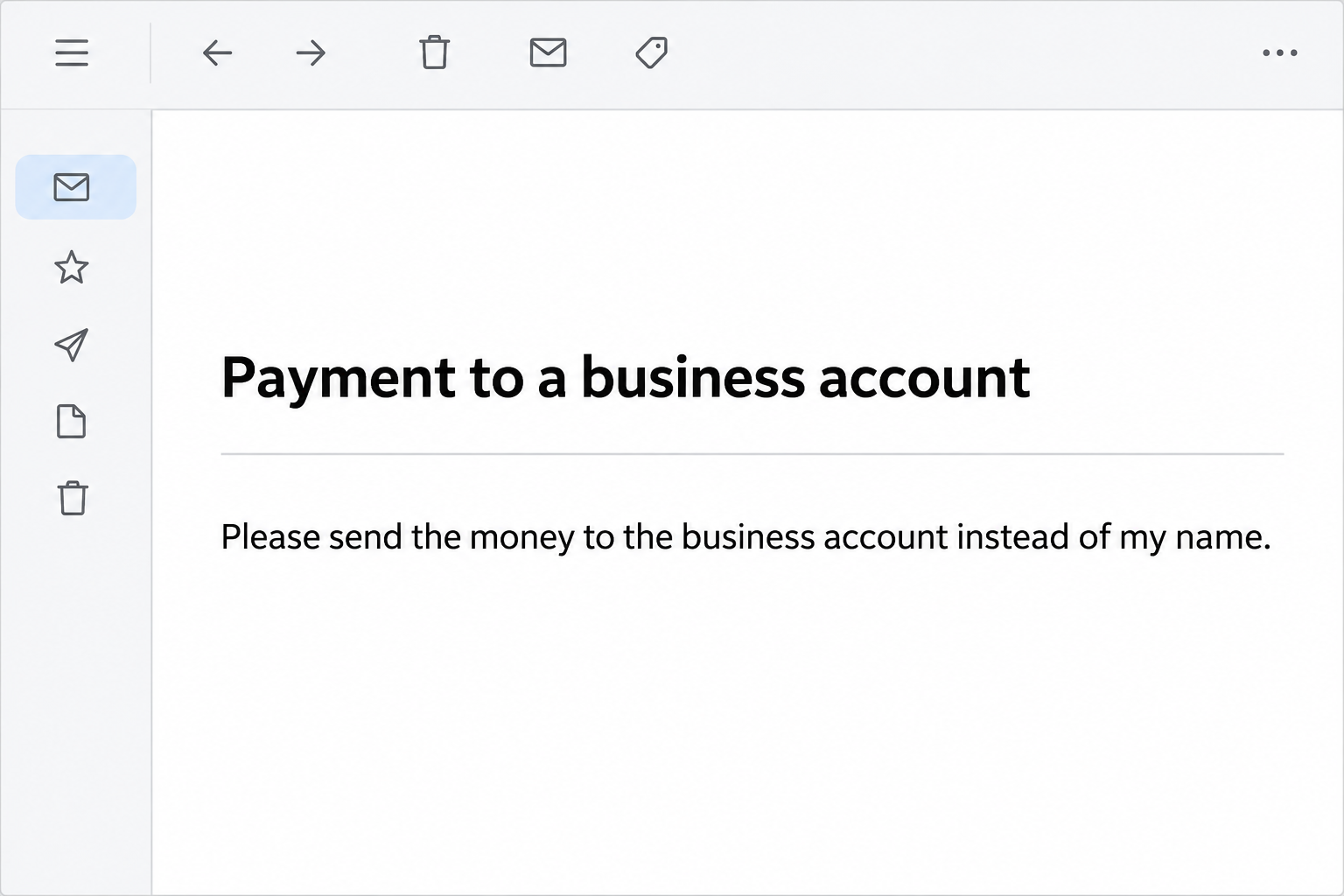
The lead image is a reconstructed example of a redirected payment request. It isn’t an original message or a quotation recovered from this case.
Why the Recipient’s Name Matters
When someone asks for help, it’s natural to focus on their supposed emergency. You may spend more time evaluating the story than examining the bank details.
A company account can make that story seem more organized. You might assume a business name means the transaction has been checked or belongs to someone accountable.
But a bank transfer records where money went, not whether the explanation was true. A completed transfer doesn’t authenticate the relationship behind it.
That doesn’t mean every company receiving money is a shell. It means a company label shouldn’t substitute for understanding the actual purpose of your payment.
Ask yourself what you would be purchasing from that business. If the answer depends entirely on someone you’ve never met, the account name resolves very little.
Nor should an unexpected recipient be treated as an administrative detail to fix later. It changes who receives your money and which records you’ll need afterward.
For someone already affected, the mismatch is useful evidence. Preserve it even if the person in the conversation insists the name doesn’t matter.
How the Mintah Dazionking Romance Scam Worked
Step 1: An online identity creates a reason to trust
Romance scams begin with a relationship presented through an online identity. The emotional connection gives later requests a context that a stranger’s request would lack.
The FBI’s romance-scam guidance describes how invented identities are used to build affection and manipulate people into sending money.
For the reader, the useful question comes before any elaborate investigation. Has someone known only online made the relationship dependent on financial help?
You can care about someone without agreeing to an unexplained transfer. A demand that you prove trust with money deserves a pause, regardless of the account offered.
Step 2: The money goes to an account outside the apparent relationship
In the confirmed case, victims sent money directly to accounts opened in Mintah’s name and in the name of Dazionking LLC.
That creates a separation between the relationship that prompted payment and the financial recipient. Investigators need both sides to understand the transaction.
Save the actual explanation for that separation word for word. Whether the recipient was described as an employer, relative, supplier, or intermediary may matter later.
Don’t send a small transfer simply to verify the destination. Successful receipt demonstrates that money can reach an account, rather than that the request is honest.
Step 3: Funds move onward through several transaction types
Prosecutors described money moving from Mintah’s personal and Dazionking accounts to coconspirators through wire transfers, cash withdrawals, and other means.
Those onward movements are why the banking record deserves prompt attention. The account first receiving your payment may be only one stop along the route.
You don’t need to trace every later transfer yourself. Give your bank the original destination and ask its fraud team to work with the receiving institution.
If multiple payments went to different accounts, keep their details separate. Combining them into one remembered total can obscure which transfer might still be identifiable.
Mintah was convicted of knowingly handling criminal proceeds. The public account doesn’t identify him as the operator of every romantic profile behind those payments.
Step 4: The apparent relationship and the money trail become separate problems
After recognizing the fraud, a victim may still feel attached to the person they believed they knew. That emotional conflict doesn’t invalidate the financial evidence.
You can stop transfers before resolving every feeling about the relationship. Protecting your remaining funds doesn’t require a final confrontation with the person requesting them.
The practical response is to preserve the story and the transaction together. Investigators can connect communications to account activity more effectively when both remain available.
A trial verdict also doesn’t automatically identify every affected person or return every payment. Reporting your own experience remains a separate task with its own records.
Use the named case as context when appropriate, but don’t force unrelated transactions into it merely because someone used a business account.
Dazionking LLC and the Accounts Behind the Transfers
The business name had a specific role
The DOJ describes Dazionking LLC as a shell entity Mintah formed to launder money. Its role was established through evidence presented at trial.
That finding concerns the identified entity and conduct. It doesn’t justify accusations against unrelated companies with similar names or against every business account used online.
If you have payment records, compare the exact beneficiary name and account information. A resemblance in spelling alone isn’t enough to identify your recipient.
Personal accounts formed part of the same operation
The proceeds weren’t limited to a single business account. The announcement also describes accounts in Mintah’s own name receiving and moving victim funds.
This is why a personal beneficiary name isn’t inherently safer than a company name. Neither provides a substitute for a legitimate reason to send money.
Record the bank, beneficiary, transfer date, amount, and reference for each payment. Preserve the actual confirmation instead of recreating it from memory.
A bank’s involvement doesn’t authenticate the relationship
The presence of accounts at financial institutions doesn’t mean those institutions approved the romantic story or knowingly participated in its deception.
Banks process transactions based on information and controls distinct from your private conversation. They may not know what someone told you before a transfer.
When seeking help, explain that context explicitly. Describe how the payment was induced, rather than assuming the bank can infer the scam from the beneficiary alone.
The verdict and the sentencing timetable are different
Mintah’s conviction is an established outcome. The announced future sentencing date isn’t an already imposed prison term or evidence that victims have been reimbursed.
Keep those distinctions when discussing the case with relatives. An inaccurate promise of repayment can create another disappointment after the original loss.
Any claim to represent the prosecution or handle refunds should be checked through independently obtained official channels, especially if it arrives with an upfront fee.
Before Sending Money to an Online Partner’s Business Contact
Separate the emotional question from the transaction question. Someone may sound caring while asking you to fund a recipient whose connection you cannot independently establish.
Write down the proposed payment’s purpose without using their reassurances. If the explanation falls apart without the phrase about trusting them, you lack a usable financial basis.
Consider whether an ordinary business would provide documentation for the proposed service. Don’t treat improvised banking instructions as a substitute for an actual transaction.
Avoid sending identity documents to the purported business to prove you’re serious. A request for money shouldn’t become a second reason to expose sensitive information.
Talk to someone you trust before proceeding, particularly if the relationship has been kept secret. An outside reader can examine the instructions without sharing the emotional pressure.
If the sender insists nobody else can know, you can decline that condition. Secrecy protects the request from scrutiny while leaving you responsible for its consequences.
The safest decision is not to send money to someone you’ve only communicated with online or by phone. An unfamiliar business beneficiary doesn’t create an exception.
If you’ve already sent money, move directly to the response steps. Continuing the conversation to extract a confession may delay the bank’s opportunity to act.
What to Do if You Have Fallen Victim to This Scam
-
Stop sending payments and stop accepting new financial instructions. Don’t forward money, receive deposits for the person, or open another account at their request.
Preserve the existing conversation before blocking the account, where you can do that safely. Keep the profile address and usernames along with the messages.
If you feel overwhelmed, ask a trusted person to help organize the records. You don’t need to manage the practical response alone.
-
Contact your bank’s fraud department through its normal app, known telephone number, or a branch. Explain that the transfer was induced through an online romance scam.
Ask whether a recall or receiving-bank notification is possible. Supply each transaction’s date, amount, beneficiary, account details, and reference rather than only the overall loss.
Request a case number and write down the next follow-up step. Recovery depends on the facts and remaining funds, so avoid treating a recall request as reimbursement.
-
Build a timeline connecting requests with payments. Include the account instructions, explanations for unfamiliar recipients, and any later changes in destination.
Keep original receipts and exported messages where available. Label notes written afterward as your recollection so they aren’t confused with contemporaneous records.
For this named case, retain any exact Dazionking or Mintah match privately. Don’t publish bank details or other victims’ personal information in an attempt to find connections.
-
Report internet-enabled fraud at IC3.gov. Choose File A Complaint, read the terms, and describe the online contact and payment trail accurately.
Save the confirmation the process provides. Include related bank case numbers and explain which details came from your records versus the other person’s claims.
A complaint doesn’t guarantee an individual response. Continue working with your bank rather than waiting for an investigator before attempting payment recovery.
-
If the person obtained account credentials, protect those accounts through their genuine websites or apps. Change affected passwords and enable available multifactor authentication.
If identity information has been misused, visit IdentityTheft.gov and follow the reporting route for the specific misuse you observed.
Don’t upload more documents to a supposed verification or recovery service introduced by the same contact. Financial recovery shouldn’t create another uncontrolled disclosure.
-
Tell the dating or social platform about the fraudulent profile using its reporting controls. Identify the money request and preserve your report confirmation where provided.
Explain the situation to anyone who might receive messages from the same persona. Share the warning without forwarding your financial records or private relationship conversations unnecessarily.
Reject unsolicited recovery offers demanding advance payment. A person claiming access to seized funds must be verified independently, not trusted because they know your loss amount.
Helping a Relative Without Driving the Conversation Underground
Start with the payment instructions rather than an argument about whether the relationship felt real. The financial recipient is a concrete detail you can examine together.
Offer to call the bank alongside them, with their permission. Practical support makes it easier to act before they feel ready to discuss the entire relationship.
Avoid promising that a single report will return everything. Instead, help assemble the records needed for each institution and keep track of promised follow-up dates.
If the contact sends another crisis story, compare it with the earlier timeline. Changing recipients and new financial demands are reasons to stop, rather than solve another emergency.
Keep the conversation respectful even when the person still feels protective of the supposed partner. Humiliation can make further requests harder for them to disclose.
The objective is to protect the person’s remaining resources and restore independent decision-making. Winning an argument about the first message doesn’t accomplish either task.
Frequently Asked Questions
Was Mintah convicted, or was he only accused?
A federal jury convicted Mintah on September 28, 2026. The DOJ announced laundering-related convictions and an unlicensed money transmitting business conviction after trial.
His announced sentencing date was still in the future. The trial announcement hadn’t established the prison term he would receive.
What was Dazionking LLC’s connection to the scam?
Prosecutors identified Dazionking LLC as a shell entity used to launder romance-scam proceeds. Accounts associated with it received funds directly from victims.
That documented role doesn’t authenticate an unrelated payment or identify every business with a similar name as part of this case.
Does paying a company mean my online partner is genuine?
A company beneficiary doesn’t verify the person requesting payment. It tells you the named destination, which may differ from the person portrayed in the conversation.
Don’t send money to an online-only romantic contact merely because their instructions include a business account.
Can my bank reverse a transfer I authorized?
Contact the bank immediately and explain the deception accurately. Ask about recall options and receiving-bank notification, even if you personally initiated the transfer.
The outcome depends on the payment and circumstances. A request for help is worthwhile without becoming a promise that the money will return.
Should I keep talking to obtain more evidence?
Preserve what you already have, but don’t send further money or expose additional information. You don’t need a confession before reporting a suspicious transfer.
Give investigators your existing records and let them decide what additional contact, if any, is appropriate.
Can someone guarantee recovery because Mintah was convicted?
A conviction doesn’t authorize a stranger to collect recovery fees from you. Verify any official case contact through an independently obtained government source.
Don’t pay someone who claims they can unlock your money because they know the defendant’s name or your loss amount.
The Bottom Line
Don’t send money to an online partner’s unexplained business recipient. The Mintah case shows that a company account can be part of moving stolen funds.
If you already paid, contact your bank now and preserve both the relationship messages and transfer records. Report the actual payment trail without waiting for another promise.

Join the discussion
0 commentsShare your experience or ask a question about this article.
Community experiences
Did this happen to you?
Your experience could help someone recognize the same scam. Submit a private report for our team to review.
I experienced this tooReports are reviewed before publication. Sharing publicly is always your choice.
Discussion
Start the conversation
Have a question or something useful to share? Add the first comment.