


You might remember the day you bought your car more clearly than the paperwork you brought home. It’s the paperwork that matters if a check arrives years later.
Before you deposit it, find out who issued it and which part of the deal it concerns.
Overview
The Napleton FTC refund is a third distribution
The FTC’s November 2026 Napleton refund notice says the agency is sending 4,732 checks totaling more than $65,000. It is the third round in this case.
Earlier rounds began in November 2022 and November 2023. The agency says those two distributions resulted in more than $9.5 million in refunds.
This time, the FTC describes two conditions: people accepted their first payment and paid the defendants more than $5,033 in add-on fees. Buying a vehicle there is not enough.
The threshold describes past charges used for eligibility. It is not what a recipient will get, and it is not a balance you must pay to release a check.
What the dealership case concerned
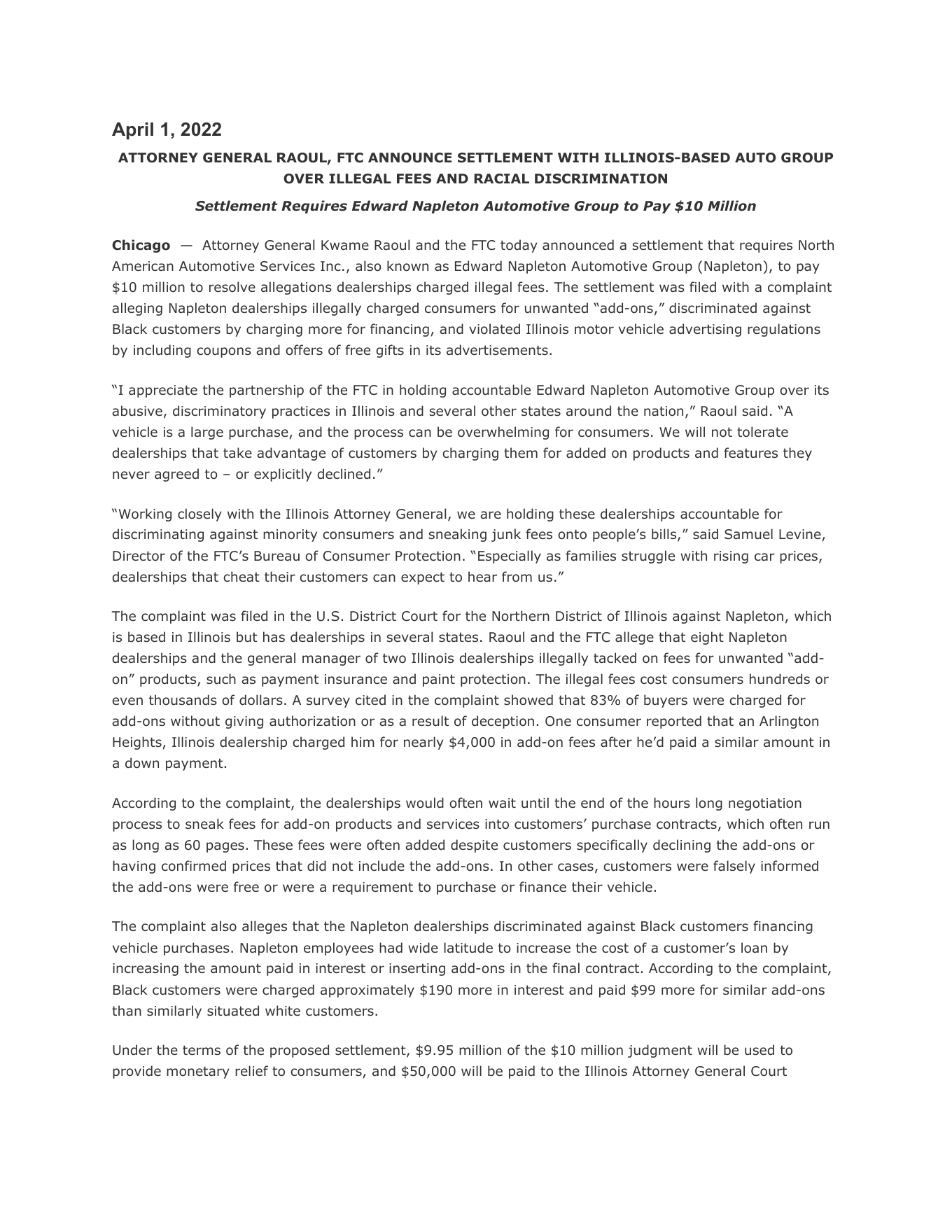
The 2022 lawsuit by the FTC and Illinois challenged fees for add-ons such as paint protection, gap coverage and extended warranties that buyers hadn’t agreed to buy.
It also alleged that Black customers were charged more for financing and add-ons. Napleton agreed to a $10 million settlement to resolve the charges.
The agreement was a civil settlement. For the November payment, it matters which dealership and purchase appeared in the case records, not just whether a sign said Napleton.
Know which numbers apply before you handle the check
- The FTC tells people who receive a check in this round to cash it within 90 days.
- Verify the refund with Epiq Systems through the administrator number listed on the agency’s current case page.
- Do not send a fee, a transfer or a share of the money to accept an FTC check.
- Keep the original loan documents if you believe you have a separate billing dispute with your dealer or lender.
A genuine refund and your car loan are separate records. Getting an FTC check does not tell you that your lender has adjusted the balance or monthly payment.
Why Add-Ons Were at the Center of the Napleton Settlement
An agreed car price is not an itemized contract
You can agree on a vehicle price at the sales desk and still see a different number in the finance office. Taxes are one reason, but additional products are another.
Read the itemized buyer’s order and compare it with the retail installment contract if you’re financing. The lender’s amount may include purchases that didn’t appear in the quote.
The Illinois Attorney General’s original announcement describes allegations against eight dealerships and the group, including unwanted items that appeared late in the purchase process.
Some buyers allegedly declined the items or accepted a price that excluded them. Other customers were allegedly told the additions were free or required to buy or finance the car.
Those allegations explain why consent is the key question. A product can exist and offer some coverage without being something you ordered or needed.
A down payment can hide a higher financed amount
The state announcement describes a buyer who reported nearly $4,000 in add-on fees after putting down a comparable sum. His deposit didn’t prevent the extras from being charged.
Think of a simpler example: a $1,200 service contract folded into a loan raises the amount financed, even if you didn’t pay a separate $1,200 at the counter.
Interest on the loan can make the full cost greater than the item’s face price. Compare the financing disclosures instead of doing the entire comparison from the monthly payment.
A small difference in the payment can also reflect a longer term. Ask for the contract both with and without the disputed item, holding the other terms steady for comparison.
Use the contract to locate each product
Look for the buyer’s order, itemized purchase agreement and separate service contracts. A finance agreement may summarize charges that are spelled out fully in a different document.
Make four columns on paper: product name, price, seller or administrator, and evidence you accepted it. A receipt may identify a different provider from the dealer itself.
For gap coverage, check who issued it and what loss it covers. For a service agreement, find the contract number, dates and rules printed on that particular paper.
If you bought two vehicles or refinanced one, make a separate note for each agreement. The same dealership name does not mean the products or payment terms were identical.
When a product’s name is unfamiliar, ask the dealer to match it to a contract page. A general explanation of dealer packages doesn’t identify the line item you paid.
How to Verify a November Napleton Refund Check
Look up the case without trusting the envelope
Go to the FTC website yourself and open its refund listing. Find the Napleton program by name, then compare the November notice with the payment you received.
The case page is more reliable than a number on an unexpected text, and it lets you distinguish this payment from publicity about the original settlement amount.
If you have questions about a check or your address, contact Epiq through the listing. Ask if it has a payment issued to you and how to verify it.
You can have the envelope and check at hand for that conversation. Do not post a picture that shows the check number, signature area, address or bank details.
Read the date and the name before depositing
Compare the payee on the check with the name on the account where you plan to deposit it. Ask the bank what it needs if the names differ.
The FTC gives recipients 90 days to cash the check. Use the instructions and date on the instrument rather than assuming the period starts when you opened your mail.
If your bank accepts the verified check by mobile deposit, start inside its own app. Use the bank’s approved check deposit feature and follow any endorsement instructions it shows.
Check the confirmation for the amount, the receiving account and deposit status. Keep the original for the time your bank specifies, but don’t deposit it a second way.
If you can’t use mobile deposit, ask the bank about its normal branch procedure. Don’t send the check to a stranger who says they’ll cash it and pay you faster.
Know when the administrator needs to intervene
A check can be late, lost, damaged or issued to someone who has changed their name. Call the verified administrator instead of changing the paper or trying another bank.
If paint protection or gap coverage appears on your paperwork but no check arrived, that alone doesn’t establish eligibility. Ask Epiq to explain which round it can check.
A prior check you declined or never received is different from one you accepted, which is part of the current selection rule. Let the administrator check its own payment record.
If the check is past its stated limit, ask whether a replacement is available. The November notice does not promise an extension simply because the letter arrived late.
How to Follow a Vehicle Add-On Credit
Locate the cancellation clause on the separate add-on contract before asking the dealership to remove it. It may identify a provider that handles cancellations and credits.
Ask that provider which information it needs, such as the agreement number, purchase date and mileage. Provide it through a contact found on a verified agreement or official website.
Ask what amount will be refunded, when it is calculated and where it will be sent. A credit to the car loan differs from a refund to your card.
Find out what charge or deduction the provider applies and ask where it appears in the agreement. Keep the explanation with any cancellation confirmation.
For a credit applied to the loan, look at the statement after the promised posting date. Compare the amount credited and confirm which portion of your balance changed.
If you refinanced or paid off the loan, tell the provider and the old lender before assuming the credit will come to you directly. Ask them what records they need.
Do not assume the credit reduces your next required monthly payment. Unless the lender says otherwise, retain enough to make the scheduled payment and check your account after it posts.
Ask whether the dealer can remove the installed item, cut the price or offer another vehicle. Ask for the final offer in writing.
Compare the resulting price with another dealer’s written price for a similar vehicle. Make sure both totals include the same kinds of charges before deciding which is lower.
Keep any check you receive in this FTC round separate from notes about new add-on credits. They may both concern a purchase without coming from the same payer or process.
A notice for the third round should not ask you to buy a warranty or renew coverage. That would be a new sale, not a condition of getting the refund.
If the person offering a new warranty knows the model you bought, don’t treat that as proof they handle the settlement. The FTC case listing is your starting point.
What to Do If You Received a Check or Found an Unwanted Charge
-
Match the settlement check to the actual case. Find the Napleton listing and call the Epiq number provided if you cannot confirm the payment.
Keep the case notice with your records. If anyone asks you to transfer the refund back, contact the administrator before responding and do not move money.
-
Make the sale and financing records easy to compare. Put the written offer beside the buyer’s order, financing agreement and paperwork for any add-on products.
Mark the products that don’t appear in the quote or that you remember declining. Record the date, document page, stated price and identity of the provider for each.
Review the dealership address and legal name on the papers, not just the brand on a license plate frame. The right company matters when you ask for records.
-
Request written proof of a charge you dispute. Send the dealership the contract reference, product name and amount and ask for the record showing you approved it.
If it sends a signed page, compare the product price and terms with the actual agreement. An initial beside one item does not explain a different charge.
Ask for a written answer and retain what you send. If you spoke to someone at the dealership, keep notes with their name and the date of the call.
-
Ask who can actually cancel the added product. The provider named in the service agreement may handle cancellations separately from the dealer or the company servicing your loan.
Request the cancellation steps, any deadline and what happens to a credit. If the seller says the money goes to your lender, ask when to expect that posting.
Keep paying according to the loan terms unless your lender confirms a change. Canceling an extra product does not necessarily reduce next month’s payment.
-
Report a problem the businesses won’t address. If you believe a dealer added something without consent, send the key records with a report at ReportFraud.ftc.gov.
Contact your state’s consumer protection office if you need help with dealership practices. Preserve any case numbers so you can follow up without rebuilding the file.
When the issue is with financing or servicing, identify the lender as well as the dealership. Ask for the relevant dispute process rather than sending a vague refund request.
Frequently Asked Questions
Is the November 2026 Napleton check a real FTC refund?
The FTC has confirmed the third distribution. Verify your own check with the listed administrator, because that announcement does not authenticate every letter carrying the Napleton name.
Does everyone who purchased from Napleton qualify?
The November round targets people who accepted their first payment and paid over $5,033 in add-on fees. It is not a refund for every past buyer.
Will I receive $5,033 in the mail?
That figure is a past spending threshold, not an individual check amount. Compare your own payment with the administrator’s records rather than assuming any advertised amount applies.
Can someone charge a fee for processing the FTC check?
Do not pay someone to unlock an FTC refund. Ask the official administrator about a check issue without sending money, access codes or your banking password.
Do I need to stop making my car payments?
Keep paying under your existing agreement unless your lender confirms a change. The FTC check does not replace the lender’s statement or amend the contract.
What if a dealer says an add-on is mandatory?
Ask the dealer to identify the product and show the written requirement, then verify it with the actual lender if financing is involved. Don’t sign until you understand the charge.
The Bottom Line
If you received a Napleton FTC refund check, verify it through the agency’s listing and follow the 90-day instructions. Never pay anyone to release or process the refund.
If you found an unwanted add-on, take the itemized contracts to the dealer and provider. Track written responses and any credit separately from your obligation to pay the loan.

Join the discussion
0 commentsShare your experience or ask a question about this article.
Community experiences
Did this happen to you?
Your experience could help someone recognize the same scam. Submit a private report for our team to review.
I experienced this tooReports are reviewed before publication. Sharing publicly is always your choice.
Discussion
Start the conversation
Have a question or something useful to share? Add the first comment.