


The purchase price on a property deal looks settled. It appears on more than one document, and the loan application is already moving toward closing.
When the numbers agree, the tempting shortcut is to assume someone else has checked where they came from.
Overview
What lenders were told in the Mordichai Weiss case
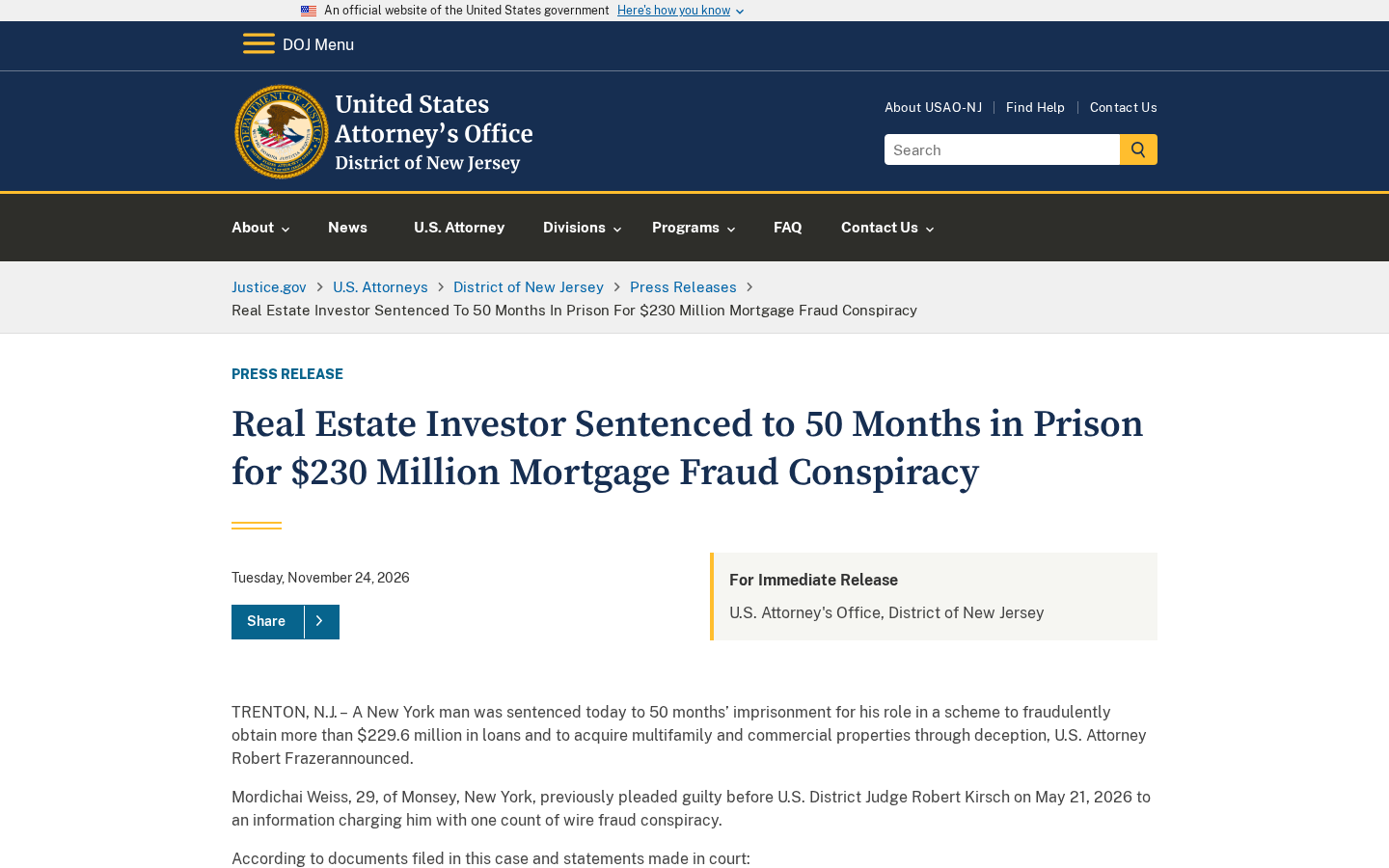
The US Attorney’s Office for New Jersey says Mordichai Weiss participated in a scheme to obtain more than $229.6 million in commercial and multifamily mortgage financing.
The lenders were shown false purchase prices and supporting documents. In a Houston deal, the real agreed price was about $66.9 million. The lender was shown a $97.8 million agreement.
The lender funded a loan of about $68.5 million and Weiss later defaulted, according to prosecutors. In other words, the loan in that example exceeded the true agreed price.
Why the figures describe different financial events
The $229.6 million figure refers to loans obtained across multiple institutions. It is not the same as the loss prosecutors attribute to the lenders.
The release puts those losses at about $94.4 million. It names Fannie Mae and Freddie Mac among the affected institutions, not among the people making the false representations.
The government describes defaults or balances substantially exceeding collateral values. A default on its own would not establish fraud; the case included false documents shown to obtain the financing.
What you can verify before releasing any more money
- Compare the final agreed sale price with the price reflected in documents sent to the financing party.
- Confirm material changes with the closing professional and lender through channels they already use with you.
- Keep the signed versions, amendments and the dates they were delivered together so you can tell which one governed closing.
- Do not instruct a bank to release funds when nobody can explain a material mismatch in writing.
Weiss pleaded guilty to one wire fraud conspiracy count in May 2026. The court sentenced him to 50 months in prison on November 24, 2026.
The court imposed three years of supervised release and ordered $94.4 million in restitution and $94.4 million in forfeiture. Those orders are not evidence of amounts collected.
How the Commercial Mortgage Fraud Worked
Step 1: Real properties were available at real negotiated prices
According to the prosecution, Weiss and others wanted to acquire multifamily and commercial properties. The government describes transactions between April 2022 and June 2023.
In the Houston example, Weiss agreed to buy an actual apartment complex at an actual price. Nobody needed to invent a building to mislead the financing party.
That is an important distinction for anyone checking a deal. An inspection or confirmation that a building exists won’t answer whether the lender saw the same purchase agreement.
Step 2: A higher purchase price appeared in the financing documents
The government says the group provided the lender with a false purchase agreement. The Houston price the lender saw was roughly $30.9 million higher than the agreed price.
A lender looking at a purchase might care about the price as part of assessing credit and collateral. A price on a document cannot replace independent evidence of the transaction.
If a colleague asks you to rely on figures in a summary, find the signed agreement and any amendments instead. Reconcile differences before treating the summary as a source document.
Step 3: More than one record repeated the false picture
Prosecutors said the inflated Houston price appeared in multiple falsified documents. They also described altered bank records and false settlement statements in the broader scheme.
This is why consistency and independence are different checks. Comparing three copies is not useful if the copies all come from the same person and reflect the same unsupported figure.
Have the person responsible for reviewing the loan obtain material confirmation from someone other than the source of the discrepancy. The aim is to verify what actually changed hands.
Step 4: Loans went out and lenders faced losses
The release says lenders approved loans in amounts they otherwise would not have issued. The defaults or collateral shortfalls left those institutions with losses the case quantified separately.
If a lender discovers conflicting documents after funding, changing a line in an internal spreadsheet is not a correction. The people handling the loan need the original record.
If you’re an apartment resident who saw this headline, the sentencing notice does not say how any particular rent payment should be handled. Check property communications through verified channels.
How to Check the Purchase Price Before Funding
Reconcile the lender’s version with the seller’s version
Ask the transaction professional who holds the final agreement for the signed copy and amendments. Confirm which date explains the final price and what each party approved.
Put the version provided to the loan team beside that document. Note discrepancies in property identity, parties and price instead of comparing only the biggest number.
Identify ordinary explanations such as a credit, price adjustment or a separate asset before drawing a conclusion. Ask the closing professional to connect any explanation to a dated agreement.
When you receive an amended figure, verify it through the established lender and closing contacts. An email saying everyone approved the change does not tell you whose records were checked.
Keep the two versions until the difference is resolved. You may need to show which copy the lender received and whether approval came before or after the discrepancy was noted.
Separate the sale price from the financing and appraisal
The price, amount financed and appraised value are distinct. An appraisal can support an estimate of value without confirming how much the buyer actually agreed to pay.
Read the approval conditions and ask what numbers the lender relied on. If a contract changed after approval, the underwriting team needs to know before release.
Give the lender a clean, dated explanation of any credit or adjustment rather than approving inconsistent versions because the final amount will supposedly balance later.
Do not accept a request to sign a document you cannot reconcile with your actual agreement. Ask the party responsible to correct the record before it is used.
Keep the funding approval separate from the sales deadline
A threatened delay is not evidence that the numbers are correct. Give yourself or another authorized reviewer time to get answers before clearing a disputed disbursement.
Decide how a late change can be approved before closing day. Record the verified contacts and confirm who can hold funds if one of those people cannot be reached.
If someone insists that a second review is unnecessary, involve a person inside your organization who can make a decision independent of the deal’s immediate deadline.
What to Record When the Numbers Don’t Agree
Build a chronology from documents, not recollections
Record the date each version was executed and the date it reached the loan team. A mismatch can be easier to explain once you know which version came first.
Mark the document the approving party relied on, and who can confirm that reliance. A later correction does not tell you what was before that person earlier.
Record the discrepancy in ordinary terms. For instance, one verified copy shows an adjustment that the lender’s copy does not mention, and the two resulting prices differ.
Identify the source of each document next to the figure. A purchase price typed into an email is different from the same number in an independently obtained signed agreement.
Keep any earlier unrelated deal documents out of that chronology. A previous offer on the same building might have a different figure without being the basis for the funded loan.
Ask how funds will be reconciled before signing off
Get an explanation of the expected flows from the closing team. A transaction may involve legitimate fees or adjustments, but the explanation should reconcile with the papers each party approved.
Ask whether the loan documents reflect changes to the underlying purchase agreement. A real last-minute adjustment needs to reach the people making the financing decision, not only the sales team.
Confirm which account belongs to the organization receiving money and how that was verified. That is a separate check from confirming the purchase amount.
Record who confirmed the final payment instructions and when. Deal teams often have many participants, so a dated confirmation can prevent confusion over who had approved what.
Make the unresolved differences visible to the person who can hold or release funds. Do not let them rely on an old checklist that says everything has been reconciled.
After funding, distinguish the error and the loss
If facts about the purchase price change, note the difference without immediately treating it as the institution’s loss. Available collateral and payment history affect that separate question.
Give any bank reviewing the case the actual funded amount and subsequent payment records. Do not make a corrected contract number do the work of a loss calculation.
If earlier decisions relied on shared documents, ask the responsible team which other records need review. It can trace the transaction without you exporting unrelated customer material.
Keep the case information accessible only to people who need it. A circulated investigation file can expose borrowers or counterparties who have no connection to the misconduct.
If someone says the dispute has been settled, obtain the written outcome and compare it with the evidence you preserved. Note which issues were resolved and which remain open.
Use the same comparison for an internal review and any authorized referral. Dates, verified values and their sources are more useful than a label saying the deal looked suspicious.
What to Do If You Find Conflicting Mortgage Documents
-
Ask the authorized team to pause an unreleased payment. Give the transaction identifier, the pending amount and the specific document or number you can’t verify.
Do not send updated payment directions through the same channel that produced conflicting paperwork. Use your existing contact at the lender or closing firm.
If the funds already moved, ask the organization that sent them what steps are available. Do not tell anyone a transfer can be recovered until that is confirmed.
-
Preserve both versions and their delivery records. Keep the signed agreements, amendments, closing statements, related emails and records showing the versions actually received by each party.
Write a short timeline in a separate file. Include who identified the difference, which numbers disagree and whether they were present before the lender released money.
Do not overwrite a disputed file with the corrected version. Keep it available to the authorized reviewers who will need to see what originally happened.
-
Verify the source of the disputed papers. Ask the authorized closing contact and financing team to check the originals they control, not copies forwarded by the same intermediary.
For a confirmed amendment, get the approval record and find where the new terms appear. Reconcile those amounts before asking the lender to clear the hold.
-
Escalate suspected fraud through the appropriate channel. See the FHFA’s reporting instructions for issues involving Fannie Mae, Freddie Mac or a Federal Home Loan Bank.
A concern unrelated to those institutions may belong with your lender, employer or law enforcement. Explain what is verified and what you still need to check.
Include transaction dates and copies your organization is authorized to provide. Keep confidential account information out of public complaints or email threads with unknown people.
-
Agree on a reliable plan before resuming the deal. Ask who can authorize funding and what documents that person will need to clear the hold.
If the numbers were genuinely wrong, get corrected records and revised approval before proceeding. If the disagreement remains unexplained, do not rely on verbal claims to release money.
Frequently Asked Questions
Was $229.6 million the amount the lenders lost?
Prosecutors described approximately $229.6 million in loans obtained and approximately $94.4 million in lender losses. The size of the loan portfolio is not the loss figure.
Was the Houston apartment complex itself fake?
The government describes an actual property and a real purchase agreement. The false claim concerned the stated purchase price supplied to the lender.
Is a higher appraisal proof the price was misrepresented?
An appraisal and a negotiated purchase price can legitimately differ. Compare the true transaction documents with what the lender was told before drawing a conclusion about the difference.
Do matching numbers across documents prove a price?
Only if the underlying records are reliable. In this case, the same false figure appeared in multiple records, so agreement between them did not establish the real price.
Were Fannie Mae and Freddie Mac accused of the misconduct?
The federal release names them as among the lenders that suffered losses. It does not present them as the parties responsible for supplying the false documents.
Does a tenant need to send rent to a new account because of the case?
The sentencing release does not instruct residents to change where they pay rent. Verify any requested change with the property manager using a contact you know is genuine.
The Bottom Line
Do not approve a commercial mortgage payment against a price you cannot verify from independent records. Matching paperwork can still describe a transaction that never took place on those terms.
If a discrepancy becomes visible after funds move, preserve the originals and report it through the authorized closing or lending team. Do not fix the numbers silently.

Join the discussion
0 commentsShare your experience or ask a question about this article.
Community experiences
Did this happen to you?
Your experience could help someone recognize the same scam. Submit a private report for our team to review.
I experienced this tooReports are reviewed before publication. Sharing publicly is always your choice.
Discussion
Start the conversation
Have a question or something useful to share? Add the first comment.