


You check the account where your disability payment normally lands. Nothing has arrived, and the bank can only tell you there’s no deposit to show you.
The next question is whether the payment was never issued or whether it went somewhere you can’t see.
Overview
The case involved redirected Supplemental Security Income
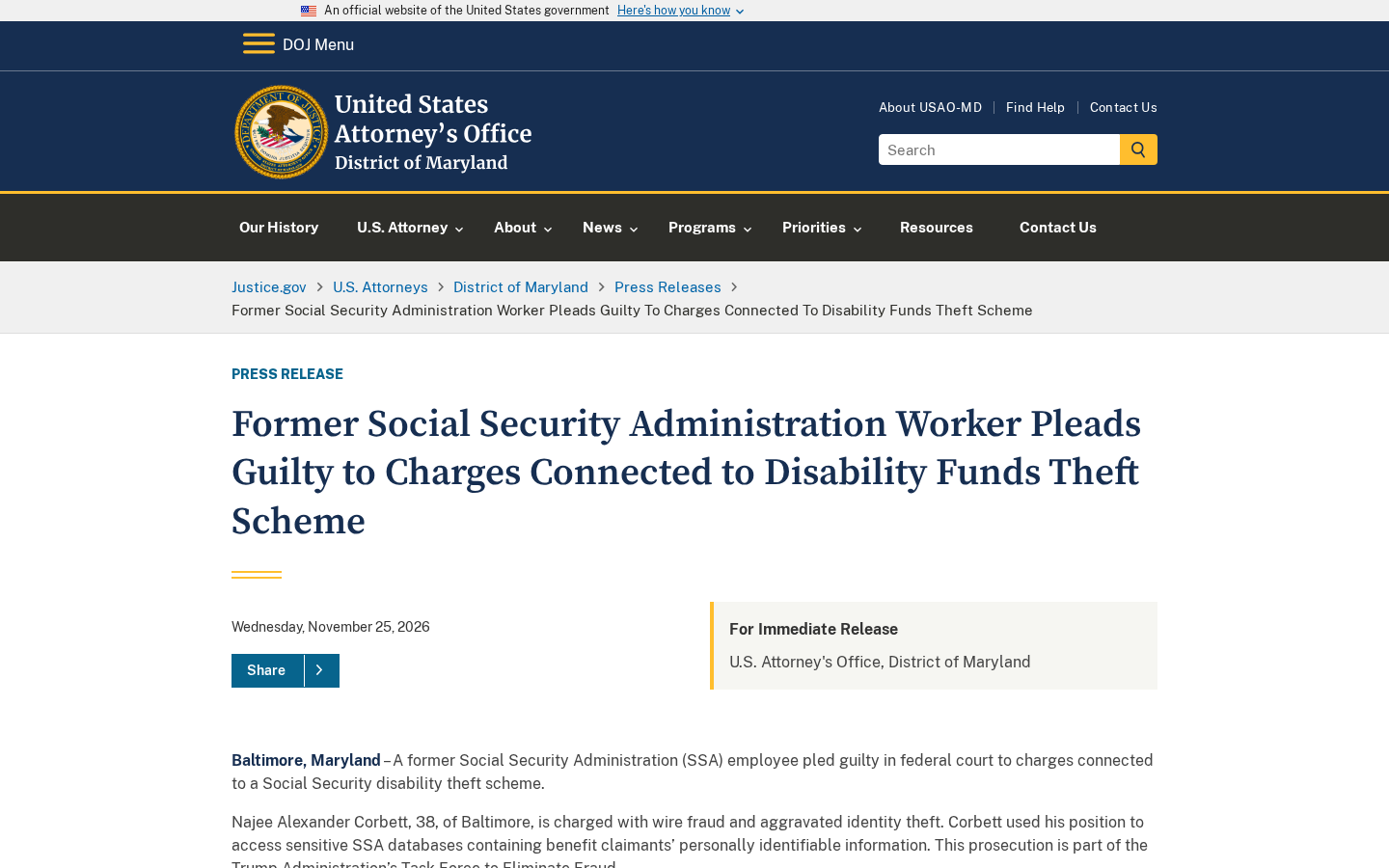
On November 25, 2026, federal prosecutors in Maryland announced Najee Alexander Corbett’s guilty plea in a scheme involving Supplemental Security Income, often called SSI.
Corbett was a Social Security Administration employee who misused his access to agency records. He redirected benefits to accounts he controlled, according to the conduct described in the plea.
The case illustrates an unusual risk: a recipient doesn’t always have to give a password to a stranger for payment information inside an agency record to be changed.
Most missing deposits do not come with an explanation on your bank screen. Confirming what the agency did with the payment is a separate step from searching your bank history.
What the amounts in the federal announcement mean
Prosecutors said Corbett received $116,537.62 in SSI disability payments through the scheme and retained $71,304.62. These describe receipts and retained proceeds, not two totals to add together.
The admitted conduct ran from January 2023 to July 2024. The release announced a plea involving wire fraud and aggravated identity theft, not a prison sentence already imposed.
The release listed February 18, 2027 as the scheduled sentencing date. Check for a new court notice if you need the current date rather than treating the schedule as final.
What to find out when a payment goes missing
- Ask your bank whether it received or returned the expected deposit on the date in question.
- Ask Social Security whether it issued the benefit, for which month, and whether the destination changed.
- In the United States, report suspected diversion to the agency servicing your benefits, not just to a consumer complaint website.
- Save benefit notices even if they appear wrong, because they may identify the change that needs correcting.
A missing payment can also reflect a delay, return or change in eligibility. Ask for the record of that specific payment before making an accusation.
How the Maryland SSI Payment Diversion Scheme Worked
Step 1: A benefit inquiry put claimants in contact with an employee
Two examples in the federal announcement began with people or their families visiting the SSA office where Corbett worked. They were seeking help with disability benefits.
The government described later unauthorized use of records, not victims following a link or installing something. A visit to a real office does not authenticate every later change.
Keep any confirmation you receive when you ask the agency to update a record. Later, you can distinguish the change you requested from a change you did not recognize.
Step 2: Claimant records were altered and payments were generated
Prosecutors said Corbett falsely changed eligibility dates so the system generated back payments in claimants’ names. A back payment covers an earlier period rather than the next regular month.
The announcement also says one claimant’s file was inaccurately changed to show she was deceased. That claim concerns a particular victim, not everyone affected by the scheme.
When you contact the agency, ask separately about the payment record and any status change that affects future benefits. Finding a missing deposit doesn’t automatically correct the underlying record.
Step 3: The payment destination did not belong to the claimant
Corbett directed money to bank accounts he controlled, according to the plea account. In one instance, he changed a mailing address so a check would go to his home.
A claimant’s name on a payment does not establish that the claimant received it. The relevant record shows where it was sent, not just who should have been paid.
If SSA says the payment went out, ask where it was sent. Explain that your bank never received it or that the destination seems wrong.
How to Check an SSI Payment Without Sharing Your Information With a Caller
Start with the month, amount and delivery method
Write down the benefit name and whose payment is missing. If you assist a family member, distinguish their benefit from a deposit meant for someone else in the same household.
Compare the last confirmed payment with the current notice. Record the expected date and whether the payment usually comes by bank deposit, mailed check or Direct Express.
A different amount is still worth checking. Save the amount actually credited and what the benefit notice said to expect, rather than just noting there was a problem.
For a bank account, look in the transaction history for both a credit and a possible reversal. If it’s unclear, call the bank using the number you already use.
For a Direct Express card, use the official contact printed on the card or supplied by SSA. Ask which benefit credits reached the card for the month in question.
Use the correct Social Security contact for SSI
Regular Social Security benefits and SSI do not have identical self-service options. The SSA’s address and direct deposit instructions tell SSI recipients to contact the agency or a local office.
Open that official page yourself and use its published contact details. Ask to report nonreceipt and a possibly unauthorized change, using the dates you wrote down.
Ask the representative to confirm which benefit record is affected and what they need to verify your identity securely. Don’t provide that information in response to an unexpected message.
Someone who has formal authority to manage another person’s benefits should identify their role. If you’re helping but lack that authority, ask what permission the office needs before discussing records.
Ask about payment tracing, replacement and the record itself
The agency’s nonreceipt guidance describes how staff handle suspected unauthorized changes. Ask the representative to check why you did not receive the payment and to explain the next action.
If the destination is unfamiliar, say you did not request the change. Ask how to restore the correct destination, what evidence staff need now and who will follow up.
Request confirmation of whether future payments are affected. A trace of one missing deposit is useful, but it does not answer which account will receive the next one.
Keep a dated record of each conversation and the documents you supplied. If an office gives you a reference number or follow-up date, save it beside the missing month.
Keep the Benefit Record and the Bank Record Separate
When the bank did receive a credit
If the bank sees a credit that you didn’t notice, ask whether it is available or was returned. A bank transaction that was reversed is not a completed payment.
Make a note of the bank’s reason for the return and the dates of both entries. Then ask the agency whether it plans to send the same payment again.
If the money reached your account and a separate transaction took it away, tell the bank that, too. That is different from SSA sending the deposit to another destination.
When the agency shows money went somewhere else
Ask the SSA representative how to document nonreceipt and whether they need a statement from you. Find out if the issue extends to prior payments or just the latest one.
A case note should identify the deposit by date and month. If you receive both SSI and another benefit, make sure both of you are discussing the same payment.
Ask whether the agency needs to correct an address as well as the payment destination. A correct bank account will not fix a mailing address where notices still go astray.
Keep using a trusted number if the office needs to collect more information. If someone unexpectedly calls you for payment records, ask how to reach them through the agency first.
When a notice says payments stopped or eligibility changed
Read the notice for its date, stated reason and any deadline to respond. If you don’t understand the explanation, ask the office to describe the change in plain language.
If the agency record incorrectly says a living person is deceased, say that plainly and ask how to prove the record is wrong. Do not mail original identity papers unprompted.
A suspension may be unrelated to missing money. Ask whether you should correct the record, dispute a decision or report nonreceipt of a specific payment.
When someone helps you, give them a clear job such as finding the original notice or writing down the office’s answer. Keep control of your own sign-in information.
If bills were missed because a benefit did not arrive, keep fees or past-due notices in a separate folder. Mention the urgency without assuming the case automatically covers those costs.
Check the next statement or card transaction history while the inquiry remains open. Record what was actually credited if the agency says it issued a replacement or resumed payments.
If a check arrives by mail instead of the expected deposit, ask SSA why the delivery method changed. Verify with the agency before treating an unfamiliar explanation as official.
Keep the status of your inquiry where you can find it. If another worker handles the next call, the previous dates and answers can prevent you from starting over.
Do not post your benefit notice to ask a public forum what happened. Strip out private details if you need general advice, and give case information only through verified channels.
What to Do If Your SSI Payment Was Redirected
-
Check the receiving account before calling Social Security. Ask the bank or card issuer whether it received, rejected or returned a deposit for the month in question.
Use the contact shown in your bank’s app, your statement or your card. Write down its answer and any trace information it can provide.
Don’t wait for a new statement if you already suspect unauthorized redirection. An initial bank check should help you contact SSA, not hold up that call.
-
Tell SSA you did not authorize the change. Contact the agency through its official route and explain which benefit, payment and destination are unclear.
Ask that staff check both the missing payment and the destination for future ones. If notices or personal information also changed, identify what looks wrong.
If a representative directs you to a local appointment, confirm its location through SSA and ask what identification to bring. Do not send papers to a caller’s personal account.
-
Keep payment recovery and fraud reporting on separate tracks. Ask Social Security how it will investigate nonreceipt and whether it will need a statement or other supporting record.
Use the SSA Office of the Inspector General contact page to report suspected misconduct or theft. Include what you saw, when it changed and whether SSA has checked your payment.
A fraud report does not itself reset direct deposit or request a replacement. Keep following the payment matter with the agency office that can access your record.
-
Check for account access you did not recognize. If you also see unexpected password resets or changes to contact details, use the official sign-in help for that account.
Confirm your email and phone details with the relevant service. Protect those accounts, but don’t assume changing their passwords will correct a separate record already changed within SSA.
-
Follow up if the change would affect essential bills. Tell SSA if you face an urgent problem paying for necessities while it looks into the missing benefit.
Ask what assistance or payment options apply to your situation rather than trusting someone to sell you a faster resolution. Keep the next expected payment date on your calendar.
If the next deposit also fails, tell SSA you are reporting an additional missing month. Have both payments’ dates and the earlier reference number ready.
Frequently Asked Questions
Was the Maryland scheme a fake phone call?
The conduct described in the plea involved misuse of employee access. The release does not describe the victims giving someone their account passwords during a phone call.
What is the difference between SSI and a Social Security disability payment?
SSI is a separate benefit program, although SSA administers it and disability can be a basis for eligibility. Check the benefit name on your actual notice before choosing instructions.
Does a missing deposit mean someone stole it?
A missing deposit can have several explanations. Ask the bank whether it received the payment and ask SSA whether the benefit was issued and where it was sent.
Can I change SSI direct deposit just by opening My Profile?
SSA directs SSI recipients to call the agency or contact a local office. The online My Profile instructions for regular Social Security benefits do not automatically apply to SSI.
Why should I keep a notice that contains incorrect information?
The notice can show when the incorrect information appeared and which record needs to change. Save it securely instead of marking over or discarding the original.
Can the inspector general send my missing benefit?
The inspector general takes fraud reports, but the agency office handles benefit records and nonreceipt. Report suspected fraud and follow the missing payment with SSA itself.
The Bottom Line
If your SSI payment does not arrive, contact the bank and then SSA through a number you verified. Ask where the specific payment went and whether any future destination changed.
Do not trust a stranger offering to release money for a fee. Report suspected diversion separately, keep your case records and confirm the correction before the next benefit is due.

Join the discussion
0 commentsShare your experience or ask a question about this article.
Community experiences
Did this happen to you?
Your experience could help someone recognize the same scam. Submit a private report for our team to review.
I experienced this tooReports are reviewed before publication. Sharing publicly is always your choice.
Discussion
Start the conversation
Have a question or something useful to share? Add the first comment.