


A preparer says your business can still recover money for wages you paid years ago. Their estimate sounds precise, but the payroll records are still in your drawer.
Before treating that estimate as a refund, ask to see exactly what would be filed under your company’s name.
Overview
What Credit Reset was doing with employment tax returns
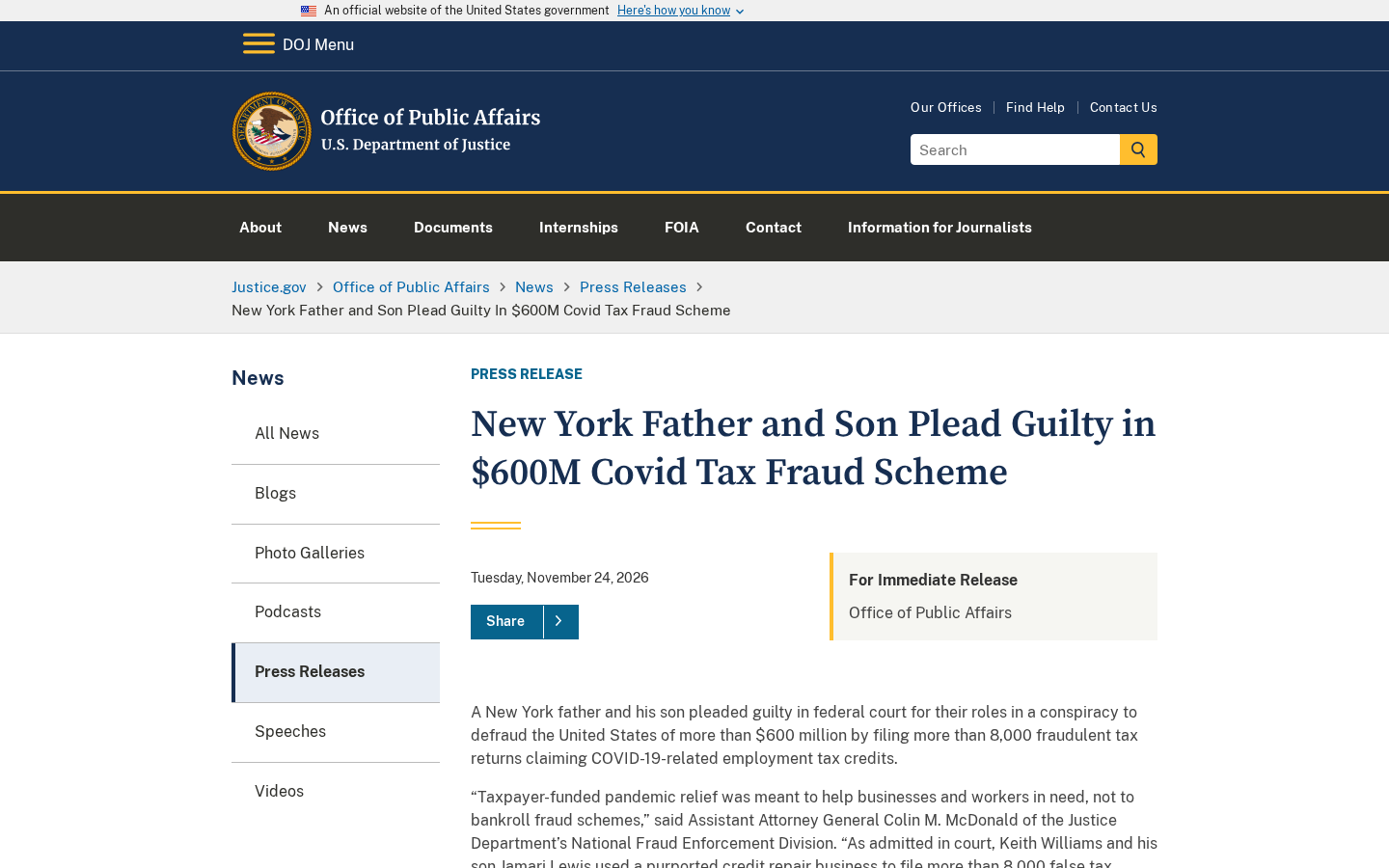
Keith Williams and Jamari Lewis pleaded guilty in a pandemic tax fraud case built around Credit Reset, a purported credit repair business Williams owned and operated.
According to the Justice Department’s November 24, 2026 account, they and others filed more than 8,000 false employment tax returns for themselves and clients.
The credits at issue were real pandemic relief programs. The scheme depended on filing claims that were not supported by the actual payroll circumstances, not on inventing a program.
That difference matters when a promoter points you to an IRS page or a real law. Neither tells you that a claim filed for your business qualifies.
More than $600 million was sought, not paid
Prosecutors say the group sought more than $600 million in fraudulent credits and the IRS paid approximately $46 million to the defendants and their clients.
The two figures answer different questions. The first reflects money requested with false filings. The second describes actual payments in the prosecution’s account.
Both men agreed to restitution of $46,756,084.89 to the IRS in their plea agreements. That is not an announcement of settlement checks for businesses that hired the preparers.
Which papers should match if you are checking a claim?
- Get the copy that was actually filed for each quarter, not just a projection or a preparer’s invoice.
- Match the employer name, EIN and covered period to your own records before reviewing any amounts.
- Ask for the eligibility explanation and the payroll records used for the calculation.
- Keep your copy of every IRS notice rather than letting the promoter be your only source of updates.
The November announcement reported two guilty pleas. It did not say every client knew the claims were false or that the two defendants had both been sentenced.
How the Credit Reset Pandemic Tax Fraud Worked
Step 1: A business that offered credit repair became a place to file refund claims
Credit Reset was the base for a group acting as tax preparers, according to prosecutors. They filed returns for themselves and for clients who sought refunds.
Credit repair, payroll administration and employment tax preparation are different services. A company’s familiarity with one tells you little about who will sign a tax filing for the others.
Before engaging anyone, ask for the name of the person responsible for preparing the return, a written fee agreement and a copy of what will be submitted.
Step 2: Genuine pandemic credits appeared on false claims
The group used two genuine programs: the Employee Retention Credit and the paid sick and family leave credit. Both were associated with employment expenses during the pandemic.
The filings misrepresented eligible payroll and sometimes counted the same payroll more than once. A refund estimate couldn’t tell a client whether the numbers were supported.
Ask the preparer to show which pay records support each part of the claim. An explanation that jumps from the name of a law straight to a total isn’t enough.
Step 3: Refund payments and fees rewarded the filing volume
The government says the participants profited from Treasury checks and from fees paid by clients, including fees tied to the amount of a refund.
A promise that you pay only after a check arrives can make a claim sound low-risk. It does not mean the preparer will pay back the credit if disputed.
Review who would receive a government payment before it is filed. Do not let the preparer’s billing arrangement become your only explanation of where a check would go.
Step 4: The payments did not validate the returns
Some claims were paid, but prosecutors later described those filings as fraudulent. A deposit or mailed Treasury check does not prove that the supporting payroll record was accurate.
Williams pleaded guilty to conspiracy to defraud the United States and wire fraud. Lewis pleaded guilty to wire fraud. The announcement gave separate plea dates for the two men.
The federal release scheduled Lewis’s sentencing for April 19, 2027, and did not give a date for Williams. Those are court proceedings, not deadlines for a business to file anything.
How to Check What Was Filed for Your Business
Put the return beside records you control
Get the filed employment tax return or adjustment, its proof of submission and any worksheet the preparer used. Make a folder for each period rather than mixing quarters together.
Bring in your payroll summaries, records of wages paid and any other claim for the same period. You need records from the business, not a second estimate from the salesperson.
Use the IRS business transcript information to check what records your authorized representative can obtain. Compare an agency record with the preparer’s copy when both are available.
Look for a return saying it was filed for a quarter in which your business had no employees or wages. Take that question to a qualified independent tax professional.
Ask a payroll provider for copies, not just summary totals. Knowing who prepared an earlier record makes it easier to explain discrepancies between the two accounts.
Make the preparer explain the fee and the authorization
Identify the fee on the agreement, the recipient on the invoice and the person who actually filed. Ask how each of them is connected to the business that approached you.
Keep the signature authorization or submission approval you gave, if there was one. Mark any filed version that differs from the document you remember approving.
If you don’t recognize the signature or the employer identification details, don’t alter the copy. Preserve both versions and ask the independent adviser how to report the mismatch.
If a new person calls and says they took over the file, confirm the relationship through records already in your possession before giving them new payroll information.
Find out whether a payment was made before asking how to correct it
There is a practical difference between a pending claim, an uncashed check and money already received. Write down which describes each return before seeking help.
The IRS ERC withdrawal instructions describe a limited route for certain adjusted returns when the employer wants to withdraw the whole credit claim and meets the other conditions.
If an adjustment included other changes or a payment has already been cashed, do not assume the same route applies. Take the actual return and notices to an independent adviser.
Being unsure about a credit does not mean you should file a second copy to see what happens. A legitimate correction should identify what was filed and what needs changing.
When the IRS Withdrawal Route Applies
Use this route only after confirming the adjustment claimed the ERC and nothing else, you want to withdraw the entire claim, and payment is pending or the check is uncashed.
Start with one copy of the adjusted return for each affected period. An authorized signer should mark the first page for withdrawal and add their signature, date, name and title.
Write “Withdrawn” in the left margin of the first page. Place the signer’s details in the right margin and keep that marked copy in your records before sending it.
For a pending claim that isn’t under audit, verify and use the IRS withdrawal fax line, 855-738-7609. Keep the fax confirmation with the signed copy.
If you cannot fax an eligible pending request, the IRS allows mailing to the address in the relevant adjusted return’s instructions. Track delivery and keep a copy of it.
If the IRS notified you of an audit, don’t use the general withdrawal fax. Ask your assigned examiner how to send it, or follow the response instructions on the notice.
For an uncashed refund check, the IRS says to mark the back “Void” in the endorsement area and include the original with your withdrawal request, not fax it.
Briefly explain why you are returning the check in a note marked “ERC Withdrawal.” Save images of both sides of the voided check and copies of the paperwork.
Do not staple, bend or clip the uncashed check. Confirm the mailing address in Section C, then send the original check and signed request with tracking.
The IRS lists Cincinnati Refund Inquiry Unit, PO Box 145500, Mail Stop 536G, Cincinnati, OH 45250 for the uncashed check branch.
Watch for an IRS letter accepting or rejecting the request. Mailing or faxing starts the process; it does not make the withdrawal effective before you receive acceptance.
Removing a credit from an employment tax filing can also affect how related expenses were handled on an income tax return. Ask your adviser to review that separate record.
A withdrawal is not a way to shield willful fraud from investigation. If you believe someone filed without your authority or copied your signature, tell your adviser and the IRS.
If you received a payment electronically or cashed a check, don’t treat it like a pending request. Bring the deposit record to your adviser and verify the appropriate correction.
Before sending anything, put the known IRS correspondence beside the signed request. You want the employer identification number and specific filing period to match the claim you are addressing.
If several quarters are affected, keep a checklist showing what you submitted and what the IRS confirmed for each one. A response for one period does not settle the others.
Use a secure company file for these papers. The issue belongs with people responsible for the tax or payroll record, not an online group asking you to share returns.
What to Do If You Suspect a False Payroll Tax Claim
-
Stop new filings while you identify the problem. Tell payroll and whoever can authorize tax returns that the disputed preparer should not submit another copy for the business.
Review the authority the preparer was given and ask an independent adviser how to revoke or change it if necessary. Keep the original authority documents for your records.
-
Build a quarter-by-quarter list of filings and payments. Include the form, date filed, preparer, amount, confirmation number if available and any letters you received from the IRS.
Write whether each payment is pending, mailed, deposited or otherwise credited. If someone says one was sent to a different address, note how you learned that.
Preserve copies of bank records and refund checks. Report any conflicting payment destination through an official route rather than asking the original preparer to retrieve the money.
-
Take the records to an independent professional. Choose someone who did not sell or file the claim. Ask them to compare the forms with the payroll records and authorizations.
If an IRS notice gives a response deadline, show it to the adviser first. Do not ignore genuine correspondence because the original promoter says they will handle it.
Do not deposit an uncashed check for a claim you think is wrong. Keep it safe while an adviser checks the IRS instructions that match your filing.
-
Report preparer conduct through the IRS website. Use the IRS tax return preparer misconduct reporting page and include the dated records that explain what the preparer did or changed.
Keep a copy of the complaint and date submitted. A misconduct report does not itself amend a return, so make a separate plan for the tax record.
-
Keep tax communications under the company’s control. Confirm the mailing address the agency actually uses and who is responsible for opening correspondence and tracking the response date.
Do not buy a promise that a third party can erase an unsupported filing or hand you a guaranteed replacement refund. Route suspicious messages through the official IRS contact system.
Frequently Asked Questions
Did the government pay out the $600 million?
That figure covers fraudulently requested credits, not all funds paid. The DOJ said the IRS paid approximately $46 million to the defendants and their clients.
Was the Employee Retention Credit itself fake?
The credit was a real federal program with eligibility rules. The case was about false claims submitted for relief, not the existence of the program.
Does this case mean that every Credit Reset client committed fraud?
The DOJ described the conduct of the defendants and other participants. Being a client does not establish what a person knew about a claim filed on their behalf.
Can the fact I received a Treasury check prove I qualified?
Receiving a payment does not establish eligibility. Check the payroll records, authorization and claimed basis for the credit with an independent professional if the filing looks wrong.
Should I use the IRS withdrawal process for every tax credit?
The linked withdrawal route concerns particular ERC claims and conditions. It is not a general process for all payroll tax credits or for every return involving one.
Can I get my refund by paying a fee to someone invoking this case?
The restitution described in the pleas is owed to the IRS. The announcement did not open a payment program for clients who pay an intermediary.
The Bottom Line
Do not authorize a payroll tax claim you cannot tie to your own records. A real credit and a confident preparer cannot substitute for a supported return.
If something was already filed, secure the forms and payment records and get independent tax help. Report misconduct separately and follow through on the actual correction.

Join the discussion
0 commentsShare your experience or ask a question about this article.
Community experiences
Did this happen to you?
Your experience could help someone recognize the same scam. Submit a private report for our team to review.
I experienced this tooReports are reviewed before publication. Sharing publicly is always your choice.
Discussion
Start the conversation
Have a question or something useful to share? Add the first comment.