

You need your car tomorrow. A message about an unresolved violation arrives tonight, and the warning about registration suddenly feels harder to ignore than ordinary spam.
The New Hampshire DMV text scam makes that uncertainty personal. Before letting its deadline decide your evening, separate the threatening message from your actual driving record.
Overview
The payment demand is the impersonation, not an official DMV task
Fraudulent messages claim an outstanding traffic violation needs immediate payment. Threats about driving privileges, registration, prosecution, or credit damage make the demand sound consequential.
An official DMV warning published by the Town of Weare describes this approach and says the agency does not send payment requests by text.
That release is dated June 9, 2025. It documents an established tactic, not proof that every later message shares an operator or comes from a newly identified campaign.
This guide concerns the fraudulent request. It does not suggest the real New Hampshire DMV is collecting money through those imitation messages.
Appointment reminders and penalty demands are different
The published warning distinguishes appointment reminders, which the DMV may send, from messages demanding payment. Remembering a genuine reminder does not authenticate an unexpected fine.
Ask what the text wants you to do. A change from remembering an appointment to supplying financial information is a change in risk, not a minor formatting detail.
You can verify a concern through the agency without replying to the sender. Published customer service is a separate route from the link inside the notice.
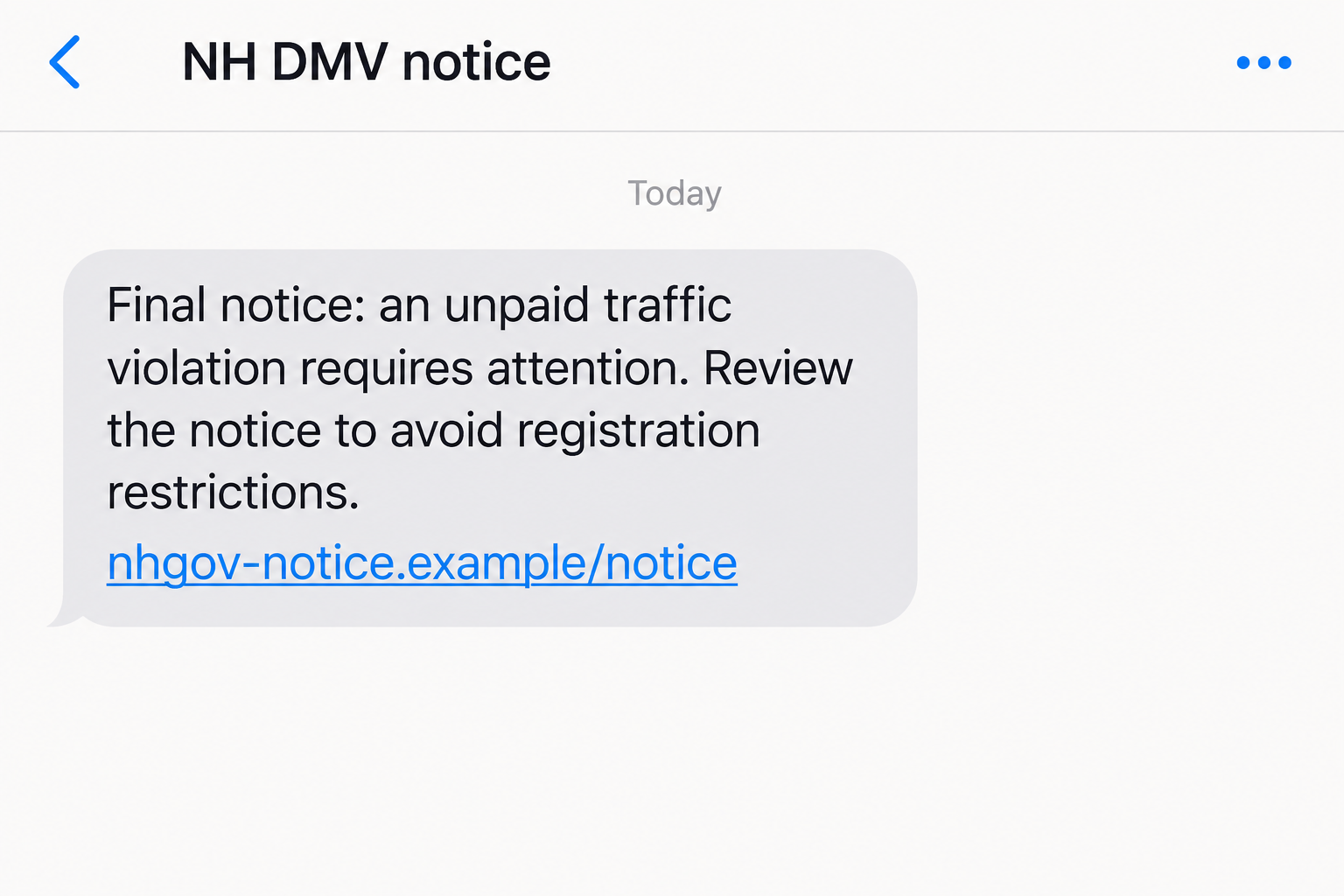
The image uses a fictional example address and invented sample wording. It is an illustration of the approach, not evidence from an actual driver’s case.
The warning combines local language with pressure to stop checking
Look closely at a message containing several of these features:
- A claim that an unspecified traffic violation remains unresolved.
- A final-notice label without a record you independently recognize.
- Immediate threats to your ability to drive or register a vehicle.
- A payment link containing reassuring state-related words.
- A request for personal or financial details before the allegation is verified.
Do not use the presence of a state abbreviation as an identity check. The question is who controls the destination and whether the actual agency recognizes the matter.
Why This Notice Can Feel More Believable Than Other Spam
Your daily plans make the threat feel concrete
A suspended license is not an abstract inconvenience when you drive to work, take someone to an appointment, or depend on a vehicle for family responsibilities.
The message puts that possible disruption beside a simple-looking action. Paying appears to be the fastest way to remove a problem you never expected.
But that comparison assumes the sender has authority. A fake payment page cannot protect your registration just because its notice promises that result.
Leave the payment unfinished while you contact the real office. You can check the concern without letting the stranger collect your money.
Government-looking words are not the same as a government destination
The DMV’s warning describes links containing nhgov. That fragment can be used to create recognition even when the destination is not the state’s service.
Read the complete address, including what follows the familiar wording. A long address is not made official by inserting a state name into its beginning.
If the destination is unclear, do not open it to inspect the design. Obtain the agency’s contact independently and describe the message instead.
A padlock or secure-connection indicator does not settle the operator’s identity. An encrypted connection can still deliver information to the wrong website.
Receiving the text does not prove someone checked your records
A message reaching your number does not establish access to your driving history. The claim may be designed to sound relevant to anyone who owns a vehicle.
You do not need to supply the missing license, plate, or address information to find out whether the sender knows it.
If the message already contains a personal detail, verify the request anyway. Accurate information and authority to demand a payment are different things.
Keep that distinction when discussing the text with family. The useful warning is about the payment route, not speculation about how a stranger obtained a phone number.
How the New Hampshire DMV Text Scam Works
Step 1: An automatic-looking alert introduces an alleged unpaid violation
The contact presents itself as a routine notification from the DMV or a similar traffic authority. It implies an existing record needs attention.
You may search your memory for a parking issue, a recent trip, or paperwork you postponed. That mental work can make a vague notice feel more specific.
Start with your own documents instead. If you received a real citation, keep its issuing authority and reference available without entering them into the unfamiliar form.
Do not reply to confirm your name or vehicle. The sender should not gain more information merely because you want to understand the allegation.
A person who does not drive can receive a similar message too. The mismatch is useful, but you should not need such an obvious mistake before checking independently.
Step 2: Multiple threatened consequences make payment seem safer than hesitation
The warning can connect an alleged balance to registration restrictions, license trouble, prosecution, or credit damage. Several threats together make the demand feel harder to challenge.
The public DMV alert describes these intimidation tactics. Their appearance in the message does not establish that the threatened action is actually pending.
A deadline stated by a stranger is not a substitute for verification. Contact the proper organization rather than paying first and planning to check afterward.
Do not interpret this as advice to ignore genuine legal or driving notices. A real deadline needs attention through the authority responsible for it.
If anxiety makes it difficult to slow down, show the message to someone you trust. Explain the requested action before either of you starts following its instructions.
Step 3: A convenient link moves the reader to the information request
The message provides the route to its own supposed solution. A copied page may repeat the agency name and display an alleged notice or payment status.
That continuity feels reassuring, but both the warning and its destination can come from the same impostor. Agreement between them is not independent confirmation.
A form may ask for payment details, identifying information, or both. Do not assume a field is harmless because it is described as verification.
Leave the process if it requests information before you have established the recipient. You can ask genuine customer service about the issue without testing the suspicious form.
Do not approve a bank code to see whether the payment is real. Read what the genuine bank says the code or approval would authorize.
Step 4: The aftermath can involve more than the amount shown
If you supplied a card or identity information, the exposure is not limited to the fee the page displayed. Take the actual disclosure to the relevant provider.
A failed page does not certify that nothing was received. Likewise, a success screen does not establish that a real traffic record has changed.
Stop further submissions and keep available evidence. Let your bank evaluate the financial response while the genuine agency addresses questions about your record.
Another caller may offer to complete the process or recover money. Independently verify that contact, even if the person knows details from the first exchange.
You do not need to stay in contact with an impostor to preserve a useful report. Your existing message, timeline, and transaction details can explain the event.
Verify the Real Concern Without Accepting the Text’s Route
Contact DMV customer service through a published channel
The DMV alert lists 603-227-4000 for customer service. Obtain current details from the agency or official government information rather than the suspicious message.
Explain that an unsolicited text threatened consequences over an alleged violation. Ask which office can verify the issue and what record it would need.
Use the genuine service’s secure process if identification is necessary. Do not send sensitive documents to an address supplied only by the person making the demand.
Record the response and any next step. A clear answer from the appropriate office is more useful than comparing the typography of two warnings.
Keep toll accounts, court cases, and DMV records separate
A text may mix several kinds of driving-related concern. Do not let that language convince you there is one universal payment that clears everything.
The City of Rochester’s official E-ZPass warning separately directs readers to genuine toll services and DMV customer service.
If your concern is an actual court matter, locate the court through official channels. The contact details in the threatening text are not their own authentication.
Keep any original paperwork. Discovering an impersonation should help you choose the correct route, not persuade you to disregard real correspondence.
Help another driver without increasing their exposure
Ask what they already did before recommending action. Someone who only received a text needs different help from someone who entered a card and a verification code.
Offer to organize the sequence or locate official contacts. Let the person speak directly to their financial provider and control their own account credentials.
Avoid blame. Embarrassment can make someone withhold the very detail, such as a second payment or shared document, that matters most during recovery.
What to Do if You Have Fallen Victim to This Scam
-
Stop the conversation and any unfinished payment. Do not supply another card, code, or identity document to remove the threatened restriction.
Write a simple timeline covering the text, the page, the information entered, and any payment. Keep the original message while preparing reports.
If you only viewed the message, do not assume identity theft occurred. Focus first on avoiding its link and checking the genuine concern.
-
Call your financial provider if money or card information was involved. Use your existing app or a number from the card itself.
Tell the provider about the false DMV demand, including any bank approval you completed. Ask what transaction protection or payment review applies.
Keep written confirmation and follow-up dates. A refund is not guaranteed, but prompt, accurate reporting gives the provider the best starting point.
-
Verify your driving or registration concern independently. Reach genuine DMV customer service and describe the alleged violation without trusting the text’s payment status.
Ask about the appropriate authority if the matter belongs elsewhere. Retain any real case reference or instructions you receive.
Do not pay the same unverified collector again while waiting. A claim that the first payment merely paused enforcement needs independent confirmation too.
-
Get identity-specific guidance for sensitive disclosures. If you shared a Social Security number, license details, or identification image, explain exactly what was exposed.
The federal IdentityTheft.gov resource can help identify relevant protection and recovery steps. Contact the real credential issuer where appropriate.
Monitor for unfamiliar account activity and retain reports. Do not publish copies of your identification while warning others about the scam.
-
Secure any login information entered into the false process. Change exposed passwords through their actual services and address reuse on other accounts.
If a security code or approval was involved, tell that provider what it described. Do not assume changing one password reverses every action already approved.
Check account recovery contacts and seek genuine support if access no longer works. Ignore unsolicited offers to recover the account for a fee.
-
Review downloads and permissions when relevant. If the page prompted an installation, stop using its supposed support service and obtain trusted assistance.
Malwarebytes can help identify malicious software. A scan cannot settle a traffic matter, revoke a financial authorization, or refund a charge.
AdGuard can limit some advertising and dangerous web destinations. It does not establish that a sender has government authority or prevent every deceptive text.
-
Report the message through the appropriate channels. Use a supported spam-report option or forward it to 7726 if your carrier offers that service.
Report financial deception at ReportFraud.ftc.gov. Where identity theft or a loss occurred, consider a factual report to local police.
Keep the bank case, identity report, and fraud report together. Note who needs a reply next so an important deadline doesn’t get lost.
-
Expect the story to return in another form. A new text may offer a cancellation, refund, or final chance to avoid penalties.
Use the verified contacts you already established rather than the new sender’s shortcut. Someone knowing the original incident does not automatically become a trustworthy helper.
Share a calm warning with anyone else handling the household’s driving paperwork. Explain the demand and independent check without forwarding a working suspicious link.
Frequently Asked Questions
Does the New Hampshire DMV send texts about payments?
Its published scam warning says it does not send payment requests by text. Verify an alleged fine through an independently located official contact.
What about an appointment reminder I was expecting?
The warning distinguishes appointment reminders from payment demands. An expected reminder does not authenticate another message asking for card or identity details.
Does nhgov in the link prove it belongs to the state?
No. The DMV specifically warns about misleading use of that wording. Recognizable text inside an address does not establish control by the state.
Can the sender actually suspend my registration?
A fraudulent text cannot establish a genuine enforcement action. Independently check any real driving issue rather than relying on the sender’s threat or reassurance.
Should I enter a license number just to find the case?
Not on an unverified page. Ask the genuine agency about the proper process and provide necessary information only through its confirmed route.
Is a displayed sender number reliable evidence of identity?
No. Do not treat a familiar-looking number or government-style name as permission to pay. Initiate your own connection to the appropriate office.
The Bottom Line
Do not follow a New Hampshire DMV text scam into a payment or identity form. The threatened disruption does not authenticate the demand.
If you already submitted information, contact the affected financial or identity provider and preserve your records. Check the actual driving issue through genuine DMV or court channels.

Join the discussion
0 commentsShare your experience or ask a question about this article.
Community experiences
Did this happen to you?
Your experience could help someone recognize the same scam. Submit a private report for our team to review.
I experienced this tooReports are reviewed before publication. Sharing publicly is always your choice.
Discussion
Start the conversation
Have a question or something useful to share? Add the first comment.