


A house fits your budget at the price in the listing. You pay to apply, then find out the monthly bill includes charges you could not decline.
Progress Residential renters also faced a second question at move-out: which repairs were theirs to pay for, and which problems were there before they arrived?
Overview
The advertised rent did not tell applicants the whole cost
Federal and state authorities allege that Progress Residential advertised rents without including charges for services renters had to pay for. Some applicants had already paid fees when they learned more.
The dispute concerns the timing and presentation of those prices, not whether rental homes existed. A real house can be advertised with an incomplete monthly price.
- Complaints address mandatory monthly costs, early application and holding fees, and the handling of security deposits.
- The proposed settlement separates $48.5 million for consumer redress from $1.25 million for Arizona.
- The FTC’s case listing identifies the proceeding as pending; the proposed amount is not a promise of a check to each tenant.
Deposit deductions are a distinct issue
The plaintiffs also allege the companies sometimes withheld deposits for old damage or ordinary wear. An applicant comparing monthly prices should plan for a separate record at move-in.
The practical evidence is a dated account of the home’s condition. An advertisement and an inspection report do not establish the same thing.
The decision before you pay an application fee
Ask for the complete recurring price and the conditions on all money due before move-in. Get the answer for the exact house and lease term.
If the landlord won’t provide those figures in writing before charging to apply, do not pay. A price you cannot find is a price you cannot compare.
What the Progress Residential Case Actually Alleges
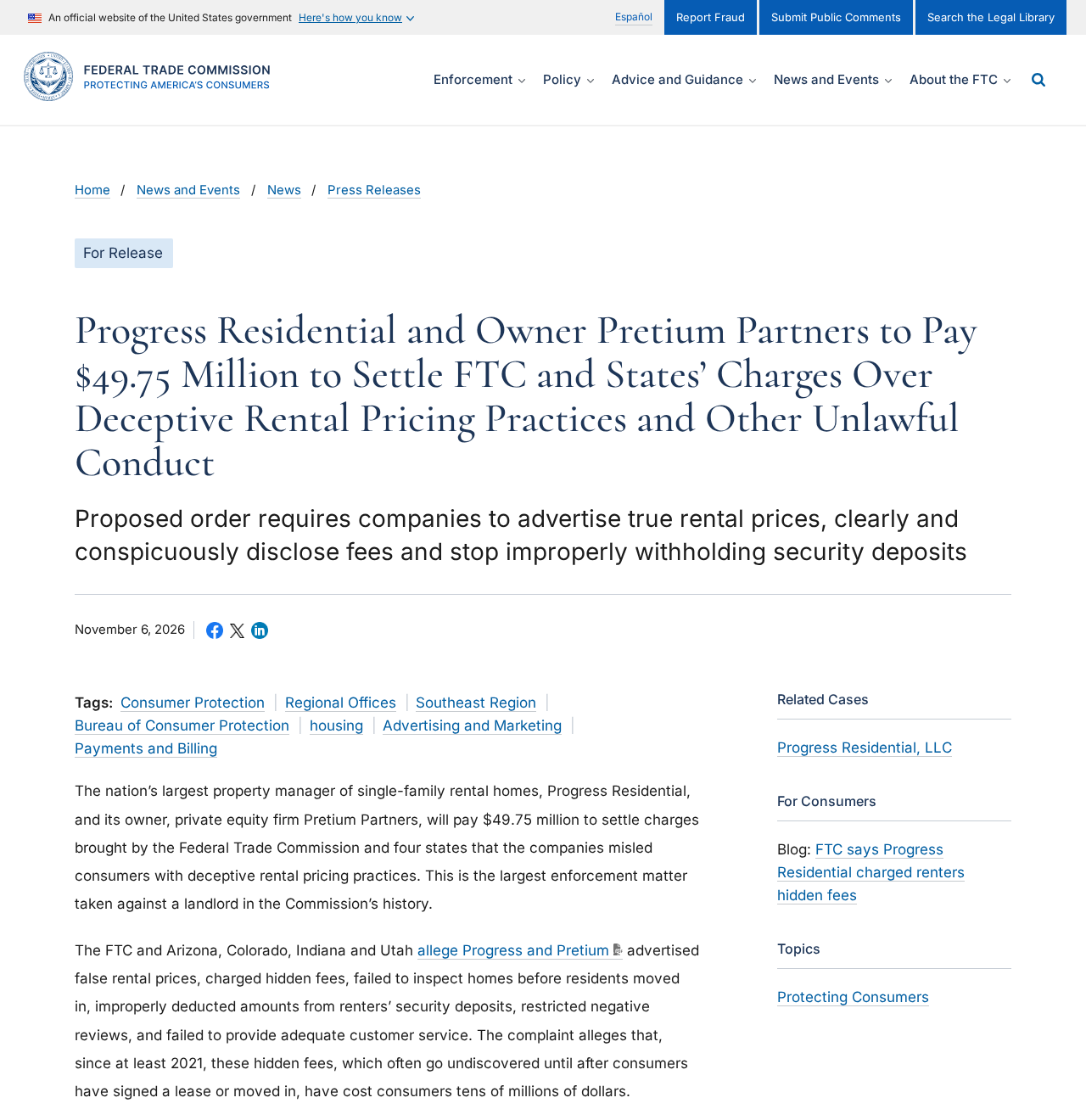
The FTC case record names Progress Residential and its owner, Pretium Partners. The federal agency was joined by Arizona, Colorado, Indiana and Utah.
The plaintiffs say mandatory charges could include smart-home equipment, utility administration or services such as filters, landscaping and pest control. What applied depended on the rental.
Utah’s account of the complaint describes extra monthly fees ranging from $30 to at least $330. Those are allegations about the practices at issue, not a fee schedule.
That distinction matters if you find a particular home priced below another manager’s listing. The only useful comparison uses totals for both homes, not their cheapest advertised figures.
Authorities also describe application fees of up to $55 per adult and holding fees of up to $500. They say renters could pay before seeing the true monthly cost.
Application fees can add up when two adults are applying. A household that already spent money might be more willing to accept fees it would have rejected earlier.
The Utah regulator also describes allegations involving edited listing photos and incomplete inspections. That makes it especially useful to document the condition of the specific house.
The FTC says much of the alleged conduct occurred under prior management and that newer management took steps to address it. The present listing still needs its own price check.
What a lower headline price can hide for a full year
Consider a hypothetical listing at $1,850 with $110 in mandatory monthly charges. That is a $1,960 commitment before other costs such as usage-based utilities.
A comparable home priced at $1,920 with no fixed monthly extras would save $40 a month in this example. The cheaper advertisement would cost $480 more over twelve months.
These are illustrative figures, not Progress quotes. The calculation matters because recurring fees affect every month of the lease, while an application fee affects the decision to enter it.
Ask which fees can change during the lease and how the lease addresses notice. A written total is most useful if you know how long it applies.
Who Handles the Price, Payment and Property Records
Identify the manager and the landlord named in your lease
The parties named in the case are not a substitute for the names in your documents. Record the manager, payment recipient and landlord listed for your exact home.
You may need those names for different purposes. The company showing the listing can answer advertising questions, while the lease tells you where to direct a formal property notice.
Use the actual property address and listing
Save the page from which you applied, including the address and date. This keeps an old price for another unit from being mistaken for the offer you accepted.
Ask management to identify which fees are attached to the address, not which fees might appear across its portfolio. Save the answer with the original listing.
Confirm who can explain a charge in writing
Before paying an application or holding fee, ask who receives it, when it becomes nonrefundable and whether it is credited to the lease.
If staff tells you a payment is optional, ask to see that in the actual agreement. A conversation and a signed document can give different accounts later.
Keep the inspection record away from the payment ledger
A receipt proves a payment, not the condition of a wall or appliance. Keep move-in photos, reports and maintenance contacts alongside, but separate from, your financial records.
Ask for copies of inspection findings and itemized deductions. When the record describes a repair, compare it with the photos of the same room from both dates.
What the Proposed Settlement Would Change
The FTC announcement gives a total of $49.75 million. The proposed allocation is $48.5 million to fund consumer redress and $1.25 million to Arizona.
Those amounts describe the proposed outcome for the case, not a formula for individual checks. The public materials do not say every resident would qualify for the same payment.
The proposed order would put the full mandatory monthly price ahead of smaller price figures. It would also restrict several kinds of security deposit deductions.
It calls for an itemized deposit statement within the applicable time, referring to 30 days and state-law requirements. That is not a nationwide replacement for state deadlines.
The companies did not admit or deny the allegations under the proposed order. The regulator says a stipulated order takes effect when the court enters it.
Check the regulatory case page for changes rather than taking an unsolicited message as proof that refunds started. A real case name can be copied into a fake claim offer.
Price disclosure and deposit treatment are two different remedies
Publishing the complete price helps someone who is still comparing homes. It would not by itself answer whether a past charge or deposit deduction was appropriate.
The proposed deposit provisions address recordkeeping, inspections and the reasons money is withheld. For an existing dispute, ask for the actual records rather than relying on a new advertisement.
The proposed order also addresses restrictions on reviews and some practices involving customer service and payment portal failures. These are separate issues from the rent shown on a listing.
Save any written notice about a review restriction or portal problem with your lease documents. If you want a charge corrected, explain which event the notice relates to.
How to Compare a Listing With Your Complete Rental Cost
Start with the base rent and create a separate line for each unavoidable monthly charge. Ask what it pays for, what it costs and when it applies.
Keep one-time fees in their own list. A refundable deposit, a nonrefundable application charge and a recurring service fee affect your budget in different ways.
Find out whether any service is optional at your specific address. If a landlord lets you decline a plan, ask how the alternative appears in the lease.
For bills that depend on usage, request the method instead of expecting an exact future figure. Confirm whether there is an additional fixed charge for handling the bill.
If the landlord gives you a rent concession, check when it ends. A promotional first month does not show what your bills will look like after the promotion.
Use the same method for competing rental homes. Otherwise, comparing one advertised number with the other’s full total makes the first property look cheaper than it is.
Compare the written quote with the draft lease before signing. If the totals differ, ask for a corrected document or walk away before sending additional money.
Preserve the numbers at each decision point
Take a copy of the listing before starting the application. Later versions may reflect a promotion, a different lease term or a correction that does not match what you saw.
Keep any page showing an application charge and what it covers. Note whether the required monthly add-ons were visible before you were asked to pay.
If the landlord tells you the price includes a service, check whether the lease lists it separately. The final estimate should not count the same fee twice.
Mark which fees are refunded, credited against later rent or simply lost if you do not take the home. Those are different outcomes even when the initial payment looks similar.
Make the move-in record before anything changes
Photograph the rooms in a consistent order and take close views of defects. Give a copy of the dated report to management using the channel described in the lease.
If an appliance or system does not work, record the condition and the repair request separately. A later repair may make it harder to show the original issue.
At move-out, take photos from similar positions and ask how to arrange an inspection. If a deduction arrives, compare the two records rather than guessing from the amount alone.
Keep any explanation of what remains refundable with your forwarding contact details. Protect your personal address when you send screenshots outside a verified tenant-support or agency channel.
What to Do If You Already Applied, Paid Fees or Moved Out
-
Gather the original listing, quote, application receipt and lease. Keep each property’s documents together so a later review can follow the actual offer.
-
Compare the advertised price with the monthly statements and mark every recurring amount you could not decline. Note when and where each amount first appeared.
-
Ask for a written explanation or correction of a disputed charge. Save the request, management response and any change shown on your account.
-
For a deposit deduction, ask for the itemized statement and supporting records. Compare the stated damage with photos and reports from move-in and move-out.
-
Follow the FTC case for redress information and contact your state consumer agency or tenant assistance service about deadlines that may apply to your dispute.
-
If someone asks you to pay for a settlement claim, stop. Verify any refund announcement through the FTC or a program administrator identified by the FTC.
Do not assume a dispute changes your current rent obligations. If missing a payment could threaten your housing, get qualified local tenant advice before changing how you pay.
Where an online payment did not go through, save the attempted date, payment notice and follow-up response. That information can help distinguish a portal problem from an overdue payment.
Keep medical information, identification and full bank records out of public complaints. Give the responsible agency only the information its secure reporting process actually needs.
If you receive an offer to resolve the dispute, check which charges it covers and whether acceptance requires waiving other claims. Ask for help if the language is unclear.
If you share the lease with other adults, agree who keeps the records and follows up. Their application fees may have been charged separately from yours.
If you no longer have the original listing, start with the first written quote you can find. Do not pass off today’s price as the one you originally saw.
Frequently Asked Questions
Is the entire $49.75 million for renter refunds?
No, the proposed total has two allocations. The FTC identifies $48.5 million for redress and $1.25 million for Arizona.
Does the FTC announcement mean I already qualify for a check?
The announcement does not establish individual eligibility or a payment date. Check the official case record for updates instead of paying a third party for enrollment.
What should I request before paying an application fee?
Request the complete monthly price, including mandatory services, and a separate list of one-time charges. Confirm whether your application and holding payments can be refunded.
Why are move-in photos important to the Progress case?
The plaintiffs allege that some tenants lost deposits over pre-existing damage or ordinary wear. Photos and reports from the start help document what was already there.
Is the proposal an admission by Progress Residential?
Utah says the companies neither admitted nor denied the allegations. The proposed settlement and the plaintiffs’ claims should not be described as a trial verdict.
Does the same monthly fee apply at every home?
The authorities describe different fees and amounts, not one nationwide schedule. Check the complete written price and terms for the specific home you want.
The Bottom Line
Do not pay to apply for a Progress Residential home if the mandatory monthly price is still missing. Ask for the exact total and one-time fee terms first.
If you already paid a disputed charge or lost part of a deposit, keep the original records. Use the official case page for redress updates without paying a middleman.

Join the discussion
0 commentsShare your experience or ask a question about this article.
Community experiences
Did this happen to you?
Your experience could help someone recognize the same scam. Submit a private report for our team to review.
I experienced this tooReports are reviewed before publication. Sharing publicly is always your choice.
Discussion
Start the conversation
Have a question or something useful to share? Add the first comment.