


The invoice looks routine, the company name sounds plausible, and the payment is already expected. Someone simply needs the money sent to a different account.
A Pennsylvania fraud case shows how much can hide behind that apparently administrative change, especially when the receiving company looks like an ordinary contractor.
Overview
A contractor-shaped business account received stolen payments
The Baquero fake contractor payment scam case involved business email compromise proceeds routed through bank accounts for a shell drainage company.
The company performed no actual work and generated no lawful income, according to the Department of Justice’s account of the guilty plea.
For a payment team, the lesson goes beyond suspicious spelling. An apparently suitable business beneficiary can still be unrelated to the contractor owed money.
The confirmed outcome is a guilty plea
Charlette Baquero pleaded guilty on November 9, 2026, to laundering-related offenses connected with a business email compromise scheme that defrauded a municipality.
Prosecutors described approximately $390,000 in stolen transfers, including three incoming wires, followed by money moving onward to other participants.
The announcement scheduled sentencing for February 19. It did not announce a prison term already imposed or say that the victim’s money had been returned.
The payment destination needs its own independent check
- The receiving company existed in name but performed no real work.
- Three municipal payments arrived across December 2020 and January 2021.
- Money moved onward within days of entering the account.
- The person opening accounts ultimately received a used car for participating.
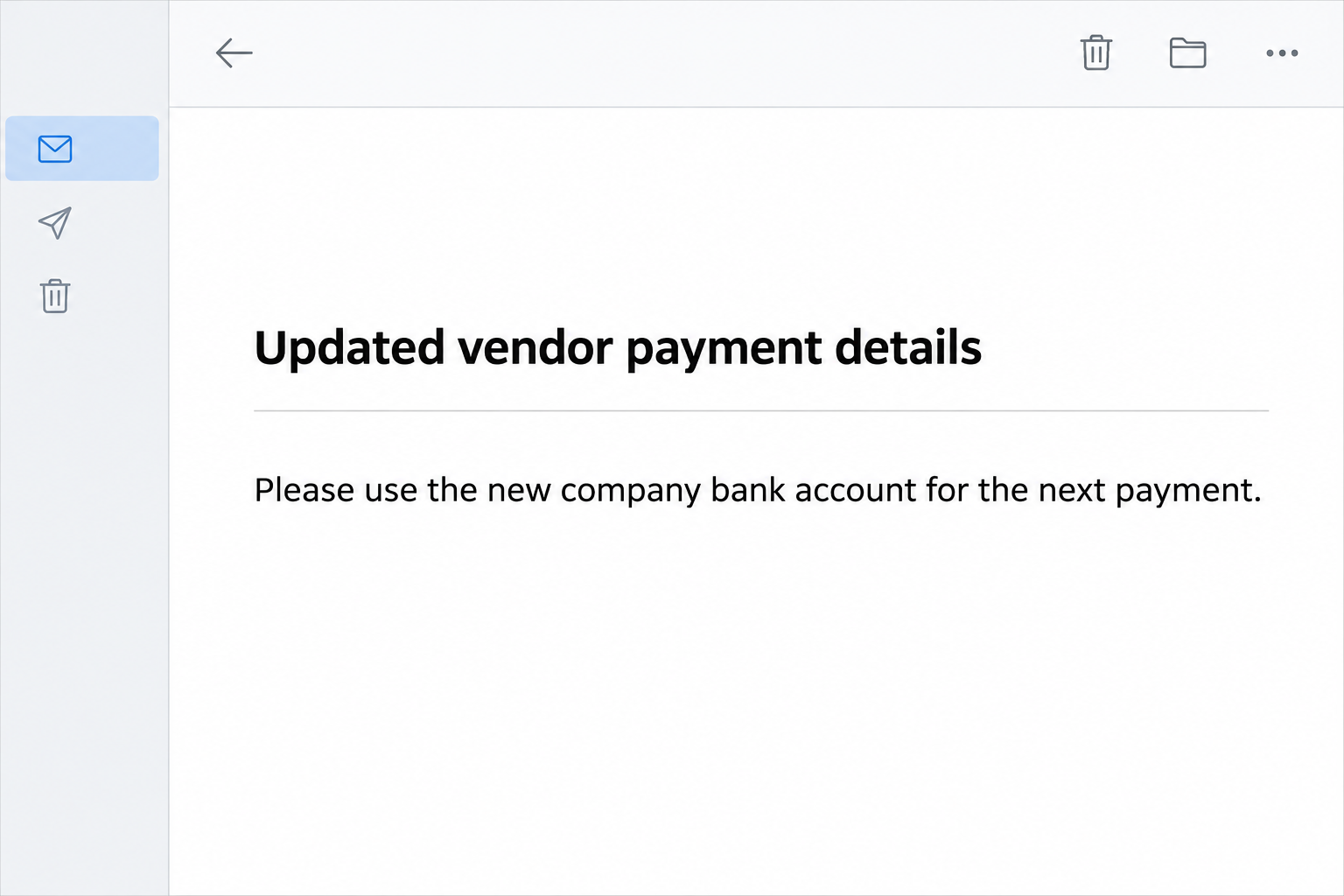
The lead picture is a reconstructed example of changed vendor instructions. The public case announcement doesn’t reproduce the original fraudulent email or identify the municipality.
When a Real Payment Meets a Fake Destination
Business email compromise often exploits a payment that already makes sense. The payer may owe a legitimate contractor, supplier, or professional for genuine work.
The deception changes the destination while leaving the surrounding transaction believable. That can make the request feel less suspicious than an unexpected demand for new spending.
The FBI’s BEC guidance describes spoofed messages, compromised accounts, and other methods for making financial requests appear to come from familiar sources.
Those are general techniques, not findings that every method occurred in Baquero’s case. The announcement establishes the fraudulent proceeds and shell-company account operation.
The announcement doesn’t publish the original email headers or explain exactly how the municipality authenticated its payment instructions.
The known banking pattern is already instructive. A recipient with an industry-appropriate description can absorb more than one transfer before the problem is recognized.
That makes verification a continuing control, rather than a one-time glance at a company’s name. A payment matching last month’s destination may simply repeat last month’s error.
For smaller businesses, the same principle applies without municipal budgets. One employee can approve a real bill while unknowingly sending the payment to someone else.
How the Baquero Fake Contractor Payment Scam Worked
Step 1: A shell business provides an apparent commercial identity
Baquero participated with a person she knew as Omar, who asked her to establish bank accounts for a drainage company incorporated in her name.
The DOJ described the company as a shell without actual work or lawful income. Its commercial appearance therefore differed from the business activity behind it.
A company name can answer what a business calls itself without answering what it has done for you. Payment authorization needs the second answer as well.
In practice, compare the recipient with your actual contract and established vendor record. If the names differ, the mismatch needs explanation through a channel you already trust.
Don’t let a newly supplied invoice explain and approve its own discrepancy. That would allow whoever created the document to determine the entire verification process.
Step 2: Fraudulent email-related payments reach the company accounts
The prosecution connected the accounts with proceeds from business email compromise that defrauded a municipality. This was admitted laundering conduct, rather than an ordinary contractor dispute.
Three cited wires arrived for $193,016, $100,705.70, and $96,174. Together, those examples total $389,895.70, which explains the announcement’s approximate $390,000 description.
The dates span more than one payment cycle. That matters because an apparently successful earlier transfer can make subsequent payments feel safe without independently validating them.
A completed wire means the bank processed a transfer. It doesn’t mean the intended contractor received it or confirmed that the destination was correct.
For your own payments, ask the actual vendor to confirm receipt using previously verified contact information. Treat silence or conflicting account details as a reason to stop.
Step 3: The account operator monitors and moves the proceeds
Baquero monitored money entering and leaving the accounts. Within days of incoming payments, she participated in or caused transfers to other money launderers.
That onward movement explains why the first institution needs prompt notice. Money may not remain where the original transfer confirmation says it first arrived.
You don’t have to identify every later account before requesting help. Provide the first destination, transaction references, and the communications that induced the payment.
If another payment is scheduled, stop and verify it separately. A bank investigating one transfer may not automatically cancel every pending instruction in your accounting system.
Keep your operational records intact while correcting the destination. Deleting an incorrect vendor entry before preserving it could remove useful evidence of what happened.
Step 4: The apparent business transaction becomes a laundering trail
The promised compensation for Baquero was a portion of the proceeds; the DOJ says she ultimately received a used car for her role.
The response should therefore focus on payment controls, recipient verification, transfer recovery, and preserving the surrounding email evidence.
The business description supplied cover for the destination. The real question for a payer is whether that recipient is actually owed the money.
The Drainage Company That Had No Real Business
Incorporation supplied a name without legitimate trading activity
A business registration can establish an entity’s recorded existence. It doesn’t establish that a particular invoice reflects genuine work for your organization.
Here, the public case account specifically says the company performed no actual work and had no lawful income. Those are findings about this identified operation.
You shouldn’t use the case to accuse another similarly named contractor. Compare exact documents, beneficiary information, and the service relationship before drawing a connection.
The receiving account was different from the underlying obligation
The victim municipality’s legitimate payment context and the shell company’s receiving role need separate consideration. Conflating them makes a false destination harder to recognize.
A believable amount or expected due date can validate the bill’s context without validating its banking instructions. Check both before releasing the payment.
When someone proposes a new destination, record who authorized the change, how they were contacted, and which established record supplied their contact details.
An account opener can be an active participant
The guilty plea concerns Baquero’s knowing role in laundering funds. The announcement describes account creation, monitoring, and onward transfers rather than innocent receipt alone.
For anyone offered compensation to open accounts, receive transfers, or move business funds for someone else, that distinction deserves attention before agreeing.
Don’t lend a business identity or banking access to an informal contact. A promised commission or other reward doesn’t make unexplained transfers a legitimate service.
A financial institution isn’t the invoice’s guarantor
The case doesn’t establish that the receiving banks knowingly supported the fraud. Their role as account providers shouldn’t be confused with the account operator’s admitted conduct.
Similarly, the intended contractor may be another victim of impersonation. Contact them independently before concluding that their business sent the deceptive instructions.
Accurate distinctions improve the response: your bank traces payments, your vendor confirms its destination, and your internal team preserves the correspondence and authorization records.
A Practical Check Before Changing Vendor Bank Details
Start with the vendor contact already recorded in your contract or onboarding file. Don’t replace that number with one supplied in the change request.
Call that established contact and ask whether the destination has changed. Verify the beneficiary and account information without letting the email dictate whom you should reach.
If the person can’t confirm the request, hold the payment. Escalate through your established procurement or finance process rather than accepting another email as reassurance.
For larger transfers, have a second authorized person review the verified instructions. Their check should include the independent contact record, not just the new document.
Record the confirmation in the payment file before approving the change. That makes the basis for the decision visible to the next employee handling the account.
If the vendor’s normal contact is unavailable, the payment can wait for proper verification. An urgent deadline doesn’t establish who controls a newly introduced account.
Afterward, reconcile the payment against the real vendor’s account statement or confirmation. Early reconciliation can expose a missing payment before another scheduled transfer follows it.
These checks help keep the invoice, recipient, and authorization connected. An instruction received by email shouldn’t be the only record justifying a new payment destination.
What to Do if You Have Fallen Victim to This Scam
-
Call your financial institution immediately using its established business-banking number. Identify the transaction as suspected business email compromise and ask for its fraud team.
Request that it contact the receiving institution and attempt a recall or hold where possible. Supply the beneficiary, account, amount, date, and transaction reference.
Ask for written next steps and a case number. A recall request is time-sensitive, but it isn’t a guarantee that funds remain available.
-
Pause additional payments using the same instructions. Check scheduled transfers, standing payment templates, and pending invoices without deleting the original records.
Inform authorized finance colleagues that the destination is under review. Keep the warning specific so a general message doesn’t accidentally approve another unverified account.
Confirm the genuine contractor’s details through the established contact route. Record whether it received any payment and which amounts remain outstanding.
-
Preserve the original emails, attachments, account-change requests, and approval records. Ask your IT team to retain message headers and relevant logs through its normal process.
Do not investigate by replying to the suspicious sender or opening more attachments. Additional interaction may expose information while giving the sender time to change course.
Keep a timeline showing request, approval, transfer, discovery, and bank notification. Record which facts are confirmed and which remain an employee’s recollection.
-
File a complaint through IC3.gov, using the File A Complaint route and its terms before entering the incident details.
Include each transfer separately and identify the accounts or businesses named in the instructions. Save the resulting confirmation for your bank and organization.
Coordinate with your legal, insurance, and incident-response contacts where applicable. Don’t assume that an online complaint replaces internal reporting or any contractual notice requirements.
-
If a mailbox may have been accessed, involve your authorized IT administrator. Ask them to review sign-ins, forwarding, inbox rules, and account access.
Use the organization’s approved recovery process for password changes, session revocation, and multifactor authentication. Preserve relevant logs before making destructive changes.
A diverted payment doesn’t prove a particular malware infection. Match technical investigation to the actual evidence rather than wiping a computer simply because an email was involved.
-
Reconcile every affected invoice with the genuine payee and maintain a record of recovery attempts. Separate money returned from amounts still missing.
Review who can create vendors, change banking details, and approve payments. Correct the specific control failure without circulating account information more widely than necessary.
Reject anyone promising guaranteed recovery for an upfront fee. Verify purported investigators through independently located agency channels before disclosing records or authorizing another payment.
If Someone Wants You to Open the Receiving Account
An instruction to create a company or receive money on someone else’s behalf deserves a different response from a normal employment offer.
Ask what genuine work creates the income and why your identity is needed. If the explanation depends on moving unexplained customer transfers, don’t proceed.
Never give another person control of an account opened in your name. The account’s records may connect you to transactions you didn’t fully understand.
If the account is already active, contact the bank and obtain qualified legal advice about your situation. Preserve messages rather than trying to hide or redistribute funds.
Don’t send received money onward to make the problem disappear. Further transfers can complicate recovery and create additional exposure for everyone involved.
The Baquero case illustrates that the receiving side isn’t an incidental detail. Opening and monitoring accounts can form part of the conduct prosecuted after the emails succeed.
Frequently Asked Questions
Is this a confirmed scam or a contractor complaint?
Baquero pleaded guilty to laundering-related offenses connected with business email compromise proceeds. This isn’t merely a complaint about poor workmanship or a disputed contractor bill.
The public account identifies a shell company with no actual work or lawful income, which is central to the warning.
Was the drainage company the legitimate contractor?
The DOJ describes the company as a shell used for receiving fraud funds. It doesn’t identify it as a genuine contractor owed the municipal payments.
Don’t assume an industry-appropriate beneficiary name establishes a connection with the work your organization commissioned.
How much did the three cited payments total?
The three figures in the announcement total $389,895.70. The DOJ describes the municipality’s loss approximately as $390,000.
Those figures describe incoming transfers in the case, rather than money already recovered or a guaranteed restitution payment.
Does the case prove the municipality’s email was hacked?
The announcement identifies business email compromise but doesn’t publish the complete original email route or technical intrusion details. Don’t assume a specific mailbox was breached.
Your own investigation should preserve headers and logs so authorized specialists can determine what happened in your environment.
Can a legitimate business account still receive scam proceeds?
A business account doesn’t authenticate the transaction that funded it. In this case, a shell company’s accounts received proceeds tied to fraudulent payment instructions.
Confirm the destination with the genuine vendor through previously verified contact information before releasing or repeating a payment.
What is the first action after discovering a diverted wire?
Contact your financial institution’s fraud team immediately and request receiving-bank notification and available recovery steps. Keep the transfer reference and destination information ready.
Then preserve the email evidence and stop related pending payments. Don’t wait for a complete internal investigation before notifying the bank.
The Bottom Line
Do not approve new contractor bank details through the same email that introduced them. The Baquero case shows how a plausible shell business can receive genuine payments.
If a transfer has already gone to the wrong destination, contact your bank immediately, hold further payments, and preserve the exact instructions for investigators.

Join the discussion
0 commentsShare your experience or ask a question about this article.
Community experiences
Did this happen to you?
Your experience could help someone recognize the same scam. Submit a private report for our team to review.
I experienced this tooReports are reviewed before publication. Sharing publicly is always your choice.
Discussion
Start the conversation
Have a question or something useful to share? Add the first comment.