

The rental listing looks promising, and someone claiming to own the home says you can see it today. The door even opens for your tour.
A self-tour code feels like stronger proof than a photograph. Before sending a deposit, check who controls the lease and where the payment goes.
Overview
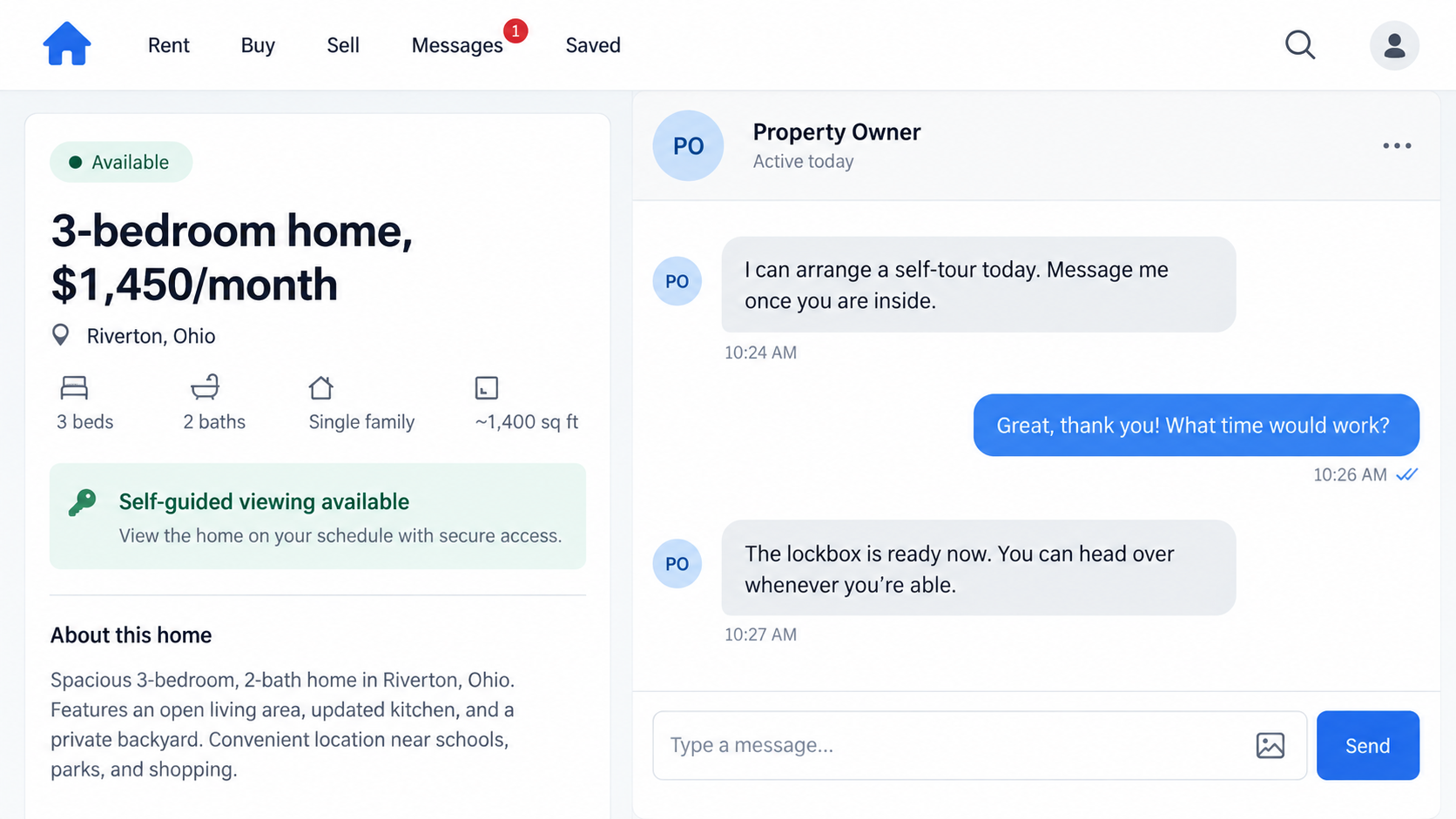
A self-tour code can support a false rental offer
This rental scam uses an actual property to make an impostor’s offer feel credible. The house exists, but the person collecting money may not control it.
Invitation Homes, a legitimate rental company, has described scammers claiming to own its homes and using genuine self-show access to support the story.
The company says past impostors obtained a code through its system, passed it to a prospective renter, and then collected payment fraudulently.
The tour proves access, not authority
A visitor who walks through a house may naturally believe the person arranging the tour is the landlord. That inference is exactly what the impostor wants.
The code may be valid even when the payment demand is not. A real door opening does not verify who will sign your lease.
The company now describes added identity checks for self-guided tours. Those safeguards do not make off-platform payment requests safe.
The safest route stays on the official leasing site
- Find the exact property on the rental company’s website yourself.
- Compare the listing price, status, and application process.
- Pay applications and leasing funds only through the company’s stated channel.
- Reject a personal-account deposit demanded by an unverified “owner.”
Invitation Homes says it accepts applications and leasing funds only through invitationhomes.com.
Our images are fictional screen reconstructions. Their city, rent, and conversation illustrate the technique rather than identify a real property or victim.
Why a Walkthrough Can Mislead a Careful Renter
Many rental warnings focus on fake photos and nonexistent apartments. This variation is more unsettling because the house is there.
Seeing rooms in person answers one question: does the property exist? It does not answer a different question: who has the legal right to rent it?
Modern self-guided tours allow prospects to view a home without an agent standing beside them. That convenience creates a separate access process.
An impostor who obtains or relays access can appear to arrange the showing. The renter may treat the successful visit as an identity check.
Invitation Homes documented this exact failure mode in a fraud-prevention article. It also describes steps it added to validate tour participants.
We should not assume every self-tour service uses identical controls or that a code can still be obtained in the same way today.
The durable lesson is narrower and more useful: access to a property is not permission to collect a deposit for it.
A person can know the address, send a photo, and communicate promptly without owning or managing the property.
Someone may even tell you which door to enter. The lease and payment authority still require independent verification.
This matters most when the offer comes through a social marketplace or private message rather than the property’s official leasing flow.
How the Fake Landlord Self-Tour Scam Works
Step 1: An attractive listing appears away from the owner
The scammer posts or shares a real home’s photos and address. The rent may be lower than the official listing to draw quick responses.
Invitation Homes says it has seen false advertisements for its homes at reduced prices on platforms such as Facebook and Craigslist.
A cheap listing does not prove fraud by itself. The concern is a seller claiming control over a home that belongs in another leasing system.
Compare the address with the official listing before talking about deposits. A difference in price or availability needs an explanation from the actual company.
Step 2: The impostor claims to be the owner or manager
The contact may say they are handling the property privately, helping a relative, or saving you a broker fee.
Those stories can explain why their messages and payment instructions differ from the company’s website. They do not verify the claim.
Ask who will be named as landlord on the lease and how that party can be contacted through a published, independent channel.
If the address belongs to a managed rental portfolio, a private “owner” story deserves especially careful checking.
Step 3: A genuine tour makes the story feel settled
In the method described by Invitation Homes, an impostor obtained a legitimate self-show code and passed it to the person they were targeting.
The renter could then enter the real house. That convincing experience makes it easier to overlook the unverified messenger.
A separate renter described a similar concern after gaining temporary access to a property. Their account alone cannot establish who controlled the listing.
Their post named an “Inviting Homes” website, not invitationhomes.com. There is no verified link between that reported loss and Invitation Homes.
The company’s statement is the stronger evidence that this technique has occurred. Its later identity controls should be considered when discussing current risk.
Step 4: The deposit is redirected to a personal route
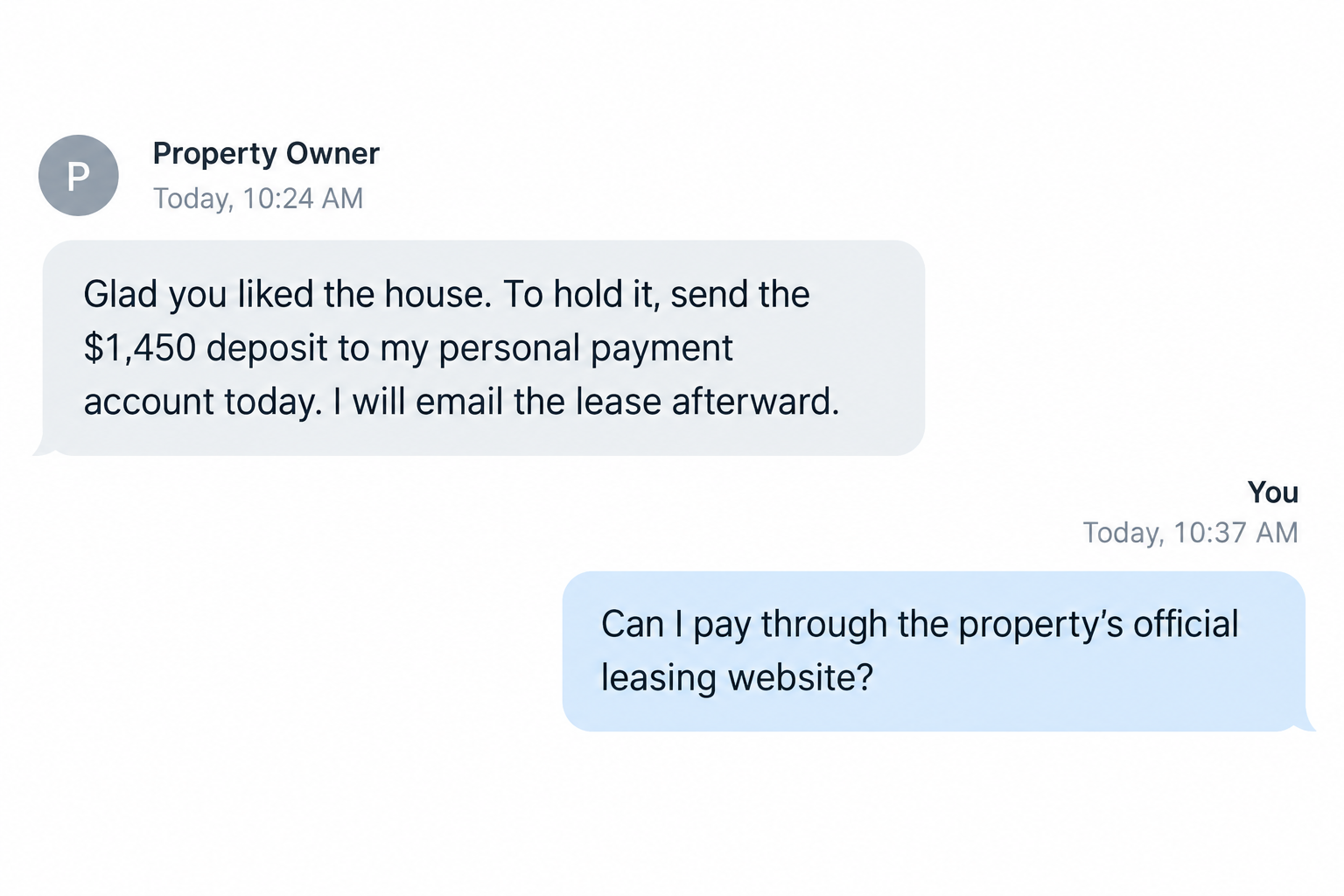
After the tour, the contact may ask for money to “hold” the home. They may promise to email the lease once payment arrives.
That reverses the sensible order. You should know who is leasing the property and review the official process before sending funds.
The payment destination is the clearest split between a genuine listing and an impostor’s transaction. Invitation Homes says its leasing funds go through its website.
A request to pay a personal account therefore contradicts the company’s stated process, regardless of how persuasive the tour felt.
Step 5: The renter discovers there is no valid lease
If the impersonator takes the deposit, the real manager may have no application or lease in the renter’s name.
That possibility can be devastating when someone has already planned a move. It is why verification must happen before funds leave your account.
Recovery depends on how and when the deposit was paid. A public account cannot predict the outcome.
Contacting both the payment provider and real property manager promptly gives them the best chance to investigate.
The Real Company and the Impostor Are Different Parties
Invitation Homes is not the scammer in this story. Its name and property are being used by someone who wants to appear authorized.
The company’s public fraud guidance describes impersonation involving genuine homes. It also explains that applications and leasing funds belong on its own website.
That distinction matters when searching for a property. You may find a real address on an official site and assume every other listing for it is endorsed.
It is not. A social-media listing can copy details from a genuine property page without having any relationship to the company.
Start a fresh browser visit to the company’s official site. Search by address and follow its listed application or contact process.
If you cannot find the home there, ask the company directly whether it manages the address. Do not use a phone number supplied only by the private messenger.
Even if the home is present, confirm the price and payment route. A scammer can reuse a true address while inventing cheaper terms.
Be cautious with claims that an employee has a “special” private deposit account. Ask the company through its published contact route.
Invitation Homes describes identity validation for tours and other controls. These are protective steps, not proof that every off-platform offer is now trustworthy.
Questions to Answer Before Paying for Any Rental
Who is the legal landlord named in the lease? A person’s screen name in a chat does not answer that question.
Does the proposed rent match the property’s official listing? A large unexplained discount is worth checking directly with the manager.
Where does the application happen? A real company’s published process should not be replaced by a form that arrived in a private message.
Who receives the deposit? The account name should match the verified leasing party or its documented payment processor.
What happens if the application is rejected? The policy should be available before you transfer money, not promised afterward.
Can you inspect the lease before paying a holding fee? A sender who refuses to identify the landlord and terms is asking for trust without evidence.
Does the company confirm the individual arranging the tour works for it? Ask through its own site or official phone channel.
None of these questions require you to disclose your bank login, a verification code, or a photo ID to a stranger in chat.
Legitimate rental applications may require personal information, but provide it only through the verified company process.
What Changed After the Documented Self-Tour Abuse
Invitation Homes described the code-sharing tactic while explaining changes to its tour process. Its account refers to a method scammers used in the past.
The company says it now requires a profile and validates identity for people requesting a self-guided tour through its system.
It also describes limits on codes for listings in different states and time restrictions on each verification.
Those details matter. A current renter should not assume a criminal can obtain an access code today through exactly the old route.
At the same time, a valid tour is still not a payment authorization. The official leasing process remains the safer independent check.
A scammer may obtain access in another way, claim a tour is scheduled, or simply reuse an old listing without access at all.
Do not try to solve every possible access route before acting. Verify the property and payment recipient with the actual manager.
The company’s public guidance says it never uses a third-party brokerage for its leasing process. That helps test a private agent’s explanation.
If a supposed broker says the company secretly approves personal deposits, ask the company directly through its official site.
Save that answer with your application records. It can clarify what you were told if a false listing later reappears.
If You Saw the Home, Resist the Pressure to Commit
A tour can create urgency. You can picture furniture in the rooms and begin planning a move before the lease is checked.
An impostor may exploit that moment by saying several other renters are ready to pay. The claim is difficult to verify inside a private chat.
Take a pause after the visit. Use the address to find the official listing from a fresh search or a URL you typed yourself.
Check whether the listing is active. A house you entered may already be leased, unavailable, or offered at a different price.
If the official information conflicts with the messenger, treat the conflict as unresolved until the real manager explains it.
Do not pay to “hold” a home while you investigate. A legitimate opportunity may be time-sensitive, but an unverified deposit is still a gamble.
What to Do if You Have Fallen Victim to This Scam
- Stop sending money and documents. Do not pay an extra key, insurance, or release fee to the same person.
- Contact the payment provider immediately. Report that the deposit went to someone falsely claiming authority over the property. Ask about recall, dispute, or fraud procedures.
- Notify the actual property manager. Search its website yourself, provide the listing and conversation, and ask whether any application or lease exists in your name.
- Preserve the evidence. Keep screenshots of the listing, full chat, payment receipt, address, access instructions, and any proposed lease.
- Protect exposed identity information. If you sent an ID or sensitive records, ask relevant agencies and credit bureaus about monitoring or freezes available to you.
- Report the false listing. Flag it on the platform and file a fraud report with local authorities or consumer agencies.
- Plan the next housing step safely. Do not assume access to the house means you can move in. Confirm status with the real manager before making further plans.
A security scan is not a remedy for a deposit sent to an impostor. Focus first on the payment provider and property manager.
If you installed an application or opened an unsafe file supplied by the contact, ask a trusted technician about a device check.
A renter who only toured the property and sent no information may not have a financial loss. Still report the false listing to protect others.
Do not pay a second person who promises to recover the deposit for an upfront charge. Recovery claims are a common follow-on risk.
Frequently Asked Questions
Does entering the house prove the sender is the landlord?
No. Invitation Homes documented a method in which an impostor relayed genuine self-show access while lacking authority to lease the home.
Is Invitation Homes itself running the deposit scam?
No. The company describes criminals impersonating its relationship to real properties. The deceptive private payment request is the scam.
Are self-guided rental tours unsafe?
Not inherently. Use the official process and verify the person, listing, and payment route separately from the door access.
What if the listing price is lower than the official price?
Pause and ask the real manager. The company says scammers have advertised its homes at significantly reduced prices.
Can I pay a deposit before receiving the lease?
Review the verified company’s actual process first. A private messenger demanding personal-account payment before showing terms is a serious warning.
What if I already transferred the deposit?
Contact the payment provider and property manager immediately. Save every message and receipt; possible recovery depends on the payment method and timing.
The Bottom Line
The fake landlord self-tour scam uses a real property to support a false claim of leasing authority. A working self-tour code is not a lease.
Check the home through its actual manager and keep applications and funds within the manager’s published process.
If an impostor took your deposit, report it quickly. Keep the evidence and do not send more money to preserve a home you have not verified.








