


A customer can pay the right bill and take home a receipt while the business still has money missing later.
You won’t see that difference by asking whether the sale was recorded, because a receipt and a deposit are separate records.
Overview
Recorded sales hid a loss at a Missouri dealership
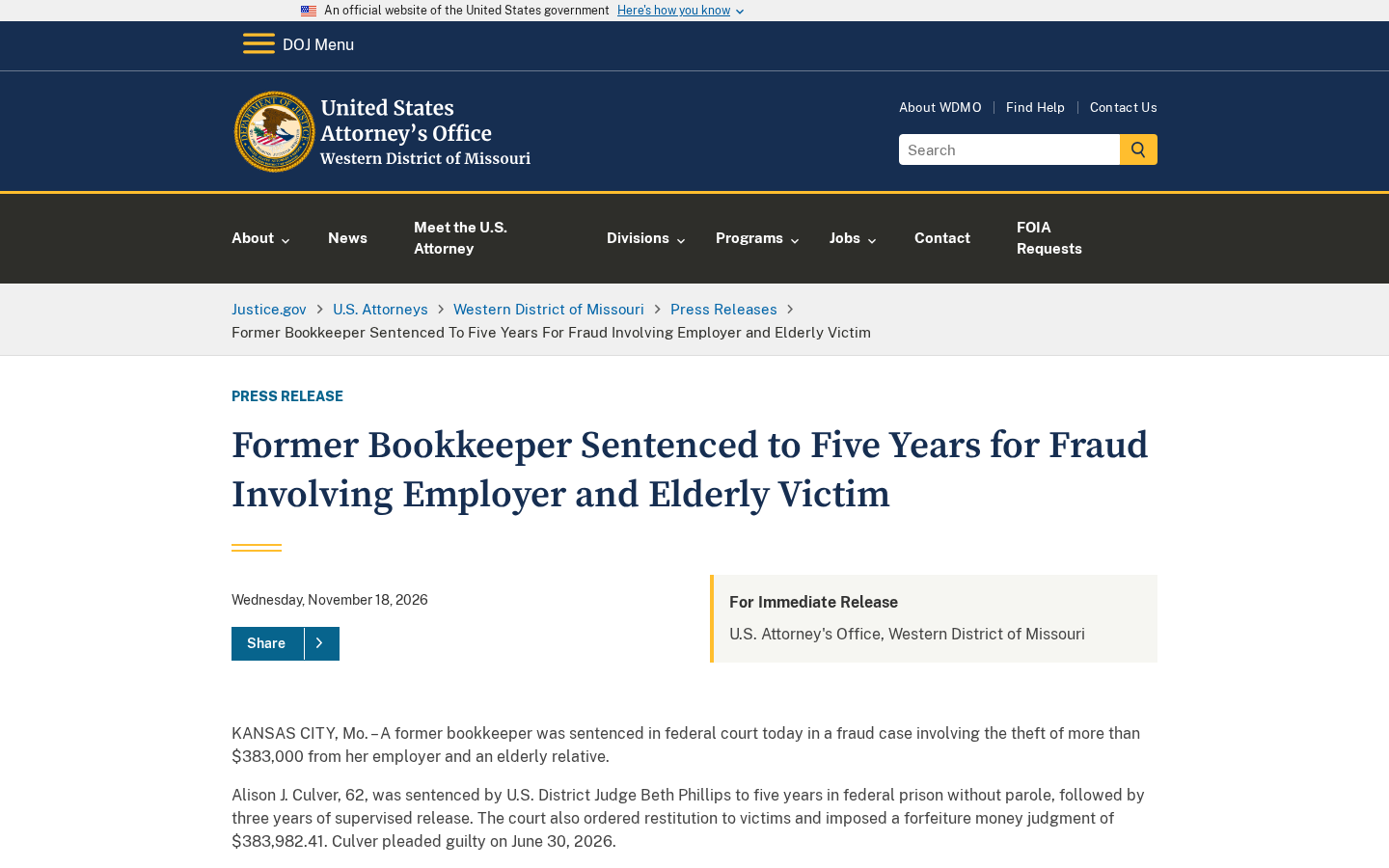
Alison J. Culver worked in accounts and bookkeeping at an automotive dealership in Cameron, Missouri, from September 2016 through December 2022.
The Justice Department’s November 18 sentencing announcement says her duties included handling customer cash, accounts payable and receivable, and recording sales and service transactions.
Culver stole at least $315,563 from the dealership between at least May 2019 and September 2022, according to the public case summary.
Prosecutors say she used false entries and misapplied unrelated customer payments to hide cash that the business should have received.
That made this different from a fake advertisement or from a customer losing money because they intentionally paid the wrong business.
The warning for business owners is that a ledger can look current even when the bank records show something else happened.
There was also a separate theft from an older family member
Culver helped manage an older relative’s living expenses and stole at least $68,419.41 from that person, according to federal prosecutors.
She used the relative’s funds for personal expenses and opened multiple credit cards in the relative’s name for her own spending.
The relationship mattered because it gave her a legitimate reason to help with finances, not permission to use them for herself.
Culver pleaded guilty in June 2026 and received five years in federal prison and three years of supervised release that November.
The court ordered restitution and entered a forfeiture money judgment of $383,982.41, which is not a confirmation that these sums were repaid.
Keep the dealership loss and the family member’s loss in separate records because the parties and possible remedies are different.
Start with the record that proves where the money went
A receipt, accounting entry and bank deposit can each be genuine and still fail to describe the same payment when compared.
Look at the payer, amount and invoice before deciding that a credit showing in the ledger matches the customer who paid it.
| Record | What to compare |
|---|---|
| Customer’s receipt | Invoice number, payer, date and tender recorded |
| Sales or service ledger | Customer account, payment source and date posted |
| Daily deposit record | Expected cash and check totals against the bank |
| Aged customer balance | Whether the credited payment belongs to that account |
| Relative’s card statement | Who authorized the account or the purchase |
- Track a payment from the customer’s receipt to its deposit rather than relying on a balance that has been cleared on paper.
- If a customer can prove a payment, keep their receipt and check your own records before asking them for money again.
- Review a relative’s accounts only with appropriate authority or consent, and avoid letting a person suspected of taking money manage the review.
For a discrepancy, start with one transaction you can trace instead of labeling every delay or posting error as theft.
How the Dealership Bookkeeping Fraud Worked
Step 1: One role combines incoming payments and accounting records
The federal summary describes a job that included handling money and recording transactions, which gave Culver both kinds of responsibilities.
An employee can legitimately do some of these tasks together, particularly when a small business does not have a large finance department.
That makes an independent check more important because the same recorded total may come from the person who handled the payment.
An owner reviewing the books should be able to see the actual bank statement or deposit record without requesting it through that person.
A busy service department can also identify who created the receipt and who handed cash over at the end of the shift.
Those records help establish whether the issue happened when someone received the payment, recorded it or took it to the bank.
Step 2: Cash goes missing while later entries can make a balance look paid
According to prosecutors, Culver stole cash and used false records and unrelated checks to conceal shortages within the dealership’s accounts.
A balance marked paid can therefore be misleading because that label does not identify the payer or prove their money was deposited.
Verify the payment source through your own records and check that it belongs to the same invoice before treating the account as settled.
Do not move a ledger entry merely to make the total look right, because doing so can hide the original problem.
Separate confirmed missing cash from possible timing differences, such as a payment that was received after a daily deposit cutoff.
If the bank deposit is lower than expected, note the gap and assign someone independent to trace what happened to it.
Step 3: Other account movement can make the business look like it is still paying bills
The DOJ says Culver moved funds between dealership accounts to cover supplier costs and conceal money missing from the business.
An internal transfer can be ordinary, so the existence of one does not prove a shortage or tell you who caused it.
Look for the reason and authorization, then check whether money counted as business income had simply moved from another company account.
Supplier payments can go through even while the overall operation is missing cash it earned, especially when looking at each account separately.
Request statements for all affected business accounts before estimating the loss, and label transfers so net figures do not count them twice.
Keep a timeline of who recorded the sale, when the bank showed a deposit and who reviewed any later adjustment.
Step 4: The separate family case involves expenses and new cards
Federal prosecutors say Culver stole from a relative whose living expenses she managed and opened cards in that person’s name.
A person can still need help with bills while a fraud inquiry is underway, so avoid leaving essential payments with no plan.
Explain what you noticed privately to the older person when possible, and ask the bank how it can review suspicious charges.
Where another person is helping with accounts, find out which documents authorize that help before asking the bank to change access.
If an account appears in the relative’s name without consent, tell its issuer exactly that, rather than disputing only one purchase.
The CFPB’s guides for managing someone else’s money explain the differences between common roles when a person has formal authority to assist.
Reconcile Receipts Without Making Customers Prove Everything Again
Choose a date with a discrepancy and make a list of the receipts issued, what was recorded and what reached the bank.
Check cash separately from checks and card settlements, because payment methods do not all enter the operating account at the same time.
When a ledger entry is missing its original invoice, keep it visible for review rather than moving it into a general adjustment.
Ask a reviewer who did not handle the payment to match a sample to the actual deposit, then follow up on mismatches.
When a payment appears on two customer accounts, preserve the original records and let the authorized reviewer determine which account should receive it.
If records show that you already received a customer’s money, do not make that customer pay again while investigating another person’s conduct.
Arrange for a different employee or accountant to review deposits during staffing changes, including periods when people are covering unfamiliar jobs.
Document when corrections reach the ledger and who approved them so the business can explain its records if another question appears later.
For older records, preserve adjustments that were entered after the original date instead of keeping only a view of the corrected balance.
Compare the count of receipts with what the business expected to issue that day so missing paperwork can be examined without guessing.
If payments include cash kept for refunds or change, account for that separately before treating every difference as a missing deposit.
Ask whether the business has a secure way to store records from its service counter without including card numbers or other unrelated details.
A bank deposit total can match the day’s receipts even when someone applied a payment to the wrong customer in the accounting system.
That is why the reviewer should verify what the individual receipt says and not stop as soon as the aggregate figures agree.
Set aside transfers between business accounts and label them clearly so someone else can track the movement without counting it as revenue.
For relatives, a simple record of approved expenses can help another person identify which bills belong to the household and which don’t.
When asking someone else to help with a relative’s records, use their authorized role and avoid sharing credentials to make the handoff easier.
If the bank opens two cases for the older person’s existing account and newly opened cards, keep both numbers next to the correct statements.
What to Do if You Have Fallen Victim to This Scam
-
Business owners: preserve records before changing the ledger
Save bank statements, deposit details, receipts, accounting records and any approval history, using access you have authority to use.
Keep the original versions and record which account, date and customer record each document concerns before annotating a working copy.
Ask a reviewer outside the original payment process to identify which records need to stay available for the bank or investigators.
-
Business owners: check deposits and contain any continuing loss
Compare receipts with the bank and discuss suspicious movements with your financial institution, using its verified business fraud contact.
Have the authorized owner or administrator review roles, then remove unnecessary access while keeping legitimate sales and supplier payments working.
If someone asks you to reset or erase a record as part of the cleanup, check what evidence would disappear first.
-
Customers: verify a disputed payment with the actual business
Keep your receipt and the record of your payment, and ask the dealership or other merchant to review the original invoice.
Avoid resending money to a person who contacted you privately, even if they know the amount you paid last time.
Ask for written confirmation once the company applies a correction so you have something to show if another bill arrives.
-
Families: raise the concern with the institutions that hold the accounts
Ask the account holder or legally authorized person to call the bank and card issuers using numbers they already know.
Identify unfamiliar charges and cards separately, and ask which accounts need restoration, closure or formal dispute based on what was found.
Keep rent, utilities, care and other legitimate bills on a separate list until there is a safe way to pay them.
-
Use a verified reporting route and protect the affected person
Use IdentityTheft.gov to report accounts opened without consent or find guidance when a person’s identity was used to open credit cards.
Contact local adult protective services or law enforcement if an older adult’s funds remain at risk, using independently verified contact details.
If you need financial or legal help, choose an adviser independent of the person you suspect and explain what still requires attention.
Frequently Asked Questions
Does a cleared invoice prove the dealership received the money?
A cleared invoice shows what the accounting record says, but you still need to know which payment was applied and deposited.
Match the payer and receipt against the bank record before treating a mark in the ledger as a complete answer.
Can a late bank deposit mean someone took the money?
Delays and recording mistakes can happen without fraud, so first compare the payment type and actual deposit timing with your procedures.
Escalate a shortage that remains unexplained or repeatedly coincides with the same person, account or change to the underlying records.
Was every customer a direct victim of the dealership theft?
The Justice Department reports the dealership’s loss, and its summary does not identify every customer as having lost money personally.
If the business contacts you about an old payment, verify what it is asking and keep the original receipt before responding.
Can a family member open a card in someone else’s name to help with bills?
The ability to pay some bills for a relative does not give a helper permission to take out credit for personal spending.
Call the issuer with the account holder or authorized representative if a card was opened without the person’s agreement.
Can the family and business submit the same loss total?
The losses came from different sources, so keep separate statements, payments and authority records even if the same person was involved.
Have a qualified adviser explain which records go to each bank, regulator or investigator and how to preserve the originals.
Does the forfeiture judgment mean the missing cash has been recovered?
A forfeiture money judgment states an obligation, but the press release does not show a completed repayment to either victim.
Verify any message about compensation through the official case contact, and do not pay a fee to claim it.
The Bottom Line
Compare actual bank deposits with customer receipts and ledger entries before treating a paid balance as proof that the cash reached the business.
When money is missing, preserve the records and call the relevant bank, keeping any older relative’s accounts and ongoing bills separate.

Join the discussion
0 commentsShare your experience or ask a question about this article.
Community experiences
Did this happen to you?
Your experience could help someone recognize the same scam. Submit a private report for our team to review.
I experienced this tooReports are reviewed before publication. Sharing publicly is always your choice.
Discussion
Start the conversation
Have a question or something useful to share? Add the first comment.