


An order can arrive safely and still leave you wondering what you paid extra for when you selected faster shipping.
Years later, a refund notice can bring that question back when the receipt is harder to find than the shoes.
Overview
The FTC is refunding a particular shipping charge
The FTC’s October 2026 refund notice covers eligible shoppers who paid the GOAT marketplace for faster shipping during the years 2020 through 2024.
The agency says it is sending 6,205 payments totaling more than $100,000 to customers who did not get a refund from GOAT.
GOAT had already returned more than $736,000 to affected customers in 2025 under its settlement with the Federal Trade Commission.
The FTC says the latest payments are checks or PayPal, handled by independent refund administrator JND Legal Administration for this distribution.
The distribution does not cover every package that arrived later than a shopper hoped or every purchase made during those years.
If your purchase is recent, use the actual order details and the seller’s written policies instead of relying on the historical refund notice.
The complaint covered late shipments and a separate refund promise
The FTC’s explanation of the 2026 payments says some priority orders shipped late without customers being given the required option to wait or cancel.
The agency also alleged problems with refunds under GOAT’s Buyer Protection policy when an item was incorrect, inauthentic or not as described.
Those are separate situations: one involves a shipping promise on an order, while the other involves the condition of something that arrived.
GOAT settled a civil enforcement action, and the current distribution is not a finding that all products on its marketplace are counterfeit.
The FTC lists 1661, Inc., doing business as GOAT, as the defendant in its case, not every seller shown in the marketplace.
Use the terms and dates that apply to the actual order before deciding whether you need the administrator, GOAT support or your issuer.
Identify what happened before asking for the money back
Shipping estimates, order cancellation, dissatisfaction with a product and an FTC payment all need different paperwork when you ask someone to help.
Start with the receipt, then use the table to separate the outcome you want from one that belongs to another process.
| What happened | What to verify |
|---|---|
| Paid for expedited shipping years ago | Order dates and prior credit with JND |
| Current order hasn’t shipped on time | Promised ship date versus carrier acceptance |
| An order arrived with the wrong item | Buyer Protection terms and written claim |
| A retailer offers store credit | Whether the terms permit an original-method refund |
| A message offers an FTC payment | Official administrator and actual incoming payment |
- Keep the item price and the shipping upgrade on separate lines so no one mistakes a shipping dispute for a missing order.
- If an item arrived but was not as described, save photos of its condition and the listing you bought it from.
- Reject any request to send a payment in order to accept the FTC refund, even when the sender knows the right case name.
The receipt can also show whether you already received a credit for the shipment and which part of the purchase it covered.
How the GOAT Refund Program Works
Step 1: The order includes a paid shipping option
The historical case concerned some orders where consumers paid for a faster option but GOAT did not ship as the company had represented.
The term shipping matters because an item leaving the seller by a given date is different from delivery to the customer’s door.
Compare what the seller actually promised with the carrier’s record before treating a late arrival as proof it shipped after the deadline.
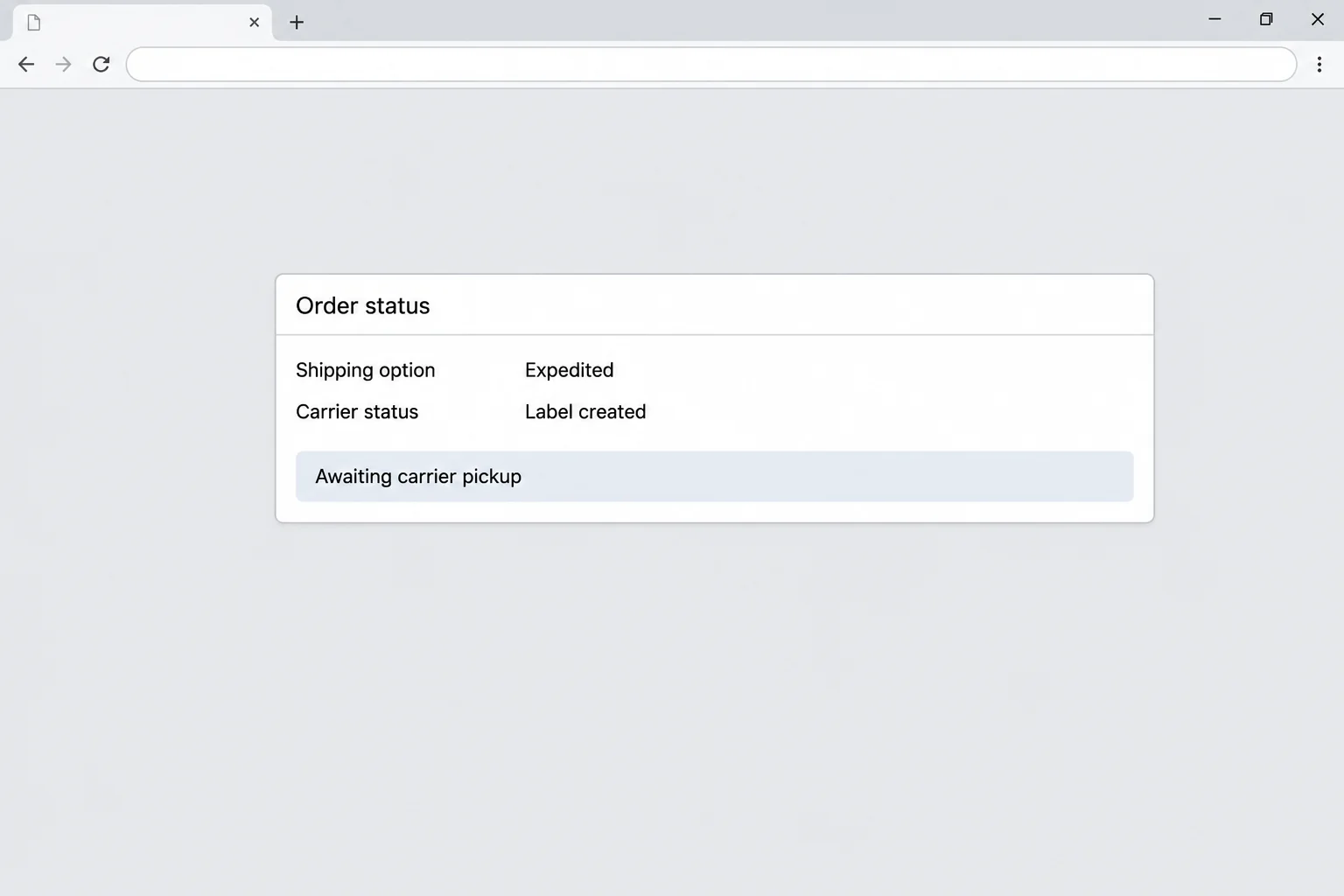
A label that appears in tracking is also different from the carrier confirming it received the package and began moving it.
The order status illustration shows that distinction without reproducing a customer’s receipt, live tracking screen or any document from the FTC.
For the old refund program, keep the original order record rather than trying to reconstruct the promise from the seller’s current product page.
The affected orders and the support process that now exists should be read separately, especially when the terms changed after purchase.
Step 2: Some shoppers did not receive the option the FTC said they were owed
According to the FTC, customers whose shipments were delayed were not always offered the choice to accept the delay or cancel for a refund.
The FTC’s merchandise rule requires sellers to have a reasonable basis for a promised ship time and sets rules for delays.
If a seller offers a revised date, keep that message and note whether you accepted the change or requested cancellation before shipment.
A store credit that arrives without explanation may settle part of a charge, so ask exactly what it covers before accepting it.
Someone checking an order years later can ask the administrator whether GOAT’s records show a prior credit rather than guessing from a balance.
The FTC’s October distribution targets eligible customers who did not get paid by GOAT after the company began refunding some buyers.
Step 3: The administrator sends the payment through one of two methods
JND Legal Administration handles the current refund distribution, so open the FTC case page and use the contact listed there for questions.
For a check, follow the 90-day instruction, and for a PayPal payment, follow the 30-day instruction after independently verifying the payment.
You do not have to pay an activation charge, transfer money back or buy a gift card to accept either kind of payment.
An email can repeat the name of a real administrator without coming from that administrator, so check it through an independent channel.
Find the incoming payment in the payment account you ordinarily use, rather than interpreting an invoice or payment request as money received.
If no payment appears and you expected one, confirm with the administrator before changing where you receive payments or giving information to anyone.
Which Policy or Company Handles the Problem?
GOAT handles a live order under its current terms
GOAT’s current shipping and returns terms distinguish shipping choices, delivery estimates and some options where an item is reviewed before reaching the buyer.
Some upgraded orders receive priority processing after the item reaches a facility, a different promise from immediate shipment after the original purchase.
Look at the wording for your order and country rather than applying a timing estimate for another location or shipping option.
Get a written decision through the actual order in your account if the tracking dates or charges do not match the promise.
Buyer Protection is different from an ordinary change of mind
The published Buyer Protection policy covers specified issues such as incorrect, inauthentic or misdescribed items, subject to its stated conditions and exclusions.
The policy directs customers to report a qualifying issue within 30 days of receiving the item through GOAT Assist or a support request.
Where a return is approved, the policy says to ship within three business days after receiving the label and follow its condition requirements.
It says approved refunds come as GOAT Credit by default and directs you to ask support for the original payment method.
Ask for that result in the first message, and keep the label and carrier receipt if support accepts the claim and authorizes a return.
JND handles the settlement distribution only
The FTC lists JND Legal Administration at 1-888-970-2410 and identifies the October payments as part of a specific historical shipping settlement.
JND can answer questions about that case, but its payment process is not the same as customer service for a new order.
Give the administrator enough information to identify your old payment or order without including unrelated purchases or sending passwords to prove your identity.
Your payment provider handles charge disputes and account security
A bank or card issuer can tell you how it handles a current charge dispute and what deadline applies to your account.
If you paid a stranger who claimed to be JND, tell the payment provider that the payment was for a false refund demand.
If you paid GOAT for a real order, explain why you dispute the charge and save your conversations with support.
Before opening a case, check whether a partial credit already covered the shipping upgrade or was applied to the item itself.
When the merchant gives you a credit reference, ask your issuer if it can find a matching entry in your payment history.
If no credit appears by the expected date, give the issuer the written promise and order number rather than starting over.
What to Do If You Received a GOAT Refund Notice or Had a Shipping Problem
-
Identify whether it concerns an old refund or an active order
Compare the order date and listed shipping option with the FTC case page if a message says it concerns the settlement.
Keep the original shipping upgrade receipt and any earlier credit or refund notices so JND can check the history without guessing.
Take new shipping or product complaints to the marketplace through your account, not through a settlement message you did not expect.
-
Confirm the administrator and payment independently
Use the contact published on the FTC case page if a check, email or message gives you a name you do not recognize.
For a check, verify it first and use your bank’s normal deposit route within the 90 days shown in the notice.
For PayPal, sign in separately, find the incoming payment in Activity and accept it within 30 days if your account requires acceptance.
-
Get written answers about a late current shipment
Open the affected order and save the promised date, original shipping fee, status and any evidence of the carrier receiving the parcel.
Ask GOAT whether your order is still pending, when it expects to ship and what cancellation or refund option applies.
If you do not get a satisfactory response, ask your issuer what kind of dispute applies and when you must file it.
-
Use the correct return process for a deficient item
In the GOAT app, open Orders and look for GOAT Assist on the purchase, then choose the issue that matches what arrived.
Send the relevant photos and listing details, state whether you want the original payment method and keep the written support response.
If a label is issued, follow its deadline and save evidence of shipment rather than returning the item to an unverified address.
-
Do not pay someone who claims to be releasing your refund
Save the message and block or report the sender after you verify that the FTC case page does not require that payment.
If you already paid or disclosed financial information, call your provider through its known number and ask about the specific risk.
Use the FTC’s fraud reporting site for the impersonation report, and keep it separate from any case inquiry with the actual refund administrator.
Frequently Asked Questions
Are the GOAT shipping refunds from the FTC real?
The FTC lists an October 2026 distribution for eligible expedited shipping customers, and JND Legal Administration handles the checks and PayPal payments.
Verify an individual notice through the case page before trusting the sender, especially if the message directs you to pay anything first.
Does every GOAT order from 2020 through 2024 qualify?
The FTC describes eligible buyers who paid for faster shipping and did not already receive the relevant refund from the company.
Check the shipping option and prior payment history with the administrator rather than assuming the dates alone establish an individual claim.
What if my order arrived late but the seller shipped it on time?
A missed delivery date and a missed promised shipping date are different issues, and the reason for the delay can affect your options.
Keep the order promise and tracking history available, then ask which terms apply to the timing and fee for that shipment.
Does store credit mean an original payment refund is impossible?
The current Buyer Protection policy says approved refunds default to GOAT Credit and tells buyers to ask for their original payment method.
Make that request in the support conversation and obtain the result in writing instead of assuming the same rule applies to every return.
Can I ask JND to refund an order I just placed?
JND handles the FTC distribution for qualifying historical orders, not payment issues for orders that you recently placed with the marketplace.
For a current case, start with GOAT’s official order support and contact your issuer if the merchant doesn’t resolve an eligible dispute.
What should I do if the notice shows a deadline that already passed?
Ask the refund administrator listed by the FTC about the specific check or PayPal payment before using any link in the notice.
An apparently expired payment is not a reason to pay a fee, share a verification code or register with an unofficial claim site.
The Bottom Line
Verify old GOAT refund payments with the FTC and JND, and do not send money to anyone who claims it releases a refund.
For a current order, keep the shipping promise or listing, open the proper support case and request the specific resolution you want.

Join the discussion
0 commentsShare your experience or ask a question about this article.
Community experiences
Did this happen to you?
Your experience could help someone recognize the same scam. Submit a private report for our team to review.
I experienced this tooReports are reviewed before publication. Sharing publicly is always your choice.
Discussion
Start the conversation
Have a question or something useful to share? Add the first comment.