


A refund for a subscription you canceled years ago can arrive long after the original charge stopped appearing on your statement.
Before acting on the message, it helps to know which account the payment concerns and who is actually sending it.
Overview
The FTC announced a second round of Cerebral payments
The Federal Trade Commission’s Cerebral refunds page says more than 26,000 people who accepted an earlier payment are in a second distribution.
The new round totals more than $766,000, after the initial May 2025 round resulted in more than $3.5 million in refunds.
The FTC’s current refund list dates this second round to November 2026, well after the original lawsuit and first mailing.
Epiq Systems administers the payments, and the case page gives the administrator’s current phone number and email for people with questions.
A check should be cashed within 90 days, while the FTC gives PayPal recipients 30 days to accept their payment.
Those periods apply to how a recipient handles their individual payment, rather than an invitation for all former subscribers to file now.
The refund turns on an attempted cancellation and later charges
The FTC says the underlying payment eligibility covers people who tried to cancel before May 2022 and were charged afterward.
The second round has another distinction: the notice says it is going to people who accepted a payment from the first round.
Someone who remembers being a customer but cannot recall the cancellation date should confirm their record rather than relying on the program headline.
Look for the first written request, the company’s reply and any charge after that date before calling the refund administrator.
When the old subscription was for health services, use billing messages and statements without attaching treatment details to a refund question.
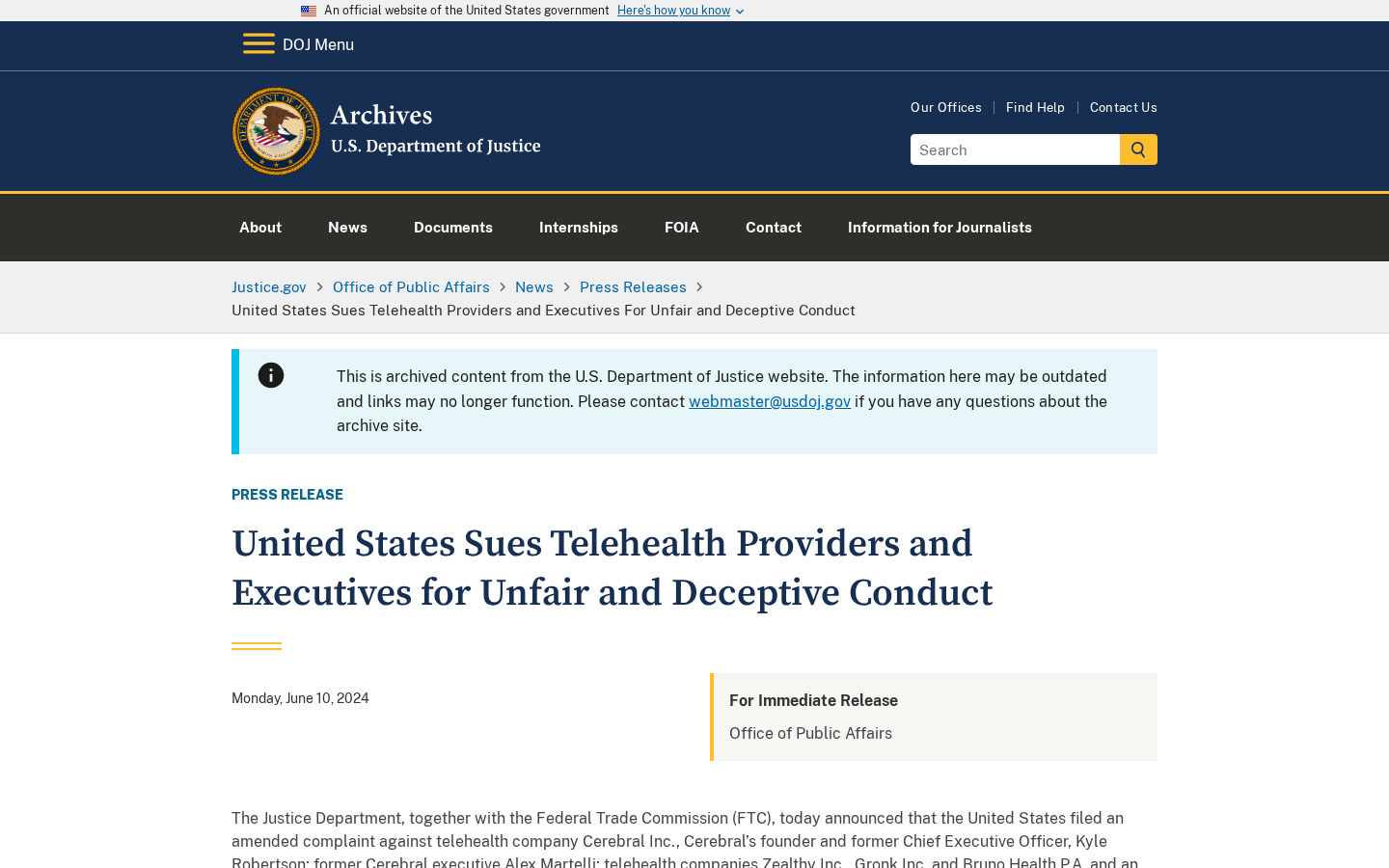
The archived Justice Department case announcement explains the original allegations, while the newer FTC refund page explains the current distribution and its separate deadlines.
Match the notice to the action it actually calls for
It is easy to read a claim about money coming back as a reason to send something, especially when the message mentions deadlines.
A legitimate check, a payment notification and a bill from the original merchant require different responses even when they all mention Cerebral.
| What arrived | First thing to verify |
|---|---|
| Paper check | Epiq contact and the date on check paperwork |
| PayPal notice | An incoming payment in your actual account |
| Message asking for a fee | No fee is required for an FTC refund |
| Charge for a current subscription | Merchant, billing date and cancellation confirmation |
| No payment notice | Eligibility and round with the official administrator |
- Open the FTC case page separately so a sender cannot choose the refund administrator or number you use to verify their message.
- Look for money coming in, not a request for you to send funds, return an overpayment or unlock an account.
- If the official contact cannot find your record, save the correspondence and do not pay someone else to search for a payment.
You do not need to know which clinical services you used to start asking whether a particular subscription charge was refunded.
How the Cerebral Refund Program Works
Step 1: Historical billing records establish who qualified
The government said consumers had been promised easy cancellation but were required to complete a more complicated process and often kept paying.
Cerebral settled the charges, and the FTC specifically connects refund eligibility to requests before May 2022 followed by subscription charges.
That is a narrower group than everyone who used the service or had a different issue with an appointment or payment.
The date of an actual cancellation request matters more than the day you stopped opening the app or using the account.
If the bill arrived after you stopped attending appointments, find out when you asked the company to stop the subscription itself.
Do not read the settlement as a ruling on every person’s current plan or a source of instructions about their treatment.
Step 2: The first distribution provides the starting point for the second
The FTC says the first round began in May 2025 and more than $3.5 million was actually returned in that distribution.
The newer notice describes money still left in the fund, which is why qualifying previous recipients can receive another payment.
Someone who remembers a letter but never accepted the payment should ask Epiq about their record, rather than assuming the new round includes them.
Keep the amount and approximate date available when you call, though you should not need to read your full payment information aloud.
A returned envelope or expired check from the old round is a question for Epiq, not a reason to start another claim elsewhere.
Do not divide the announced total by the recipient count and expect everyone to get that figure in the mail.
Step 3: Recipients check the payment and act before it expires
For a paper check, confirm the paperwork and administrator on the FTC page before depositing it through your normal banking channel.
Look for the stated expiration on the check or accompanying notice and contact Epiq if that date is unclear or has passed.
For PayPal, open your account independently and look for a matching incoming payment in Activity rather than following a message link.
If the account shows a genuine payment waiting to be accepted, use PayPal’s own prompts and stay within the stated 30 days.
Signing in to your account ordinarily shows the payment history, but a fake notice can also send you to a convincing outside page.
If you see no incoming payment, ask the official administrator to confirm the delivery method instead of paying a fee to find it.
Who Handles the Old Charge and Who Handles the New Payment?
Cerebral handled the original membership
An old Cerebral statement can identify when the company charged a membership fee after you tried to end the subscription.
The FTC’s settlement did not turn Epiq into Cerebral’s current billing department or give it control over a person’s treatment.
If you still receive membership charges, speak with Cerebral through the account or public support route and ask for written confirmation.
Epiq handles this distribution, not every dispute
Epiq Systems is the independent administrator named on the FTC page, and the listed phone number is 1-888-884-6036 for refund questions.
Verify that number on the official page before calling, particularly if a message gives you a different office or extension.
An answer about program eligibility will not settle a new credit card dispute, so keep your requests to each party separate.
PayPal or your bank handles payment activity
The administrator can tell you what it sent, while the payment provider can help you identify what appeared in your account.
If PayPal shows an invoice asking you to pay, that is not the same thing as a refund arriving in your balance.
When a check is verified but your bank will not accept it, get the reason and ask Epiq about your options.
Billing evidence should not contain your treatment history
To show a charge after cancellation, a date, merchant name, amount and relevant message are more useful than medical details.
Keep unredacted originals privately and send only what the verified recipient actually requests through a channel you know to be official.
Do not post refund notices publicly without removing details that could identify a person as having used a telehealth service.
Sort Out a New Charge Without Losing the Old Refund Records
Start with your statement and mark each recurring membership payment by date, leaving visits or other billing entries on separate lines.
A payment from Epiq and a credit from your card issuer can arrive separately, so verify who issued each one.
If a family member helps with paperwork, explain which record they need to recognize the charge and keep the rest private.
Check the written billing response for an effective date rather than relying on a screen that only confirms someone received your message.
The FTC’s subscription guidance suggests keeping the cancellation request and checking later statements, which gives you a dated record for a dispute.
If another charge arrives, ask your issuer how to dispute that recurring payment without challenging purchases you agreed to make.
Keep each dispute number with its statement so someone can tell which payment you are questioning without opening unrelated records.
Open the payment history again after the next billing date instead of assuming a temporary credit means the issue was resolved.
If you depend on appointments through the service, ask the provider about access separately from any decision to stop future billing.
For the old program, keep the first payment record until Epiq confirms whether it counted as accepted for the second round.
Once the official payment clears, note the date and save the original notice in case another message names the same amount.
A message about the same amount could still be an impersonation, since it does not tell you who actually sent it.
What to Do If You Received a Cerebral Refund Notice
-
Confirm the program and administrator yourself
Open the FTC’s refund page for Cerebral and compare its round, administrator and payment options with what the notice says.
Use the phone number on the case page if the notice names an unfamiliar sender or directs you to a different website.
Treat a demand to send money, buy gift cards or share a login code as a separate issue, not a refund condition.
-
Verify and handle the payment in the right place
For a paper check, use your regular bank deposit procedure after verification and keep the paperwork with the stated date.
For a PayPal payment, sign in without using the message and check Activity for money received or waiting for acceptance.
If a payment is missing, expired or addressed to an old account, call Epiq instead of sending money through the notice.
-
Check the old cancellation and payment dates if eligibility is unclear
Find the notice, support ticket or email from the original cancellation attempt and compare its date with the next subscription charge.
If you accepted a first payment, note approximately when and through which method so the administrator can check the second round.
If you did not receive or accept it, say that clearly rather than assuming both rounds use exactly the same selection.
-
Use a separate route for charges you are still getting
Open your Cerebral account directly and contact Support if you need help finding or confirming the end of a subscription.
Save the request and written confirmation, then check the next statement for the same merchant name and a new charge.
If the charges continue, use your issuer’s dispute process and give it the cancellation date, amount and evidence you kept.
-
Respond to an impersonator based on what you revealed
If you paid a fee, contact the payment provider immediately and explain whom you paid, the amount and the false reason.
If you shared a PayPal password, visit PayPal directly to change it and check for unfamiliar payments through the Resolution Center.
Keep the suspicious notice for PayPal’s reporting process or file a consumer report through the FTC’s official fraud reporting site if relevant.
Frequently Asked Questions
Are the November 2026 Cerebral payments real?
The FTC lists a second distribution for eligible recipients, with Epiq Systems handling checks or PayPal payments under the settlement.
A genuine program can still attract impostors, so verify the individual notice separately before depositing, accepting or replying to anything.
Does everyone who had a Cerebral account qualify?
No, the FTC describes a group that tried canceling before May 2022 and was charged after the cancellation request.
The current round is described as going to people who accepted their first payment, so an old account alone is not enough.
What if my PayPal account uses a different email now?
Contact Epiq through the FTC case page, explain which account changed and ask how the administrator can verify where it sent payment.
Do not give a password or a one-time login code to anyone offering to transfer the payment to the new address.
Can the FTC check expire before I have time to verify it?
The FTC says to cash checks within 90 days, so use the written date and contact the administrator promptly if necessary.
A person demanding a fee for a faster deposit is not following the normal refund route described on the case page.
Do I need to send a care record to prove I was a subscriber?
Begin with your billing and cancellation records, since those address the dates the FTC identifies without exposing details of your care.
Ask Epiq what information it needs through the published contact rather than attaching a full treatment record to a refund inquiry.
Will accepting this payment stop a charge on my account today?
The settlement payment concerns qualifying earlier charges and does not change a current membership or answer whether a new charge is correct.
Handle any present billing problem through the service and card issuer separately, with a dated cancellation request and the relevant statement.
The Bottom Line
Verify any Cerebral refund through the FTC page and Epiq, then cash the check or accept the PayPal payment within its deadline.
Never send a fee to receive the money, and take ongoing subscription charges to the service and your payment provider separately.

Join the discussion
0 commentsShare your experience or ask a question about this article.
Community experiences
Did this happen to you?
Your experience could help someone recognize the same scam. Submit a private report for our team to review.
I experienced this tooReports are reviewed before publication. Sharing publicly is always your choice.
Discussion
Start the conversation
Have a question or something useful to share? Add the first comment.