


After a serious injury, having someone else manage the settlement can take one difficult job off a person’s shoulders.
The arrangement still needs to let the injured person understand where the money is and what it can pay for.
Overview
A patient’s settlement was meant to support the patient
Eric Brown, a psychotherapist in Newton, Massachusetts, agreed to act as trustee for a patient who had been injured by a drunk driver.
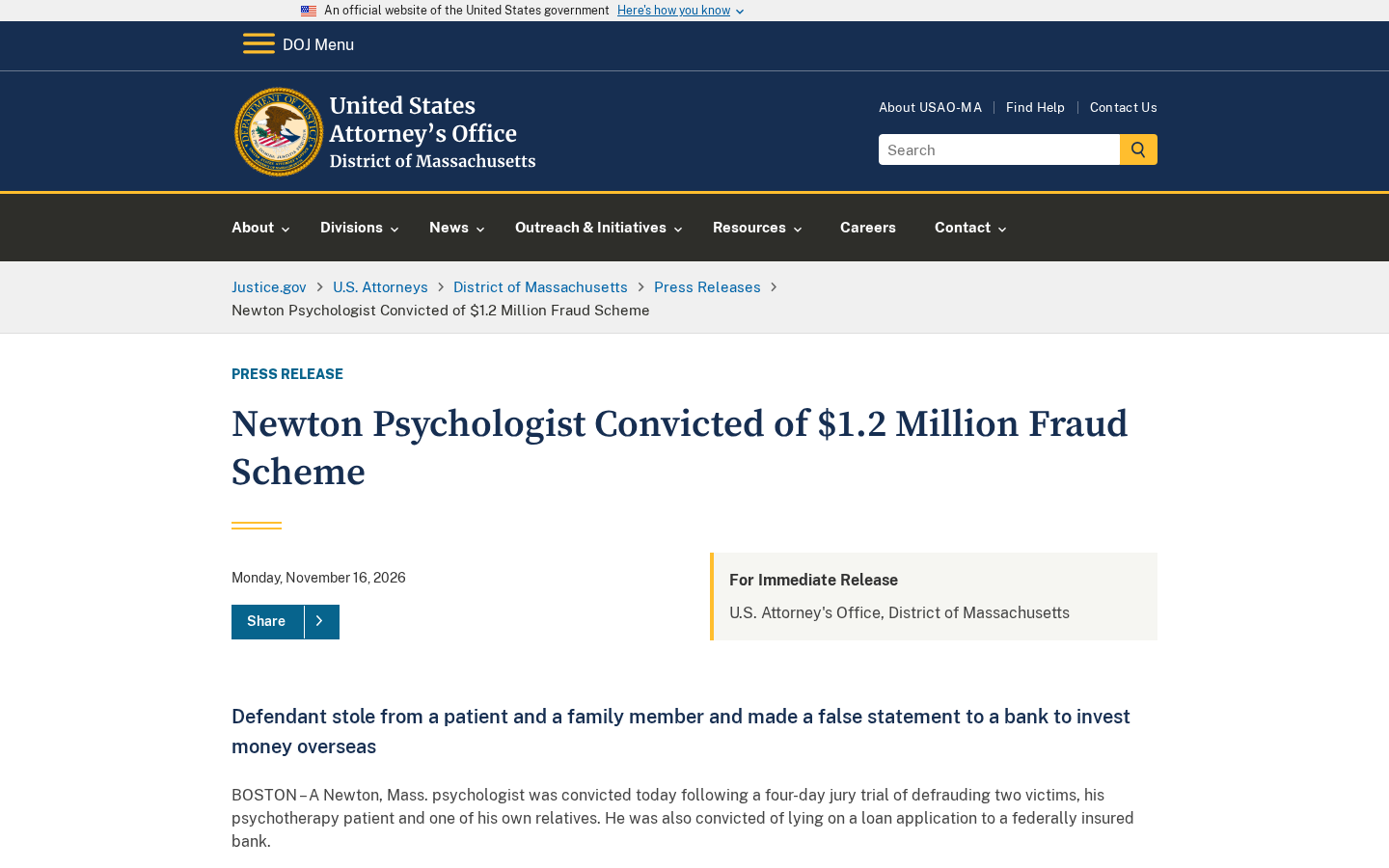
The Justice Department’s November 16 verdict announcement says the trust held about $700,000 from the patient’s settlement.
Brown had sole control over the money as trustee, but that authority came with duties to the person the trust protected.
Prosecutors said he moved $600,000 of the patient’s money into an overseas investment at the urging of someone he met online.
That was money intended to help an injured person, not money Brown could treat as part of a plan to pay his debts.
A federal jury convicted him of wire fraud, making a false statement on a bank loan application and an unlawful monetary transaction.
The announcement scheduled sentencing for February 22, 2027, so the November outcome was a verdict, not an announcement of the prison term.
The person investing your money should be able to explain where it went
A trustee and a beneficiary have different roles, and the person who can direct a transfer may not own the money being transferred.
The beneficiary may not have a login for the account, but that does not make a vague conversation about losses an accounting.
A useful account explains the assets held, money spent, amounts transferred and the people or institutions responsible for each material decision.
Massachusetts publishes its statute on a trustee’s duty to inform and report, including what an account generally contains and when certain beneficiaries receive it.
Who qualifies and what can be requested depend on the trust and relevant law, so start with the actual documents rather than assumptions.
Put the explanation beside an independent account statement if you can obtain it, since they answer different parts of the same question.
Which records can answer your questions?
A report can sound reassuring or alarming without telling you whether an investment exists, who owns it or where the money is held.
Instead of asking only whether the trust performed well, break the concern into questions you can match to specific records.
| If you want to know | Ask to see |
|---|---|
| Who can move trust assets | Trust instrument and any later appointment or amendment |
| What happened to a balance | Statements covering the transfer and relevant payout records |
| What the trust received | Investment or custody documents identifying the trust as owner |
| Who benefited from a payment | Accounting entry, recipient and explanation for the expense |
| Whether the trustee was paid | Compensation entries and the authority for those payments |
- Gather dated records from before and after a disputed transfer so the opening balance does not get lost from the explanation.
- Keep a record of which numbers came from a bank and which came only from a summary prepared by the trustee.
- Write down requests that went unanswered, particularly when the trustee cites a loss but produces no document that identifies the investment.
Good records can also show that an unexpectedly low balance has an ordinary explanation, such as a properly documented expense.
How the Settlement Trust Fraud Worked
Step 1: A trusted professional takes charge of the settlement
The injured patient asked Brown to become trustee in February 2022, after the accident had resulted in a settlement to benefit the patient.
Having a trusted professional manage money may seem reasonable when the beneficiary has other urgent concerns and the two already know each other.
The risk here was not the act of seeking help, but that one person had exclusive control over a substantial fund.
A separate review does not require the beneficiary to manage every trade or payment personally, which would defeat much of the arrangement.
It can mean having a qualified adviser compare annual accounts against bank records or requiring independent review for a change in custody.
Talk to local counsel about building those checks into the arrangement before signing, rather than relying on informal promises about access later.
Step 2: An online relationship draws the trustee into an investment scheme
Beginning in August 2023, Brown was drawn into what prosecutors describe as an online investment confidence scam with a pretend romantic connection.
Brown was a target of that separate deception while also making decisions about funds he did not own and was bound to protect.
He transferred $600,000 overseas and did not tell the patient about his plan to use profits to meet his own substantial debts.
Prosecutors said he told the patient that the trust’s investments were doing poorly, without disclosing the deal he planned to make.
A poor return can happen without wrongdoing, but it does not answer whether the assets went somewhere the trust was allowed to invest.
There is a big difference between a loss on a documented holding and a transfer whose purpose the person controlling it will not explain.
Step 3: More of the investment money comes from another person and a bank
Brown obtained $310,000 from a relative by saying he needed to cover taxes and consolidate debts, according to the verdict announcement.
Prosecutors said the actual plan was to invest overseas and keep most of the hoped-for profits to pay his own debts.
He separately applied for a $517,800 home equity line of credit and gave Citizens Bank a false explanation of the intended use.
He sent most of the loan proceeds overseas, but the case summary does not say the trust itself took out that loan.
These transactions explain why the headline figure is not an amount that disappeared from the patient’s trust or a measure of its balance.
They also show why a loan’s stated purpose should be kept in writing when the person borrowing asks for significant family funds.
Step 4: A jury decides the fraud case, leaving recovery questions open
After a four-day trial, jurors convicted Brown on the charges described in the public announcement, including two counts of wire fraud.
The result concerns Brown’s conduct toward the patient, relative and bank, not a finding about the benefit of all trustee-managed settlements.
A criminal verdict does not tell you whether the patient can see a current accounting or when property might be restored.
The beneficiary’s practical concern continues after the headline: protecting the remaining assets and getting a reliable record of amounts already transferred.
An independent trusts lawyer can separate the need to preserve money now from questions about the investment and damages that take longer.
The Difference Between An Investment Loss and Missing Records
A legitimate investment can lose value, and a reliable statement can show exactly which holding fell and what it was worth afterward.
A missing statement leaves you unable to tell whether the trust bought the asset at all, even when someone supplies a convincing explanation.
When only a short summary is available, ask for the underlying statements for the specific period, not a new performance estimate.
If assets changed custodians, look for a closing balance from the old institution and an opening balance from the new one.
Compare ownership as well as amounts because an account in the trustee’s personal name may not document a trust-owned investment.
Keep questions about consent separate from questions about ownership, since someone can show you a real investment without explaining whether it was authorized.
An adviser reviewing a large transaction can ask what purpose it served for the beneficiary and where that reasoning was recorded.
You may not be entitled to third-party documents immediately, so have counsel explain which requests should go through the trustee or court.
When the money supports medical bills or living expenses, prepare a list of upcoming needs before deciding what needs the fastest attention.
A trustee’s explanation can also confuse the trust’s balance with an estimate of what an outside investment might one day return.
Keep assets the trust actually holds separate from expected proceeds so you know what is available to cover bills today.
If a relative lent money as well, keep their loan documents separate from the beneficiary’s records and avoid combining both claims.
What to Do if You Have Fallen Victim to This Scam
-
Make a timeline before requesting changes
Start with the trust agreement, settlement amount, trustee appointment and the earliest statement that identifies where the funds were first deposited.
Add withdrawals, balance changes and any explanations you received, keeping the original messages alongside notes made from telephone conversations.
If you only know the approximate date, say so rather than filling in the gap with a date you cannot support.
-
Ask for an itemized account in writing
Identify the trust and the period you are asking about, then request its assets, receipts, disbursements and any compensation taken.
Name individual transfers where you can and ask for statements showing the destination, purpose and resulting asset held for the trust.
Save proof that you sent the request and avoid sending sensitive financial records to an address you have not independently verified.
-
Contact a lawyer who is independent of the trustee
Bring the trust documents and timeline to someone who handles trust disputes in the state whose law applies to the arrangement.
Ask what rights you have as a beneficiary, representative or family member and which requests have to go through someone else.
If money is still moving, explain that urgency before asking for a full review of everything that happened in the past.
-
Discuss safeguards for the remaining property
Massachusetts lists court remedies for breach of trust, which can include ordering an accounting, stopping conduct or appointing someone to protect trust property.
Ask which options are realistic under your circumstances and whether immediate action could affect payments you depend on for ordinary expenses.
Do not assume you can take over an account yourself without legal authority, even if you believe the trustee acted improperly.
-
Report suspect transfers using records you can explain
If you have authority to speak for the trust, alert the financial institution through a known number about the transfers in question.
If the concern involves online investment fraud, preserve the messages and use the FBI’s internet crime reporting service to submit a complaint.
Make clear which facts you know, such as a transfer date, and which statements were made to you without supporting records.
-
Keep ordinary obligations and recovery claims separate
Identify bills paid from the trust and ask your adviser how to avoid an interruption while the disputed transfers are investigated.
Do not make a payment to someone who contacts you about releasing a recovery award or starting a private investigation.
For case-specific requests, locate the prosecutor’s office independently and confirm the case information before sending any private records or financial details.
Frequently Asked Questions
Was Eric Brown convicted or only charged?
A federal jury convicted him in November 2026, and prosecutors reported a sentencing date in February 2027 rather than a completed sentence.
The verdict concerns his use of other people’s funds and the false statement he made when applying for credit from a bank.
Was the trust itself part of the online investment pitch?
The patient already had the trust for settlement funds, and Brown was later drawn into a separate online investment confidence scheme.
He was convicted for conduct involving other people’s money even though prosecutors also described him as a target of the online scheme.
Does one figure tell me what the patient lost?
The trust started with about $700,000, and the Justice Department describes $600,000 of patient funds being moved into the overseas investment.
The relative’s loan and the home equity credit involve different parties, so neither belongs in an estimate of the patient’s trust balance.
Can I ask for more than a general update?
If you have the relevant rights under the trust and local law, ask for the account and the records behind specific entries.
The distinction matters because a general update can mention losses without describing current holdings, expenses or amounts paid to the trustee.
Should I confront someone before the next transfer goes out?
If the money may be moved soon, speak with independent counsel promptly about preserving it before relying on an informal confrontation.
Give the adviser dates, amounts and the reason you believe another transfer is pending so they can assess the urgency realistically.
Does the verdict guarantee a payment to the beneficiary?
The announcement reports a verdict and a scheduled sentencing hearing, not a date or amount for money returned to the beneficiary.
Ask an independent lawyer to review the trust’s existing property and remedy options rather than waiting for an expected payment to appear.
The Bottom Line
Do not accept an explanation about poor investments in place of an accounting when someone else controls the money set aside for you.
Request the records in writing, then bring them to independent counsel if important transfers remain unexplained or assets may still move.
A trustee may make decisions for the trust, but the records should show how those decisions served the person it protects.

Join the discussion
0 commentsShare your experience or ask a question about this article.
Community experiences
Did this happen to you?
Your experience could help someone recognize the same scam. Submit a private report for our team to review.
I experienced this tooReports are reviewed before publication. Sharing publicly is always your choice.
Discussion
Start the conversation
Have a question or something useful to share? Add the first comment.