


A voice message lands while your team is waiting to confirm a launch. The person speaking sounds like the streamer you hoped would take part.
There’s an agreement in the chat, too. Before releasing the money, the team has one more thing to establish.
Overview
The N3ON crypto scam targeted a project team
The organizers of a cryptocurrency memecoin project believed N3ON, an online streamer, had agreed to participate in and promote their launch. They were not speaking with the real streamer.
In the Justice Department’s account, David Anthony Sanchez posed as both N3ON and the streamer’s representative. The organizers sent about $260,000 in cryptocurrency to accounts Sanchez controlled.
That is different from a promoter telling fans to buy a token. The documented victims were on the organizing side, making a payment to someone they thought represented a partner.
Someone looking at a token or project announcement later could still be misled about who endorsed it.
Prosecutors did not identify retail token purchases as the source of that $260,000.
One person supplied three kinds of apparent proof
There were accounts that looked like N3ON’s, agreements executed using his identity, and an AI-generated voice recording that appeared to confirm participation.
Each piece could make the other two look more convincing. The missing check was whether any confirmation came from outside the messages and agreements Sanchez controlled.
- A real-looking profile is not proof the real person controls that account.
- A signed document does not verify the signer’s identity when the source supplied the whole exchange.
- A recognizable voice can sound convincing without identifying the person who actually sent the recording.
The sentence is real, but it does not show who has been repaid
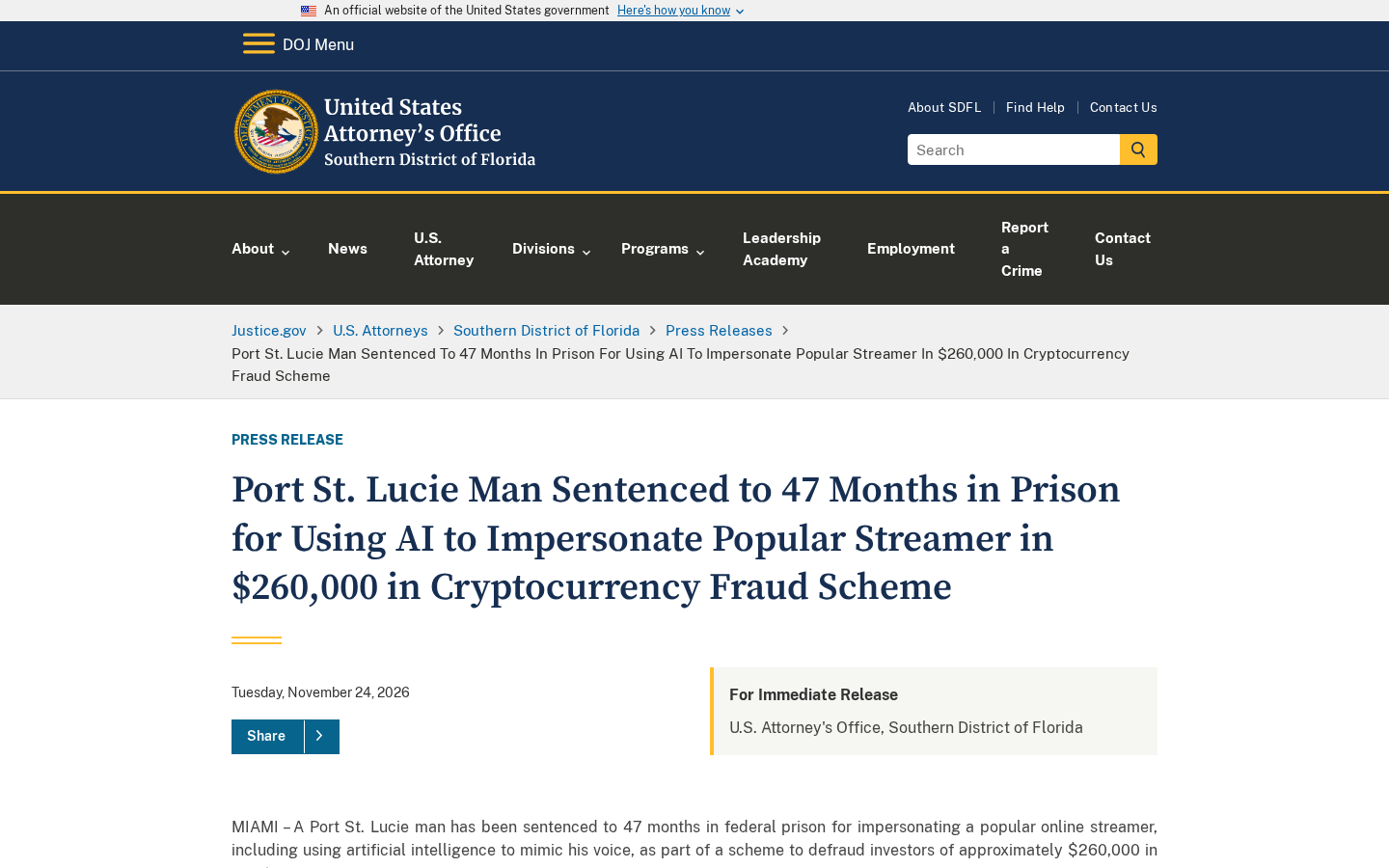
The Southern District of Florida announced a 47-month federal prison sentence on November 24, 2026. Sanchez had pleaded guilty to money laundering and aggravated identity theft.
He was ordered to pay restitution.
The announcement does not say that the victims had already been repaid or set out a public claims process for anyone who heard about it.
N3ON’s name belongs in the story because it was misused. The case is not an accusation that the streamer sold an endorsement or took the team’s money.
How the N3ON Crypto Endorsement Scam Worked
Step 1: The team thought it was talking to a recognizable partner
A public figure can be valuable to a new project because an endorsement can bring attention quickly. That makes the identity of the person taking part a material business fact.
Prosecutors said Sanchez created accounts to resemble N3ON’s and used them to communicate with organizers. They did not identify the exact handle or disclose every message in the sentencing notice.
Lookalike accounts are especially confusing when copied material comes from the real person. A photo or clip may be genuine even though the person using it isn’t who they claim.
Get the handle from an independently known profile and compare it character by character. Better yet, ask the person or their business contact to confirm which account is theirs.
Step 2: A supposed representative backed up the story
The Justice Department says Sanchez claimed to represent the streamer as well as posing as the streamer himself. Two apparent contacts were not two independent sources.
Here is where a referral inside a chat can sound safer than it is. If the first person introduces the second, you have not made a separate check yet.
A reliable check starts somewhere the original contact did not supply, such as a business email listed on a known official profile or a representative your team has used before.
If you cannot find a reliable independent contact, don’t let an approaching launch replace that confirmation. Treat the sponsorship as unverified and keep it out of the announcement.
If someone offers a management company’s name, that gives you a business to verify. It does not give you a reason to use the email address they supplied.
Where a bid involves an intermediary, agree on who is responsible for the introduction, who can sign and who actually receives the money. Keep those roles separate in your records.
Step 3: The agreement and voice recording made it feel done
According to court records summarized by prosecutors, Sanchez executed agreements using N3ON’s identity. He also sent an AI-generated recording imitating the streamer’s voice to confirm his participation.
A deal document can make a chat look official, but signing software does not tell you whether the person using it has authority to commit a public figure.
The voice recording addressed a familiar concern: an organizer can finally hear the person they were meant to be dealing with. In this case, that reassurance was fabricated.
You don’t have to diagnose synthetic audio to protect a payment. If the recording came from the negotiation itself, verify the deal separately rather than listening for glitches.
Keep the file as it arrived if the deal looks suspicious. A forwarded clip may lose account or timing information that the original conversation still shows.
Even a real clip from a previous appearance can be passed off as new. Ask for confirmation through a verified channel instead of treating any recording as the final check.
Step 4: The organizers authorized a transfer to the wrong party
The organizers transferred about $260,000 in cryptocurrency to accounts Sanchez controlled. The public announcement does not identify the sending chain, wallet address or exact token involved.
There is no need to invent a wallet-draining link to explain the loss. People authorized the transfer after being misled about the person and agreement behind it.
Prosecutors said Sanchez converted a substantial portion and used proceeds for his own benefit. That is separate from the chain record showing money left the organizers’ control.
Make the destination part of the approval, not a detail copied from a chat at the last minute. If the recipient changes, reopen the check before paying.
How to Verify a Streamer Deal Without Trusting the Voice Clip
Start a fresh conversation on a known channel
Open the public figure’s known channel or website yourself. Use a business inquiry route you can trace to that channel, not a reply address in the proposed contract.
Send a short request that identifies your project, the proposed role and the name of the person claiming to represent the streamer.
Leave sensitive wallet details out of that first message.
Ask the confirmed representative whether the proposed participation, timing and payment terms are real. If an assistant answers, confirm the scope of their authority with the established business contact.
When confirmation comes back, make sure it refers to your project rather than a general statement that the streamer is open to sponsorships. Those two answers are not interchangeable.
Check what the streamer agreed to do. A mention, an appearance and permission to advertise an endorsement are different commitments. Do not treat approval of one as approval of all.
Match the signer, invoice and payment destination
Read the agreement for the actual contracting party. If the signer, invoice sender and payee are different, get the confirmed representative to explain the relationship before funds go out.
Have a second person at your organization compare the confirmed destination and the payment terms against what the payment screen shows.
Share the signed records through a channel your team controls.
A test transfer can show funds reached an address. It cannot show that the address belongs to the person in your contract, so it does not replace identity verification.
Decide who can approve an exceptional change before anybody requests one. You should already know which teammate can stop a payment that doesn’t match the verified instructions.
Holding money back until work starts may limit how much you send at once. It doesn’t establish that the person who offered the deal ever represented the streamer.
If the proposal includes an escrow service, check the service independently as well. Never assume a link from an unverified representative belongs to the escrow provider it names.
Keep the validated agreement with the records your finance team actually uses.
A teammate who sees only an amount and wallet address cannot tell whether the instructions came from anywhere reliable.
Document who confirmed the payee, where they confirmed it and when. A note that simply says the deal was approved is hard to check when the conversation disappears.
Keep the public announcement out of the payment decision
Once an announcement is scheduled, it is tempting to approve a deal quickly so you don’t miss a window.
That pressure is a reason to pause, not a reason to send.
If your team has already announced the endorsement, freeze promotions while you confirm it. A correction is less damaging than allowing people to rely on a false claim longer.
Give anyone handling community updates the verified wording. Avoid telling buyers that the streamer supports the project or that funds are secure before you can establish either claim.
Separate the schedule from the identity check. You can prepare creative material and make a backup launch plan without announcing a partner whose involvement hasn’t been confirmed.
When someone asks why a headline or post changed, state only what you can establish.
A false endorsement does not tell you that every other person on the project was involved.
Save the original announcement and the corrected version with their dates. That gives partners a record of exactly which claim you withdrew and helps prevent yesterday’s draft from reappearing.
What to Do If You Have Fallen Victim to This Scam
-
Stop pending payments and preserve the conversation. Tell your treasury or payment team which deal is affected and call off any second installment that has not been sent.
Save the original recording, complete message thread, contracts and dates. Keep the actual files as well as screenshots, so investigators can distinguish a real attachment from a picture.
-
Identify the exact transfer before filing your report. Open the sending wallet or exchange, go to transaction history and select the transfer that corresponds to the signed deal.
Copy the transaction identifier, network, amount, asset, date and destination. The FBI’s crypto reporting guidance explains why those details matter for tracing.
-
Contact the sending service through its real site. If an exchange handled the payment, sign in independently and report the transfer through that exchange’s verified fraud support route.
State whether you authorized it based on deceptive information. A request to freeze identifiable funds through a service is different from undoing an already confirmed blockchain payment.
-
Recheck the endorsement and warn affected partners. Use the independently verified representative, then tell your team whether the deal was ever authorized and which materials must come down.
Ask the platform to review the impersonating profiles through its own reporting system. Keep a copy of what you reported, and avoid reposting the criminal account as a clickable link.
-
File an independent report and save its reference. In the United States, go to IC3, select the complaint filing option and attach or describe the transaction records requested.
Save the confirmation and give the reference to existing investigators or your financial provider. Do not send keys, recovery phrases or a release payment to someone offering guaranteed recovery.
-
Track the loss separately from your next launch. Record which organization paid, which account sent the money and who can respond to questions from the platform or investigators.
If several contributors are involved, keep their records distinct. A transfer from the organization does not automatically establish an equivalent personal loss for everyone who invested in it.
If a case notice arrives later, look up the issuing office independently. Ask what it means for your specific payment before giving anyone financial details or expecting a refund.
Frequently Asked Questions
Did the real N3ON make the endorsement in this case?
The Justice Department says Sanchez impersonated N3ON and falsely confirmed the streamer’s participation. The documented payments went to accounts controlled by Sanchez, not to the real streamer.
Was the $260,000 stolen from fans who bought the coin?
The sentencing announcement describes transfers from the project organizers. It does not identify the amount as retail token losses or name a separate group of token buyers.
Can a voice message verify a business deal?
It can help you understand what the sender is claiming, but it cannot prove who sent it. Confirm the agreement through a channel your negotiator did not supply.
Would blockchain verification have prevented the transfer?
A transaction check can show whether funds reached an address. It cannot tell you whether the real streamer approved that address without an independent link to the payee.
What offenses did David Anthony Sanchez admit?
Sanchez pleaded guilty to money laundering and aggravated identity theft, according to the Southern District of Florida. The court imposed a 47-month prison sentence and ordered restitution.
Does a restitution order mean the victims already got their money?
A restitution order requires payment but is not proof it has been collected and distributed. Verify any case notice with the agency that issued it.
The Bottom Line
Do not send crypto for a streamer deal until a separately verified representative confirms the endorsement, contract and payment destination. An agreement and an audio clip are not enough.
If your team already sent funds, stop additional transfers and save the original records. Contact the sending platform and report the exact payment rather than paying someone to recover it.

Reviews & discussion
0 commentsShare a firsthand experience, or ask a question.
Community reviews
N3ON
Moderated reader experiences, not an editorial verdict.
Start the conversation
Have a question or something useful to share? Add the first comment.