

It is the kind of headline that catches you at exactly the wrong moment. You are reading something completely unrelated when a photo of a refrigerator appears beside a warning: Never Put Mustard in Your Fridge, and apparently there is a reason nobody told you.
The answer is much less dramatic than the headline. This investigation follows the ad through the machinery that makes it profitable, explains why the source keeps changing, and shows how a harmless condiment became bait in a large click-arbitrage system.
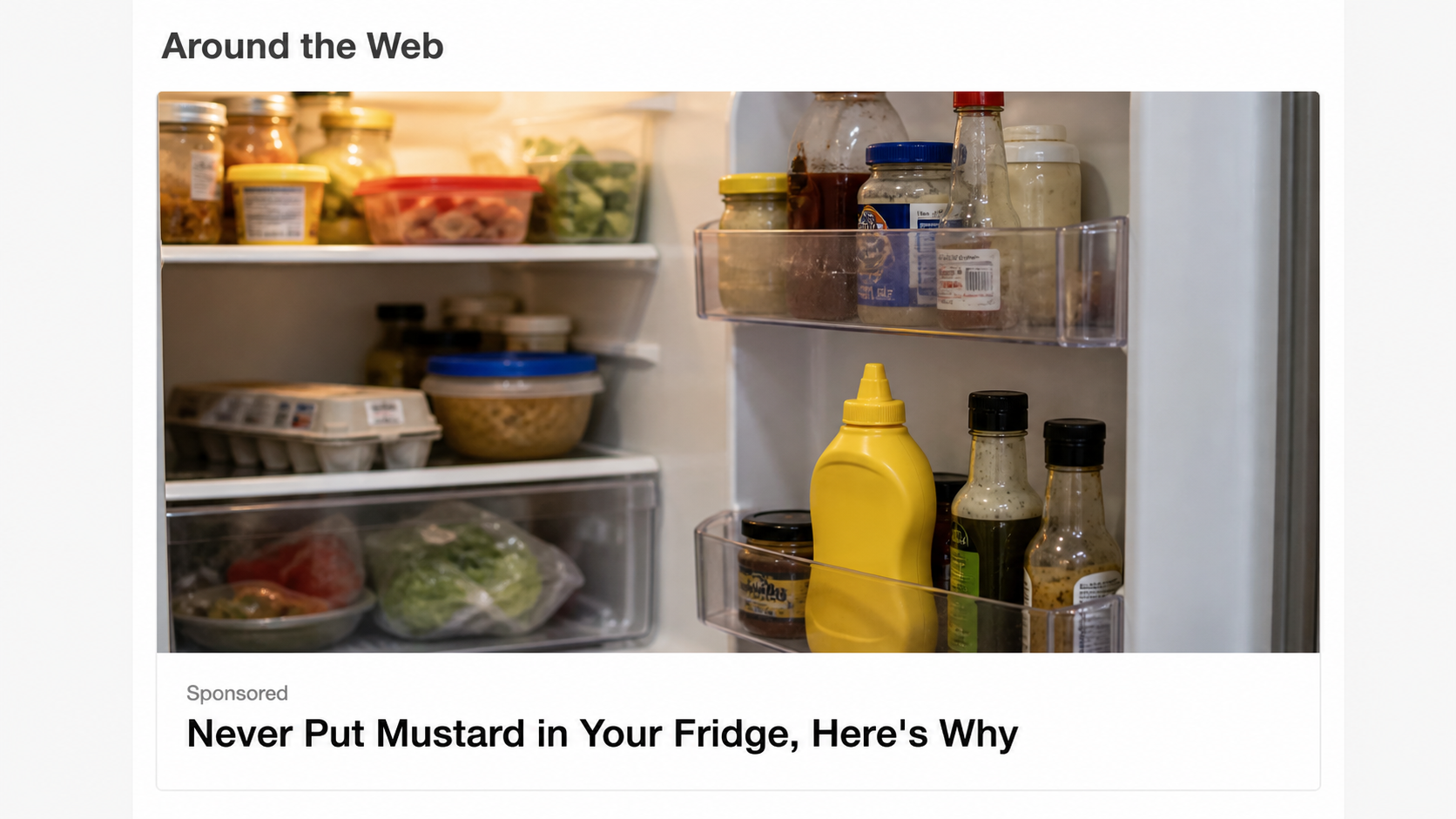
The ad is usually placed inside an Around the Web, Recommended, or Sponsored Content widget below a legitimate article. Its design is intentionally modest. A household photo, a mysterious warning, and a tiny source label are enough to trigger curiosity.
Different placements attach the same basic headline to names such as LifeHack Guru, Life Hacks Garden, 101LIFEHACKS, or Healthy Living Tips. The label sounds like a publication, yet it may identify only a disposable content brand connected to a tracking route.
After the click, the visitor rarely finds an urgent food-safety discovery. The destination is commonly a long article, gallery, or slideshow surrounded by ads, trackers, recommendation widgets, and buttons that turn one question into many page views.
Overview
This is primarily a click-arbitrage scheme, not a mustard emergency
The Never Put Mustard in Your Fridge headline is designed to buy a cheap click with curiosity. The operator can then earn revenue from the ads shown on the destination page, additional recommendation clicks, affiliate offers, or data used to retarget the visitor later.
Calling every appearance a direct theft scam would be too broad because some routes may lead only to low-value content. The deceptive element is the exaggerated warning and the way a sponsored placement can borrow credibility from the legitimate page around it.
The same creative can travel through many domains and source names
Native-ad networks distribute campaigns across thousands of publisher pages. A campaign can change its display name, tracking domain, landing page, headline variation, and final offer without changing the curiosity hook that made the visitor click.
That flexibility makes the operator difficult to identify from one screenshot. The site hosting the ad, the recommendation network, the advertiser, the tracking service, and the destination publisher may all be different companies with separate roles.
The food claim is stretched far beyond ordinary storage guidance
Mustard is relatively acidic and shelf-stable compared with many perishable foods. Some opened mustard can remain safe outside the refrigerator for a period, while refrigeration usually helps preserve flavor and quality. The exact advice depends on the product label and manufacturer.
That ordinary nuance does not support the alarming implication that putting mustard in a refrigerator is dangerous. The refrigerator is not the threat. The headline turns a preference and quality question into a secret warning because secrets generate clicks.
- The ad appears beneath unrelated articles on trusted sites.
- A small Sponsored label may be easier to miss than the headline.
- The display source can change while the creative stays familiar.
- Tracking links record the click before the destination loads.
- The answer is often delayed across a gallery or slideshow.
- More page views create more advertising opportunities.
- Some routes may escalate into affiliate offers or unsafe redirects.
Why a Mustard Headline Can Outsmart a Careful Reader
Curiosity gaps work because the headline gives the reader enough information to feel concerned but withholds the one detail that would resolve the concern. Mustard is familiar, the refrigerator is personal, and the warning suggests a mistake happening in the reader’s own kitchen.
The claim also feels easy to verify. Unlike a complicated investment or medical promise, it asks for only a click. That low perceived cost lowers skepticism, even though the real price may be time, tracking, exposure to more ads, and a path toward less trustworthy offers.
Placement adds borrowed credibility. When the widget appears below a story from a newspaper, television station, or specialist publication, readers may assume the surrounding publisher reviewed or endorsed each recommended item. In many cases, the slot is supplied automatically by an advertising network.
The FTC describes native advertising as paid content that resembles the surrounding editorial material. The key consumer issue is whether the commercial nature is clear. A tiny Sponsored label can be technically present while the overall design still feels like a normal recommendation.
The destination often uses a familiar editorial rhythm. It opens with a broad promise, adds personal anecdotes, introduces several common household mistakes, and postpones the mustard answer until later. Next buttons and separate pages keep the visitor moving.
This is why the content can feel strangely thin. Its first job is not to teach food safety efficiently. Its first job is to retain the visitor long enough to create multiple ad impressions and additional opportunities to click.
The same system can promote harmless trivia one moment and aggressive health or finance claims the next. That adjacency matters. A person who accepts one exaggerated household headline may be retargeted with a more expensive promise after the network learns what captures their attention.
What the Native-Ad Trail Reveals
The mustard phrase has appeared inside recommendation widgets on unrelated publisher pages. Captured placements show it surrounded by other sensational sponsored headlines about sexual health, neuropathy, belly fat, olive oil, and household secrets.
Some of those placements identify RevContent as the advertising provider. RevContent is a native recommendation network, which explains how the same creative can appear below many independent articles without being written by those publications.
Source labels attached to the mustard headline have included several generic life-hack names. That rotation makes the campaign look like it comes from different editorial voices while preserving a reusable headline and image.
The headline itself does not state the supposed consequence. It avoids a claim that can be tested immediately and instead requires the visitor to leave the trusted page. This is the defining curiosity gap.
Food-safety guidance does not support panic. Government emergency-storage charts treat mustard as much less risky than meat, dairy, eggs, or opened creamy dressings during a power outage. That does not mean refrigeration is harmful or that every mustard should be stored identically.
Manufacturers may recommend refrigeration after opening to maintain flavor, color, texture, and quality. A reader should follow the label on the bottle rather than a generic ad whose source, product type, and destination can change.
The strongest evidence of the business model is structural: paid placement, tracking redirects, delayed answers, repeated page loads, and more sponsored recommendations. The operator earns attention first and decides what to sell with that attention later.
A safe landing page today does not guarantee a safe route tomorrow. Advertising campaigns can change destinations, and compromised or low-quality sites may ask for browser notifications, downloads, surveys, email addresses, or payment information unrelated to mustard.
How the Never Put Mustard in Your Fridge Scam Works
Step 1: A native widget appears on a page the reader already trusts
The reader finishes an ordinary news or entertainment article and reaches a block labeled Around the Web or Recommended. Because the ad is embedded within the page, it benefits from the host publication’s design and reputation.
The publisher may have sold the placement through an automated network rather than selecting the mustard story. The difference is invisible unless the advertising disclosure and outbound destination are examined carefully.
Step 2: The headline creates an urgent but incomplete household warning
Never Put Mustard in Your Fridge sounds specific, surprising, and personally relevant. It never explains what will happen, which mustard it means, or whether the issue concerns safety, taste, texture, storage time, or packaging.
That missing consequence is deliberate. If the ad said refrigeration can affect flavor and is generally optional for some mustard, most readers would understand the point without clicking.
Step 3: A tracking link records and routes the visitor
The visible source name may not be the first server contacted. The click can pass through one or more tracking addresses that log the placement, device, campaign, publisher, geography, and whether the visitor completed later actions.
Redirects are common in legitimate advertising, but they reduce transparency. A user cannot reliably judge the final site from the label printed beneath the thumbnail, especially when several campaign domains rotate.
Step 4: A slideshow stretches one answer into many impressions
The landing page may present a list of kitchen mistakes, foods not to refrigerate, or storage tips. The mustard answer is delayed behind introductory text, scrolling, a gallery, or repeated Next buttons.
Every additional page can load fresh display ads, sponsored tiles, analytics scripts, and affiliate links. One inexpensive curiosity click can therefore generate several monetized impressions.
Step 5: More sensational recommendations surround the visitor
Once inside the content site, the reader encounters other dramatic headlines. They may concern weight loss, nerve pain, memory, celebrity secrets, cheap gadgets, government benefits, or financial shortcuts.
The system learns which themes earn another click. A harmless mustard question can become the first step in a broader profile of the visitor’s interests and vulnerabilities.
Step 6: Some routes ask for permissions, data, or money
Lower-quality destinations may request browser notifications, an email address, a survey response, a download, or card information for an unrelated offer. Those actions are not necessary to learn how to store mustard.
If a page demands permission before revealing the answer, close it. Do not install an extension, enable alerts, call a support number, or submit payment details to continue a household slideshow.
Step 7: The campaign changes names and starts again
When one domain gains a poor reputation or stops converting, the operator can change the source label, image, landing page, or redirect while keeping the same emotional hook. Search results may then show many apparently separate versions.
This is why blocking a single site helps only temporarily. The durable defense is recognizing the pattern: dramatic warning, missing explanation, sponsored placement, generic source, tracking redirect, and an answer delayed for monetization.
Company, Address, and Fulfillment Checks
The source label may be a campaign name, not a newsroom
Names such as LifeHack Guru or Healthy Living Tips sound editorial, but a friendly label does not identify a legal company, editor, physical office, or accountable author. Treat it as advertising until those details can be independently verified.
A real publication normally provides ownership, contact information, corrections, an editorial archive, and consistent authorship. A disposable landing brand may provide none of those things because it exists mainly to receive paid traffic.
The host publisher is not automatically the advertiser
A newspaper or local television site can contain a third-party recommendation widget. The surrounding publisher may control the slot and disclosure but may not write, operate, or endorse the destination advertised inside it.
Complaints should identify both the host page and the ad network when possible. A screenshot that includes the Sponsored label, headline, source name, and page address helps the publisher locate the campaign.
Redirect domains can hide the real destination
The link may pass through several tracking services before reaching a content farm. Those domains are infrastructure, not necessarily the final advertiser. The full chain matters when reporting a harmful page or investigating unauthorized data collection.
Do not copy an unfamiliar tracking link into random online forms. If you need evidence, use browser history, a reputable URL scanner, or a security professional. Avoid revisiting the route after it begins triggering unsafe behavior.
There may be no product, address, phone, or fulfillment center
The basic mustard campaign can earn money without selling a physical item, so company and warehouse details may be absent. That absence becomes more serious if the route eventually promotes a supplement, trial, gadget, or recurring subscription.
Before buying anything reached through the funnel, identify the legal seller, support number, return address, card descriptor, and shipment origin. An unrelated mailbox, unreachable email, or anonymous fulfillment center gives the customer little practical recourse.
The Real Answer About Refrigerating Mustard
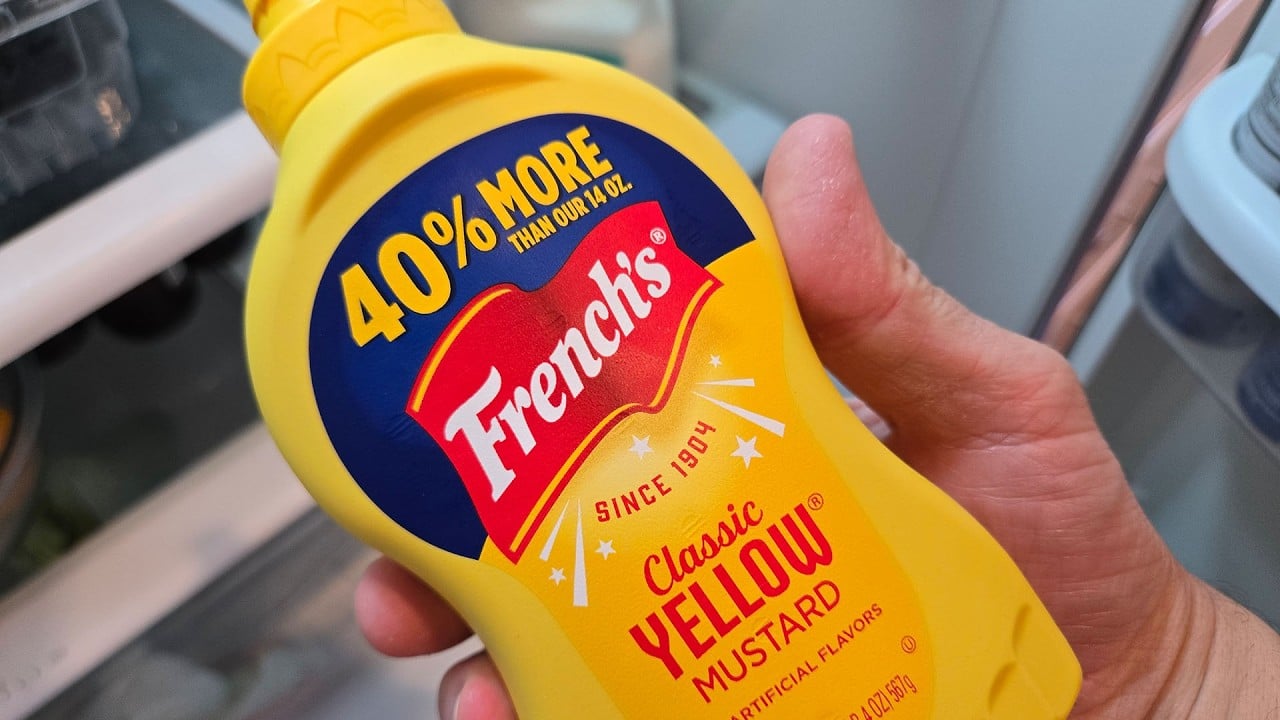
Refrigerating mustard is generally not dangerous. For many commercial mustards, the refrigerator helps maintain flavor and quality after opening. Some products can remain safe at room temperature for a time because acidity and ingredients discourage rapid pathogen growth.
Safety and quality are different. A condiment can remain unlikely to cause foodborne illness while gradually losing color, texture, aroma, or sharpness. That distinction is too ordinary for a viral warning, but it is the useful answer.
Different formulas also behave differently. Prepared yellow mustard, Dijon, whole-grain mustard, homemade mustard, mustard mixed with dairy, and sauces containing mustard should not be treated as one product. The package label is the best first instruction.
Cross-contamination changes the picture. A bottle touched with dirty utensils, left open, diluted, homemade without controlled acidity, or exposed to heat may spoil differently from a sealed commercial squeeze bottle.
Look for mold, swelling, leakage, an unusual odor, severe discoloration, or a damaged seal. When in doubt, discard the condiment. Saving a partly used bottle is not worth gambling with uncertain storage or contamination.
The clickbait survives because the truthful answer contains nuance. The ad removes that nuance, turns an optional quality step into a forbidden act, and sells the missing explanation one page view at a time.
Warning Signs to Watch For
- A household warning refuses to name the actual danger.
- The story appears inside a third-party recommendation widget.
- A tiny Sponsored label is visually weaker than the headline.
- The source has a generic life-hack name and no clear owner.
- The click passes through unfamiliar tracking domains.
- The answer is delayed across many pages or slides.
- Notification permission is required before content appears.
- The destination pivots from mustard to health or money offers.
- A download or payment form appears without a sensible reason.
The mustard headline is useful because it teaches a pattern that appears far beyond food. Whenever a paid ad invents a personal emergency, hides the consequence, and makes the answer difficult to reach, assume your attention is the product.
What to Do if You Have Fallen Victim to This Scam
- Close the entire redirect chain. Do not keep clicking Next in search of the promised answer. Close the destination and any pop-ups it opened. Reopen your browser only after confirming that no download or permission prompt remains active.
- Remove notification permission. Check the browser's site settings and revoke notifications from any unfamiliar domain. Scammy content sites use alerts to keep sending health, prize, subscription, and security headlines after the original page is gone.
- Delete suspicious extensions and downloads. Remove anything installed during the visit. If a download started automatically, do not open it. Empty it only after your security software has inspected the file and device.
- Change exposed passwords. If you entered a login on a page reached through the ad, change that password from a clean device and enable multi-factor authentication. Reusing the same password means other accounts may also be at risk.
- Call the card issuer if you paid. If the route led to a purchase or trial, review the checkout and statement for recurring terms. Dispute unauthorized charges promptly and ask the issuer how to stop future merchant-initiated billing.
- Report the placement. Send the host publisher a screenshot showing the ad, disclosure, source label, and page address. Report deceptive commercial content or unsafe redirects to the FTC and the advertising platform that displayed it.
- Run a Malwarebytes scan. Use Malwarebytes for a complete device scan if the page delivered pop-ups, forced redirects, fake warnings, or downloads. Quarantine detections, restart if requested, and scan again before using sensitive accounts.
- Install AdGuard for future protection. AdGuard can block many recommendation widgets, trackers, pop-ups, and known malicious domains. Review its filtering log if a page behaves strangely, but remember that an ad blocker cannot reverse data already submitted.
Frequently Asked Questions
Is the Never Put Mustard in Your Fridge story true?
The dramatic warning is misleading. Refrigeration is not inherently harmful to mustard and often helps preserve quality. Storage advice varies by formula, so follow the product label and ordinary food-safety practices.
Is this a direct payment scam?
Often it is better described as deceptive click arbitrage because the immediate goal is ad revenue and tracking. Some routes may later promote paid products or subscriptions, so the risk can escalate after the first click.
Why does the ad appear on a trusted news website?
Publishers commonly use third-party native-ad networks to fill recommendation slots. The host site may not have written or endorsed each promoted story, even though the placement benefits from the site’s credibility.
Why do different websites use the same mustard headline?
Ad networks syndicate campaigns across many publishers, and operators can reuse a successful creative under rotating source labels and destinations. The repeated headline is a conversion tool, not evidence of independent reporting.
Can mustard be kept outside the refrigerator?
Some commercial mustard can remain safe at room temperature for a period, but refrigeration usually protects flavor and quality. Homemade products, mixed sauces, and labels with specific instructions require different treatment.
How can I block these Around the Web ads?
Use a reputable content blocker such as AdGuard, disable unnecessary browser notifications, and avoid clicking sensational sponsored tiles. Keep the browser and security software updated because domains and campaign names rotate.
The Bottom Line
The Never Put Mustard in Your Fridge campaign turns a simple storage question into a manufactured emergency. Its value lies in the click, the redirect, the tracking, and the extra pages loaded before the reader reaches an ordinary answer.
Mustard is not the real subject. The same machinery can attach any familiar food, celebrity, health concern, or household habit to a curiosity gap and distribute it beneath legitimate articles at enormous scale.
Follow the bottle label, not the warning tile. When an ad refuses to explain the danger without taking you through a sponsored maze, the smartest click is no click at all.








