


Most people expect to hear from a life insurance company after they apply, not years after they stopped shopping for coverage.
An unexpected welcome letter can leave a household wondering what happened and where the company got the information it used.
Overview
An agent opened policies people had not requested
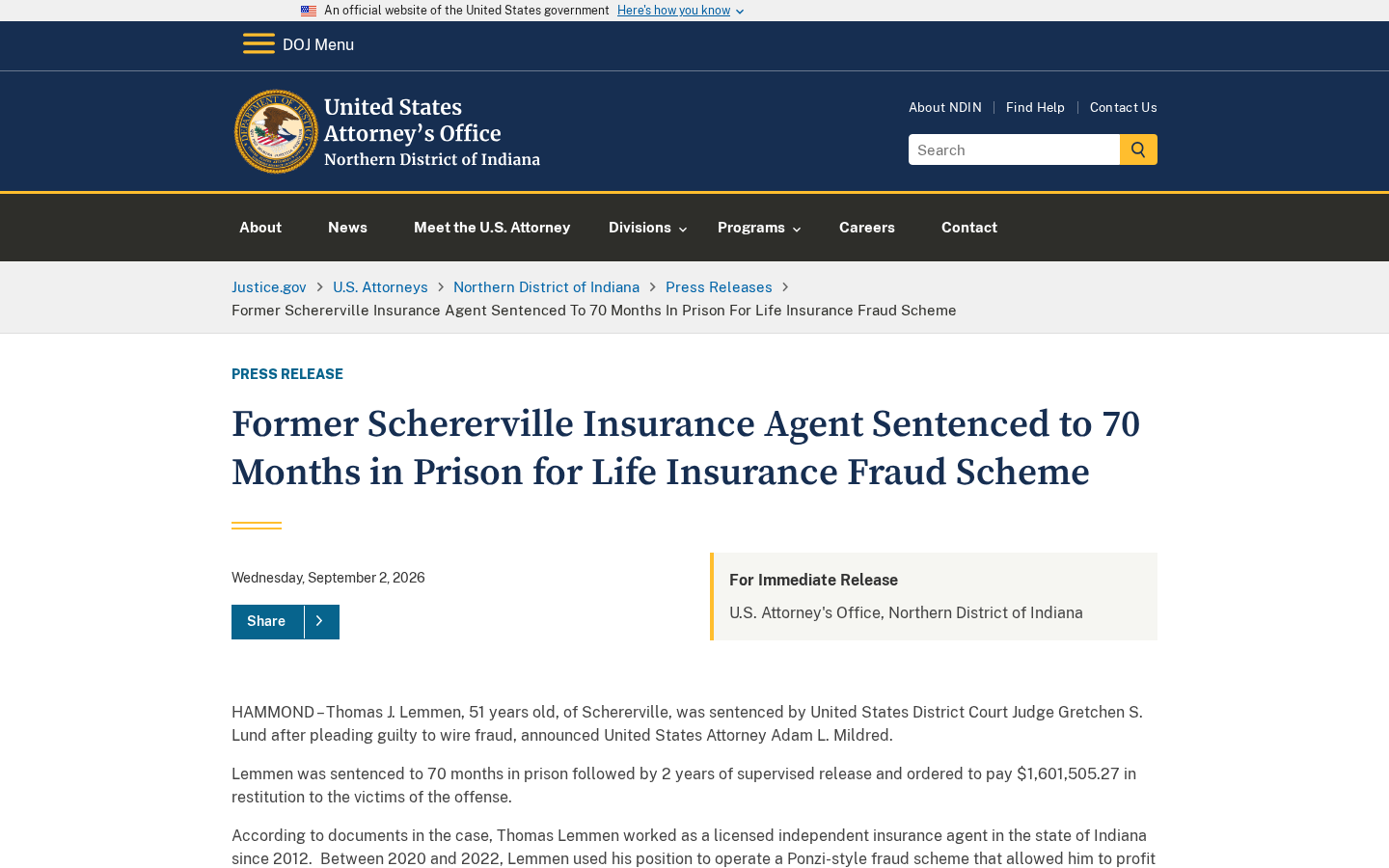
Thomas J. Lemmen was a licensed independent Indiana insurance agent when he used customers’ information to open policies without their permission.
The Justice Department’s sentencing announcement says the scheme ran between 2020 and 2022 and produced more than 2,000 unauthorized life insurance policies.
Hundreds of people had their identities used, and federal prosecutors say most were retirees or older residents of Northwest Indiana.
Lemmen received more than $5 million in commissions that he was not entitled to collect, according to investigators familiar with the records.
After pleading guilty to wire fraud, he received 70 months in prison and two years of supervised release in September 2026.
The court ordered $1,601,505.27 in restitution, which is separate from the total amount of commissions prosecutors said he collected during the scheme.
Why it matters even if you never paid a premium
Some of the people whose identities were used had not bought insurance from Lemmen and were only prospective clients.
An application can contain a full name, date of birth and Social Security number before the person decides whether to buy.
The harm here extended beyond the existence of an extra policy because the paperwork gave insurers access to private health information.
Federal prosecutors say Lemmen forged digital signatures on releases that led to medical and pharmacy information being shared with insurance companies.
The carriers in that account received the information while processing the forms, rather than being identified as organizers of the fraud.
A welcome packet from a carrier may be authentic even when the document that supposedly authorized the policy was not.
Separate the application, the money and the medical release
If you discover a policy you did not request, obtain answers from the insurance company rather than the person who submitted it.
You may need several teams because the question about an application is different from the dispute over a payment or a disclosure.
| Record you find | What to ask the carrier for |
|---|---|
| Welcome letter or policy number | Application date, status and agent of record |
| Signature you do not recognize | Signed application and available consent records |
| Medical or pharmacy release | Copy of the authorization and record of the request |
| Payment you never approved | Billing history and funding details the carrier can disclose |
| Listed owner or beneficiary you did not choose | Verified ownership and beneficiary records, subject to privacy rules |
- Tell the carrier whether you dispute the application, the signature, the payment, the medical release or more than one of them.
- Keep records for any policy you did choose so the company can distinguish your genuine coverage from a disputed application.
- Request a case number for the inquiry and ask where to send documents without including personal information in ordinary email.
A real policy number can help the company find what happened, but it does not settle whether you gave consent.
How the Scam Works
Step 1: People provide information during ordinary dealings with an agent
Current, past and prospective clients had supplied enough personal information for Lemmen to identify them and complete new policy applications.
Their original interactions did not authorize him to use those details for new coverage beyond what the individuals had actually agreed to.
The names and dates on an unauthorized application might therefore be correct, which makes accuracy a poor shortcut for checking consent.
If someone in your family asks for help, find out which policies they remember buying and which conversations were only about quotes.
An old quote may be useful evidence because its date and contents show when an agent came into contact with particular information.
You do not need to replace sensitive records to question the policy, and keeping originals makes the conversation with the insurer easier.
Step 2: The agent files applications without genuine signatures
According to prosecutors, Lemmen wrote policies in other people’s names and forged their digital signatures on a range of legal documents.
There was no need to persuade each person to select a premium or sign a form once he started using their information.
A carrier may have a record of a completed signature, but you can still ask what verifies that you completed it.
Ask when the application was signed and which email, telephone number or other contact channel the carrier used for that process.
Do not assume that an email date by itself identifies the signer, especially if you have never used the email address listed.
The carrier may need to limit what it discloses during its investigation, so ask how it handles a formal request for your records.
Step 3: A medical release leads to a second privacy problem
Some forged signatures authorized the release of health details, and medical or pharmacy information reached insurers as a result of those forms.
That makes undoing the policy only one part of the response because another organization may still hold and use information already disclosed.
For an authorization you do not recognize, ask the insurer what it asked for, when it asked and who received the request.
You can also get in touch with your provider’s privacy office through its published number and explain why you are disputing consent.
Ask how to obtain copies, record the dispute and find out whether further requests could still be authorized by that same release.
The process can vary with the record and institution, so ask for a written answer rather than assuming the insurer deleted everything.
Step 4: New policy commissions keep the operation going
Lemmen collected commissions from new policies while using part of the proceeds to keep the scheme operating, according to the Justice Department.
The benefit flowed to the agent even when the named applicant did not choose the policy or know it had been written.
Federal prosecutors describe this as a Ponzi-style scheme and say Lemmen spent some of the proceeds on himself as well.
They do not say an unfamiliar commission entry means the insured person paid that fee out of pocket to the agent.
If you suspect a debit from your own account, verify it separately with your bank and with the insurer’s billing department.
In April 2023, Indiana’s insurance regulator took action to prevent renewal of Lemmen’s license, years before the federal sentencing announcement appeared.
Help a Family Member Without Creating a New Privacy Problem
Start with the letters or messages the person received, and ask whether they remember discussing coverage with the listed agent or insurer.
You may find a welcome letter for a policy they do not remember buying, alongside paperwork for one they definitely want to keep.
Do not treat old age or an uncertain memory as evidence that a person chose, or did not choose, a particular policy.
Mark what you know from documents separately from what they remember so the carrier can investigate without guessing at their preferences.
When calling on their behalf, ask what authority or permission the carrier requires before it can discuss an individual’s personal records.
Let your family member take part as much as possible, particularly when confirming coverage they rely on or access to medical information.
Read policy numbers out only after calling the carrier yourself, and use its secure channel for any documents it needs to see.
Check the arrival dates of the notices and ask whether a change of address or other routine issue could explain the surprise.
If several carriers are involved, keep a separate page for each one so you can match every response to the right policy.
One carrier’s decision to remove an unauthorized policy does not change what a different company has stored about the same person.
For each decision, note the case number, which documents were corrected and where the company said it would send the written outcome.
A file that stays with the person helps them explain the problem if another letter arrives months after the first carrier responds.
If a compensation offer arrives, read it together and confirm it through the verified agency before sharing identifying details or signing anything.
Keep the consent question separate from billing and disclosure until all three issues have been addressed by the appropriate office.
What to Do if You Have Fallen Victim to This Scam
-
Open a fraud inquiry with the insurer
Use a phone number or account portal you found independently and ask for the team that handles unauthorized insurance applications.
Give the policy reference through that secure channel and explain that you do not recognize the consent or signature on file.
Before requesting changes, verify which policies you actually intended to keep so the company does not confuse valid coverage with the dispute.
-
Get the available records before they are harder to find
Ask for the application, signature documentation, agent information, funding records and any authorization the insurer believes it received from you.
Keep the envelopes and electronic messages, including dates and delivery details, because those can help explain when you first learned about the policy.
Save your old quotes separately from records of policies you accepted, particularly if both name the same insurance agent.
-
Protect any medical or pharmacy information that was shared
If the insurer relied on a release you dispute, ask its privacy team to document the dispute and check for other requests.
Use the provider’s actual privacy contact to ask which records were disclosed and how to request a copy through a secure process.
Do not attach your medical records to a public post or forward them to a person offering to investigate the notice.
-
Check financial records for signs of wider identity misuse
Review statements for unknown insurance payments and contact your bank promptly if you find a charge you did not authorize.
Use the federal identity theft recovery guidance to make a plan if your personal information was used without permission or appears on other accounts.
Ask about a credit freeze if sensitive identifiers were misused, but understand that a freeze does not undo an existing policy.
-
Report the issue through the state insurance department
Indiana residents can follow the Department of Insurance complaint instructions when seeking help with an insurer or the agency involved in the disputed policy.
The department says complaints can become public records, so ask what to redact before enclosing documents with private medical or financial details.
If your policy concerns a different state, use that state’s insurance regulator and ask which organization can review the agent’s conduct.
-
Ask for written closure on each issue you raised
You want to know whether the policy remains in force, who can access the records and whether any billing problem remains.
Request a written decision for your files and ask which team you should call if an unfamiliar payment or new notice appears.
If someone offers restitution after calling you out of the blue, confirm that message through a verified authority before responding.
Frequently Asked Questions
Was Lemmen licensed when he wrote the policies?
Federal prosecutors say Lemmen worked as a licensed independent insurance agent in Indiana and used that position to carry out the fraud.
The state department took administrative action in April 2023 to prevent renewal, so a historical license should not be read as current authority.
Does receiving a policy mean I signed an application?
An insurance company can issue a policy based on an application it received, even if the purported signature was not yours.
Ask the carrier for the application and the record behind the signature rather than trying to decide by looking at the signature alone.
Should I close every life policy the agent handled?
Identify the policies you chose and confirm their details directly with the issuing carriers before stopping premiums or asking for cancellation.
A fraud dispute should name the specific policy or application you did not authorize, unless the insurer finds evidence of additional misuse.
What if I never noticed a charge for a policy?
You can dispute the unauthorized application without a charge because opening the policy and sharing your information are separate from taking your money.
Ask the carrier whether anything was billed to you and whether that application led to medical or pharmacy disclosures you did not authorize.
Does the $5 million cover money stolen from buyers?
The reported figure refers to improper commissions Lemmen received, not total bank debits for individual victims or the court’s separate restitution order.
Find out what happened with your own account before using the case figures to estimate an amount that might be recoverable.
Could someone use an old quote to apply for something else?
An old quote does not give an agent permission to submit new applications, although it may contain enough information for identity misuse.
Speak with the insurer about the records it holds and use the official recovery guide if you discover other applications you did not authorize.
The Bottom Line
Do not accept or pay for a life insurance policy you did not request, even if the paperwork lists accurate personal details.
Call the insurer through a number you found yourself, dispute the application and ask whether it relied on a medical release.
Keep authorized coverage separate and follow up on any billing, identity or medical privacy concern that remains after the policy is addressed.

Join the discussion
0 commentsShare your experience or ask a question about this article.
Community experiences
Did this happen to you?
Your experience could help someone recognize the same scam. Submit a private report for our team to review.
I experienced this tooReports are reviewed before publication. Sharing publicly is always your choice.
Discussion
Start the conversation
Have a question or something useful to share? Add the first comment.