


If you’ve lost money to a scam, a headline about billions in assets can stop you scrolling. You might wonder whether your payment is there.
Finding out starts with a much smaller question. Which case, if any, actually involved your transaction?
Overview
What the DOJ anti-fraud crackdown counts
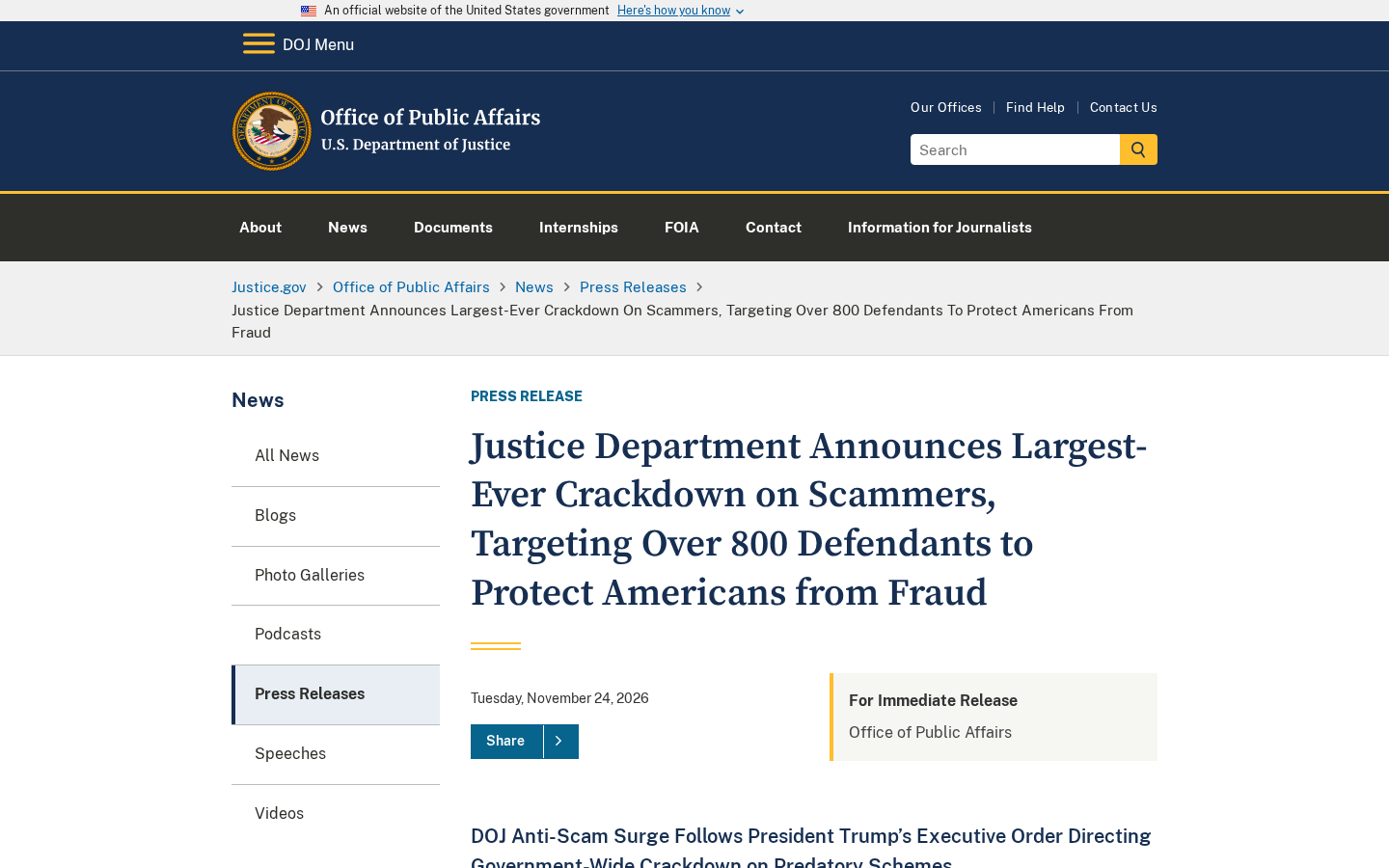
On November 24, 2026, the US Justice Department announced results from a nationwide effort against cyber-enabled fraud. It covered more than 400 cases targeting more than 800 defendants.
The department measured work since March 6, 2026. Cases reached different milestones during that period. An investigation, a charge, an extradition and a sentence do not mean the same thing.
A name on the map may belong to an ongoing prosecution.
Read the announcement for that particular case before sharing a claim that someone was convicted or ordered to repay victims.
The campaign includes federal offices and partner agencies. When one office summarizes its role, it may describe the same case already counted in the national release.
Where the nearly $17 billion figure comes from
In its part of the announcement, the FBI said it had restrained nearly $17 billion in assets. The amount describes an enforcement result, not money already credited to anyone’s account.
Restrictions can prevent assets from being moved while legal proceedings continue. Something can be restrained without having been finally forfeited or made available for distribution.
The national announcement does not say the money forms one fund. It does not supply a single application, common claims deadline or way to look up a personal payout.
The FBI’s wording matters if you see the number reprinted simply as recovered money. Ask whether the figure describes assets under restraint, assets forfeited or money distributed.
What else the FBI reported
Other measures in the announcement reflect prevention or disruption. They matter, but adding them to the asset figure would mix outcomes that tell different stories.
- The FBI reported seizing more than 14,000 devices. A device count is not a count of bank accounts or payment claims.
- Operation Blackout directly warned more than 11,000 people. Its $690 million-plus estimate concerned potential losses prevented, not refunds already paid.
- The announcement described action against scam compounds and assistance to more than 2,200 trafficked workers. Workers and people who sent money may need different kinds of help.
These figures can tell you how broadly authorities intervened. None establishes whether an individual bank transfer, gift card payment or crypto transaction was identified in a case.
How to Find Out Whether Your Loss Is Part of a Case
Start with the transaction, not the grand total
Find the actual date, amount and destination of your payment. If you made more than one transfer, save them in order rather than describing the total from memory.
Keep the name the person used, the exact account or domain you saw and any separate identity in the payment record.
An app display name might differ from the receiving account.
Make a second note of any agency complaint numbers and the date you first reported it.
A caseworker can do more with a dated reference than with a screenshot of headlines.
The DOJ’s Anti-Scam Surge case map helps you locate announcements associated with federal districts. Use it to get a case name or find the office that issued the release.
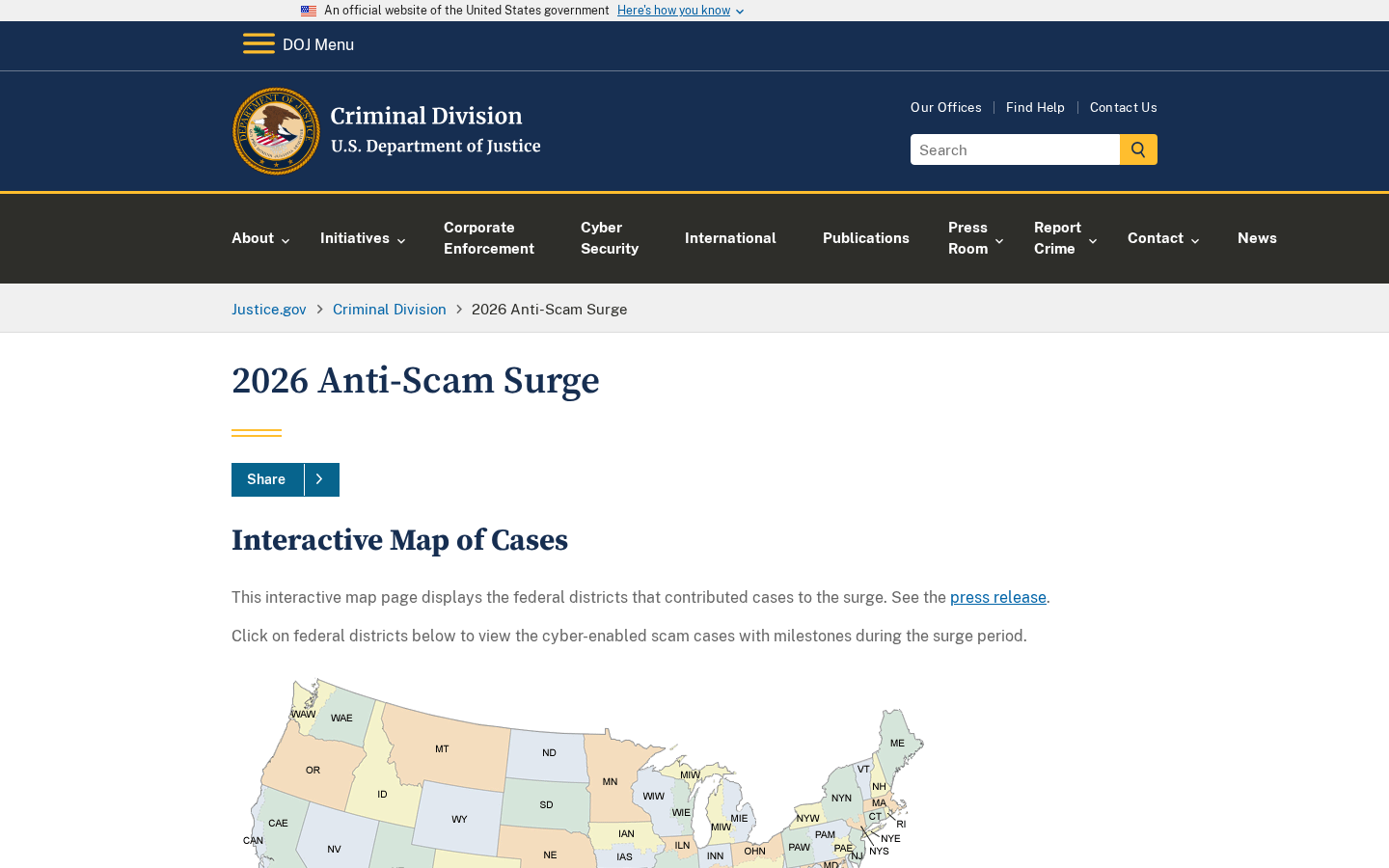
The map is an index, not a payment tracker. A matching district or general type of scam is a starting point, not confirmation that your money belongs to that case.
You might find an investment platform with the same name but a different website.
Save the exact domain and timeline from your own records before assuming those offers shared an operator.
If the map doesn’t show a match, you can still report the loss. The public release describes the enforcement effort and is not a substitute for filing your own report.
Use the district linked to the prosecution rather than assuming your home district has the file. An online fraud can involve victims and investigators in more than one place.
Save the link and date of the case announcement. If you find a later release, check whether it replaces an earlier date or covers another defendant in the same matter.
Ask the office that is actually handling the case
Once you have a possible match, find the case office on justice.gov and use the number or contact route listed there.
Do not rely on a number attached to a receipt.
Explain how you reached the suspected platform or contact and when you paid. Then ask whether the office is collecting information from people affected by that particular offer.
An office may be able to explain victim notification procedures without confirming details of an investigation. For ongoing case notices, see the DOJ’s Victim Notification System information.
Keep any case identifier separate from your consumer complaint number. They serve different purposes, and supplying one does not always let an office find the other.
When you call, ask how the office wants supporting records submitted. A press contact listed on a release may not manage victims’ records or accept evidence directly.
Keep dated notes on what an authorized contact tells you. Record whether you were asked to wait for notice, submit documentation or contact a different agency.
Check for a real, case-specific instruction
A verified notice should tell you which case it concerns and what you need to do. Confirm whether it is seeking evidence, registering victims or inviting a formal claim.
Ask which records establish a covered loss. You might need to show money actually transferred, not an account dashboard that claims to display gains you never withdrew.
Read the eligibility period and the instructions for sending documents.
A deadline in a different district or an older news article does not tell you how long your own case allows.
If a notice asks you to submit financial details, call the responsible office from an independently found number first. Verify the receiving address and send only what the process requires.
If your relative made the payment, ask what authority you need to help with their claim. Do not send their identity documents to someone who contacted only you.
Before a verified deadline, keep a copy of what you submit and how it was delivered. You may need to show which transactions were included or answer a later request.
Restitution, Remission and the Money You Actually Receive
A restitution order is an obligation, not a deposit
A court may order someone convicted of a crime to pay victims back. The order and the amount eventually paid are different, and collection may depend on available money.
A release that reports restitution does not necessarily show how much each victim has received.
Verify the payment status through the office responsible for the case, not through the announcement date.
Keep your mailing address current with the relevant office if it has identified you as a victim.
Use the verified process for changes rather than replying to a surprise text message.
If you previously received part of the money back from a bank, disclose that history when asked. Keep the new credit alongside the original debit so the record is clear.
Forfeited assets can follow another process
The DOJ’s forfeited-assets FAQ explains how victims may seek compensation through remission. It depends on an established connection to the case, the rules and the available net proceeds.
Remission is not the same as a court ordering a defendant to pay restitution. Ask which process, if any, the office is using and what it needs from you.
If an actual notice asks for dates and proof of what you lost, send records showing actual payments. Keep records of chargebacks or other amounts already returned as well.
There is no fee to file a petition for remission with the DOJ.
Anyone who wants money to add you to a purported federal claimant list is asking for something different.
Ask what to do if the filing period has already closed. A private company cannot extend an official deadline or guarantee that an agency will consider a late request.
Keep an eye out for duplicate requests. If someone asks you to resubmit existing records, verify the new contact before sending the same packet.
If a verified process asks whether you received compensation elsewhere, include the records you have. Ask how to update the case if your bank issues a credit later.
Check whether a form asks for each payment separately. Combining installments can hide that some payments went to different accounts or took place outside the covered dates.
An interrupted payment is not recovered money
An investigator might warn someone before money leaves their account. That can prevent a loss, but it doesn’t create an amount the government needs to send back.
Compare that with a separate situation where funds left a bank and the bank says they are on hold. Verify the transfer status directly before assuming either outcome.
Those distinctions also explain why it’s misleading to turn the headline figure into an estimate of what any one victim might receive. It doesn’t answer the personal eligibility question.
When you explain the news to someone who lost money, give them the agency announcement and a next step. Do not tell them their money has been found.
What to Do If You Already Sent Money
-
Contact the company that moved the money now. Call the bank, card issuer or payment platform through its app or an official number, even if you’re still gathering details.
Ask whether the payment is pending and whether it can be stopped, recalled or disputed. Describe exactly what happened, including whether you personally authorized the transaction.
If you bought a gift card and shared the code, contact the issuer with the receipt. Report which amount and card are involved without posting the code publicly.
-
Make a clean copy of the evidence. Retain messages, invoices, account statements, payment confirmations and the website address you actually opened.
For crypto, save the transaction identifier and network. An investigator should be able to tell which transfer is yours without ever seeing a wallet recovery phrase.
Keep the originals and use copies to mark dates or highlight amounts. A readable timeline with account destinations is easier to act on than unlabeled screenshots.
-
Report the incident without waiting for a match. For an internet crime affecting you in the United States, file through the FBI’s Internet Crime Complaint Center.
Include the real amounts and dates, including failed attempts if asked. Save your reference so you can supply it when an investigator or financial institution follows up.
If you are outside the United States, report it to your local authorities or national fraud reporting service as well as your payment provider.
-
Confirm any offer of federal repayment apart from the message. If someone mentions a case number, look it up yourself and locate the agency handling it.
Contact the office from its official listing. Ask whether it sent the notice, whether there is a process for your case and whether there is a deadline.
Never use caller ID, a copied seal or a working link to a news release as the only proof that a contact really represents the government.
-
Do not buy recovery help from a stranger. The FTC warns about recovery scammers who use a prior loss to demand new money.
Save the solicitation and report it through a trusted channel. If you already paid this second person, give the payment provider both timelines and identify the transfers separately.
Frequently Asked Questions
Is the 2026 DOJ scam crackdown a real government announcement?
The Justice Department announced it on November 24, 2026 and published a district case map. A private message claiming to collect claims for it needs separate verification.
Does the $17 billion mean the DOJ has started sending refunds?
The FBI reported nearly $17 billion in assets restrained. That does not establish a single refund program or a payout for a particular victim.
Do more than 800 defendants mean more than 800 convictions?
The total covered cases with different legal milestones. Read the case release to determine whether the applicable result is a charge, a plea or a sentence.
Can I file a report if I suspect my case is unrelated?
Report the actual loss to your payment provider and the appropriate authorities. There is no need to match your story to a national enforcement announcement before seeking help.
Is a case number proof that the caller can help me?
Someone can copy a number from a public release. Use it to help identify the right office, not to authenticate a phone number someone has given you.
What if I was warned before paying?
Save the messages and report the attempt. If you shared sensitive data or account access, contact the provider about securing the account even if no money moved.
The Bottom Line
The DOJ anti-fraud crackdown is real, but nearly $17 billion restrained does not mean automatic refunds. Do not pay to register for a supposed national payout.
If you lost money, contact the company that handled your payment and file your own report.
Follow a claims process only after the responsible office confirms it applies to your case.

Join the discussion
0 commentsShare your experience or ask a question about this article.
Community experiences
Did this happen to you?
Your experience could help someone recognize the same scam. Submit a private report for our team to review.
I experienced this tooReports are reviewed before publication. Sharing publicly is always your choice.
Discussion
Start the conversation
Have a question or something useful to share? Add the first comment.