


Someone calls about the magazines you already receive and offers a lower monthly price. It sounds like a small improvement to an account you recognize.
The nationwide magazine case shows why that familiar opening can matter more than whether the magazines themselves actually arrive at your door.
Overview
A promised reduction created another subscription instead
The scheme targeted people with existing magazine subscriptions. Callers made them believe they were renewing or reducing those subscriptions while actually selling new ones.
The result could be several companies billing the same person. Some victims faced charges from as many as ten businesses and more than $1,000 monthly.
The DOJ’s trial announcement describes a wider nationwide conspiracy that took more than $300 million from over 150,000 victims.
Those are figures for the broader scheme, rather than money attributed solely to one caller or one subscription company.
The criminal finding survived a later appeal
A jury convicted Tashena Crump, Amondo Miller, and Ballam Dudley in 2023. In June 2026, the Eighth Circuit affirmed Crump’s judgment.
The court’s opinion explains how Readers Club Home Office, also known as Pacific Renewal Service, used misleading price-reduction language and coordinated subscriber leads.
- Callers approached people who already paid for magazines.
- The introduction suggested an existing relationship with the subscriber.
- The supposed reduction opened an additional paid subscription.
- More callers could target the same person using shared leads.
Genuine magazines did not make the sales pitch honest
The deception concerned who was calling and what the customer was agreeing to buy. Delivery of a real publication did not resolve those misrepresentations.
These are historical criminal proceedings, rather than a claim that every magazine renewal call today comes from this operation.
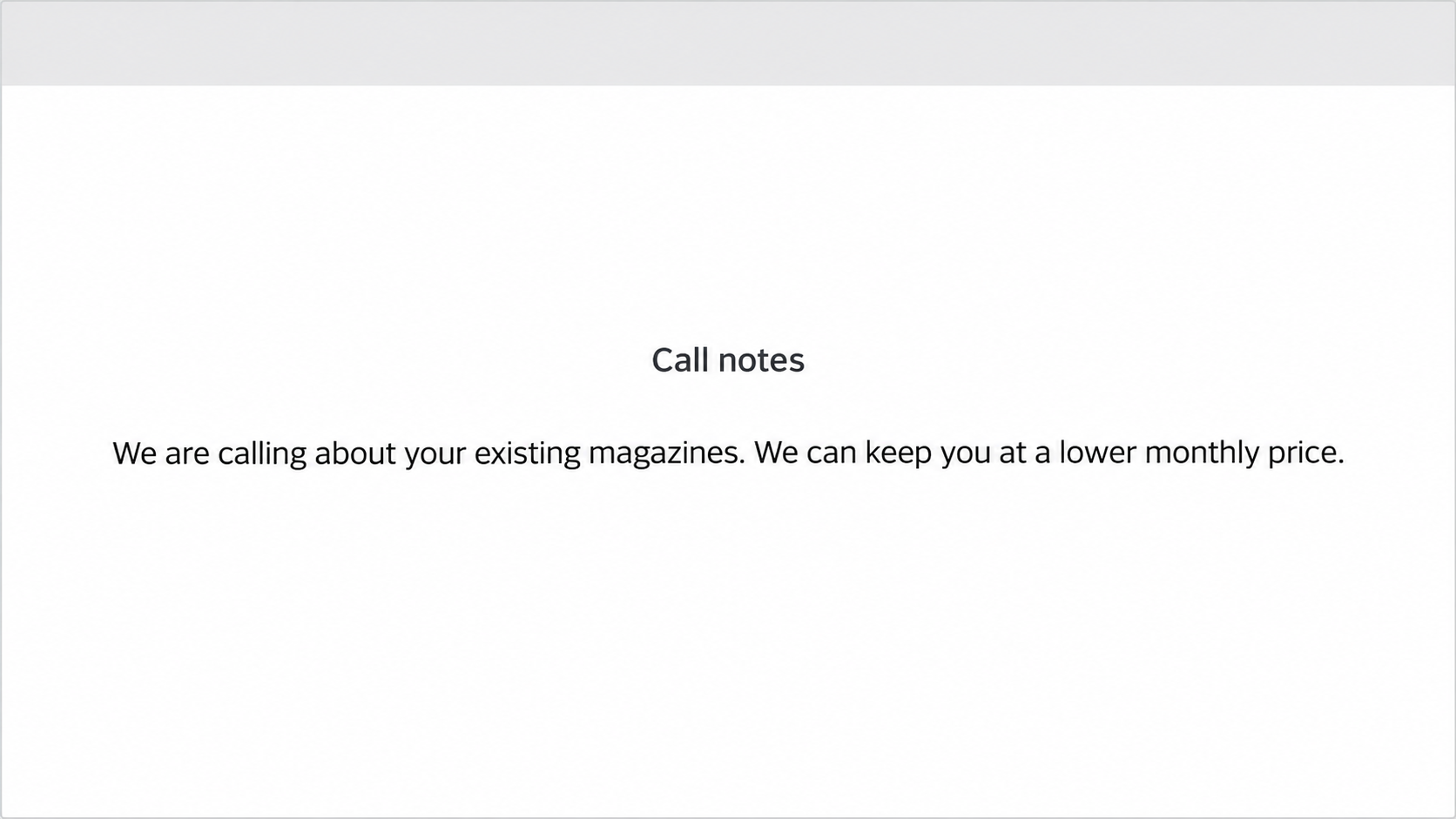
The lead illustration reconstructs the price-reduction pitch in a call-notes display. It is not a recovered recording, original subscriber note, or court exhibit.
Why an Existing Subscription Made the Call Believable
A caller asking about magazines you genuinely receive has an immediate opening. The topic matches something in your life, so the conversation does not feel completely random.
The caller can then speak as though the relationship is already established. Questions about delivery and condition sound like customer service rather than a new sales approach.
In the RCHO script examined by the court, the caller described the business as the people sending magazines and offered to keep the customer at a lower price.
The critical impression was that the caller belonged to the existing provider. The court found sufficient evidence that the script actively concealed the truth.
That matters because a subscriber evaluating a discount makes a different decision from someone deciding whether to purchase another subscription.
If you think the call concerns an existing bill, you may not ask which new company would gain permission to charge you.
The scheme exploited that gap in understanding. The customer expected one obligation to become cheaper, while the transaction created an additional obligation.
You can interrupt that confusion with a specific question: which existing account is being changed, and which company currently bills it?
How the Magazine Renewal Scam Works
Step 1: Subscriber information supplies a targeted starting point
The operation used lead lists containing people with existing magazine subscriptions. Those records helped callers reach an audience already likely to recognize the product category.
The appeals court describes Crump handling leads for RCHO and coordinating their purchase, sale, and exchange. This was part of the evidence supporting her knowledge.
Being contacted about a real subscription therefore did not prove the caller represented the publisher or the company already collecting payment.
Treat accurate background details as information to protect, rather than automatic permission to continue. Another company can know about an account without controlling it.
Step 2: A service conversation becomes a price-reduction pitch
The RCHO script began with questions about the magazines’ arrival and condition, then introduced a lower monthly price. It did not present itself as a new purchase.
The court reproduced a script using $14.95 monthly. That figure describes the particular script, not a uniform price charged throughout the entire national conspiracy.
The customer was encouraged to evaluate the proposed price against an existing expense. The missing explanation was that another company would start charging separately.
Before discussing any payment, establish the caller’s identity and the specific account involved. A genuine provider should be identifiable through your own existing records.
Step 3: Questions are answered without correcting the false impression
The court also examined a response intended for customers who asked what they were currently paying. The caller claimed to be new and unable to access that information.
That answer preserved the appearance of an existing relationship without supplying the requested account details. It kept the conversation focused on the offered monthly price.
For a subscriber, that is a useful point to stop. Someone who cannot identify the current charge should not be trusted to explain how they will reduce it.
Contact the provider shown in your own statement or subscription records. Do not allow the caller’s uncertainty to become a reason you provide more financial information.
Step 4: The new subscription adds another bill
Instead of reducing an existing arrangement, the sales process signed customers up for new magazine subscriptions they did not want and often could not afford.
This explains why canceling one charge might leave others in place. Several businesses could have separate accounts associated with the same subscriber.
The physical magazines could also make the situation confusing. Receiving something does not tell you which conversation created the charge or whether the sale was honestly explained.
Match each merchant descriptor with its own dates and amounts. Do not assume every magazine arriving at the same address belongs to one combined billing account.
Step 5: Shared leads expose the subscriber to repeated approaches
The court described companies sharing leads and calling the same people. A subscriber who had already been targeted could encounter another apparently familiar service call.
That repetition could reinforce the confusion instead of clarifying it. Each caller might describe a reduction while another subscription remained active elsewhere.
Keep a simple record of incoming offers and the company each caller claims to represent. Similar language does not establish that the contacts are from the same legitimate provider.
Avoid trying to resolve all the charges through whichever caller happens to telephone next. That person may be introducing another account rather than managing the earlier ones.
Step 6: A false cancellation offer can demand another payment
The DOJ’s archived victim-information page describes another part of the wider scheme: callers claiming to work for a cancellation department.
They offered to cancel subscriptions or clear supposed amounts owed in return for another large payment. They lacked the authority they claimed to exercise.
That variation turned frustration with the subscriptions into another sales opportunity. A victim wanting the calls and bills to stop could lose money again.
Do not pay an unexpected caller to cancel accounts they have not independently demonstrated they control. Work through each actual merchant and your payment provider.
The Billing Businesses Behind the Magazine Names
The publisher and the sales company were not necessarily the same
A familiar magazine title can make an unfamiliar billing business seem harmless. The publication’s name does not establish who made the sale or collected the payment.
Keep the actual merchant identity with the subscription record. That is the company you need to identify when challenging a particular charge.
RCHO also used the Pacific Renewal Service name
The appeals opinion identifies Readers Club Home Office and Pacific Renewal Service as names associated with the same operation. Crump handled its everyday management and operations.
Those names help connect relevant historical records. They do not justify accusing a different business merely because it uses ordinary words such as readers or renewal.
Multiple merchants required multiple account checks
The wider fraud produced overlapping subscriptions and charges. A promise concerning one account did not establish that other companies had canceled their own billing.
Ask for the account identifier, cancellation date, and final charge for each merchant involved. Keep separate confirmations instead of assuming a single conversation resolved everything.
Compliance language did not correct the actual sales conduct
The court considered the operation’s use of outside compliance services and the information withheld from those advisers. A claimed compliance relationship did not establish an honest sales pitch.
This does not implicate an unrelated adviser merely because its name appeared in records. The important question remains what the caller actually told the customer.
What to Do if You Have Fallen Victim to This Scam
-
Review several statements and list every magazine-related merchant, charge amount, and billing date. Include unfamiliar descriptors even if the publication titles are recognizable.
Compare the entries with subscription confirmations and the labels on magazines you receive. Keep those records privately because subscriber details can identify your account.
If several companies are involved, give each one a separate row. That makes it easier to see which charges stop and which continue.
-
Contact each identified merchant through a verified statement, receipt, or genuine account route. Ask what subscription it says you purchased and when consent was obtained.
Explain that the call represented a reduction of an existing subscription rather than permission for another one. Request cancellation and written confirmation of any refund decision.
Keep the response, including any recording or agreement supplied. Do not accept another paid cancellation service from a person who unexpectedly contacts you.
-
Give your card issuer the disputed charges and the explanation of the misleading renewal call. Ask about the applicable dispute process and deadlines.
Identify the merchants individually instead of describing everything as one magazine bill. Provide cancellation requests and later charges when they are relevant to the claim.
Ask specifically about preventing further recurring payments from the disputed merchants. Do not assume a replacement card automatically closes the underlying subscription accounts.
-
For automatic bank-account debits, notify the company and your bank that you are revoking authorization. Follow both conversations with a written record.
The CFPB’s instructions explain stop-payment orders and possible fees. Ask the bank which process applies and retain confirmation of the instruction.
Cancel the subscription as well as addressing the payment authorization. Review later statements promptly so an additional debit does not remain unnoticed.
-
If you believe your records relate to the federal magazine case, start with the DOJ’s archived case information and the Minnesota victim-witness office.
The office lists its main number as 612-664-5600. Ask for the appropriate case contact and describe the company names and dates in your records.
For restitution payment questions, its published Financial Litigation Unit number is 612-664-5746. Have the relevant defendant’s name available and verify current instructions directly.
-
Report a new deceptive renewal or cancellation offer through ReportFraud.ftc.gov. Include the caller’s claimed company, the actual billing name, and the connected payment records.
Do not send a fee to join a supposed government refund program. The existence of this criminal case does not authenticate a caller promising compensation.
Ask a trusted person to help organize the charges if the records feel overwhelming. The goal is to regain a clear view of each account.
Frequently Asked Questions
Was the magazine renewal scheme proven, rather than merely alleged?
Yes, the nationwide case produced guilty verdicts, including Crump’s 2023 conviction. The Eighth Circuit affirmed her judgment in June 2026.
The court examined misleading scripts, subscriber leads, and other evidence. The finding was not based solely on a customer disliking an ordinary subscription.
Why did a lower-price offer produce higher total bills?
The caller was selling another subscription while creating the impression that an existing one was being reduced. The original charge could therefore continue alongside the new charge.
Repeated approaches from different businesses could multiply the problem. That is why each billing merchant needs its own review and cancellation record.
Did all victims pay the same monthly amount?
No, the $14.95 figure appears in the RCHO script discussed by the court. The broader case involved many businesses and different charges.
The DOJ reports some victims facing more than $1,000 monthly from multiple companies. That example should not be applied automatically to every subscriber.
Does receiving real magazines prove I agreed to the new billing?
No, delivery does not establish that the caller truthfully explained a separate purchase. The court rejected the idea that providing a publication resolved the underlying deception.
Compare the sales representation, account terms, and payment record. A genuine product can still be sold through a fraudulent explanation.
Can a caller cancel every magazine account for one fee?
An unexpected caller’s promise does not establish authority over accounts held by other businesses. The DOJ specifically describes false cancellation-department demands in the wider scheme.
Identify each actual merchant and contact it independently. Preserve written cancellation and dispute records rather than purchasing another unverified promise.
Will the federal case repay everyone completely?
Restitution depends on the relevant orders, identified losses, and available resources. The DOJ’s case information warns that complete repayment should not be assumed.
Use verified case contacts for your circumstances and current instructions. Do not pay a stranger to activate or release supposed government compensation.
The Bottom Line
Do not accept a magazine price reduction from an unidentified caller without checking the existing account yourself. The promised saving can conceal an additional monthly bill.
If charges have multiplied, identify every merchant, request cancellation, and involve your payment provider. Keep the records needed to connect each charge with the misleading call.

Join the discussion
0 commentsShare your experience or ask a question about this article.
Community experiences
Did this happen to you?
Your experience could help someone recognize the same scam. Submit a private report for our team to review.
I experienced this tooReports are reviewed before publication. Sharing publicly is always your choice.
Discussion
Start the conversation
Have a question or something useful to share? Add the first comment.